
Theory · Learning theories
Naturalism in education
Naturalism in education is a philosophical view that children are naturally good and learn best through nature and direct experience of their surroundings, rather than through artificial school environments.[1][2]
Naturalism treats children as naturally curious and motivated to learn.[1] One school built lessons around sensing, reflecting on, and thinking about the universe.[3] Naturalist teaching must suit the child's stage of development and improve rather than change the child.[4] Naturalism is offered as a basis for satisfying children's needs for autonomy, competence and relatedness.[4]
Overview
What naturalism in education means
Naturalism is the view that only natural laws and forces apply in the universe, and that supernatural forces do not.[6] In education, that view becomes a claim about how children should learn: through direct contact with the natural world and with their own surroundings, rather than through settings built for them by adults. A naturalist account of schooling therefore begins with the child, not with the subject matter or the timetable. The approach is described as child-centric, meaning that the needs and interests of the learner set the starting point for what happens in a classroom.[1]
Naturalism in education seeks to free learners from the constraints of artificial environments. The natural world is treated as having value in its own right, as a place where a deeper connection with the world around them can form. Learners are encouraged to deal with what surrounds them in ways that are deliberate and genuine. That engagement is meant to cultivate skills such as observation, critical thinking and problem-solving.[1]
The theory rests on a claim about children themselves: that they are inherently curious and motivated to learn. Naturalism accordingly emphasises intrinsic motivation, the drive that comes from interest in an activity rather than from rewards or penalties imposed from outside. It gives similar weight to creativity and to holistic growth, a term for development across the whole person rather than in one subject alone.[1]
The implications reach the design of learning spaces, which naturalist writers say should harmonise with the diverse needs of students. Such spaces are meant to nurture respect for the natural world and to support learning environments described as inclusive, equitable and adaptive. One analysis connects these aims with the progressive vision of the National Education Policy 2020, an Indian policy document, and treats the overlap as a sign of the approach's relevance to current schooling.[1]
History
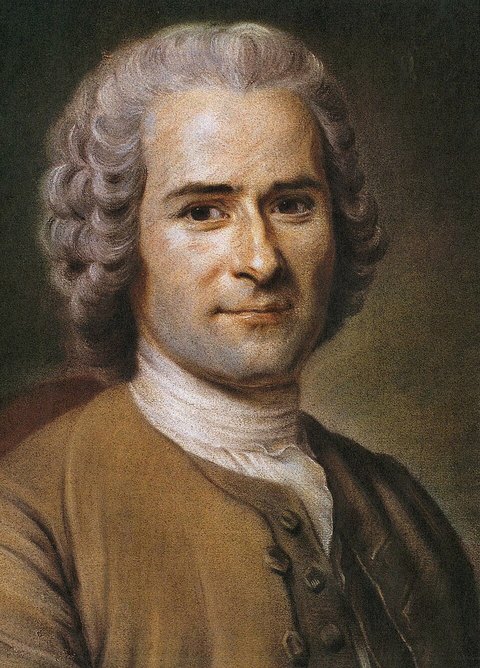
Rousseau and the origins of the idea
Nursusanti, Andriany, Agustina, Wahyuni, Alika K and Oktavia (2022) set out naturalism according to J.J. In this view the child, as created, is good, while the environment is bad.[2]
Dewey, ecology and transactional naturalism
Boyles examines Thomas Colwell's claim, made in the early 1970s, that there should be an ecological basis for human community. Colwell suggested that a position he named "naturalistic transactionalism" was being developed by some ecologists and by some philosophers of education, but that the two groups were working independently of each other. He suspected that ecologists were arriving at their own versions of naturalistic transactionalism without drawing on Dewey. Deron Boyles took Colwell's central claim and his complaint as the starting point for a wider inquiry into Dewey's thought, published in 2012.[7]
Boyles asked whether there was and is a shortage of writing that treats Dewey as an ecological philosopher. He then asked what such writing says, if it exists.[7]
Naturalism as a movement in literature and culture
Naturalism as a movement and genre took much of its shape from the work of Émile Zola, above all from his essay Le roman expérimental, published in 1880. Zola's influence was strong, yet ideas from other writers, some of them earlier than his essay, also shaped the movement. Naturalism is generally accepted as having begun in France in the late 19th century and as having continued into the early 20th century. It soon became an international movement and genre, and an interdisciplinary one as well.[8]
The international and interdisciplinary network of Naturalism appears in the writing of Zola, Joris-Karl Huysmans and Oscar Wilde. The links to Decadence and Aestheticism have received little discussion in relation to Naturalism, particularly regarding the roles that interiority and exteriority play in its international and interdisciplinary expressions.[8]
A separate naturalistic account treats culture as the means by which a society lives in its surroundings by acquiring and consuming free energy. On this account everything can be valued in terms of energy, so social changes can be described as natural processes influenced by the second law of thermodynamics. The paths societies take are still non-integrable, which is to say unpredictable in detail. The reason given is that free energy, the driving force, is finite and cannot be separated from the flows of energy. Energy differences inside a system, and between a system and its surroundings, tend to shrink in the shortest possible time. That tendency produces very economical, apparently immaterial ways of carrying energy, and these are linked to cultural codes, habits, traditions, taboos and values. Social changes in complex societies are inherently intractable, yet the principle allows universal tendencies to be recognized in diverse cultural characteristics and prospects for the future to be rationalized.[9]
Naturalism in literature and its classroom uses
Literary naturalism treats characters as shaped by forces outside their control, such as fate and natural law. A study of Thomas Hardy's The Mayor of Casterbridge argues that free will is not entirely free and that a person is not solely accountable for the actions that lead to a miserable destiny.[10][11] A linguistic study of Thomas Hardy's The Mayor of Casterbridge identifies immanent will, fate and the law of nature as the book's main naturalist tenets. It argues that an absolute force, the Immanent Will, directs human lives whatever people decide or want. The same study holds that a man is not solely accountable for the actions that lead to his unhappy end, and that free will is not entirely free. It also examines the part played by coincidence and chance, and it concludes that natural law governs every side of human life, so all people fall under it.[10]
A comparison of Hardy's Tess of the d'Urbervilles with Theodore Dreiser's Sister Carrie finds that both novels mix realism and naturalism, and that both show women struggling inside oppressive social structures. Hardy's lyrical realism carries a fatalistic tone, while Dreiser's journalistic detachment gives a raw, unembellished picture of city life, according to that comparison. Both writers show the social and economic pressures, gender roles and moral limits of their periods, and both leave room for moments of personal agency alongside the deterministic forces of society.[11]
Ernest Hemingway has been placed in an intellectual tradition whose three main strands are empiricism, behaviourism and naturalism, a placement argued through a mix of philosophical and literary analysis. In that account, empiricism gives the senses and sensations, which David Hume called impressions, a central place, and ideas are said to derive from impressions.[12]
Japanese naturalist literature appeared in the early 20th century and holds a significant place in the history of modern Japanese literature, with a deep influence on writing that followed. Tayama Katai's novel The Quilt is a representative naturalist work and helped to advance Japanese naturalist literature, and a study of the novel argues for its impact on that movement.[13]
Naturalism in language, aesthetics and communication
Plato's dialogue Cratylus stages a dispute between two views of names. Naturalism holds that a name is fitted to the thing it names. Conventionalism holds that the link between a name and its referent depends on an agreement among ordinary speakers that is arbitrary and can change. Hermogenes, the conventionalist, counts a name's simple attachment to a referent as enough for full communication. He stresses the imposing and re-imposing of names. He does not ask how their assigned meanings are carried beyond the parties to an agreement and preserved across generations of speakers. Socrates answers with a theory of the name as an instrument. In its highest function a name should serve dialectical enquiry, so it should be made appropriate to the properties of its referent. Its maker therefore cannot be an ordinary speaker but a competent lawgiver, supervised by a philosopher-dialectician. Socrates grants agreement a role only in communication, not in the assignment of names. One case is σκληρότης, 'hardness', where the resemblance carried by σ and ρ is blocked by λ, which conveys the opposite idea of softness. A speaker then has to fall back on linguistic habit. Some scholars read the dialogue's final part as a partial or complete victory of conventionalism, while others argue that naturalism wins both according to the text and according to the character of Socrates' argument.[14]
A naturalistic account of how language began takes pantomime as a privileged lens, because pantomime is motivated and iconic in contrast to the arbitrary and abstract features of linguistic signs stressed by the conventionalist thesis. Such an account also revises the thesis of a one-way influence of language on thought in favor of a two-way influence. Studying thought and language at their nascent stage means asking how thought shapes language. Two ideas support this: thought rests mainly on narrative, and pantomime is an ideal means for bootstrapping the evolutionary foundations of language origins.[15]
Bergson long distrusted language, treating it as allied to space, communication, social life and conceptual thinking and as an obstacle rather than a vehicle for the expression of duration, except in its artistic dimension. Comparing the claims about language in Time and Free Will of 1889 with those in Creative Evolution eighteen years later shows a significant change of position. Language moves from being an element of dissimulation to being an instrument of liberation. Bergson gave the course L'idée de temps at the Collège de France in 1901-1902, and it was later published. The course traces that adjustment to two developments: Bergson's abandonment of a certain anti-naturalist conception of language, and his gradual formulation of what can be called linguistic naturalism.[16]
Kames explains aesthetic values by reference to general laws governing human nature, an explanatory naturalism. In his essay 'Our Attachment to Objects of Distress' and in Elements of Criticism he argues that we are drawn to tragedy through the workings of the blind instinct of sympathy. On that view the standard question of why painful things please us rests on a mistaken assumption. The assumption is that only pleasure can attract us. Tragedy, among other phenomena, shows human nature to be considerably more complex. Kames adds a normative aesthetic naturalism: upon reflection we can judge that an instinct and its exercise are good. Tragedy is his example, which he holds morally educative because it strengthens sympathy. We should also train our instinctual affective responses so that they suit their objects and serve the human goods they are meant to promote.[17]
Main ideas
Naturalism as a philosophy of science and life
Naturalism as a philosophy of science and life begins from a simple habit: explaining events in the natural world, and the course of human life, by observation and by scientific reasoning rather than by appeal to something beyond nature. A 2023 article describes naturalistic philosophy as an approach that stresses observation. It seeks to understand natural phenomena and human life through a scientific lens. Ferdiana (2023) argues that studying naturalistic philosophy gives learners a broad grasp of how people and nature are connected, and that its basic principles build awareness of the natural processes that shape human existence. It asks what the study of naturalistic philosophy contributes to the growth of knowledge and to how people understand the world around them.[18]
Studying naturalistic philosophy, the article argues, opens the door to a broad understanding of how humans and nature are connected. Grasping the basic principles of naturalism is said to build awareness of the natural processes that shape a person's existence. That awareness, in turn, is presented as a foundation for understanding science and technology. The claim is stated as a general one about what such study provides; the article reports no measurement of how much understanding or awareness results.[18]
Ferdiana also reports that naturalistic philosophy strengthens analytical skills and problem-solving abilities. It is also said to stimulate curiosity and creativity, so that a person can look critically at complex issues and work out new solutions. These are the qualities the article groups together when it describes the outcome of learning naturalistic philosophy: people who think analytically, who act responsibly toward the environment, and who are creative in addressing contemporary challenges.[18]
Ferdiana states that naturalistic philosophy supports the concepts of sustainability and environmental preservation. A deeper grasp of how humans interact with nature can lead individuals to treat the environment with responsibility and to help conserve natural resources.[18]
For teachers, the article draws one direct conclusion: naturalistic philosophy should be integrated into education. It calls that integration a step forward, on the grounds that such study gives deep insight into nature and life while also shaping the analytical, environmentally responsible and creative qualities described above. The article does not specify a curriculum, a teaching method or an age group, and it reports no classroom trial, so the recommendation rests on conceptual argument rather than on evidence about what students learn when the subject is taught.[18]
Naturalism among rival educational philosophies
Educational philosophies are commonly grouped into a short list of rival positions: humanism, idealism, naturalism, pragmatism, materialism and existentialism. A 2023 article sets out the challenges that each of these positions raises for education and for the impact of philosophy on Christian religious education in the era of globalization. The article treats philosophy as the view of life of a person or a group of people, the basis on which all aspects of their life rest. The comparison responds to a problem the article describes in the present period: education is said to be experiencing a value crisis.[19]
The value crisis, as the article frames it, is that education produces outputs that are cognitively smart and skilled in theory and technology but empty of human and social values, a condition the article calls dehumanization. Globalization is the setting in which this outcome is said to arise.[19]
Phela and colleagues state that in studying secular philosophy one must be careful. The article quotes Colossians 2:8, which warns against being taken captive by empty and false philosophies according to the traditions and spirits of the world.[19]
Kantian assumptions and naturalist alternatives
Much writing on education rests on a picture of mind and world that is often labelled Kantian, and that picture has drawn widespread criticism. The picture is a set of assumptions about how the mind relates to what it knows, and those assumptions shape how teachers and theorists talk about knowledge, reality and learning. Immanuel Kant's own position is often read as a form of idealism, the view that the structure of the world as known depends on the mind that knows it. That reading is not the only one available, and a more careful account treats Kant's idealism as non-traditional rather than as the claim that the world is merely a construction of the mind. Kant's Copernican view, the proposal that objects must conform to our ways of knowing rather than the reverse, has been discussed in relation to traditional metaphysics and to empiricism, the tradition that traces knowledge to sensory experience.[20]
Naturalist epistemology offers an alternative to the Kantian picture, and it comes in several versions. Naturalism in this context is the view that nature and reality can be conceived without appeal to a mind that orders them in advance, and materialism is the related view that what is real is ultimately material. The discussion turns to John McDowell, Sebastian Rödl and David Bakhurst for different ways of conceiving what is real and what is natural in the world. These writers do not agree on a single alternative, and their versions of naturalism and materialism differ in what they count as natural. The point of comparing them is to show that the choice between a Kantian and a naturalist account is a choice among several conceptions of world, not a simple choice between mind and no mind.[20]
For educational theory, the practical question is what each conception of world allows a teacher or researcher to say about knowledge and about the objects of study. A Kantian picture tends to locate the conditions of knowledge in the knowing subject, while naturalist epistemology locates them in nature and in the ways human beings, as part of nature, come to know. Materialist accounts extend this move by treating mental life as continuous with the material world rather than as standing outside it. The contrast matters because criticisms of the familiar Kantian picture in education are often aimed at assumptions that a more careful reading of Kant does not require. Reading the alternatives side by side helps clarify which criticisms hit their target and which rest on a version of the picture that its defenders would not accept.[20]
Educational thought often carries an unexamined picture of mind and world, and a body of work on Immanuel Kant in education has identified one such picture as the familiar Kantian view that draws widespread criticism. That picture is not the only reading available, and later discussion of the same familiar concepts aims at a more valuable interpretation. Underlying the competing interpretations are different ideas about mind and world, including different conceptions of world, nature and reality. The contrast drawn in this literature is with naturalist epistemology, the view that knowing is to be understood as part of the natural world and studied as such.[20]
Versions of naturalism and of materialism are examined by way of John McDowell, Sebastian Rödl and David Bakhurst. The discussion serves an understanding of Kant's own version of idealism, which the chapter presents as non-traditional.[20]
Naturalism, land and management education
Naturalist philosophy has been read as a position that favors intelligence and careful thought about nature, and that supplies arguments against the plowing of land and forest. A 2023 study framed this reading as an axiological synergy, meaning a working together of values, and set it inside management and Christian religious education. The same framing treats naturalism as a source of resistance to capitalism in the economic sector, to cultural pressures, and to problems of employment. The researchers approached these claims through the humanities rather than the natural sciences, taking up management, education and their Christian counterparts in turn. The design was qualitative, and the data came from secondary sources: earlier research journals and books on the philosophy of naturalism.[21]
The philosophy of naturalism underwent a shift in meaning when spirituality was added to it during the 19th and 20th centuries, and that addition is described as one way of taking up the philosophy of naturalism. Because the argument rests on secondary sources, it reports what earlier journals and books have claimed about naturalism and does not test those claims against new data. The study therefore offers a map of how naturalist ideas have been carried into management and religious education, not a measure of their effects on students or institutions.[21]
Judging adequacy across proposal and report
A naturalistic study is judged at three moments: when the proposal is submitted, while it is carried out, and in the final report. Naturalistic inquiry is research that observes people in their ordinary settings rather than testing them under controlled conditions. As such approaches to administrative inquiry came to be used more often, the need grew to set rigorous standards for judging whether a study was adequate at each of those moments. A 1982 article in Educational Administration Quarterly set out ways of handling three specific issues that arise when the methodological adequacy of naturalistic inquiry is judged.[22]
The proposal stage asks the researcher to say in advance what will be studied, in what setting, and by what means the account will be produced. A reviewer weighing a proposal therefore looks for standards stated in advance, so that adequacy can be assessed against a plan rather than reconstructed after the fact. The same three issues identified for judging adequacy apply at the proposal stage as at the other two, which means the questions asked of a plan resemble those asked of a finished report.[22]
The execution stage sits between proposal and report, and the standards proposed for naturalistic work cover it alongside the other two. Judging adequacy during execution concerns whether the study as actually conducted still meets the standards set out when it was proposed. The 1982 article treats proposal, execution and final report as three stages of one judgment rather than as separate audits.[22]
In the final report, the reader must be able to see how the account was produced and why it should be trusted. The three issues named for naturalistic inquiry are the points at which reviewers press hardest when they weigh a report. Because the standards are proposed rather than settled, the article offers ways of dealing with the issues instead of a fixed checklist.[22]
Defining naturalism and its educational reach
Racine (2008) distinguishes three epistemological stances in bioethics: anti-naturalism, strong naturalism, and moderate pragmatic naturalism. Cottingham (2022) frames the choice as one between secular naturalism, with a neutralist conception of nature and of human nature, and theistic naturalism, on which the natural world and human nature bear the stamp of the divine.[23][24] In ethics and bioethics the term is used epistemologically, to mark a stance on how far moral knowledge depends on empirical knowledge. A defense of moderate pragmatic naturalism published in 2008 distinguishes three positions on how knowledge relates to nature: anti-naturalism, strong naturalism, and a moderate pragmatic naturalism. Anti-naturalism rests on a strong distinction between what is and what ought to be, and that commitment has helped separate academic philosophical ethics from major social problems. Strong naturalism, the second of those positions, is said to commit the naturalistic fallacy and to risk collapsing moral norms into biological requirements. The moderate option treats bioethics as tied to empirical knowledge without being ruled by it.[23]
A second meaning is cultural: a society can be described as living in its surroundings by taking in free energy and using it up. On this account social change is a natural process shaped by the second law of thermodynamics. Societies arise, develop, and in time die out once they have drawn on, used, and exhausted their resources. The same analysis holds that identities take shape and grow through interaction, and that class structure follows from a search for the most entropic partition. Trajectories of societies are described as inherently non-integrable, meaning unpredictable in detail.[9]
A 2022 paper argues that the interesting philosophical question is not whether to be a naturalist but which naturalism to choose. One option is secular naturalism, which treats nature and human nature in a neutral way. The same paper finds the secular option open to grave problems, both in what it can know and in how it handles moral questions. It also notes a break between present-day uses of the words nature and natural and older ones. Many philosophers and theologians of the classical, medieval and early modern periods would have taken the naturalist thesis as close to obvious.[24]
The three are anti-naturalism, strong naturalism and moderate pragmatic naturalism, and a 2008 article in the journal Bioethics sets them out in order to clarify a growing but unsettled interest in naturalist approaches to bioethics. Anti-naturalism holds that facts about the world cannot by themselves settle questions of value, and it rests on a firm distinction between what is and what ought to be. That commitment has been the dominant paradigm within philosophical ethics, and the article argues that it helped separate academic philosophical ethics from major social problems. The same argument offers a partial explanation for the observation, made in the early 1980s, that medicine saved the life of ethics.[23]
Strong naturalism is the position that people often adopt when they reject anti-naturalism, and it treats ethical questions as answerable by biological or empirical facts alone. In doing so it commits the naturalistic fallacy, the mistake of deriving statements about what ought to be done directly from statements about what is the case. It also threatens to reduce the normative dimension of ethics, the part that concerns norms and obligations, to biological imperatives. The article calls this reduction a trap that is rightly set aside, because ethics is partly a matter of resisting the ordinary course of nature. Rejecting naturalism altogether has costs of its own, because it discourages bioethicists from acknowledging the naturalistic commitments that their own field already makes implicitly.[23]
Moderate pragmatic naturalism is offered as the stance that best holds the tension between the other two positions rather than dissolving it in either direction. The argument for the moderate option is built from historical writings in philosophy and in bioethics rather than from new empirical data.[23]
Naturalism, science and the study of society
Euro-American debates over what social science is and how far it reaches have long carried a stubborn dispute about whether the study of society should copy the methods of the natural sciences. Research in politics and international relations has not escaped the resulting paradigm wars, and the question of methodology has been central to these fields. Because the debate is commonly framed as a choice between two opposed sides, claims about global politics have ranged from merely varied to wildly contradictory. Each side has claimed the epistemic authority it believes it is due, along with the privileges that come with it, and the resulting contest of position has proved so intractable that some researchers want the two parties to go their separate ways, citing irreconcilable differences.[25]
One proposed response comes from critical realism, a philosophy that treats the critical naturalist position as a promising alternative to the either/or logic that shapes much of the existing debate. On this account, critical naturalism answers the methodological question in a broader and more scientifically credible way than the two positions usually, and wrongly, taken to be the only choices. The logic it recommends is neither/both/and rather than either/or, so that the methods of natural science and attention to the distinctive features of social life are not treated as mutually exclusive. The argument is directed against the assessment that separation is the preferred outcome, and it holds that a mutually acceptable intellectual and institutional settlement remains available.[25]
A related use of the term appears in critical theory, where a manifesto published in the journal Krisis (volume 42, issue 1) called for rethinking the role and the concept of nature in relation to questions of ecology, health and inequality. The journal issued an open call for responses to the manifesto, and sixteen selected responses were published, each augmenting, specifying or questioning its assumptions and arguments. One of those responses, a commentary on the manifesto, was written from the margins and took up the critical naturalist label in its title.[26]
Induction and the rejection of a priori justification
Epistemological naturalists hold that empirical knowledge, meaning knowledge gained through observation and experience, does not need justification from a priori principles, that is, from principles held to be true independently of experience. On this view, no such a priori justification of empirical knowledge is possible.[27]
Observation reports, which serve as the foundation of empirical knowledge, are not justified by other sentences. They are also not certain. What they can do is be agreed upon as starting points for inductive reasoning, the reasoning that moves from particular observations to general claims. Observation reports also function as implicit definitions of the predicates used in them, where a predicate is the part of a sentence that attributes a property to something.[27]
Generalising inductively from observations is a basic human habit, and people do it without justification. People still have firm intuitions that certain inductive generalisations will break down, while they expect more from others. This is the induction problem as formulated by Goodman, who suggested that some predicates are projectible, meaning fit to be carried into new cases, when they become entrenched in language. That suggestion is a step forward but not entirely correct.[27]
Inductions result in universally generalised conditionals, sentences of the form that if one thing holds then another follows, and these contain two predicates, one in the antecedent (the if-clause) and one in the consequent (the then-clause). A counterexample to a preliminary inductive generalisation can be set aside by tightening the criteria for applying the predicates involved. The tightening can go on until the criteria for the predicate in the antecedent take in the criteria for the predicate in the consequent. At that point no further counterexample is possible. Arriving at that point means arriving at a law, and such laws are implicit definitions of theoretical predicates. An accidental generalisation lacks this feature, because its predicates are unrelated.[27]
Laws are said to be necessary, which may be read as the claim that laws are necessarily true, so that necessarily true is a semantic predicate about meaning rather than a modal operator about what could have been otherwise. Because laws are definitions, they are necessarily true in the sense that later use of the predicates they define depends on assuming them. Induction as used in science is therefore a way of inventing useful scientific predicates, a heuristic rather than an inference principle.[27]
Naturalism and Christian philosophy in dialogue
Finding shared ground between naturalists and Christian philosophers looks unlikely, Fiona Ellis writes in a 2025 paper in Studia Philosophiae Christianae. The typical naturalist is an anti-supernaturalist, a person who denies that anything exists beyond the natural world. The Christian philosopher, by contrast, appears to be a supernaturalist of the first order, holding that reality extends beyond nature. These two positions are said to be mutually exclusive, so that anyone who holds one cannot hold the other.[28]
Ellis argues that a broad, expansive form of naturalism throws doubt on that way of dividing the philosophical map. Her first task in the paper is to set out the shape of this expansive naturalism. She does so with the philosopher and novelist Iris Murdoch as her main interlocutor, the thinker she reasons with throughout. She examines Murdoch's relation to the Christian theologian Paul Tillich and considers what that relation implies for an assessment of Murdoch's commitment to atheism. Ellis argues that a knife-edge separates the two positions, a narrow line on which the views nearly meet without merging. That knife-edge, she holds, has important implications for understanding the limits of expansive naturalism and for the prospects of common ground between naturalists and Christian philosophers.[28]
Research
Naturalism and the quality of schooling
One argument about school quality locates it in the institution's founding vision and mission rather than in teaching technique alone. On this account, the quality of school education will be low when the management of human resources has not carried out its duties optimally, whatever the school's reputation suggests. A 2022 qualitative study of one Indonesian school reports the gap directly: many schools hold good accreditation, yet some teachers have not implemented their learning management properly, so students who should behave well toward their surroundings act in the opposite way. The study treats the development of naturalistic intelligence, the disposition to observe, reflect on and reason about the living world, as the way to raise school quality.[3]
Analysis followed the stages set out by Miles, Huberman and Saldana: data collection, data condensation, data presentation and drawing conclusions. Its setting was STP Khoiru Ummah, where teachers asked students to sense and pay attention to the surrounding environment and then to reflect on everything they sensed. Students were then invited to consider who created the universe, life and humans. Zaytun Hasanah, Istiqomah and Hajar Dewantara concluded that the school's methods, curriculum and learning align closely with Islamic education and draw on the Al-Qur'an and Al-Hadith. In the study's judgment this makes the school high quality.[3]
The argument that vision and mission determine quality places a heavy burden on how staff carry out their duties, since a stated mission that teachers do not enact in their learning management leaves the school's quality low by the study's own standard. Accreditation, in this view, records formal compliance and can sit alongside weak classroom practice.[3]
Naturalism in music education and artificial intelligence
Music education has become one of the places where the rapid development of artificial intelligence is felt, and the 2022 revised music curriculum actively recommends the use of such tools. A 2025 study argues that this use brings positive effects to music education while also carrying the risk of negative results. Its central claim is a trade-off: the technical effect grows with the use of artificial intelligence in music education, and humanity is lost to the same degree. The study therefore treats music education infused with humanity as the form that deserves more emphasis as artificial intelligence develops, and it proposes a naturalistic basis for that form.[29]
A 2017 article explores where pragmatic philosophy and the Aristotelian concept of praxis overlap and applies that overlap to music and music education. It sets John Dewey's philosophy of art, as developed in Art as Experience, against the unexamined aesthetic assumptions about music that music teachers often hold after inheriting an aesthetic meme from their university music studies. Praxis is then explained through the conditions of consummatory experience, which the article treats as shared with Dewey's pragmatism. Regelski examines the importance of consummatory experience to both pragmatism and praxis in terms of ends-in-view.[30]
Regelski examines intentionality, both individual and collective, as analyzed by John Searle and qualified by the pragmatic realism of Hilary Putnam. The philosophical implications are then drawn out as conclusions for music education.[30] The two lines of argument differ in emphasis: the 2025 study builds its case on nature, aesthetic emotion and organic vitality, while the 2017 article builds its case on praxis, consummatory experience and intentionality.[29][30]
Monotheistic naturalism and self-awareness
One line of work applies a naturalist starting point to the teaching of self-awareness, and it does so within a religious frame rather than against one. A 2025 study set out to identify the parts of a self-awareness skill built on monotheistic naturalism, the view that the natural world, including human nature, is understood as created and ordered by one God. It then judged whether a teaching package assembled from those parts was sound. The researchers gave the culture and religion of Iran as their reason for the inquiry, arguing that self-awareness deserves study on those terms in that setting. The study was applied in purpose and descriptive in method, meaning it aimed at a practical product and described the material it gathered rather than testing it against a comparison group. The published report describes the identification of components and the expert review of the package, and it reports no trial of the package with learners.[5]
To find the components, the researchers drew on work in the field published up to 1402 in the Iranian calendar, the equivalent of 2023. They chose 27 articles, theses or books by purposive sampling, a method of picking items deliberately for their fit with the question rather than at random. Data came from note-taking on those texts and from a survey of how far experts agreed with the proposed components. The notes were analyzed by thematic analysis, a method for sorting passages of text into recurring topics and grouping the small topics under larger ones. The package itself was judged by 8 specialists and experts familiar with the field, also chosen by purposive sampling, and their agreement was summarized with an agreement coefficient.[5]
The 5 organizing themes were: knowing one's own identity; knowing one's tendencies and needs; knowing one's interests and feelings; knowing one's values and goals; and knowing one's plan for life. These 5 were placed under a single overarching theme, the top-level label in thematic analysis that covers the whole set, named self-awareness skill based on monotheistic naturalism. The content validity index and the content validity ratio were both rated desirable for every one of the basic themes.[5]
The educational package built on these components was designed to run for 8 sessions of 120 minutes each. The study concludes that researchers can use the package, which is a claim about its readiness for further study rather than evidence that it changes self-awareness in students.[5]
Khamisi, Ehteshamzadeh, Heidari and Kalantari state that the developed package can be used by researchers. The 5 organizing themes and the 28 basic themes rest on a reading of 27 selected texts, and the selection was purposive, so the set of components reflects the judgment of the researchers about which works belonged in the sample. The judgment of quality came from 8 experts who were familiar with the field, a small panel whose agreement was summarized by a coefficient rather than by a comparison with an independent group. The report gives no measure of self-awareness taken before and after the 8 sessions, and no comparison with a group that did not receive the package. Within those limits, the study shows how a naturalist account of the person can be joined to a religious account and turned into a structured curriculum with named parts, stated session lengths and expert-reviewed content.[5]
Naturalistic inquiry as a research method
Naturalistic inquiry is a research approach in which educational researchers study events in the settings where they ordinarily occur, describing and comparing what they find rather than testing it against fixed conditions set in advance. The label covers a family of methods rather than a single procedure, and its use in educational evaluation has been growing, though the practical consequences of that growth are unclear.[31] In administrative research the same approaches have been employed with increasing frequency, which raised the question of how to judge the adequacy of such studies at the proposal, execution and final report stages.[22] The philosophical roots of naturalism belong to the earlier sections of this article; this section concerns the research method that borrowed the name.[31][22]
The comparison described both sets of requirements and then examined the problems evaluators could meet while working with naturalistic methods. Its conclusion was that compromises in the use of evaluation standards and in the criteria for naturalistic procedures are usually necessary. The same analysis held that cautious flexibility in applying the small number of standards and criteria that may conflict is well justified when an evaluation's needs call for naturalistic techniques.[31]
A 1982 article in an administration journal offered ways to handle three particular problems that arise in judging how methodologically adequate a naturalistic inquiry is.[22] The spread of naturalistic methods into evaluation and into administration thus brought a demand for explicit criteria of adequacy rather than a settled body of rules.[31][22]
Naturalistic evaluation applies methods of observation and description to educational programmes, and its use in educational evaluation has been growing. The practical consequences of that growth are unclear, because the field draws on separate sets of rules written for different purposes. One set consists of standards for evaluation, which set out what a finished evaluation should deliver. The other set consists of criteria for judging naturalistic inquiry, which set out how the research itself should be conducted. Describing and comparing the sets of rules turned up a few places where they potentially conflict.[31]
Looking at the problems evaluators could meet while using naturalistic methods suggests that they usually have to compromise in applying evaluation standards and criteria for naturalistic procedures. The suggested response is cautious flexibility in using the few standards and criteria that are in potential conflict.[31]
In practice
Aristotelian naturalism and moral education
Moral education in schools has moved toward an integrated approach as the cognitive approach of Lawrence Kohlberg met a series of limits. This is reported in a 2022 critical examination of Aristotelian naturalism and its implications for evaluation objectives in moral education as a school subject. Among the scholars leading that change are the neo-Aristotelian writers associated with the Jubilee Centre in the United Kingdom. These writers propose Aristotle's virtue ethics as a theory that explains moral life as people actually live it, and they build theoretical and practical research on that basis. The same examination credits this body of work with a large contribution to research on moral education.[32]
The shift has a cost for evaluation, because moral life now carries more elements that educators must consider than it did in Kohlberg's time. Questions that once looked settled and clear now need to be argued again. The 2022 paper concentrates on one such question: whether the virtuous human being, which Aristotle's theory treats as the ultimate aim of education, can serve as the objective of evaluation. The paper identifies difficulties in making that aim an evaluation objective.[32]
The 2022 paper points to the naturalistic character of Aristotle's theory, and to Aristotelian ethical naturalism as it has been systematized in modern work. One might expect the position to help educators grasp objective moral truths. The 2022 examination argues the opposite: the distinctive character of Aristotelian naturalism can itself generate a further problem for evaluation.[32]
Naturalist themes in early modern philosophy teaching
Teaching early modern philosophy asks instructors to hold two aims at once: staying faithful to the arguments and concerns of the period's philosophers, and interpreting those arguments so that contemporary undergraduate students find them plausible. The period is unusual because it applies modern scientific method directly to problems about nonphysical aspects of reality, which contemporary scientific thought and mainstream contemporary culture no longer treat as open to reliable reasoned approaches in their own right. Early modern texts also take seriously purely conceptual or logically consequential thought about these topics, a style of reasoning that mainstream contemporary culture does not. On this account, the period links two kinds of thinking. One is the reasoned, objective thought that mainstream culture accepts as plausible. The other concerns nonphysical reality, or more broadly the thinking that marks philosophy.[33]
Readings that treat Descartes as a naturalist run into a sharper difficulty, since one analysis argues that his philosophy is programmatically anti-naturalistic and that presenting it as a form of naturalism shows a misunderstanding of its basic principles. That analysis puts the word naturalism in quotation marks for Descartes, because his philosophy does contain postulations and assertions that can be read in naturalistic terms, but only when they are taken out of the wider Cartesian system. The text gives two such examples, while noting that more could be found in seventeenth-century thought, and in each case the example departed from the foundations of the system.[34]
Drozdowicz (2019) argues that Descartes's philosophy is anti-naturalistic by design, and that presenting it as a form of naturalism misreads its basic principles. Barris and Turner (2015) treat early modern philosophy as a bridge between reasoned, objective thought and thought about nonphysical reality, without settling whether Descartes's system counts as naturalistic.[33][34]
Field courses and experiential learning outdoors
Field work is a standard part of undergraduate ecology training, and many university courses build field-based or experiential components into the curriculum so that students handle real organisms and real settings rather than only readings. When instruction moved online in spring 2020 because of the COVID-19 pandemic, instructors of such courses had to find ways to keep field activities rigorous while students worked alone, online, and from their own backyards. A case study describes how one such course moved to fully remote instruction. The course was a UC California Naturalist certification course taught at the University of California, Davis.[35]
The redesign drew on established, publicly available online participatory science platforms, such as iNaturalist, through which members of the public record and share observations of living things. Students in the course contributed data and field observations to these platforms from wherever they were, so the outdoor work continued without a shared field site or an instructor standing beside them. Student feedback on the course, together with voluntary continued use of the participatory science platforms after the course, indicates that students rated the experience on par with earlier traditional offerings of the same course.[35]
The case study also lists topics and participatory science resources for faculty facing a similar move. Their group field activities would become remote, individual field-based experiences. The evidence comes from one course, from what students said about it, and from their voluntary continued use of the participatory science platforms. No controlled comparison of learning outcomes was run, so the study reports how students received the course, not how much they learned compared with the traditional version.[35]
What this looks like when you study
Teachers at STP Khoiru Ummah had students observe and take note of their surroundings, reflect on what they noticed, and consider the origin of the universe, of life and of human beings. The same teachers reminded children to tidy the classroom and to pick up litter even when it was not their own, and they trained children to make fertilizer from leaves. One teacher taught children to separate organic waste from inorganic waste that cannot be recycled, and the school barred snacks containing micin (a flavor enhancer). The curriculum deputy gave each child a Student Daily Activities sheet listing duties such as speaking makruf nahi munkar (enjoining good and forbidding wrong) with peers and in the community.[3]
In a study of sports coaches, researchers video-recorded coaches at work and then invited them to recall, while watching the video, what they were thinking at the time. Even so, the method drew from experts accounts of the decisions they had made and preserved the advantages of studying them in a naturalistic setting, although some accounts were rearranged to fit prior theories. The author concludes that stimulated recall works best with immediacy of recall, consonance between questions and cognitive organization, and indirect means of introspection in complex settings such as the classroom.[36]
A systematic review examined 76 studies that used portable electroencephalographic (EEG) devices, which record brain activity, in naturalistic and semi-naturalistic educational contexts. Most of those studies focused on attention, took place in technology-mediated semi-naturalistic situations, recorded one student at a time, and used university students with low-cost equipment of fewer than 15 channels. The review also raises ethical questions, among them that commercial algorithms whose workings are not disclosed may reduce judgments about mental processes to too simple a form and may not fit the traits of each student.[37]
A study of classroom discourse analyzed a fourth-grade lesson on fractions to show what sequential analysis of naturally occurring talk reveals about the work of instruction in the early grades. The same article contrasts this naturalistic program with critical discourse analysis, which it calls a formal-analytic program. Macbeth closes by restating his position that naturalistic inquiry was the main new development in classroom studies over the previous 30 years.[38]
If you follow the naturalist advice on self-determination, match each intervention to the child's current stage of development and improve rather than replace what is there. Leave the child free for nature to guide, monitor actions from a distance, and give feedback that informs rather than commands. When teachers and parents show concern for children's interests and welfare, children show high internal motivation; when adults withhold the communication children seek, children lose intrinsic motivation.[4]
Criticism
Environmental policy, postmodernism and criticism
Environmental education has become a place where naturalist assumptions meet public policy, and critics have begun to examine what those assumptions do to the teaching that follows. The UK Department for Education published a policy strategy in response to a worsening climate and ecological crisis, and the strategy aims to bring about transformational behavioural change through reforms. Those reforms are meant to give pupils a lasting and action-orientated sense of awe and wonder about the natural world. The approach ties increased sustainability and climate literacy to transformational change by satisfying two aspects of effective environmental education. The first is an ontological aspect, meaning the pupils come to grasp their place in nature more fully; the second is an affective aspect, meaning they are motivated to protect and value nature.[39]
A critical reading of the strategy, drawing on critical environmental philosophers, argues that it inadvertently reveals a gap in environmental education policy. The gap arises because the strategy commits itself to a strong ontological naturalism, a stance that treats nature as the whole of what exists, with relatively little critical examination. That commitment unduly limits critical reflection on the affect- and action-guiding assumptions that lie beneath the entities mainstream science reveals. The critique ends with some modest remedial measures and with broader questions about what environmental education ought to be.[39]
A second critical strand concerns postmodernism in educational thought, where some of the most important ideas are found in the writings of Michael Peters. One paper examines Peters' postmodern stance and his use of Lyotard's account of knowledge. Working from a naturalist standpoint, it raises several objections. The objections centre on science as a metanarrative, that is, science treated as one grand story among others rather than as a distinctive form of inquiry. They centre as well on the unity of the empirical and the evaluative, and on reason, truth and the growth of knowledge. The paper concludes that postmodern epistemology serves education less well than naturalism does.[40]
Open questions and limits of the evidence
A 1972 article by Gallop treats the place of art colleges in further education as ambiguous, and it takes that ambiguity as its central problem. The ambiguity had been thrown into relief by two reappraisals of the role of art colleges, undertaken by the Coldstream and Summerson committees. Gallop analyses the ambiguity through patterns of interpersonal relationships inside art colleges, which the article treats as a function of two things: established institutionalised behaviour and the contrasting personality structure of art college teachers. The article is described as a socio-psychological investigation of radicalism, naturalism and tender-mindedness among teachers in foundation art classes. Its abstract reports no sample, no measure and no result, so the size of any association between naturalism and the position of these teachers is not established by the source.[41]
The reconstruction of Alrazi's reasoning rests on a single 2024 article that applies the method of historical biographical reconstruction, which reads a person's thought through the social and intellectual conditions of the person's time. The article concludes that Alrazi reasoned as a theistic naturalist because the social and religious conditions of his era manipulated truth and limited what reason could do. It adds that religious communities of the period barred rational speculation about religion, since religion was held to be sacred and well established, and that Alrazi therefore treated truth as secretive in nature. The article also reports that Alrazi, a believer in pure rationalism, took reason as proof of the existence of God, because reason lets humans understand problems. These claims are interpretive conclusions drawn through a biographical lens, and the abstract names no primary texts, dates or archival materials against which they could be checked.[6]
Agustin uses the method of historical biographical reconstruction to examine how Abu Bakar Alrazi's theistic naturalistic reasoning developed.[6] For the art college question, the missing evidence is empirical: no counts of teachers or students, no personality measures and no comparison groups appear in the abstract.[41] For Alrazi, the missing evidence is documentary: the reasoning is attributed to him, but the writings and historical records that would support the attribution are not identified.[6]
Stimulated recall and the study of thinking
Stimulated recall is a family of introspective research procedures in which a person is shown a video sequence of an earlier event and asked to recall the thinking that ran through the mind while that event was happening. The term introspective means that the account comes from the person's own report of inner experience rather than from an outside observer. The video prompt serves as a cue, and the aim is to recover concurrent thinking, meaning thought that occurred during the recorded event rather than reflection added afterwards. Variations of this generic approach are widely used, and many studies treat the procedure as non-problematic, that is, as if the reports needed no special caution.[36]
A 2003 report reviewed what stimulated recall does well and badly, and showed it at work in a study of how sports coaches make decisions without deliberating. Non-deliberative decisions are choices made quickly, without a period of explicit weighing of options. The study reaffirmed the potential limitations of participants reordering their accounts, whether because deeper memory structures were activated or to keep biases of control and to confirm a theory held in advance. A bias of control is a tendency to present one's actions as more deliberate and governed than they were, and a priori theory affirmation is a tendency to report in line with a view held in advance.[36]
The report concluded that stimulated recall is a valuable tool for investigating cognitive processes, though research designs need care. Immediacy of recall means that the prompt and the report come close in time to the event, and consonance means that the questions fit the shape of the thinking being reported. Indirect means of introspection are questioning strategies that approach the thought sideways rather than asking the person to inspect it directly. The report also described considerable potential for stimulated recall in research and as the basis of training programmes.[36]
What the procedure can show is a participant's account of concurrent thinking, gathered in a naturalistic setting and prompted by a record of the event itself. What it cannot show, on the report's evidence, is a clean transcript of that thinking, because accounts may be reordered as memory structures are activated and as biases of control and prior theory press on the telling. The report therefore treats the method as valuable but design-sensitive, and it places the weight on how the study is built rather than on the procedure alone.[36]
Naturalistic epistemology in school administration
One strand of naturalist thinking in education concerns not classrooms but the people who run schools and school systems. Allison's commentary traces where this naturalistic epistemology came from and then weighs what it can and cannot do for the study of administration.[42]
The central objection turns on meaning. Allison argues that the programme imposes limits on understanding social behaviour at the level of meaning, that is, on grasping what people take themselves to be doing when they act. Social action in schools, on this reading, is not fully captured by an account built to resemble the natural sciences. The criticism is therefore aimed at the reach of the framework rather than at its internal consistency.[42]
Allison also examines the coherence criteria that the programme uses to compare rival theories. He gives brief attention to how those criteria should properly be employed when a field chooses among competing accounts, suggesting that their correct use is itself a question in need of an answer. The commentary closes with a short consideration of the general problem of building theory in educational administration and of the role that modern science should play in that work.[42]
The exchange is a dispute within naturalism about method, not a defence of older foundational approaches. Allison accepts that theory in educational administration is a general problem worth addressing and asks what part modern science should take in it. His reservations concern what a naturalistic epistemology leaves out when administrators' actions are studied as meaningful conduct. Questions about teaching and learning inside classrooms belong to other parts of this article.[42]
Coherentism is a theory of knowledge holding that a belief counts as justified by its fit with the rest of what is believed, rather than by matching some foundation outside belief. A naturalistic version of this theory treats knowledge as continuous with science and asks that theories be judged by how well they cohere with the best available accounts of how the world works. In educational administration, Evers and Lakomski set out this programme in an article titled "Theory in educational administration: naturalistic directions". Allison (2001) traced where that naturalistic epistemology came from and weighed what it cannot do for understanding social action.[42]
Allison argued that the coherentist account imposes limits on understanding social behaviour at the level of meaning, the layer at which people's own interpretations of what they are doing are located. On this view, a theory chosen for its coherence with natural science may fit the observable regularities of administrative life while leaving out what the actions mean to those who perform them. The criticism is therefore not that coherence is irrelevant but that it is incomplete as a standard for social inquiry.[42]
A second line of criticism targets the coherence criteria themselves. Allison gave brief attention to these criteria, particularly to the manner in which they should be appropriately employed in theory choice.[42]
Critical versus naturalistic readings of lessons
Two analysts can watch the same recording of a lesson and come away with different accounts of what happened, because each brings a different question to the transcript. A 2003 article by Karen Macbeth in the American Educational Research Journal sets the two programs side by side and argues for the naturalistic one.[38]
The naturalistic analyst asks how instruction gets done in the early grades, and the sequence of turns is the evidence. On this reading, the lesson is not a container for meanings imposed from outside the room; it is an order that the participants produce and that the analyst can describe from the transcript itself.[38]
The critical analyst starts from a different premise, treating classroom talk as a place where wider social arrangements are reproduced, and reads the transcript for those arrangements. Macbeth's middle section sets out both programs and their differences by criticising formal and critical studies of classroom discourse. The dispute is thus about what a transcript is evidence of, not about whether the recording is accurate.[38]
Each approach leaves something out. Macbeth's stated aim is to reaffirm naturalistic inquiry as the central innovation of classroom studies over the previous 30 years, a claim about the field's direction rather than a finding about any one lesson.[38]
Hugh Mehan's book Learning Lessons occupies a central place in the growth of naturalistic studies of classroom talk, and in particular in the sequential analysis of naturally occurring classroom discourse. Sequential analysis means working through a lesson turn by turn as it unfolds, asking what each utterance does in relation to the one before it, rather than coding talk against categories fixed in advance. A 2003 reconsideration of the book treats this approach as the central innovation of classroom studies over the previous 30 years.[38]
The two programs differ in what they take a recorded lesson to be evidence of. Naturalistic sequential analysis stays close to the local organization of the lesson, treating the transcript as a record of how instruction is accomplished in that room on that day. Critical analysis reads the same lesson through a formal framework, so that what is said is interpreted in light of broader categories the analyst brings to the material. The 2003 article sets out the character of each program and its differences by criticizing formal and critical studies of classroom discourse.[38]
To show what the sequential approach yields, the article ends by analysing a lesson on fractions taught to a fourth-grade class. The stated aim of the article is to reaffirm naturalistic inquiry as the premise and program at the center of classroom studies.[38]
Hegel, normativity and the study of religion
Bar (2016) reports a recent tendency to detect naturalism in Hegel's epistemology, and asks in what sense it is appropriate to speak of Hegel's naturalism. Bar describes Hegel as offering an ongoing dialogue with divergent streams of naturalism. On the naturalist reading, Hegel treats the natural world as the sole precondition for meeting the needs of self-consciousness, the mind's awareness of itself as a thinking subject. That reading treats self-consciousness as embodied in nature by its essence, and it gives little weight to the intersubjective dimension of reciprocal recognition, meaning the mutual acknowledgement that selves give one another. The result, as the reading presents it, is that the mind is led to an allegedly unavoidable delimitation of any knowledge-claims, with the natural treated as an insurmountable obstacle to the mind. One 2016 paper describes the tendency to find naturalism in Hegel as more than a fashion within English-language scholarship, since it mirrors a questionable state of the art where philosophy of science meets philosophy of mind. The same paper notes that Hegel carries on an ongoing dialogue with divergent streams of naturalism, and it asks in which sense one can properly speak of Hegel's naturalism. Its proposed answer is Hegel's concept of the transsubjective thinking mind, the Geist, which is not confined to any single subject.[43]
Mundra (2017) rejects the common view that the study of religion must be descriptively neutral and naturalistic rather than normative in order to count as academic. It rejects the widespread view that such study qualifies as academic only if it stays neutral in description and naturalistic, avoiding normative or prescriptive claims. A 2017 article makes this case with the help of philosophers including John McDowell, John Cottingham and Tyler Roberts. The article claims that the neutral stance treats humans as agents whose conduct is fixed rather than as free agents. Mundra draws on Quine and Davidson's account of translation to argue that normative judgment cannot be removed from humanistic scholarship. Quine and Donald Davidson's work on translation, the article argues that normativity, the presence of standards for judging what ought to be believed or done, cannot be removed from humanistic scholarship. That scholarship, the argument continues, is itself inextricable from religious studies. Mundra then turns to Pippin's and Lewis's readings of Hegel for resources to reconcile human freedom with constraint in religion.[44]
Self-refutation and pragmatist replies
A radical form of naturalism holds that everything real must be established through the scientific method alone, and a 2025 paper by Wesół argues that this position refutes itself. Wesół treats radical naturalism as an ontological position, meaning a view about what exists, and defines it by its reliance on the scientific method as the sole ground of justification. The paper draws on two American pragmatists, William James and Charles Sanders Peirce, who challenge naturalism in different ways.[45]
James describes naturalism as an overbelief, a worldview that is assumed rather than justified through science. On this reading, naturalism functions as a dogmatic starting point rather than a conclusion that inquiry has established. The charge is not that naturalism is false but that it is held in a way its own standards would not permit.[45]
Peirce's reply rests on abduction, the conjectural step by which a scientist proposes a hypothesis worth testing. Wesół argues that abduction is indispensable to scientific inquiry and cannot itself be explained in naturalistic terms. If the method depends on a step it cannot account for, then grounding everything in that method leaves something out. The Peircean challenge thus concerns the resources of inquiry rather than the contents of the world.[45]
Wesół adds to these two lines of argument Jaegwon Kim's treatment of the epistemological and metaphysical sides of naturalism. The epistemological dimension concerns how naturalistic claims are known, and the metaphysical dimension concerns what those claims say exists. Taken together, the paper concludes that radical naturalism cannot justify itself and is also self-refuting. The proposed remedy is to reconsider the scope of legitimate naturalistic positions within more modest boundaries.[45]
Naturalistic settings and portable brain measurement
Studies of attention dominate the reviewed set. Most recordings were made in technology-mediated semi-naturalistic situations, meaning settings that keep some features of ordinary classrooms while introducing controlled digital tasks. Records were taken individually rather than from groups. The participants were mainly university students, and the equipment was low-cost, with fewer than 15 channels, the electrode channels through which a device samples brain activity.[37]
Using these devices in educational contexts raises ethical concerns. One concern is that teaching decisions may be influenced by opaque commercial algorithms, whose workings are not disclosed to teachers or students. Such algorithms may oversimplify assessments of specific cognitive processes and may fail to adapt to individual student characteristics. The review presents these ethical challenges as a matter for educators, researchers and policy makers alike.[37]
Common misconceptions
At STP Khoiru Ummah, the practice described is structured adult guidance: teachers remind students to keep the classroom clean, to pick up litter even when it is not their own, and to sort organic from inorganic waste. At STP Khoiru Ummah, teachers never stopped reminding children to maintain cleanliness and asked them to pick up trash even when it was not theirs.[3]
A common view treats stimulated recall as non-problematic, but the review finds that subjects may reorder their accounts in response to deeper memory structures and to maintain biases of control and prior theory. The procedure still elicited expert accounts of decisions taken and kept the benefits of the naturalistic context. Care with research designs is therefore required, especially immediacy of recall and consonance between questions and cognitive organization.[36]
It is often assumed that portable brain measurement in classrooms is ready for practice, but the review finds the field has not yet been fully integrated into educational practice. The 76 reviewed studies were dominated by attention research in technology-mediated semi-naturalistic situations with individual records and fewer than 15 channels. The review warns that opaque commercial algorithms may oversimplify assessments of cognitive processes.[37]
Key studies
| Year | Study | Sample | Design | Finding |
|---|---|---|---|---|
| 1982 | Owens[22] | not stated | methodological essay | The article proposes ways to judge the methodological adequacy of naturalistic inquiry at the proposal, execution and final report stages. |
| 1986 | Williams[31] | not stated | description and comparison of standards and criteria | Compromises in the use of evaluation standards and naturalistic criteria are usually necessary. |
| 2001 | Allison[42] | not stated | critical commentary | Naturalistic coherentism limits understanding of social behaviour at the level of meaning. |
| 2003 | Lyle[36] | sports coaches (number not stated) | stimulated recall study in a naturalistic setting | The procedure elicited expert accounts of decisions taken while keeping the benefits of the naturalistic context. |
| 2003 | Macbeth[38] | a fourth-grade lesson on fractions | sequential analysis of naturally occurring classroom discourse | Sequential analysis of naturally occurring talk shows the work of instruction in the early grades. |
| 2008 | RACINE[23] | not stated | philosophical analysis | Moderate pragmatic naturalism best embraces the tension between anti-naturalism and strong naturalism. |
| 2012 | Boyles[7] | Historical and conceptual essay on Dewey, ecology and education | Boyles examines Colwell's claim that some ecologists and some philosophers of education were each developing naturalistic transactionalism on their own, without contact between the two groups. | |
| 2016 | Maralani & Hoseini[4] | not stated (descriptive analysis of texts) | descriptive-analytic review | Naturalism can supply the context for satisfying the needs for competence, autonomy and relatedness, and thus self-determination. |
| 2018 | Johansson[27] | not stated | philosophical analysis | Induction in science is a heuristic for inventing useful scientific predicates, not an inference principle. |
| 2022 | Zaytun Hasanah et al.[3] | teachers and a principal at STP Khoiru Ummah | qualitative descriptive study with observation, documentation and interviews | Teachers developed naturalistic intelligence by asking students to sense and reflect on the environment and to keep the school clean. |
| 2024 | García‐Monge et al.[37] | 76 studies | systematic review | Attention studies in technology-mediated semi-naturalistic situations dominated, with individual records and fewer than 15 channels. |
| 2025 | Khamisi et al.[5] | 27 articles, theses or books and 8 specialists | thematic analysis with expert rating | The self-awareness package had 28 basic themes and 5 organizing themes and was designed for 8 sessions of 120 minutes. |
| 2025 | Wesół[45] | not stated | philosophical analysis | Radical naturalism, defined as grounded exclusively in the scientific method, is self-refuting. |
| 2025 | The Korean Society of Music Education Technology & Kim[29] | Conceptual paper on music education in the process of AI development | The paper proposes music of nature, human beings of aesthetic emotions of organicity, and aesthetic experience of music as premises for music education of humanity. |
See also
References
- Das, G. (2024). Implications of Naturalism in Education: A Comprehensive Analysis. RESEARCH JOURNAL of PHILOSOPHY & SOCIAL SCIENCES, L(2), 292-299. doi:10.31995/rjpsss.2024v50i02.35
- Ayut Nursusanti, Jessica Andriany, Resa Agustina, Arita Wahyuni, Hestia Alika K, & Selvi Oktavia (2022). Philosophy of Materialism and Philosophy of Naturalism. Jurnal Ilmiah Pendidikan Holistik (JIPH), 1(3), 203-216. doi:10.55927/jiph.v1i3.1982
- Zaytun Hasanah, N., Istiqomah, I., & Hajar Dewantara, M. (2022). The Development of Naturalism Intelligence as an Effort to Improve the Quality of Education in Schools. Evaluasi: Jurnal Manajemen Pendidikan Islam, 6(2), 273-287. doi:10.32478/evaluasi.v6i2.1032
- Maralani, F. M., & Hoseini, A. S. (2016). Investigate the Origin of the Components of Self-Determination Theory in Naturalism Thought. Journal of Social Science Studies, 3(2), 198. doi:10.5296/jsss.v3i2.9446
- Khamisi, L., Ehteshamzadeh, P., Heidari, A., & Kalantari, F. (2025). Determining the Components of Self-Awareness Skill Based on Monotheistic Naturalism and Evaluating the Developed Educational Package for It. Psychology of Motivation, Behavior, and Health, 3(4), 1-14. doi:10.61838/jpmbh.145
- Agustin, N. (2024). The Naturalism and Historical Biographical Reconstruction. Journal of Innovation in Teaching and Instructional Media, 4(3), 104-113. doi:10.52690/jitim.v4i3.781
- Boyles, D. (2012). Dewey, ecology, and education: Historical and contemporary debates over dewey's naturalism and (transactional) realism. Educational Theory, 62(2), 143-161. doi:10.1111/j.1741-5446.2012.00440.x
- Dodworth, C. (2019). Impressions on the Evolution of Naturalism: Interiority, Exteriority, and the International/Interdisciplinary Nature of Naturalism. Humanities, 8(3), 128. doi:10.3390/h8030128
- Annila, A., & Salthe, S. (2010). Cultural Naturalism. Entropy, 12(6), 1325-1343. doi:10.3390/e12061325
- Afaq, M., Sabih-ul- Hassan, S., & Gul, N. (2022). A Linguistic Critique on Naturalism in Thomas Hardy's Novel 'The Mayor of Casterbridge'. Journal of Education and Social Studies, 3(2), 143-150. doi:10.52223/jess.20223210
- Murodjon qizi, H. Z. (2025). Realism and naturalism intertwined: Hardy’s tess and dreiser’s carrie. Journal of Higher Education and Academic Advancement, 2(11), 490-495. doi:10.61796/ejheaa.v2i11.1426
- Fitzpatrick, J. (1980). Hemingway's Naturalism. New Blackfriars, 61(722), 314-331. doi:10.1111/j.1741-2005.1980.tb06937.x
- Xu, H. (2025). On Japanese Naturalism through The Quilt. Lecture Notes in Education, Arts, Management and Social Science, 3(10), 46-48. doi:10.18063/lne.v3i10.1099
- Verlinsky, A. (2024). Plato’s Last Word on Naturalism vs. Conventionalism in the Cratylus . Ι. Hyperboreus, 29(2), 196-233. doi:10.36950/hyperboreus.rcvh-fa73
- Ferretti, F. (2023). On the influence of thought on language: a naturalistic framework for the pantomimic origins of human communication. Frontiers in Psychology, 14. doi:10.3389/fpsyg.2023.1197968
- Rates, B. B. (2022). Linguistic Naturalism and Anti-Naturalism in Bergson’s Course L’Idée de Temps: Language, Society, and Life. Bergsoniana, 2. doi:10.4000/bergsoniana.618
- Zuckert, R. (2009). Kames's Naturalist Aesthetics and the Case of Tragedy. Journal of Scottish Philosophy, 7(2), 147-162. doi:10.3366/e1479665109000414
- Ferdiana, R. M. (2023). Philosophy of Naturalism. Journal of Innovation in Teaching and Instructional Media, 4(1), 19-27. doi:10.52690/jitim.v4i1.721
- Phela, Y. J. P., Hasibuan, N., Rohy, A. R. W., & Manodohon, M. A. (2023). Challenges of Educational Philosophy (Humanism, Idealism, Naturalism, Pragmatism, Materialism, Existentialism) and its Impact on PAK in the Era of Globalization. Formosa Journal of Multidisciplinary Research, 2(5), 809-820. doi:10.55927/fjmr.v2i5.4315
- WEBB, S. (2020). Chapter 4 Naturalisms, Materialisms and the Ideal World. Journal of Philosophy of Education, 54(6), 1546-1564. doi:10.1111/1467-9752.12532
- Sinta, G., Lestary, D., Tanzania, T., Napat, S., Mariani, E., & Munte, A. (2023). Framing Naturalism Philosophy's Axiological Synergy in Management-Christian Religious Education. Aksiologi : Jurnal Pendidikan dan Ilmu Sosial, 71-83. doi:10.47134/aksiologi.v4i2.163
- Owens, R. G. (1982). Methodological Rigor in Naturalistic Inquiry: Some Issues and Answers. Educational Administration Quarterly, 18(2), 1-21. doi:10.1177/0013161x82018002002
- RACINE, E. (2008). Which naturalism for bioethics? A defense of moderate (pragmatic) naturalism. Bioethics, 22(2), 92-100. doi:10.1111/j.1467-8519.2007.00604.x
- Cottingham, J. (2022). Which naturalism? New Blackfriars, 103(1107), 581-596. doi:10.1111/nbfr.12765
- van Ingen, M. (2021). Sublating the Naturalism/Anti-Naturalism Problematic: Critical Realism, Critical Naturalism, and the Question of Methodology. International Studies Review, 23(3), 835-861. doi:10.1093/isr/viaa080
- Teixeira, M. (2023). Critical Naturalism from the Margins: Commentary to Critical Naturalism: A Manifesto, by Federica Gregoratto, Heikki Ikäheimo, Emmanuel Renault, Arvi Särkelä and Italo Testa. Krisis | Journal for Contemporary Philosophy, 43(1), 159-163. doi:10.21827/krisis.43.1.40866
- Johansson, L. G. (2018). Induction and Epistemological Naturalism. Philosophies, 3(4), 31. doi:10.3390/philosophies3040031
- Ellis, F. (2025). Naturalism and Christian Philosophy: Identifying Some Common Ground. Studia Philosophiae Christianae, 61(2), 39-55. doi:10.21697/spch.2025.61.a.10
- The Korean Society of Music Education Technology, & Kim, G. s. (2025). The Premises of Music Education of Humanity in the Process of AI Development: Focusing on Naturalism. The Korean Society of Music Education Technology, 64, 61-80. doi:10.30832/jmes.2025.64.61
- Regelski, T. A. (2017). Pragmatism, Praxis, and Naturalism: The Importance for Music Education of Intentionality and Consummatory Experience in Musical Praxes. Action, Criticism, and Theory for Music Education, 16(2), 102-143. doi:10.22176/act16.1.102
- Williams, D. D. (1986). Naturalistic Evaluation: Potential Conflicts Between Evaluation Standards and Criteria for Conducting Naturalistic Inquiry. Educational Evaluation and Policy Analysis, 8(1), 87-99. doi:10.3102/01623737008001087
- Lee, G. (2022). A Critical Examination of Aristotelian Naturalism and its Implication on Defining Evaluation Objectives in Moral Education as a School Subject. Journal of Moral & Ethics Education, 76, 197-228. doi:10.18338/kojmee.2022..76.197
- Barris, J., & Turner, P. M. (2015). Teaching Early Modern Philosophy as a Bridge between Causal or Naturalistic and Conceptual Thought. Metaphilosophy, 46(3), 326-343. doi:10.1111/meta.12134
- Drozdowicz, Z. (2019). The “naturalism” of Descartes and the naturalism of “Cartesians”. Humaniora. Czasopismo Internetowe, 28(4), 51-61. doi:10.14746/h.2019.4.4
- Gerhart, L. M., Jadallah, C. C., Angulo, S. S., & Ira, G. C. (2021). Teaching an experiential field course via online participatory science projects: A COVID‐19 case study of a UC California Naturalist course. Ecology and Evolution, 11(8), 3537-3550. doi:10.1002/ece3.7187
- Lyle, J. (2003). Stimulated recall: a report on its use in naturalistic research. British Educational Research Journal, 29(6), 861-878. doi:10.1080/0141192032000137349
- García‐Monge, A., Rodríguez‐Navarro, H., Bores‐García, D., & González‐Calvo, G. (2024). Electroencephalography in naturalistic and semi‐naturalistic educational contexts: A systematic review. Review of Education, 12(3). doi:10.1002/rev3.70020
- Macbeth, D. (2003). Hugh Mehan’s Learning Lessons Reconsidered: On the Differences Between the Naturalistic and Critical Analysis of Classroom Discourse. American Educational Research Journal, 40(1), 239-280. doi:10.3102/00028312040001239
- Booth, R. (2026). ‘We should all in part be naturalists’: critical environmental philosophy and environmental education policy. Journal of Philosophy of Education, 60(1-2), 1-22. doi:10.1093/jopedu/qhaf034
- Clark, J. A. (2006). Michael Peters' Lyotardian Account of Postmodernism and Education: Some epistemic problems and naturalistic solutions. Educational Philosophy and Theory, 38(3), 391-405. doi:10.1111/j.1469-5812.2006.00165.x
- Gallop, R. (1972). A socio‐psychological investigation of radicalism, naturalism, and tender‐mindedness of teachers in foundation art classes. Educational Review, 24(2), 132-144. doi:10.1080/0013191720240206
- Allison, D. J. (2001). Riding the E and L roller‐coaster: How I came to fear naturalistic coherentism. Journal of Educational Administration, 39(6), 539-553. doi:10.1108/eum0000000006052
- Bar, R. (2016). Hegel’s Naturalism? Revista Eletrônica Estudos Hegelianos, 13(22). doi:10.70244/reh.v13i22.166
- Mundra, A. (2017). Naturalism, Normativity, and the Study of Religion. Religions, 8(10), 220. doi:10.3390/rel8100220
- Wesół, B. (2025). How Naturalism Refutes Itself: Pragmatist Challenges for Naturalism (William James and Charles Sanders Peirce). Studia Philosophiae Christianae, 61(2), 77-90. doi:10.21697/spch.2025.61.a.12
Cite this page: Atlas Nova editors. (2026). Naturalism in education. Atlas Nova. https://velocer.io/atlas/naturalism-in-education/