
Theory · Learning theories
Ki Hajar Dewantara's philosophy of education
Indonesian educational philosophy and character education
Ki Hajar Dewantara's philosophy of education is a body of thought on schooling that treats education as a purposeful effort to advance the growth of a child's character, covering feeling, thought, spirit and body, through teaching, example and habit, without orders or coercion.[1]
Education should incorporate culture into the child and put the child into the culture.[2] The among system advances students' morality, mind, and body.[3] The leadership motto has three parts: in front as example, in the middle building intention, behind motivating.[4] The Merdeka Curriculum is relevant to Ki Hadjar Dewantara's conception of education.[5]
Overview
Who Ki Hajar Dewantara was
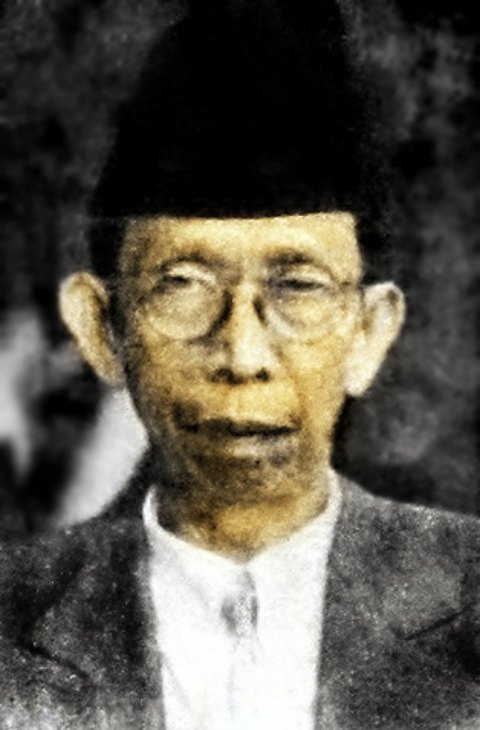
Ki Hajar Dewantara was born Raden Mas Soewardi Soerjaningrat in Yogyakarta on Thursday legi, 2 May 1889. In 1922 he took the name Ki Hajar Dewantara in place of his birth name.[9]
The founding of Taman Siswa, the school institution he established, is treated in the historical literature as a concrete expression of his educational ideas.[10] Through it he sought to replace the Western system with an education built on a national system grounded in the culture of the people among whom it operated.[11] The school is credited with widening access to education, preserving national culture and encouraging national consciousness in the colonial period and after independence.[10]
His date of birth, 2 May, is observed as Indonesia's national education day, and he is known as the father of education. His writings, varied in form and suited to the time and the questions he faced, carried an enthusiasm of struggle. His educational thought has continued in use, including in the independent campus or independent learning policy associated with Nadiem Makarim.[12]
A 2017 qualitative study of Taman Siswa collected documents, observations, interviews and open-ended questions and concluded that the ideas of Ki Hajar Dewantara were beyond his time and generation. That study attributes the stagnation of Taman Siswa as a national movement in education mainly to management problems rather than to any obsolescence of its philosophical foundation.[13]
History
The Taman Siswa school and its principles
Ki Hadjar Dewantara founded the Taman Siswa schools, whose name means Garden of Students, in 1922.[14] Baidowi, Ahyat and Noer (2026) describe Taman Siswa as a nationalist educator's answer to schooling under colonial rule.[15] Ten years after the founding, the Dutch colonial government declared them Wilde Scholen, or Wild Schools, for operating without government certification. Taman Siswa educators resisted the designation and eventually secured repeal of the ordinance, an act of rebellion against colonization.[14]
Baidowi, Ahyat and Noer (2026) set out the institution's principles in a literature review of Dewantara's thought. These include the Among system, a method of teaching in which the teacher guides rather than commands, and the concept of Tri Pusat Pendidikan, the three centres of education. A further motto, given in Javanese in the same review, sets out the teacher's stance in front of, among and behind students. The founders held that the school should shape students who are independent, creative, educated and responsible.[15]
Irwin (2021) reports that long after independence Taman Siswa kept working toward decolonization, with student self-governance and local wisdom as two of its core pedagogies. These two core pedagogies of Dewantara are practised daily in the system's music classrooms.[14] Dewantara also sought to balance Western cultural influence with values drawn from Javanese culture, which he described as more family-oriented, independent, morally serious and in harmony with nature. He developed many Javanese teachings through slogans and statements grounded in religious values, so that individualistic, rationalistic and intellectualist elements of Western culture could be offset naturally.[16]
Ki Hadi Sukatno composed a Sendratari, a dance drama combining dance, music and drama, titled Mouse Deer Stealing Cucumbers, and used it to put the Among system into practice. The Kancil, or mouse deer, stories used in this way carry moral values, and the school held that educational materials must change as the child's nature develops. Teachers were expected to sort the stories so that each matched the basic or secondary level.[17]
Traditional children's games also served as arts education at Taman Muda Pawiyatan Taman Siswa Yogyakarta. In Jamuran and Cublak-cublak Suweng, students practised sensitivity through movement, song and rhythm, and creativity through inventing movements and expressions at the request of a fellow player. Appreciation appeared in the rewards built into play, given while singing, dancing and showing facial expression whether a player won or lost. Productivity appeared when players devised pleasant penalties for those who lost or broke the rules.[18]
Main ideas
The three-centre view of education
Tri Pusat Pendidikan, the three centres of education, is Ki Hajar Dewantara's name for the three settings in which a child is educated: the family, the school and the community.[19][20][21] The family comes first in his account, because it is the earliest environment in which a child's character takes shape. Dewantara treated ethical education as practice rather than theory: children learn good conduct by living it day by day, not by being told the difference between good and bad.[22] The family centre works through example, encouragement and guidance from parents.[23]
The school and the community complete the set, and the three are meant to operate as one integrated basis for managing education. Their combined purpose is a student who is of good character, competent and able to adapt.[19] Dewantara's writings treat the three centres as a way of protecting children, the nation's assets, by passing on cultural traditions and values suited to national life. He also argued that a boarding school, where family, school and community life sit in one place, is the most ideal arrangement for forming character, intellect and social manners.[20] The environment's influence on character is direct: it can shape qualities such as leadership, mutual help and responsibility.[24]
The idea has been taken up as a framework for running schools, not only as a teaching principle. Read that way, it carries managerial implications: governance of the educational ecosystem, coordination across institutions, resourcing and collaborative and creative leadership. One analysis describes the problem it answers as a crisis in the educational ecosystem, marked by a broken link in the working relationship among family, school and community.[19] A separate line of work treats the weakening role of family education, alongside the influence of digital culture, as a source of the current crisis in children's character. That study proposes joining the family-centred reading of Tri Pusat Pendidikan with religious teaching about fitrah, the idea that every child is born with an inherent goodness that parents must nurture.[23]
The three-centre view is one part of Dewantara's thought, alongside the leadership trilogy of ing ngarsa sung tuladha, ing madya mangun karsa and tut wuri handayani.[21][23] His educational and teaching principles rest on five dharmas: humanity, the nature of life, nationality, culture and independence or freedom. The three centres have been compared with the educational thought of Hinduism, which likewise addresses stages of education for children, the aguron-guron relation between teacher and pupil, and the forming of character.[21]
The among system and the teacher as pamong
The among system is Ki Hajar Dewantara's name for an approach in which the teacher guides rather than commands, and in which the relationship between teacher and pupil is built on care.[25][26] In this system the teacher is called a pamong, a word that carries the sense of one who cares for and accompanies a child, and the pamong teaches through what the literature calls the three mong: asah, asih and asuh. The pamong's task is to help students develop the potential and talents they already carry, not to fill them with material decided in advance.[25] A 2025 literature study describes the among system as education based on love and care, and it describes educators under this system as mentors, motivators and role models.[26]
A 2016 content analysis of Dewantara's newspaper articles from 1920 to 1960 found that his early twentieth-century writing had already reached the contextual and collaborative principles that now underlie student-centred learning. Among the initiatives the analysis identifies is an emphasis on equity between learners and teachers, set against the strongly hierarchical social culture of Indonesia at the time. The analysis also describes observation-based learning meant to build self-direction: students reflect on their own mistakes, think independently, take responsibility, and are offered role models and chances to take an active part in their own learning.[7]
A 2024 interpretive review places the system within constructivist learning theory, the view that learners build knowledge rather than receive it whole. In that reading the student sits at the centre of the learning process while the teacher acts as a guide who gives the child room to develop potential, creativity, talents and interests in line with the child's own nature. The review adds a qualification: students are not left entirely free to hunt for information on their own, and guidance from teachers and parents helps identify what kind of knowledge a child needs at a given stage of development.[27]
The among system has been documented in practice from kindergarten upward.[28][29] A 2023 qualitative study in two kindergartens, TK Pembina Kayuagung and TK Pertiwi Kayuagung, traced how the system is carried out with young children. Activities there aim at developing the senses through playing, singing, dancing and storytelling, and the process uses a cultural approach: traditional games, traditional songs, stories, and natural materials as learning media. The study reports that the Dewantara educational concept is always applicable, and it also names barriers to and enablers of adopting the idea in the classroom.[28] A 2020 case study at TK Taman Indria in Malang City described the system as a whole in the teaching of character, using the methods of habit, example, storytelling and conversation. The characters observed in children there included politeness, responsibility, discipline, orderliness and acceptance of rules, and the kindergarten used various strategies to preserve these values and to handle obstacles to doing so.[29]
The among system has also been read against other educational traditions. A 2024 literature review compares it with Christian education and finds both differences and similarities. In the among system the teacher directs students toward the potential and talents within themselves, while in Christian education the teacher is a guide who leads students to know, admire and glorify God and to come to Christ.[25]
Ing ngarsa sung tuladha and the leadership trilogy
Ki Hajar Dewantara's leadership trilogy consists of three Javanese phrases that describe where a teacher or leader should stand in relation to learners.[30][4] The first, ing ngarsa sung tuladha, places the teacher in front as a model or example. The second, ing madya mangun karsa, places the teacher in the middle to build intention and will in learners. The third, tut wuri handayani, places the teacher behind, giving encouragement and motivation. A 2019 reading of the philosophy describes it as an educational concept that applies local wisdom within the harsh conditions of colonial life.[4]
That 2019 study interpreted the three phrases through the hermeneutics of Friedrich Schleiermacher, a method of reading that combines grammatical interpretation of a text's language with psychological interpretation of its author's life and setting. On this reading, the trilogy states a single requirement in three positions: both teacher and leader should be in front performing a model, in the middle building intention, and behind motivating learners and the public.[4]
Later writers have treated the trilogy as a general framework for leadership rather than only for classroom teaching.[8][6] A 2022 qualitative study analyzed seven articles from national journals by content analysis and described cendekia leadership, a term for scholarly or learned leadership, in the light of Dewantara's character. In that account, ing ngarsa sung tuladha means a leader behaves and speaks well, is disciplined, serves as a model for everyone, and acts as innovator, protector, educator, honest person, and wise person who serves wholeheartedly. Ing madya mangun karsa means helping others, motivating and encouraging hard work, inspiring, showing empathy and sympathy, and collaborating. Tut wuri handayani means encouraging subordinates to reach the forefront of achievement, to be strong in facing obstacles, smart, creative, just, free to express themselves, and independent, effective and efficient at work.[8]
A 2024 survey study tested the trilogy as a model for digital leadership at Tamansiswa College, using purposive sampling to reach 116 respondents, a five-option Likert questionnaire, and structural equation model analysis with SmartPLS version 3 software. That study concluded the trilogy is highly suitable for school principals in their digital leadership practices with principals and teachers. It treated ing ngarsa sung tuladha as particularly relevant to modern digital leadership, on the reasoning that leaders who model the practice may motivate their people, establish trust, and find their way through the complexities of the digital era. It read ing madya mangun karsa as a principal encouraging collaboration and co-creation, and tut wuri handayani as cultivating a culture of autonomous learning in which team members pursue knowledge, acquire new abilities and adjust to a changing digital environment.[6]
A 2024 deconstructive study of leadership accountability in universities influenced by neoliberal values, meaning the treatment of higher education on market terms, applied the trilogy to propose an alternative. The resulting concept of accountability emphasizes moral, spiritual and sincere compassion, and treats learning leadership accountability as involving not only cognitive understanding but also moral character, emotional intelligence and sincere intentions.[31]
The trilogy has also been read inside religious education, where a 2025 library study reported that applying the teacher trilogy significantly influenced the formation of students' religious character, especially in the discipline of worship, spiritual attitude and social conduct.[30] A 2023 literature review framed the trilogy as a holistic view of the teacher's responsibility, arguing that teachers guide and direct students in all aspects of life rather than only teaching knowledge.[32] A 2023 study of Christian religious education teachers drew on Dewantara's philosophy of the teacher as a trusted and imitable example, and held that such teachers must lead by example in their teaching.[33]
Niteni, nirokke and nambahi in creativity
Ki Hajar Dewantara described a three-step sequence for learning that he called Tri-N, from niteni, nirokke and nambahi, which translate from Javanese as pay attention, imitate and add. A 2020 review of his writings, using a descriptive qualitative method of literature study, found that the three steps together form a process in which creativity takes shape. Niteni is the start of the process, the point at which an idea first appears. Nirokke, the act of imitating, follows as a setting in which skill is sharpened by adding meaning to examples that already exist. Nambahi, the final stage, is where a creative product visibly answers a problem by using various means.[34]
Arts education holds a defined place in Dewantara's scheme: the arts sit within the Tamansiswa Pancadharma circle, a set of principles guiding the institution's schooling. A 2024 account of arts education in his perspective states that art used as an educational tool in Tamansiswa is meant to move children's souls toward beauty, understood together with nobleness and subtlety, and so suited to civilised and cultured human life. That account adds that art should rest on national life in a broad sense and should not oppose humanity or the law. The same account reports that learning activities developing children's senses were applied at Taman Indria Ibu Pawiyatan Yogyakarta and Taman Indria Jakarta, and that the cultural approach taken by the teacher is a distinctive feature of his concept for early childhood.[35]
The Sariswara method is a way of educating children that combines 3 lessons at once: song, literature and story. A 2020 case study at the Sariswara Club Yogyakarta found that this combination means education does not focus on cognitive aspects alone but involves affective and psychomotor aspects at the same time. The method is applied through children's play songs, known as tembang dolanan anak, and the study identified lessons in individual freedom of soul carried within it, including harmony, family, deliberation, tolerance, togetherness, democracy, discipline and responsibility. Supporting factors named in the study were enjoyable learning, messages children receive easily, and a loving pamong, the term for a teacher-guide in this tradition. Obstacles were a limited number of human resources, students who had difficulty loving the culture, especially the Javanese language, and institutions, whether Tamansiswa or government bodies, that gave the movement little support.[36]
The nature and aims of education
For Ki Hadjar Dewantara, education was not the same thing as instruction. Teaching, in his account, is one part of education: it supplies students with knowledge. Education itself he described as an activity that guides the growth of children. Both were understood as efforts to prepare students to face the various aspects of life well. An educator, on this view, cannot change the basic nature of a student, but can guide that nature so that good qualities come forward and poor ones are covered.[37] A 2021 comparative study of his philosophy and colonial schooling notes that Dewantara, influenced by Tagore, Montessori and Fröbel, stressed local wisdom and values that colonial schools had ignored.[38]
The widest statement of the aim is cultural: the essence of education, Dewantara held, is to incorporate culture into the child and to place the child into that culture, so that children become human beings.[2] Samho (2015) reads Dewantara as holding that education works to free a person in both body and spirit. Every activity in an educational institution should therefore be a process of humanisation, meaning growth that is at once physical, mental, spiritual, individual, social, cultural and natural.[39] Widiawati, Nirwana and Sukma (2024) conclude from their review that his concept gives weight to building character and independence, and to keeping intellectual and moral growth in balance.[40] A 2026 literature review finds that his thought gives moral education a central place, carried out through school lessons, through the example set by parents and educators, and through daily activities and experience.[41]
The ends he set are stated as a balanced growth of the person's character, covering the intellectual, spiritual, social, emotional and physical dimensions. In his terms, education is an effort to advance good character, meaning inner strength and character, together with the mind and the body. A person educated in this way, the same account holds, may respect the rights of other people and could develop concern for the natural world.[39] Learning, described from his perspective in a 2025 review, is an activity that gives knowledge so that a person may reach the highest possible safety and happiness, put another way, the formation of a free human being. That review lists the broad destinations of learning in his writing: a life filled with feeling, a strong social sense, knightly values, and the freeing of human beings.[42]
Education is also an effort to free oneself while continuing the culture and outlook of one generation into the next. This relay of education and culture across generations, in a 2022 account of his thought, gives birth to a national character. The same account holds that education is not centred only on knowledge and skills but also on forming children's character, a task shared by the family, the school and the community as one educational environment.[43]
Suparlan (2016) reads the philosophy as a meeting of progressivism and essentialism. Progressivism trusts the child's natural ability to solve problems when given the widest freedom of thought. Essentialism treats long-tested culture as the base from which the child reaches the goal. In that reading he drew on native Indonesian culture while taking Western values selectively, through what is called the Trikon theory: continuity, convergence and concentric.[2]
Humanism, ethics and the whole person
Dewantara's humanistic view of the person begins with a claim about what education is for: it is the foundation for nurturing and touching each soul, which then becomes a compassionate one. Kristanto, Faritz Bahan and Nache (2025) describe learning as the means by which students are helped to find their own identities and to develop their potential as far as they can. Education that attends only to intellectual achievement risks detaching learners from their communities. In Indonesia, the same authors write, thinking skills have come first while emotional, creative and character growth have often drawn little attention. They read the continuing high rate of student violence as a sign of a deeper crisis, one caused not only by weak academic results but by the lack of an education that forms the whole person.[44] A comparative study of Dewantara and Al-Ghazali treats education as the effort to build human beings as whole persons.[45]
Dewantara's humanistic concept centers on human freedom to express potential and abilities, while Al-Ghazali's religious humanistic education aims at attaining the pleasure of Allah SWT.[45] Marzuki and Khanifah (2016) describe the Among system, Dewantara's educational approach, as an effort to bring forward students' morality, their thinking, and their physical side. A comparison of Dewantara with Rabindranath Tagore finds that Tagore saw education as based on freedom and love, and that the two thinkers share a view of education and of an ideal system of schooling.[3] A historical study of the same pair reports that both opposed colonial education systems that were intellectual and hegemonic, and that both held education to be a power, a guidance, that guides the growth of children. Supardi, Kuntoro and Dwiningrum (2018) trace Tagore's principles in an institution whose education was in communion with nature, free, self-expressive, and internationalist. They trace Dewantara's in the principles of Taman Siswa and its panca dharma.[46]
Sumiati, Kartimi and Rahtikawati (2025) present organic education, which they associate with Dewantara, as a way to bring humans back into harmony with the universe. Organic education as Dewantara pioneered it is presented as an alternative that can harmonize the relationship between humans and nature, and its approach is more holistic, involving not only intellectual development but also ecological and spiritual awareness. On this account humans are part of a larger system, the universe, and depend on one another. Sumiati, Kartimi and Rahtikawati (2025) propose putting ecological, social and spiritual values into the curriculum to form a generation more aware of, and more responsible for, the sustainability of life on earth. The same study notes that technology has made human life easier while straining the relationship between humans and nature and contributing to mental health problems.[47]
Putri (2020) compares the character education paradigms of Paulo Freire and Ki Hajar Dewantara, two figures the paper treats as giving close attention to an education able to answer new challenges. Putri (2020) describes Freire's solution as leaving magical and naive education for a critical education that frees humans and leads to progressive change. Dewantara's is a trilogi, a three-part scheme, in which family, school and public each take part in forming the character and mentality of children through the among system. The comparison was made by an analytic comparative method that looks for similarities and differences in the two bodies of thought.[48]
Applied to language teaching, Dewantara's humanistic concept is held to require that learners be placed as independent individuals with the potential to be creative and to develop. Arabic language materials tend toward a behavioristic structure that treats learners as objects into which knowledge of grammar is poured, yet the choice of method can still provide a space of liberation in which learners grow independently while learning and mastering the language. The methods named as humanistic in that study are Active Learning, Cooperative Learning, Contextual Teaching Learning and quantum learning, which are described as liberating and as standing on an essential footing closely relevant to Dewantara's humanistic thought.[49]
In Ki Hajar Dewantara's philosophy, education is described as a process of humanization, the process that leads learners to understand the reality of life and that treats human beings as human beings.[50] Education in this reading is a transformation in humans toward optimal self-actualization, meaning the full development of a person's capacities. It is also described as a form of freedom of thought for all humans, a release from a life that intimidates and seems to exploit.[51] Humanization as an educational goal is never completed, so the study of humanistic education always finds its context.[50]
The whole-person claim has a specific content in Dewantara's philosophy: independent education that balances physical, intellectual, spiritual, and social aspects, grounded in Panca Dharma and Tripusat Pendidikan. A systematic review of 9 selected articles from indexed journals, covering literature from 2015 to 2025, describes this philosophy as student-centered and as sharing similarities with essentialism while remaining dynamic.[52]
Character education in theory and practice
Almuzani, Handoko and Maksudin (2021) report that for Dewantara character education studies what is good and bad in human attitudes, so that pupils can act on the difference in daily life, and that he oriented it toward a liberating science.[53] The Indonesian term budi pekerti names this same work, and a 2018 literature review describes government efforts against a moral crisis as character education or budi pekerti education.[54] A 2021 comparison of Dewantara with the American educator Thomas Lickona found that both treat character formation as the shared task of every social element, across age groups and professional groups, and as a target of the school's educational process.[55] A 2022 comparison with Abdullah Nasih Ulwan reported different biographies and works for the two figures but the same way of thinking about character education.[56] A 2022 study of Dewantara and Hasyim Asy'ari described his concept as guidance and direction for pupils' growth according to their nature, aimed at their highest safety and happiness.[57]
Dewantara's account of how character forms runs through knowing, feeling and doing: understanding has to be planted, something has to be felt, and only then is it carried out in real behavior.[58] A 2019 study of his method for Islamic education gives the same sequence as ngerti, ngrasa and nglakoni, and adds among and ngemong, the Javanese terms for the teacher's caring supervision of pupils. The same study describes his approach as joining morality, intellect and spirituality, three elements it calls circularly applicable in the Islamic pattern of believing, understanding and practicing.[59] A 2023 thesis on his perspective names the among method, the tricenter of education and education as a cultural process among his concepts, and says the character building he directs proceeds by good example and by making habits of good acts.[60] A comparison with the Ministry of Education and Culture's strengthening program lists discipline, hard work, independence, social care and responsibility as the habits Dewantara's view stresses, with love of country, friendliness and social care as its exemplary traits.[61] A 2021 reflection on his thought sets out five basic aspects of character: smart, excellence, soft-skill, perfect and global character education.[62]
Dewantara placed the work of character in three basic instruments, the family, the school (perguruan) and the youth movement, according to a 2019 comparison with the philosopher Driyarkara.[63] A 2020 comparison with Lickona describes his route to educational goals as the Education Tripusat, the three centers, and a 2009 study says his among system makes educators role models and mentors, so that parents and teachers must behave well in front of pupils.[58][64] The 2023 thesis likewise holds that environment and place matter greatly in shaping a child's character, producing a spirit of leadership and mutual help and a love of the child's own culture.[60] A comparison with Imam Zarkasyi found that Dewantara's concept was implemented in the 2013 curriculum through the cognitive, affective and psychomotor domains. The same study judged Zarkasyi's concept the more relevant of the two to that curriculum, because it rests on religious teaching and uses habituation as the main method.[53]
The intervention combined problem-based learning with Dewantara's ideas, and the study concludes that the combination may improve character development compared with traditional education.[65] At SMA Negeri 10 Berau, a convergent mixed-methods study surveyed all 26 students of class X-B and interviewed seven of them about Dewantara's values in character education. Overall perception fell in the good category at an average of 81.2%, highest on teachers as motivators at 82.5% and lowest on teachers as role models at 79.8%, a gap the study reads as a need for structured professional development on exemplary modeling. Interviewees reported feeling motivated, treated as unique individuals and developing in discipline, responsibility and cooperation.[66]
Much of the literature on Dewantara's character thought is library research rather than classroom evidence, including the 2018 review, the 2009 study, the 2020 comparison with Lickona, the 2021 comparisons with Lickona and with Zarkasyi, and the 2023 thesis.[54][64][58][55][53][60] A 2022 study notes that the affective domain has not been a priority among the cognitive, affective and psychomotor domains in school teaching and learning, which is the problem the character literature addresses.[56] The 2021 reflection argues that his character education remains relevant to Indonesian curricula, especially the independent learning perspective, through religiosity, ethics, social life, culture and universality.[62] The 2009 study calls his concept applicable for building and maintaining character education up to the present.[64]
Character education sits at the centre of Ki Hajar Dewantara's philosophy of education, and the term he used for it is budi pekerti.[67] Budi pekerti names the growth of a child's inner life, described in one reading of his work as feeling, thought and spirit together with the body, and education for him was a deliberate effort to advance that growth through teaching, example and habituation. The same effort, in his account, should proceed without orders and without coercion.[1] Another analysis describes his concept of character education as an approach to the soul of the learner, without coercion and grounded in the learner's own nature, with materials matched to the student's age level.[68]
Research
The colonial school and the case for change
A 2024 comparison with Ivan Illich's idea of deschooling, the radical removal of the formal school system, finds that both thinkers criticised formal education for failing to meet society's needs but proposed different answers. Where Illich called for a fundamental shift away from schools, Dewantara proposed a more integrated and human-centred system built on the Tri Centre of Education and the Among System, with family, community and school working together.[69]
In practice
Teaching at the right level and vocational learning
A study of his learning concept describes learners as the centre of the activity, with the educator guiding, directing and motivating them from a basis of affection. The same study holds that learners should be developed in line with their talents and interests, which rest on their existing potential of idea, feeling and intention.[70] Dewantara seeks to draw out each individual's potential, educating the head, the heart and the hand, while Bloom's approach centres on behaviourism and the cognitive aspect.[71]
One analysis argues that the Merdeka Curriculum restores an educational paradigm consistent with Dewantara's philosophy, which treats meeting students' needs as the main goal of education. That analysis locates the philosophy's implementation in the learning outcomes of vocational education, in general subject matters and in vocational subject matters alike. It reads the mottoes Ing Ngarso Sung Tulodho, Ing Madya Mbangun Karso and Tut Wuri Handayani as working through the pamong and among systems in student-centred learning, so that creativity, a sense of initiative and character stay in harmony.[72]
Accounting education has been examined through Dewantara's writings in two studies with different designs.[73][74] A qualitative case study at one economics faculty found that the reality of accounting education there did not reflect the values of Dewantara's idealistic thinking, and it proposed a formulation of the purpose of accounting education built on spiritual, moral and independence values.[73]
Internships, the placements in which students work under supervision outside the classroom, have been read through the same philosophy. A qualitative case study in Indonesia drew on interviews with students taking part in an internship programme, on national higher education policy for the Kampus Merdeka programmes, and on Dewantara's book Toward an Independent Man as its primary source. It concludes that his philosophy of education can be relevant to students while they carry out an internship, and that the teaching can be integrated into the orientation activities that institutions run before placements begin.[75]
Arts education enters the account through the claim that Dewantara integrates art and cultural aspects into learning, a point the comparison with Bloom sets against a purely cognitive emphasis. The same comparison describes his approach as drawing on the whole social and cultural setting in which the learner interacts with the environment, through an among system of care and dedication based on love.[71]
What this looks like when you study
In a quasi-experimental study, 84 undergraduate students were randomly assigned to an experimental group of 42 and a control group of 42. The experimental group worked with a problem-based learning model that had Ki Hajar Dewantara's ideas built into it. Before the intervention, the control group mean character score was 49.40 with a standard deviation of 13.05. The experimental group pretest mean was 51.45 with a standard deviation of 16.05. After the intervention, the experimental group mean was 92.17 with a standard deviation of 17.11. An analysis of covariance (a statistical adjustment for pretest differences) confirmed the effect with F = 64.110 and p < 0.001.[65]
A qualitative case study at TK Taman Indria in Malang City described how the Among System was applied to character education. Teachers there used methods of habit, exemplary conduct, storytelling and conversation. The study also reported strategies for preserving these values and for dealing with obstacles to them.[29]
A qualitative study interviewed 20 primary and secondary school teachers across various regions about the Independent Learning Curriculum. Teachers generally appreciated Dewantara's philosophy but reported limited resources and insufficient professional development opportunities. Teachers in the study also said that his principles helped them take a broader view of what education should develop in students.[76]
A survey of 116 people used a five-option Likert questionnaire and structural equation model (a method for testing how variables relate) to study digital leadership. The three parts of the leadership trilogy significantly shaped the leadership construct, with Ing ngarsa sung tuladha at 0.917, Tut wuri handayani at 0.898 and Ing madya mangun karsa at 0.868. Ki Hajar Dewantara's leadership had an estimated coefficient of 0.850 on digital leadership, and the R-square value was 0.723. The authors recommend that a school principal set an example in the digital domain, encourage collaboration and co-creation, and cultivate a culture of autonomous learning.[6] When you study, follow the learners to their utmost potential by reflecting on your mistakes and becoming an independent thinker, as the Tut Wuri Handayani principle recommends.[7]
Later developments
Merdeka belajar and the independent curriculum
A second analysis reaches the same conclusion through a philosophical and pedagogical reading, finding that the curriculum and Dewantara's conception of education are related and mutually consistent.[5] A 2026 literature review, drawing on Dewantara's own writings and official curriculum documents, describes the curriculum as the actualization of his educational values in current policy. That review stresses his insistence that students develop without coercion, and that they can grow only when they feel free in body and mind.[77]
A 2025 interview study of 20 primary and secondary school teachers in various regions found that teachers generally appreciated Dewantara's philosophy and saw his principles producing a more holistic approach to education. The same teachers reported limited resources and insufficient professional development opportunities as obstacles to putting the philosophy into practice. The study concludes that teachers need more structured support and resources before the philosophy can be fully implemented within the curriculum.[76]
A 2025 review notes that research directly connecting Dewantara's educational concepts with the implementation of the Merdeka curriculum remains limited, even though each subject has been studied separately. The same review identifies educators' readiness and the adaptation of teaching methods that emphasize freedom of thought as continuing challenges. It finds the leadership trilogy of ing ngarsa sung tuladha, ing madya mangun karso and tut wuri handayani, together with his concept of independent learning, highly relevant to how the curriculum is carried out.[78] An earlier 2021 article had already treated the freedom-to-learn idea as a manifesto drawn from his philosophy and proposed it as a new formula for teaching Islamic religious education in schools.[79] A 2023 article reads the policy as one that liberates teachers and students in deciding how learning is organized, and as an effort to make education enjoyable for both groups after a period in which schooling stressed knowledge over skills.[80]
Digital tools and artificial intelligence
One line of work treats the digital age as a new set of challenges that education must equip people to face, alongside personal development and care for the environment. A 2025 library study argues that Dewantara's thought places education in three roles: a means of personal development and self-protection, a vehicle for nationalism and for meeting contemporary challenges such as the digital age, and a platform for environmental responsibility.[81] A 2026 conceptual analysis frames the same question through Society 5.0, a term for a digital society that keeps human welfare at its centre, and asks how education should prepare people with technological competence together with ethical awareness, creativity, independence and adaptability.[82]
Microlearning, the use of short, focused and flexible learning units, has been examined as a digital format that might carry the among system into practice. A 2026 library study compared the two by content analysis, philosophical interpretation and conceptual comparison, drawing on Dewantara's original works and on scholarly writing about microlearning and mathematics education. The study reports that the among principles, which stress guidance based on the learner's nature and the demands of the times, line up conceptually with microlearning's learner-centred, flexible and contextual character. In mathematics, the study suggests, small structured units may support gradual conceptual understanding, and microlearning becomes educationally grounded when it is designed beyond purely technical considerations.[83]
A 2024 literature review argues that character education in Indonesia has not reflected the ethical cultural values of the nation and highlights the difficulty of integrating moral principles as digitalisation develops. The review reads Dewantara's three-part motto as a basis for holistic individual development and as a route to a moral and ethical society in the present.[84] A 2023 study asks how far the motto can be integrated into technology-based education so that such education still respects the values and principles Dewantara set out.[85] A 2024 narrative review of 21st century learning likewise connects Dewantara's question of how to become a complete human being with the shift from teacher-centred to student-centred instruction.[86]
The philosophy in the Merdeka curriculum
Indonesian scholars have compared the Merdeka Curriculum (the "Independent Curriculum," a policy that gives schools and teachers room to design learning around students' needs and potential) with the educational philosophy of Ki Hajar Dewantara.[87][88] Walad, Suastra, Nasri and Manap (2024) call for holistic evaluation to keep implementation consistent with the philosophical vision, so as to create individuals with character, national identity and independence.[89] A separate analysis of the curriculum's philosophical basis named freedom to learn, diversity, equality and student-centred learning among its founding principles, and found that progressivism, perennialism, essentialism, constructivism and Dewantara's thought all shape it.[90]
Several reviews treat the curriculum's central slogan, freedom to learn, as a restatement of Dewantara's idea that education is guidance rather than dictation.[91][92] In this reading, students act actively and independently while teachers serve as guides, facilitators and motivators, and education is understood as an effort to cultivate the natural potential each child already holds.[93][92] Pratiwi and Slamet (2024) list freedom to learn, character education and differentiated learning (teaching planned around differences among students) among the curriculum's innovations, and match differentiated learning to his pedagogical vision. The same review argued that education should be seen not only as a schooling initiative but as a social system, which it found consistent with Dewantara's philosophy at Taman Siswa.[88] A 2025 literature review using a hermeneutic-philosophical approach (close interpretation of texts) reached a similar conclusion. Khoir, Widyaningsih and Muharromah (2025) hold that the curriculum fits Dewantara's concept because it puts individual uniqueness first and lets potential develop independently, with teachers and parents keeping watch.[92]
A comparative study of Dewantara and the Reggio Emilia approach placed both within constructivism and found that both give children chances to learn through games and art, with children learning through play in an engaging environment. The two differ in emphasis: Reggio Emilia speaks of an "image of the child" as capable and needing minimal interruption from adults, while Dewantara's Among system gives the teacher a significant role as a role model. That study also described the concept of independent learning for young children as intended to reduce the decline in learning performance after COVID-19, with a curriculum contextual enough to fit different school environments.[94]
Yaqin, Samad and Sabaruddin (2024) used observation, interviews and documentation at Muhammadiyah Al Mujahidin Senior High School in Wonosari. They found the school had carried out the independent learning curriculum very well and that students and staff received it well, partly because its activity programmes already resembled the curriculum's system.[91] A literature review of implementation argued that a Dewantara-based reading of the curriculum helps increase students' creativity, independence and active participation, and that applying local cultural values strengthens students' identity and character.[87] A critical study of the curriculum's philosophical schools found that essentialism dominates the content of learning materials and that progressivism fills the process of character building through the Pancasila student profile. Constructionism dominates the structure and system of school stakeholders, while perennialism serves only as a stronghold of cultural values.[95] A textual study of the philosophical foundations of the 2022 draft law on the national education system, read against Dewantara's views, concluded that the draft contained fundamental philosophical problems that could conflict with Islamic education in Indonesia.[96]
Teachers, teaching level and the digital age
In Dewantara's account, a teacher does not manufacture a student's development, because each stage of growth lies beyond the teacher's control or will. Faradila, Priantari and Qamariyah (2023) describe education instead as guidance that draws out each student's own potential, aiming at the greatest well-being and happiness a person can reach as a member of society.[97] Dewantara's Tri-N, the three steps of niteni (paying attention), nirokke (imitating) and nambahi (adding), has been proposed as a basis for developing teacher professionalism, with the three steps described as fitting the growth of creativity.[98]
A literature review of the Teaching at the Right Level approach, which groups students for instruction by their current skill rather than by age or grade, found alignment between Dewantara's philosophy and the approach as used at the senior high school level. That review concluded that implementing the approach in schools can be regarded as a manifestation of his thinking. The Indonesian government's newer educational paradigm was described in the same review as giving teachers flexibility in designing classroom learning, a flexibility the review found consistent with his philosophy.[97]
Suparlan (2025) reviewed scholarly works on Dewantara's thought and its application in contemporary education, and Kurniawan, Wibawa and Anugrah (2021) set his concepts of the Three Education Centers and the Among System beside the development of artificial intelligence.[99][100] Kurniawan, Wibawa and Anugrah (2021) argue that niteni, nirokke and nambahi can be put to work in artificial intelligence during learning. They add that his philosophical principles can set ethical limits on such systems, so that they do not conflict with humanity.[100] A classroom study of rhythmic learning that combined the 3N concept, rhythm syllables, assessment for learning and video sharing reported that students were more motivated, mastered the material well, and could collaborate, create and communicate their results.[101] A 2022 analysis of the mover teacher program, introduced in early 2021 to encourage innovative and creative teaching with educational technology, described the program's teacher concept as a unification of Dewantara's three educational principles.[102]
Criticism
Comparisons, criticisms and open questions
Supriyanti (2020) compares Dewantara with K.H.A. Wahid Hasyim on the questions of what education is, who educates, why, when and where education takes place, and how it is carried out. Supriyanti (2020) contrasts the two thinkers on who counts as an educator: for K.H.A. Wahid Hasyim an educator must know religion as well as subject matter, while for Ki Hajar Dewantara educating is the process of humanizing humanity, freeing people in their inner life through autonomy of thinking and deciding, dignity and a democratic outlook. Wahid Hasyim, the Nahdlatul Ulama figure born in Jombang in 1914, and finds agreement that education is a conscious effort to form people who are knowledgeable, of good character and religious. The same study records a difference in the preparation expected of teachers: Wahid Hasyim required mastery of religious science, while Dewantara described educating as the process of humanizing humanity.[103]
Sekolah Alam, the Indonesian network of nature schools, has been read through Dewantara's ideas under the label progressive humanism. A synthesis of 12 journal articles from Google Scholar found shared ground in following children's natural inclinations, humanizing the person, teaching moral values, leadership, logical thinking and entrepreneurship, and involving community and family in a democratic, non-authoritarian setting.[104]
A historical study of the national education system finds continuity across different times, with Dewantara's system described as dynamic and continuous with national education, and with both upholding human values and non-discriminatory access.[105] A comparison with the 2013 curriculum concludes that its character education and Dewantara's ideas can both serve as starting points for restoring the quality of Indonesian education.[106] The challenges named in that case include students' changing kodrat alam and kodrat zaman, the Javanese terms for the given nature and the conditions of the age, and differing views among the three education centres.[107]
Key studies
| Year | Study | Sample | Design | Finding |
|---|---|---|---|---|
| 2016 | Claramita[7] | 30 master's students and two national experts | content analysis with focus group discussions and interviews | Dewantara's ideas reached contextual and collaborative principles, emphasizing equity between learners and teachers and observation-based learning. |
| 2016 | Marzuki & Khanifah[3] | literature review comparing Tagore and Ki Hadjar Dewantara | Ki Hadjar Dewantara developed the among system as an effort to advance students' morality, mind, and physical development. | |
| 2020 | Apriliyanti et al.[29] | TK Taman Indria Malang City | qualitative case study with interviews, observation and documents | The Among System was applied through habit, exemplary conduct, storytelling and conversation, and produced politeness, responsibility, discipline, orderliness and acceptance of rules. |
| 2020 | Ardhyantama[34] | primary and secondary sources | descriptive qualitative literature study | Niteni, nirokke and nambahi form a process in which creativity is formed, from the first idea through imitation to adding something new. |
| 2020 | Shandy & Trilisiana[36] | Sariswara Club Yogyakarta | qualitative case study | The Sariswara Method combined songs, literature and stories, and supported harmony, family, deliberation, tolerance, togetherness, democracy, discipline and responsibility. |
| 2021 | Taufikin[20] | KHD documents | literature study with content analysis | The boarding school system is the most ideal setting for the three centres of education to work together for character, intellect and social manners. |
| 2022 | Arifin & Hermawan[8] | seven national journal articles | qualitative literature study with content analysis | Ing Ngarso Sung Tuladha means behaving and speaking well as a role model; Ing Madya Mangun Karsa means motivating and collaborating; Tut Wuri Handayani means encouraging independence. |
| 2023 | Martinah[28] | TK Pembina Kayuagung and TK Pertiwi Kayuagung | qualitative study with interviews, observation and documentation | Kindergarten activities developed the senses through playing, singing, dancing and telling stories, using traditional games and natural materials. |
| 2023 | Faradila et al.[97] | literature review | literature review | Teaching at the Right Level at the senior high school level aligns with Ki Hajar Dewantara's philosophical thinking. |
| 2023 | Efendi et al.[5] | literature study of the independent curriculum and Ki Hadjar Dewantara's conception | The independent learning curriculum concept is relevant to Ki Hadjar Dewantara's conception of education. | |
| 2024 | Purbonuswanto et al.[6] | 116 people | quantitative survey with structural equation model | Ki Hajar Dewantara's leadership had an estimated coefficient of 0.850 on digital leadership, and the R-square value was 0.723. |
| 2025 | Hermawan et al.[76] | 20 primary and secondary school teachers | qualitative in-depth interviews | Teachers appreciated Dewantara's philosophy but reported limited resources and insufficient professional development. |
| 2025 | Albin[78] | primary and secondary sources | qualitative literature review with descriptive-critical analysis | Albin (2025) reports that the Taman Siswa guiding phrases ing ngarso sung tulodo, ing madyo mangun karso and tut wuri handayani, together with Dewantara's concept of independent learning, align closely with how the Merdeka Curriculum is carried out. |
| 2026 | Susarno & Arifin[65] | 84 undergraduate students | quasi-experimental randomized pretest-posttest control group | The experimental group's mean character score rose to 92.17 (SD = 17.11) versus 60.71 (SD = 20.02) in the control group, with F = 64.110 and p < 0.001. |
See also
References
- RAHAYUNINGSIH, F. (2022). Internalisasi filosofi pendidikan ki hajar dewantara dalam mewujudkan profil pelajar pancasila. SOCIAL : Jurnal Inovasi Pendidikan IPS, 1(3), 177-187. doi:10.51878/social.v1i3.925
- Suparlan, H. (2016). Filsafat pendidikan ki hadjar dewantara dan sumbangannya bagi pendidikan indonesia. Jurnal Filsafat, 25(1), 56. doi:10.22146/jf.12614
- Marzuki, M., & Khanifah, S. (2016). Pendidikan ideal perspektif Tagore dan Ki Hajar Dewantara dalam pembentukan karakter peserta didik. Jurnal Civics: Media Kajian Kewarganegaraan, 13(2), 172-181. doi:10.21831/civics.v13i2.12740
- Darmawan, I. P. A., & Sujoko, E. (2019). Understanding Ki Hadjar Dewantara’s educational philosophy. International Journal of Humanities and Innovation (IJHI), 2(3), 65-68. doi:10.33750/ijhi.v2i3.42
- Efendi, P. M., Tatang Muhtar, & Yusuf Tri Herlambang (2023). Relevansi Kurikulum Merdeka Dengan Konsepsi Ki Hadjar Dewantara: Studi Kritis Dalam Perspektif Filosofis-Pedagogis. Jurnal Elementaria Edukasia, 6(2), 548-561. doi:10.31949/jee.v6i2.5487
- Purbonuswanto, W., Sutama, S., Supriadi, D., Adnan, M. B., & Waluyo, M. (2024). Transforming Educational Leadership: Digital Applications of Ki Hajar Dewantara’s Leadership Principles. Indonesian Journal on Learning and Advanced Education (IJOLAE), 422-437. doi:10.23917/ijolae.v6i3.23839
- Claramita, M. (2016). Revealing "Tut Wuri Handayani" - A Student-Centred Learning Approach- by Ki Hajar Dewantara from The Early 20th Century: A Literature Review. Jurnal Pendidikan Kedokteran Indonesia: The Indonesian Journal of Medical Education, 5(1), 1. doi:10.22146/jpki.25295
- Arifin, A. L., & Hermawan, E. (2022). Portraying Cendekia Leadership in the Perspective of Ki Hajar Dewantara’s Trilogy. AL-ISHLAH: Jurnal Pendidikan, 14(1), 811-820. doi:10.35445/alishlah.v14i1.1821
- Suparlan, S. (2018). Pemikiran Ki Hajar Dewantara terhadap Pendidikan. FONDATIA, 2(1), 71-86. doi:10.36088/fondatia.v2i1.117
- Firdiana, L., Muchasin, F. V., Isrofuzain, I., & Khoir, M. A. (2025). Kontribusi Ki Hajar Dewantara dalam Membangun Pendidikan Nasional Indonesia. TSAQOFAH, 5(5), 4268-4280. doi:10.58578/tsaqofah.v5i5.6756
- Riska Devi (2020). Pemikiran Ki Hadjar Dewantara dan Sistem Among di Perguruan Taman Siswa Yogyakarta (1922-1945). PERIODE: Jurnal Sejarah dan Pendidikan Sejarah, 2(2), 87-99. doi:10.21009/periode.022.1
- Zulkifli Alamsah Sutanto (2026). Ki Hajar Dewantara : Pemikiran dalam Filsafat Kewarganegaraan dan Pendidikan Kewarganegaraan. RISOMA : Jurnal Riset Sosial Humaniora dan Pendidikan, 4(2), 136-146. doi:10.62383/risoma.v4i2.683
- Towaf, S. M. (2017). The National Heritage Of Ki Hadjar Dewantara In Taman Siswa About Culture-Based Education And Learning. KnE Social Sciences, 1(3), 455. doi:10.18502/kss.v1i3.768
- Irwin, G. (2021). Decolonization in “Wild Schools”: Local Music Pedagogies in Indonesia’s Taman Siswa School System. Intersections, 39(1), 93-104. doi:10.7202/1075344ar
- Baidowi, A., Ahyat, N., & Noer, M. F. (2026). Konsep sekolah rakyat dalam perspektif KI hajar dewantara. Risda: Jurnal Pemikiran dan Pendidikan Islam, 11(2). doi:10.59355/risda.v11i2.266
- Wiryokusumo, I. (2014). Ki hajar dewantara, mengurangi pengaruh barat secara kultural. Jurnal Budaya Nusantara, 1(2), 121-125. doi:10.36456/b.nusantara.vol1.no2.a412
- Sudrajat, U. (2018). Transformasi pendidikan seni di taman siswa. Jurnal Ilmiah Mimbar Demokrasi, 18(1), 46-58. doi:10.21009/jimd.v18i1.9252
- Gusyanti (2024). Esensi pendidikan seni dalam dolanan anak jamuran dan cublak-cublak suweng di taman muda pawiyatan taman siswa yogyakarta. Jurnal Pendidikan Seni dan Industri Kreatif: Sendikraf, 3(1), 60-67. doi:10.70571/psik.v3i1.117
- Atabik Zuhdi, A. (2026). Tri Pusat Pendidikan Ki Hajar Dewantara sebagai Filosofi Manajemen Pendidikan di Era Global: Ki Hajar Dewantara’s Three Pillars of Education as a Philosophy of Educational Management in the Global Era. JSSH (Jurnal Sains Sosial dan Humaniora), 62-79. doi:10.30595/jssh.v10i1.30979
- Taufikin, T. (2021). Pesantren as the Three Centers of Education Perspective of Ki Hadjar Dewantara. Dinamika Ilmu, 101-119. doi:10.21093/di.v21i1.3149
- Gede Agus Siswadi (2022). Relevansi Pemikiran Filosofis Ki Hadjar Dewantara Terhadap Sistem Pendidikan Hindu. JAPAM (Jurnal Pendidikan Agama), 1(02), 150-159. doi:10.25078/japam.v1i2.2653
- Afifah, Herman Nirwana, & Dina Sukma (2025). The Role of Family Education in the Development of Character According to Ki Hajar Dewantara. Manajia: Journal of Education and Management, 3(1), 18-28. doi:10.58355/manajia.v3i1.75
- Hadi, Y. N., Khoirun Nisa`, N. A., Baihaqy, A. B. A., Bisri, K., & Kudhori, M. (2026). Integration of Hadith-Based Fitrah Education and Ki Hajar Dewantara’s Family Education Concept for Children’s Character Building. Jurnal Kawakib, 7(1), 84-100. doi:10.24036/kwkib.v7i1.437
- Zulfiani, M., & Hidayat, F. (2024). Children’s Character Education in Axiological Perspective: Tri Center Education Ki Hajar Dewantara. International Proceedings of Nusantara Raya, 3(1), 11-14. doi:10.24090/nuraicon.v3i1.1116
- Br Tarigan, W. S., & Rahmadi, P. (2024). Peran guru sebagai pamong - among dalam pemikiran ki hadjar dewantara ditinjau dari pendidikan kristen [the role of the teacher as pamong - among in the perspective of ki hadjar dewantara viewed from christian education]. Kumpulan Artikel Ilmiah Rumpun Ekonomi dan Ilmu Sosial, 4(1), 1-15. doi:10.19166/kairos.v4i1.7765
- Ivan Riyadi, & Sri Sumarni (2025). Educational Leadership in the 21st Century: The Relevance of The Among Ki Hajar Dewantara System. Islam Transformatif : Journal of Islamic Studies, 9(1), 103-123. doi:10.30983/it.v9i1.8797
- Nalle, C., Saryanto, S., & Rejokirono, R. (2024). The Use of Constructivist Learning Theory in Ki Hadjar Dewantara System Through Tut Wuri Handayani in Merdeka Curriculum. International Journal of Engineering, Science and Information Technology, 5(1), 28-34. doi:10.52088/ijesty.v5i1.624
- Martinah, M. (2023). The Educational Concept of Ki Hajar Dewantara in Kindergarten. PPSDP International Journal of Education, 2(1), 129-141. doi:10.59175/pijed.v2i1.76
- Apriliyanti, F., Hanurawan, F., & Sobri, A. Y. (2020). Sistem Among dalam Penerapan Nilai-nilai Luhur Pendidikan Karakter Ki Hadjar Dewantara. Jurnal Pendidikan: Teori, Penelitian, dan Pengembangan, 5(8), 1048-1055. doi:10.17977/jptpp.v5i8.13866
- Maftuhatuzzulfa, & Elya Afifah Yusuf (2025). Penerapan Trilogi Guru Perspektif Ki Hadjar Dewantara Terhadap Karakter Religius Peserta Didik. Millatuna: Jurnal Studi Islam, 2(04), 135-145. doi:10.33752/mjsi.v2i04.11219
- Rahman, A., & Djamhuri, A. (2024). Deconstruction of leadership accountability of neoliberalist universities based on Ki Hajar dewantara's trilogy leadership. The International Journal of Accounting and Business Society, 32(2), 170-178. doi:10.21776/ijabs.2024.32.2.725
- Yuliantin, D., & Rahmadi, P. (2023). Trilogi pendidikan ki hajar dewantara sebagai keselarasan tanggung jawab guru kristen [ki hajar dewantara's trilogy of education as an alignment in christian teacher's responsibility]. Kumpulan Artikel Ilmiah Rumpun Ekonomi dan Ilmu Sosial, 3(1), 66-87. doi:10.19166/kairos.v3i1.6393
- Bastian, A. (2023). The Relevance of Ki Hajar Dewantara's "Being a Model" Philosophy for Christian Religious Teachers. Journal Didaskalia, 6(1), 39-47. doi:10.33856/didaskalia.v6i1.290
- Ardhyantama, V. (2020). Creativity development based on the ideas of ki hajar dewantara. Jurnal Pendidikan dan Kebudayaan, 5(1), 73-86. doi:10.24832/jpnk.v5i1.1502
- Indah Wijayanti, Herman Nirwana, & Dina Sukma (2024). Functions and Benefits of Arts Education in the Perspective of Ki Hajar Dewantara. Manajia: Journal of Education and Management, 2(4), 256-269. doi:10.58355/manajia.v2i4.74
- Shandy, H. D. A., & Trilisiana, N. (2020). Implementasi metode sariswara Ki Hadjar Dewantara dalam membangun kemerdekaan jiwa individu anak. Epistema, 1(1), 31-38. doi:10.21831/ep.v1i1.32323
- Yogyakarta State University, Yogyakarta, Indonesia, Sasti, R., ., S., & Yogyakarta State University, Yogyakarta, Indonesia (2025). Rediscovering the Basic Values of Ki Hajar Dewantara's Education for Civic Education Learning. INTERNATIONAL JOURNAL OF MULTIDISCIPLINARY RESEARCH AND ANALYSIS, 08(01). doi:10.47191/ijmra/v8-i01-14
- Ferary, D. (2021). On Ki Hadjar Dewantara’s Philosophy of Education. Nordic Journal of Comparative and International Education (NJCIE), 5(2), 65-78. doi:10.7577/njcie.4156
- Samho, B. (2015). Pendidikan Karakter dalam Kultur Globalisasi: Inspirasi dari Ki Hadjar Dewantara. MELINTAS, 30(3), 285. doi:10.26593/mel.v30i3.1447.285-302
- Lika Widiawati, Herman Nirwana, & Dina Sukma (2024). Literature Review: Analysis of Ki Hajar Dewantara's Concept of Education. Manajia: Journal of Education and Management, 2(4), 179-183. doi:10.58355/manajia.v2i4.60
- Elfa Yuliana (2026). Konsep Pendidikan Ki Hadjar Dewantara. Journal of Teaching and Elementary Education, 2(2), 52-56. doi:10.58218/jte2.v2i2.4714
- Dinata, S. (2025). Ki hajar dewantara: Konsep belajar ala bapak pendidikan. Journal Cerdas Mahasiswa, 7(1), 26-38. doi:10.15548/jcm.v7i1.11641
- Iwan Sunarya, Muhammad Nurwahidin, & Sudjarwo, S. (2022). Pandangan ki hajar dewantara dalam mengkonstruksi pendidikan indonesia pada abad 21. Jurnal Cakrawala Ilmiah, 2(4), 1485-1496. doi:10.53625/jcijurnalcakrawalailmiah.v2i4.4336
- Kristanto, Y., Faritz Bahan, & Renovan Nache (2025). Rehabilitasi Pendidikan Indonesia Melalui Konsep Pendidikan Humanisme Ki Hajar Dewantara [Rehabilitation of Indonesian Education Through Ki Hajar Dewantara's Concept of Humanist Education]. Jurnal Ketopong Pendidikan, 5(1), 1-12. doi:10.19166/jkp.v1i1.7518
- Royani, A. (2012). Pendidikan Humanis: Perbandingan Paradigma Pendidikan Humanis Al-Ghazali dan Ki Hadjar Dewantara: Humanistic Education: A Comparative Study of Al-Ghazali's and Ki Hadjar Dewantara's Paradigms. Fenomena, 11(1), 107-112. doi:10.35719/fenomena.v11i1.516
- Supardi, S., Kuntoro, S. A., & Dwiningrum, S. I. A. (2018). Ki Hadjar Dewantara and Rabindranath Tagore’s thought about education. Journal of Social Studies (JSS), 14(1), 48-62. doi:10.21831/jss.v14i1.21653
- Sumiati, T., Kartimi, K., & Rahtikawati, Y. (2025). Manusia dan Alam Dalam Bingkai Harmoni: Menggali Konsep Pendidikan Organik Ki Hajar Dewantara. Indonesian Journal of Education and Social Sciences, 4(1), 9-14. doi:10.56916/ijess.v4i1.748
- Putri, S. A. (2020). Comparative Study of Paradigm on Character Education Perspective by Paulo Freire and Ki Hajar Dewantara. Proceeding International Conference on Science and Engineering, 3, 649-652. doi:10.14421/icse.v3.580
- Umam, M. K., & Syamsiyah, D. (2020). Konsep Pendidikan Humanistik Ki Hadjar Dewantara dan Relevansinya Terhadap Desain Pembelajaran Bahasa Arab. EDULAB: Majalah Ilmiah Laboratorium Pendidikan, 4(2). doi:10.14421/edulab.2019.42-04
- Ikmal, H. (2015). Pendidikan Humanis: Telaah Perbandingan Ki Hajar Dewantara Dan Paulo Freire. AKADEMIKA, 9(1), 137-154. doi:10.30736/akademika.v9i1.79
- Anggraini, G. O., & Wiryanto, W. (2022). Analysis of Ki Hajar Dewantara's Humanistic Education in the Concept of Independent Learning Curriculum. Jurnal Penelitian Ilmu Pendidikan, 15(1). doi:10.21831/jpipfip.v15i1.41549
- Harmita, Amelia, B. D., Dupa, A. P., Inmanora, Supian, & Idrus, A. (2026). Ki Hadjar Dewantara's Philosophy of Education. Jurnal Prajaiswara, 6(3). doi:10.55351/prajaiswara.v6i3.236
- Almuzani, S., Handoko, G., & Maksudin, M. (2021). The Concept of Character Education Perspective of Ki Hajar Dewantara and KH Imam Zarkasyi and Their Relevance With The 2013 Curriculum. At-Ta'dib, 16(2), 263. doi:10.21111/at-tadib.v16i2.6965
- Wijayanti, D. (2018). Character education designed by ki hadjar dewantara. EduHumaniora | Jurnal Pendidikan Dasar Kampus Cibiru, 10(2), 85. doi:10.17509/eh.v10i2.10865
- Hikmasari, D. N., Susanto, H., & Syam, A. R. (2021). Konsep Pendidikan Karakter Perspektif Thomas Lickona dan Ki Hajar Dewantara. AL-ASASIYYA: Journal Of Basic Education, 6(1), 19-31. doi:10.24269/ajbe.v6i1.4915
- Selamat, K., Adripen, A., & Jamaluddin, J. (2022). Character Education: Comparison Analysis Between The Thinking of Ki Hajar Dewantara and Abdullah Nasih Ulwan. Ta'dib, 25(2), 273. doi:10.31958/jt.v25i2.6856
- Abidin, M. A. (2022). Studi komparasi konsep pendidikan karakter menurut KH. Hasyim asy’ari dan ki hadjar dewantara. Jurnal Madrasah Ibtidaiyah, 1(01), 20-32. doi:10.55732/jmi.v1i01.714
- Asnawan, A. (2020). Exploring Education Character Thought of Ki Hajar Dewantara and Thomas Lickona. International Journal on Advanced Science, Education, and Religion, 3(3), 164-174. doi:10.33648/ijoaser.v3i3.83
- Salam, M. (2019). Pembentukan Karakter Menurut Ki Hajar Dewantara dan Relevansinya dengan Pendidikan Islam. KUTTAB, 3(2). doi:10.30736/ktb.v3i2.236
- NUrazizah, N. (2023). Pembentukan Karakter Perspektif Ki Hajar Dewantara. JM2PI: Jurnal Mediakarya Mahasiswa Pendidikan Islam, 2(1), 1-14. doi:10.33853/jm2pi.v2i1.483
- Sidon, B. A., Hidayah, F., & Muria, M. S. (2023). The strengthening character education perspective of ki hajar dewantara and the ministry of education and culture. INCARE, International Journal of Educational Resources, 3(6), 669-687. doi:10.59689/incare.v3i6.671
- Hufron, M., & Juanedi, M. (2021). Reflection of Ki Hajar Dewantara’s Character Education Philosophy on Independent Learning. Edukasia Islamika, 6(2), 226-243. doi:10.28918/jei.v6i2.2625
- Asa, A. I. (2019). Pendidikan karakter menurut KI HADJAR DEWANTARA dan DRIYARKARA. Jurnal Pendidikan Karakter, 9(2). doi:10.21831/jpk.v9i2.25361
- Anisah, N. (2009). Pendidikan karakter dalam perspektif ki hajar dewantara. MUDARRISA: Jurnal Kajian Pendidikan Islam, 1(1), 117. doi:10.18326/mdr.v1i1.117-160
- Susarno, L. H., & Arifin, Z. (2026). Character Development in Higher Education Through Seamless Problem-Based Learning Based on Ki Hajar Dewantara's Philosophy. Indian Journal of Information Sources and Services, 16(3), 92-101. doi:10.51983/ijiss-2026.16.3.11
- Ratu Rahmini, & Rhoma Dwi Aria Yuliantri (2026). Students' Perception of the Implementation of Ki Hajar Dewantara Values in Strengthening Character Education at an Indonesian Senior High School. Indonesian Technology and Education Journal, 223-234. doi:10.61255/itej.v4i1.1290
- Syafri, U. A., Muhammad Asker, N. B., Bte Omar, Z., & Bin Hassan, M. Y. (2026). Character education in comparative perspective: Ki Hajar Dewantara’s Budi Pekerti education and the character and citizenship education framework in Singapore. Tawazun: Jurnal Pendidikan Islam, 19(2), 561-576. doi:10.32832/tawazun.v19i2.24070
- Setyorini, A., & Asiah, S. (2022). Konsep pendidikan karakter menurut ki hajar dewantara. Turats, 14(2), 71-99. doi:10.33558/turats.v14i2.4466
- Riyazati, S., & Muhid, A. (2024). Deschooling Concept in Islamic Education: a Comparative Study of Ivan Illich and Ki Hajar Dewantara. Muaddib : Studi Kependidikan dan Keislaman, 14(2), 106-115. doi:10.24269/muaddib.v14i2.9628
- Eko Mujito, W. (2017). Konsep belajar menurut ki hadjar dewantara dan relevansinya dengan pendidikan agama islam. Jurnal Pendidikan Agama Islam, 11(1), 65-78. doi:10.14421/jpai.2014.111-05
- L., I. (2019). Analisis psikologis komparatif pendekatan pembelajaran ki hadjar dewantara dan benjamin s. Bloom. DIDAKTIKA : Jurnal Kependidikan, 13(1), 17-30. doi:10.30863/didaktika.v13i1.326
- Irawati, D., Masitoh, S., & Nursalim, M. (2022). Filsafat Pendidikan Ki Hajar Dewantara sebagai Landasan Pendidikan Vokasi di Era Kurikulum Merdeka. JUPE : Jurnal Pendidikan Mandala, 7(4). doi:10.58258/jupe.v7i4.4493
- Bachtiar, Y., Yanuarmawan, D., Triyuwono, I., & Irianto, G. (2019). Reconstruction of Accounting Education Purpose Concept through the Thoughts of Ki Hadjar Dewantara. International Journal of Religious and Cultural Studies, 1(2). doi:10.34199/ijracs.2019.10.04
- Politeknik Keuangan Negara STAN, Qadri, R. A., Dinarjito, A., Politeknik Keuangan Negara STAN, Mahrus, M. L., Politeknik Keuangan Negara STAN, Maulana, A. S., & University of Birmingham (2023). Actualization of "ngarti-ngrasa" in accounting education: Ki hadjar dewantara's perspective. Jurnal Akuntansi Multiparadigma, 14(2). doi:10.21776/ub.jamal.2023.14.2.22
- (2025). Evaluation of Internship Programs and Ki Hadjar Dewantara Philosophy of Education in Indonesia. Firdaus Journal, 5(2), 15-24. doi:10.37134/firdaus.vol5.2.2.2025
- Hermawan, A., Rocha, T., & Lima, R. (2025). Analysis of Teachers’ Perceptions on the Implementation of Ki Hajar Dewantara’s Educational Philosophy in the Independent Learning Curriculum. International Journal of Educational Narratives, 3(1), 76-85. doi:10.70177/ijen.v3i1.2144
- Faizah, N., 'Alam, G. F., & Mohamad, N. A. b. (2026). Philosophy of Ki Hajar Dewantara’s Concepts and Independent Learning Curriculum for Indonesian Education Character Building. Fahima, 5(1), 16-28. doi:10.54622/fahima.v5i1.602
- Albin, A. I. (2025). The Relevance of Ki Hajar Dewantara's Thoughts in the Implementation of the Merdeka Curriculum. Anjasmoro: Islamic Interdisciplinary Journal, 2(2), 127-138. doi:10.69965/anjasmoro.v2i2.117
- Basuni, A., Ma'mur, I., & Kurniawan, A. F. (2021). Freedom to Learn Manifesto of Ki Hadjar Dewantara's Educational Philosophy (A new formula in PAI learning). International Journal of Nusantara Islam, 9(2), 548-560. doi:10.15575/ijni.v9i2.16871
- Wijayanti, N. (2023). Freedom Of Learning (Kurikulum Merdeka) In The View Ki Hadjar Dewantara And Relevance To The Character Education. Jurnal Suluh Pendidikan, 11(2), 190-198. doi:10.36655/jsp.v11i2.1222
- Ajid, A. H., Hamid, A. R., & Sudarman, S. (2025). Reactualization of Ki Hajar Dewantara's Educational Philosophy in the Digital Era. RADEN INTAN: Proceedings on Family and Humanity, 2(1), 261-269. doi:10.47352/3032-503x.76
- Muhamad Miftah Farid, & Jawad Z. Salic (2026). Ki Hajar Dewantara’s Educational Philosophy for Human Capital Development in Society 5.0. TATHO: International Journal of Islamic Thought and Sciences, 521-531. doi:10.70512/tatho.v3i4.202
- Dyah Ayu Sulistyaning Cipta, Dedi Kuswandi, & Agus Wedi (2026). Dari among ke microlearning: Telaah filosofis pemikiran ki hadjar dewantara dalam pembelajaran matematika digital. Prismatika: Jurnal Pendidikan dan Riset Matematika, 8(2), 357-366. doi:10.33503/prismatika.v8i2.2749
- Hilda Triyaswati (2024). Analisis Pendidikan Karakter Era Digital melalui Perspektif Filosofi Pendidikan Ki Hajar Dewantara di Indonesia. Paradigma: Jurnal Filsafat, Sains, Teknologi, dan Sosial Budaya, 30(3), 49-55. doi:10.33503/paradigma.v30i3.74
- Sulistyaningrum, F., Radiana, U., & Ratnawati, R. E. (2023). Filsafat Pendidikan Ki Hajar Dewantara sebagai Landasan Pendidik di Era Digital. EDUKASIA: Jurnal Pendidikan dan Pembelajaran, 4(2), 2331-2336. doi:10.62775/edukasia.v4i2.538
- Salihin Salihin, & Liesna Andriany (2024). Relevansi Pemikiran Pendidikan Ki Hajar Dewantara Pada Abad Ke-21. Morfologi : Jurnal Ilmu Pendidikan, Bahasa, Sastra dan Budaya, 2(2), 164-179. doi:10.61132/morfologi.v2i2.475
- Torly Amora Jofipasi, Herman Nirwana, Dina Sukma, & Jon Efendi (2025). Implementation of Education in the Independent Learning Curriculum Based on Ki Hajar Dewantara Education. Manajia: Journal of Education and Management, 3(1), 1-8. doi:10.58355/manajia.v3i1.72
- Pratiwi, A. D., & Slamet, S. (2024). Literatur review: Relevansi penerapan kurikulum merdeka dengan konsep pemikiran ki hajar dewantara. Jurnal Pembelajaran, Bimbingan, dan Pengelolaan Pendidikan, 4(9), 10. doi:10.17977/um065.v4.i9.2024.10
- Walad, M., Suastra, W., Nasri, U., & Manap, A. (2024). Independent Curriculum Analysis from Constructivism and Ki Hajar Dewantara Philosophy Perspective. Jurnal Ilmiah Profesi Pendidikan, 9(1), 221-228. doi:10.29303/jipp.v9i1.1915
- Ganesha University of Education, Sukiastini, I. G. A. N. K., Suharta, I. G. P., Ganesha University of Education, Lasmawan, I. W., & Ganesha University of Education (2024). Analysis of the Independent Curriculum from the Perspective of the School of Education Philosophy and the Philosophy of Ki Hajar Dewantara. Path of Science, 10(5), 3085-3093. doi:10.22178/pos.104-31
- Yaqin, M. N., Samad, M. H., & Sabaruddin, S. (2024). THE RELEVANCE OF KI HAJAR DEWANTARA'S EDUCATIONAL PHILOSOPHY IN THE NATIONAL EDUCATION CURRICULUM POLICY BASED ON MERDEKA BELAJAR: (A Study at Muhammadiyah Al Mujahidin Senior High School, Wonosari). TRANSFORMATIONAL LANGUAGE, LITERATURE, AND TECHNOLOGY OVERVIEW IN LEARNING (TRANSTOOL), 3(4), 8-18. doi:10.55047/transtool.v3i4.1329
- Khoir, M. A., Widyaningsih, E., & Muharromah, F. (2025). Implementasi Pemikiran Ki Hajar Dewantara pada Dunia Pendidikan: Literatur Review. TSAQOFAH, 5(1), 879-896. doi:10.58578/tsaqofah.v5i1.4649
- Siswadi, G. A. (2023). Relevansi kurikulum merdeka dengan pemikiran filosofis ki hadjar dewantara. Sang Acharya: Jurnal Profesi Guru, 4(2), 159-177. doi:10.25078/sa.v4i2.2452
- Sani, A. N. H., Mahmudah, S., & Muhammad, A. A. (2022). The Concept of Merdeka Belajar in Early Childhood: Comparative Study of Reggio Emilia and Ki Hajar Dewantara's Thoughts. JOYCED: Journal of Early Childhood Education, 2(2), 156-175. doi:10.14421/joyced.2022.22-06
- Fitriani, H., Suastra, I. W., & Atmaja, A. W. T. (2023). Critical Study : Independent Curriculum from the Perspective of Educational Philosophical Schools and the Philosophy of Ki Hajar Dewantara. Empiricism Journal, 4(2), 585-597. doi:10.36312/ej.v4i2.1645
- Prabtama, O. R., & Dwi Kartika, G. (2024). Ki Hajar Dewantara's Critique of the 2022 Sisdiknas Bill: Implications for Islamic Education in Indonesia. Progresiva : Jurnal Pemikiran dan Pendidikan Islam, 13(03), 361-378. doi:10.22219/progresiva.v13i03.35589
- Faradila, A., Priantari, I., & Qamariyah, F. (2023). Teaching at The Right Level sebagai Wujud Pemikiran Ki Hadjar Dewantara di Era Paradigma Baru Pendidikan. Jurnal Pendidikan Non formal, 1(1), 10. doi:10.47134/jpn.v1i1.101
- Diah Rahayu Isnaini, Naning Puji Lestari, & Mohammad Romadlon Habibulloh (2024). Pengembangan Profesionalitas Pendidik Menurut Ki Hajar Dewantara. DAARUS TSAQOFAH Jurnal Pendidikan Pascasarjana Universitas Qomaruddin, 1(2), 170-177. doi:10.62740/jppuqg.v1i2.133
- Suparlan (2025). The relevance of ki hajar dewantara’s educational philosophy in 21st century education. Indonesian Journal of Education and Science, 1(3), 124-130. doi:10.67028/ijes.v1i3.104
- Kurniawan, D., Wibawa, A., & Anugrah, P. (2021). Artificial Intelligence Sesuai Dengan Filsafat Pendidikan Ki Hajar Dewantara. Jurnal Inovasi Teknologi dan Edukasi Teknik, 1(8), 599-611. doi:10.17977/um068v1i82021p599-611
- Faisal Permana (2024). Mengembangkan Keterampilan Abad 21 Melaui Pembelajaran Ritmik Berbasis 3N Ki Hadjar Dewantara. caruban, 6(3), 355-366. doi:10.33603/e8jmd693
- Elitasari, H. T. (2022). Analisis konsep guru penggerak: Pandangan ki hajar dewantara. As-Sibyan, 5(2), 79-91. doi:10.52484/as_sibyan.v5i2.347
- Supriyanti, I. (2020). Konsep 5W+1H dalam Pendidikan (Komparasi Pemikirian Ki Hajar Dewantara dan K.H. A. Wahid Hasyim). Tarbawi Ngabar: Jurnal of Education, 1(02), 133-158. doi:10.55380/tarbawi.v1i02.57
- Iqbo, J. (2023). Sekolah Alam vs. Ki Hajar Dewantara: A Progressive Humanism Study. Edelweiss : Journal Of Innovation In Educational Research, 1(2). doi:10.62462/edelweiss.v1i2.17
- Indrayani, N., Purnomo, B., & Oktaniati, O. (2023). The relevance of the national education system in the educational thinking of Ki Hajar Dewantara. Harmoni Sosial: Jurnal Pendidikan IPS, 10(1), 55-62. doi:10.21831/hsjpi.v10i1.30544
- Ananto Wibowo, B., Wulandari Iman Utama, W., & Bagas Arwansyah, Y. (2022). The Relevance of Ki Hadjar Dewantara's Ideas to Character Education in the 2013 Indonesian Curriculum. KnE Social Sciences. doi:10.18502/kss.v7i14.12046
- Ardiansyah, Z., & Hendriwanto, H. (2025). Menilik Demokrasi Pendidikan Ki Hajar Dewantara dalam Kelas Kontemporer. JENTRE, 5(2). doi:10.38075/jen.v5i2.510
Cite this page: Atlas Nova editors. (2026). Ki Hajar Dewantara's philosophy of education. Atlas Nova. https://velocer.io/atlas/ki-hajar-dewantara-philosophy/