Theory · Learning theories
Emotional intelligence
Set of emotion-related skills
Emotional intelligence is the name given to a set of skills that involve emotion and thinking together.[1]
Emotional intelligence is a set of skills for appraising, expressing, regulating, and using emotions.[1] Ability tests measure emotional intelligence reliably and relatively independently of personality traits.[2] Self-report measures overlap heavily with personality, limiting their distinct validity.[3] Emotional intelligence predicts success in personal and work relationships.[4]
Key facts
| 530 | total participants across three studies of emotional intelligence measures[3] |
|---|---|
| 183 | men and women who took an ability test of emotional intelligence[2] |
| 62 | independent samples in a meta-analysis of emotional intelligence and leadership[5] |
| 110 | internists surveyed along with 2872 out-patients in an observational study[6] |
Overview
What emotional intelligence means
A systematic review of measures published in 2021 gives a shorter working description: the ability to perceive, express, understand and manage emotions.[7]
Perceiving covers the reception of emotional information, using covers the employment of feelings in thought, understanding covers knowledge about how emotions work, and managing covers the regulation of emotion in oneself and others. The four branches are described as related rather than separate, so the model treats them as parts of one set of abilities.[4] A 2025 revision of the ability model places emotional intelligence within the Cattell-Horn-Carroll model of intelligence, a widely used account of broad and narrow mental abilities, and states that more areas of problem solving are involved than the original account detailed.[8]
The ability model treats emotional intelligence as a mental ability, and a 2016 restatement set out seven principles that have guided thinking about the construct, some of them new.[9] A 2008 review of the field distinguished approaches to emotional intelligence and concluded that specific-ability approaches and integrative-model approaches conceptualize and measure it adequately.[10]
Trait emotional intelligence is a different construct, described as trait emotional self-efficacy, meaning a person's self-perceived capacity in the emotional domain. Its proponents present it as a preferred alternative to treating emotional intelligence as a cognitive ability and briefly discuss key limitations of the ability conceptualization. Trait emotional intelligence is measured by self-report, and its theory distinguishes it from other self-report models of emotional intelligence that lack an underlying theoretical rationale.[11] A 2021 systematic review of 40 instruments found that most were based on three main models, skill-based, trait-based and mixed, which differ in how they conceptualize and measure emotional intelligence.[7]
The four-branch model has been summarized in reviews of the theoretical literature as one of the major models of emotional intelligence, with its own stages of development and its own definition of the construct.[12] Despite measurement obstacles, evidence in favor of emotional intelligence has been described as accumulating, and emotional intelligence has been reported to predict success in domains that include personal and work relationships.[4]
History
How the idea developed
A 2000 review described the construct as nebulous and tried to pin it down using competency-based scales and personality factor scales. In an exploratory study, the reviewers examined three scales for reliability and for construct and predictive validity. A scale built from 16 relevant competencies showed highly promising reliability and validity, and two further competency-based scales, one for intellectual intelligence (IQ) and one for managerial intelligence (MQ), both predicted organisational advancement. Taken together, the three scales had even higher validity than any of them alone. The results supported measuring emotional intelligence through performance analysis rather than classic paper and pencil tests, and supported the view that emotional intelligence combined with IQ predicts success better than either measure on its own.[13]
A 2001 comment argued that the literature contained enough work for the construct, or the series of constructs, to deserve serious attention, while questions remained about construct validation and about how emotional intelligence emerges and develops with age. That comment called for convergent and divergent validity studies on a midlife sample, a reference domain of cognitive intelligence built in a multiple-construct manner, and validation by confirmatory factor analysis together with an extension method published by Dwyer in 1937.[14] Confirmatory factor analysis is a method that explains the relationships among variables in terms of a smaller number of unobserved variables called factors, and tests assumptions about those relationships.[15]
A 2012 assessment of the field's promise found validity evidence supporting research on emotional intelligence but also weaknesses in existing instruments. The reviewers concluded that no strong, overarching general factor of emotional intelligence shapes emotional functioning across diverse contexts. They advocated a multipolar conception that separates temperament, information processing, emotion regulation and acquired skills, and argued that research on narrower but conceptually coherent domains may be more productive than the search for an all-embracing general emotional intelligence.[16] A 2026 narrative review of work published from 2019 to 2025 identified six trends, among them convergence of theoretical models, growth in the neuroscience of emotional intelligence, and integration of artificial intelligence and affective computing with emotional intelligence frameworks. That review also reported a global decline in measured emotional intelligence of 5.79 percent between 2019 and 2024, which it called an emotional recession, and it named assessment validity across cultural contexts and the causes of the post-pandemic decline as questions for further study.[17]
Main ideas
The four branches in detail
A review of 30 primary and secondary sources concluded that emotional skills and social learning belong together in university teaching, because emotions can support problem solving, positive attitudes and retention of information. The same review described emotional intelligence as helping students manage environmental change, strengthen self-regulation and motivation, and build a sense of efficacy. These claims come from a qualitative synthesis rather than from a controlled experiment, so they describe what the reviewed literature argues rather than a measured effect.[18]
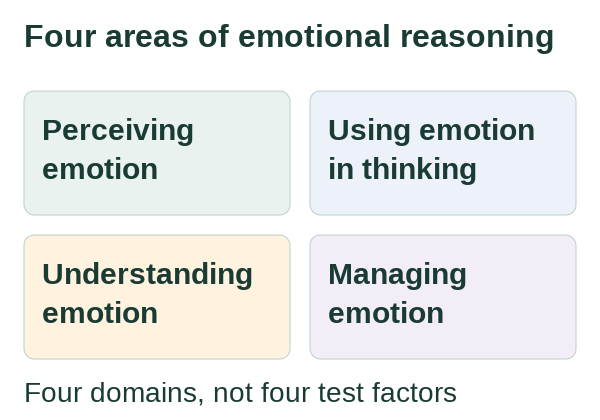
The fourth branch, managing emotions, covers regulating one's own feelings and responding to the feelings of others. The process model of emotion regulation describes management as a sequence of choices, from selecting a situation to changing how one thinks about it, and later work extends the sequence to interactions between people. Test items for this branch therefore take the form of situations that call for a judgment about the best response.[19]
A test built directly on that definition shared about 10% of its common variance with a general intelligence test and was independent of major personality dimensions, which suggests the skills are partly separate from both. That test's internal consistency reached .88, and its scoring rested on the judgments of expert psychotherapists, trainers and human resource specialists rather than on a single right answer.[20] A behavioral account adds that emotional intelligence also shows up in what people actually do, not only in what they can judge on a test, and treats it as a performance trait, a self-image and a set of competencies.[21]
How ability tests are built and scored
Two instruments built on this model are the Situational Test of Emotional Understanding (STEU), which asks what emotion a described person is likely to feel, and the Situational Test of Emotion Management (STEM), which asks how a situation should be handled. The STEU and STEM were developed and validated in a study of 207 psychology students, which examined their links with other emotional intelligence measures, vocabulary, personality and emotion-related criteria. A second study of 149 white-collar volunteers related the scores to clinical symptoms. In the second study, both tests were related to anxiety and stress, and the STEM was also related to depression. The developers concluded that performance-based formats of this kind may help separate the effects of a particular test from the effects of the ability itself.[22]
The two situational tests were not strongly correlated with personality or with fluid cognitive ability, the capacity to reason quickly with novel problems. They did not measure the same thing as self-report emotional intelligence tests and corresponded instead to performance-based measures, a pattern the researchers read as support for the situational judgment approach to measuring emotional intelligence as an ability.[23] A separate study of the same two tests alongside the MSCEIT found that only the STEU and the MSCEIT branch on understanding emotions correlated significantly with psychometric intelligence, which suggested that only understanding emotions could be treated as a candidate new component of intelligence. Neither the STEM nor the STEU correlated significantly with trait emotional intelligence tests, which confirmed that trait and ability measures are distinct.[24]
The MSCEIT has been translated and checked in several countries.[25][26][27] A comparison of Pakistani and French students found significant mean differences in MSCEIT scores between the two cultures, while the validity results generalized across both, including factorial invariance of factor loadings, unique variances and factor variance.[27]
Self-report and trait measures
Self-report measures of emotional intelligence are questionnaires on which people rate their own emotional abilities, rather than solving problems with a right answer. A 2003 review of these instruments concluded that self-report techniques measure a dispositional construct, meaning a stable tendency to feel and act in certain ways, rather than a mental ability. The same review found that such scores are highly correlated with personality and independent of intelligence, though they may have some predictive validity.[28]
The trait emotional intelligence model treats emotional intelligence as a constellation of emotion-related self-perceptions and dispositions. Under this model, trait emotional intelligence is also called trait emotional self-efficacy, a person's confidence in his or her own emotional functioning.[29] Examined together with the Eysenck Personality Profiler, the inventory produced a clear trait emotional intelligence factor in Eysenckian factor space, the map of personality dimensions that questionnaire defines. In a second study, with 166 participants, a modified version of the inventory was examined with the NEO PI-R, and a truncated trait emotional intelligence factor was isolated within the Five-Factor Model.[30]
A later study with 274 participants, 92 of them male, ran two joint factor analyses to locate trait emotional intelligence within the Eysenckian and Big Five taxonomies. Six two-step hierarchical regressions then tested whether trait emotional intelligence predicted six outcomes beyond the Giant Three and Big Five personality dimensions: life satisfaction, rumination, two adaptive coping styles and two maladaptive coping styles. Trait emotional intelligence added incremental prediction for four of the criteria over the Giant Three and for five of them over the Big Five.[29] Trait emotional intelligence was substantially related to Extraversion, Agreeableness, Emotional Stability and Autonomy, yet the emotional intelligence factors still predicted additional variance beyond the Big Five in one competency, support.[31]
The Trait Emotional Intelligence Questionnaire, usually shortened to TEIQue, was designed to assess emotional intelligence as a constellation of emotion-related self-perceptions. A Serbian adaptation was tested with 254 adults who completed the Serbian TEIQue, the NEO-FFI personality inventory, the MSCEIT ability test, the EQ-short and the RSPWB well-being scale. The adapted questionnaire also predicted psychological well-being over and above the Big Five.[32] A Bangla adaptation of the short form, administered to 200 people aged 17 to 21 years between May 2017 and June 2017, reported satisfactory Cronbach alpha values and satisfactory content and construct validity.[33]
The Schutte Emotional Intelligence Scale is another self-report questionnaire, and its construct validity was examined among 364 Anglican clergy serving in the Church in Wales. The study tested whether item content favors some psychological types over others, and scores were higher among extraverts than introverts, intuitive types than sensing types, and feeling types than thinking types. No significant difference appeared between judging types and perceiving types. The findings were read as a caution that the scale partly captures psychological type preferences, and the authors encouraged future scale development that conceptualizes emotional intelligence more independently of those preferences.[34]
The Wong and Law Emotional Intelligence Scale, or WLEIS, has four factors: self-emotional appraisal, other's emotional appraisal, regulation of emotion and use of emotions. In a sample of 238 employees in the Indian hospitality industry, three of the WLEIS factors and the Satisfaction With Life Scale showed Cronbach's alpha above 0.8, described as excellent internal consistency, with self-emotional appraisal the exception. Exploratory factor analysis found eigenvalues from 2.8 to 5.9, and the constructs together explained 65.9% of the total variance. Confirmatory factor analysis gave an average variance explained of 0.5 for each construct and composite reliability above 0.7, which the authors read as excellent construct validity in that sector.[35] Measurement equivalence between self-report and peer-report held for the WLEIS and for a five-factor personality inventory, the International Personality Item Pool.[36] A separate study of the WLEIS found it configurally and metrically invariant across self and other ratings, meaning the same items loaded on the same factors in both, but found no evidence of structural invariance between rater groups.[37]
Emotion perception and understanding in the mind
Emotion perception and emotion understanding are treated in emotional intelligence research as abilities that rest on ordinary mental processes, and a 2009 framework proposed that individual differences in these abilities may be best understood by studying how people process emotional stimuli automatically, without deliberate attention. That framework drew a distinction between conscious and automatic processing and argued that most studies up to that point had measured emotional intelligence with correlational designs, which describe how traits vary together rather than how the mind handles emotional information from moment to moment. The proposal was to combine experimental work on underlying processes with correlational analysis of individual differences, so that the automatic part of emotional intelligence would also be examined.[38] A related construct, meta-emotional intelligence, starts from the ability model of emotional intelligence and adds the beliefs people hold about emotions, their self-concept about their own emotional abilities, and their self-evaluation of how well they perform. This construct treats emotional abilities and these metacognitive dimensions, meaning thoughts about one's own thinking and feeling, as a single combination, and a multi-method test called the IE-ACCME was developed to measure its parts.[39]
Brain imaging has begun to link self-reported emotional intelligence to the density of gray matter, the tissue that contains the cell bodies of neurons, in specific regions. The interpersonal factor showed significant positive correlations with density in the right superior temporal sulcus, and the situation management factor showed significant negative correlations with density in the ventromedial prefrontal cortex. The researchers concluded that each factor in healthy young people is related to regions known to take part in social cognition, self-related recognition and the somatic marker circuitry, a network thought to tie bodily states to decisions.[40]
Emotion recognition has also been studied outside the visual channel, through music. Expression of emotion in musical performance is a form of nonverbal communication to which listeners may differ in receptiveness, and the Mayer-Salovey-Caruso Emotional Intelligence Test at the time contained no musical or spoken items. In a study of 24 undergraduates who completed both that test and a listening task identifying intended emotions in classical piano performances, emotional intelligence and music emotion recognition correlated at r = .54, a moderate positive association. The result suggests that hearing emotion in music engages some of the same sensitivities that everyday emotional intelligence is built from.[41]
Judging other people accurately is a further part of interpersonal accuracy, the broader skill of reading others correctly. A 2020 study asked 121 participants to rate eight traits in each of 30 targets, who appeared in a still photograph, a silent video clip, or a video clip with sound. The videos were 30 second excerpts from negotiations the targets had taken part in. Accuracy in judging personality, scored as trait accuracy and as distinctive profile accuracy, went up with emotion recognition ability. It showed no link to emotion understanding or to trait emotional intelligence, the self-reported form of the construct. Female participants judged the targets' personalities more accurately than male participants did. The findings support viewing interpersonal accuracy as a set of correlated skills that are specific to their domain rather than as one general capacity.[42]
Clinical comparisons show that emotion perception can come apart from other social-cognitive skills. A systematic review and meta-analysis published in 2018 pooled 19 studies with 1,040 patients, 558 with schizophrenia and 482 with autism spectrum disorders, and compared their performance directly. On facial emotion perception, eight studies showed better performance by participants with schizophrenia than by those with autism spectrum disorders, with a Hedges' g of 0.43 and p = 0.031. Age moderated the effect size in the emotion perception and Reading the Mind in the Eyes analyses, with larger differences favoring patients with schizophrenia in studies of younger participants, and the reviewers concluded that available instruments separate the two groups poorly.[43]
The test showed adequate internal consistency reliability, meaning its items hung together, and patients scored significantly below normative levels. Its scores separated from measures of neurocognitive functioning and psychopathology, but related only modestly to objective measures of functional outcome. Against expectations, the test also failed to correlate with a behavioral measure of social cognition. Exploratory factor analyses raised the possibility that the latent structure of emotional intelligence, the pattern of abilities the test measures, shifts in schizophrenia compared with healthy samples.[44] Incarcerated female offenders were impaired in understanding and managing emotion relative to the general population, and affective traits such as callousness showed a small relationship with difficulties in managing emotion.[45]
Research
Reliability and factor structure
The Mayer Salovey Caruso Emotional Intelligence Test (MSCEIT) is an ability test, meaning it asks people to solve problems about emotions rather than describe themselves, and in a military sample its four-factor model fit well in confirmatory factor analysis. The Emotional Quotient Inventory (EQ-i), a mixed-model measure that combines self-report items with other content, did not show good fit for its five-factor model in the same sample. Scores from the two instruments were only modestly intercorrelated, which suggests that they are not interchangeable indices of one construct.[46]
One workplace instrument, the Emotional Capital Report, was examined over a 5-year period in 6,874 professional people from 11 geographical regions. That report had an adequate factor structure, and its component scales showed good internal consistency and test-retest reliability, the latter being the stability of scores when the same people are tested twice. Its scales showed a meaningful pattern of convergent validities with measures of normal personality, depression and psychopathology, and the instrument appeared to measure something distinctive about the experience of people in professional roles.[47]
Does EI predict academic achievement
A later study by Lanciano and Curci (2014) reached a more favorable conclusion using an ability test, the Mayer-Salovey-Caruso Emotional Intelligence Test (MSCEIT), which asks people to solve emotional problems rather than describe themselves. Emotional intelligence ability added a percentage of incremental variance beyond cognitive ability and personality in explaining scholastic success, and the associations were generally stronger for men than for women.[48]
At Wollo University in Ethiopia, a 2025 study used the Trait Emotional Intelligence Questionnaire-Short Form with 1,351 randomly selected first-year undergraduates and took first-semester grade point average as the achievement measure. Trait emotional intelligence was positively related to academic engagement (r = 0.350) and to academic achievement (r = 0.407), and engagement was related to achievement at r = 0.628. Trait emotional intelligence and academic engagement together accounted for 49.9% of the variance in achievement, and engagement partially mediated the effect of emotional intelligence on achievement (beta = 0.220, p = 0.000).[49]
Medical students have been studied with an ability test rather than a self-report questionnaire. Chew, Zain and Hassan (2013) tested 163 first-year and final-year medical students in Malaysia (84 in year one and 79 in year five, a response rate of 66.0%). Emotional intelligence was scored with the MSCEIT, and performance was measured through continuous assessment and a final examination. The total emotional intelligence score predicted good overall continuous assessment (odds ratio 1.01) and was a negative predictor of a poor result in overall continuous assessment (odds ratio 0.97). It also predicted a good overall final examination result (odds ratio 1.07) and was significantly related to final-year examination marks (adjusted R squared = 0.43).[50]
Well-being, health behaviour and risky behaviour
A meta-analysis of 41 studies, 37 of them pooled, examined the link between emotional intelligence and subjective well-being in adolescents aged 10 to 19. It analysed the affective and cognitive components of subjective well-being separately. The same meta-analysis reported an estimated effect size of 0.29 for the cognitive component. The size of the association depended on how emotional intelligence was measured: self-report ability measures gave 0.33 for affective and 0.28 for cognitive well-being, while self-report mixed models gave 0.42 and 0.38. The review's authors proposed that teaching emotional skills in schools and clinics could raise subjective well-being and thereby help prevent emotional disorders in adolescents.[51]
Happiness has been studied separately from life satisfaction, and one 2003 study of trait emotional intelligence, meaning emotional self-perceptions measured by questionnaire, found that trait emotional intelligence explained over 50% of the total variance in happiness. That positive relationship held after the Big Five personality traits were taken into account, whereas the Big Five did not account for a significant share of happiness variance once trait emotional intelligence was partialled out. Cognitive ability was related neither to happiness nor to trait emotional intelligence in the same sample.[52] Optimism, the general expectation that good things will occur, has also been linked to emotional intelligence. A 2024 meta-analysis of 25 independent samples covering 6,889 participants found a weighted effect size of r = .35, p < .001, moderated by measurement approach and by the country of the participants.[53]
Among 74 children with a mean age of 9.03 years, trait emotional intelligence and a positive restructuring coping style were the only variables that significantly contributed to psychological well-being, while general intelligence formed a separate cluster unrelated to it.[54] A survey covered 1,031 Spanish secondary school students aged 12 to 17 (average age 14.91 years). Personality and emotional intelligence were both related to eudaimonic well-being, the form of well-being that comes from self-realization and personal growth, and the emotionality and well-being factors of trait emotional intelligence showed predictive value.[55]
A 2016 review of studies using such maximum-performance measures of ability emotional intelligence in adult populations found negative associations with depression and positive associations with well-being. Several factors, among them gender and self-reported emotional intelligence, changed the strength of those associations or carried them along. The review also noted that too few studies of ability emotional intelligence and health outcomes existed to allow moderator analyses in meta-analyses, so the size of the association may be inaccurately estimated.[56]
A study of 362 volunteers (222 males) examined trait emotional intelligence alongside somatic complaints, meaning bodily complaints people report, and positive and negative mood. In a study of 362 volunteers (222 males), high trait emotional intelligence was positively correlated with positive affect and negatively correlated with negative affect and somatic complaints, and it predicted somatic complaints over and above both mood measures.[57] A study of 427 German-speaking occupational therapists tested a chain running from mindfulness facets through trait emotional intelligence and emotional distress to multiple health behaviours. Eight of 12 indirect effects reached significance, and the Observe facet was most relevant to health behaviours although its relation was not amenable to mediation.[58]
Problematic internet use shows a moderate inverse relation with emotional intelligence. A meta-analysis pooling correlations between internet addiction and emotional intelligence reported a pooled correlation of minus 0.393 (95% confidence interval, minus 0.564 to minus 0.190), with high heterogeneity between studies (I2 = 97.75%) and no publication bias detected.[59] For internet gaming disorder, a 2024 systematic review and meta-analysis identified 49 studies providing 54 independent samples (N = 43,289) and 166 correlation coefficients, and found a small-to-moderate negative association with any measure of emotional intelligence. Methodological quality, research design, geographical location and the way emotional intelligence was assessed could all change that association. The review concluded that poor emotional regulation or weak social competence could raise the risk of developing gaming disorder.[60]
Among 94 adolescents who played the cold version of the Columbia Card Task, a card game designed to involve mainly deliberative rather than emotional decisions, trait emotional intelligence was associated with greater risk taking, and the link ran through the decision makers' self-motivation.[61] An incentivized online survey likewise found a positive correlation between trait emotional intelligence and financial risk taking that was at least as large as the correlation between risk taking and a measure of cognitive control. Not all components of trait emotional intelligence played an identical role: well-being showed positive effects driven mainly by males and by sociability, and self-control mattered only for males. The survey authors noted the bias of self-reported answers as a limitation common to all survey studies.[62]
That third study also tested regulation directly, by inducing a negative state with the Velten method, a procedure in which people read statements designed to shift their mood.[63] A later eye-tracking study of 104 healthy adults suggested one pathway behind such differences: attention to positive social signals. Time spent looking at happy faces also mediated the link between interpersonal emotion regulation ability and trait anxiety, which the researchers read as a possible buffer against anxiety in everyday life.[64]
Among adolescents, the picture has been examined in a very large sample: 3520 high school students aged 12 to 18 (mean age 14.37, standard deviation 1.67). Victims of bullying and cyberbullying, and students who were both victims and perpetrators, scored lower on satisfaction with life and on most facets.[65]
Peer relations in childhood have been linked to trait emotional intelligence, defined as a set of emotion-related self-perceptions and dispositions rather than a tested ability. In a study of 160 pupils (83 girls, mean age 10.8 years), classmates and teachers nominated pupils matching seven behavioural descriptions. Teacher nominations fell into two independent factors, one prosocial and one antisocial, and high trait emotional intelligence pupils scored higher on the prosocial factor and lower on the antisocial one.[66]
Three studies tested whether emotional intelligence and emotional creativity are separate abilities, and confirmatory factor analyses supported that they are. Self-report measures of emotional creativity correlated with laboratory and self-reported creativity measures, while ability measures of emotional creativity correlated only with self-reported artistic activity. Emotional intelligence itself was uncorrelated with creative behaviour.[67]
Measurement in specific populations and languages
A Spanish-language study applied the Trait Meta-Mood Scale-24, a 24-item self-report questionnaire, to 349 nursing students. The validation combined expert review of the content, pilot testing, Cronbach's alpha (a measure of how consistently items hang together) and factor analysis, a method for checking whether items group into the dimensions the theory predicts. Cronbach coefficients were adequate for all three dimensions, and the factor analysis confirmed the expected structure of perception, comprehension and regulation of mood. The researchers concluded that the scale is a reliable and valid tool for measuring the emotional intelligence of nursing students.[68]
A separate study tested the construct validity of an emotional intelligence scale written for sports students, using a survey of 280 active sports students. The analysis ran exploratory and confirmatory factor analysis within structural equation modeling in AMOS 22 software, judging the model by absolute, incremental and parsimony fit indices. All 27 question items were declared valid, and these items measured five components through 14 indicators built on the Bar-On conceptual model.[69]
The Trait Emotional Intelligence Questionnaire Short Form has been examined in a mixed sample of 938 first-year undergraduate nursing and computing students in September 2013. Rasch analysis, a method that places items and persons on one scale, showed that most items made a unique contribution to the measured trait, but five items did not fit the model. Differential item functioning by gender accounted for that misfit, and confirmatory factor analysis gave a four-factor structure of self-confidence, empathy, uncertainty and social connection, with all five misfitting items belonging to the social connection factor.[70]
Researchers translated the Wong and Law Emotional Intelligence Scale from English into Korean and tested it with 210 nurses recruited from two hospitals in South Korea. The final scale had a content validity index of .90, adequate construct validity and a Cronbach's alpha of .91 for the overall scale, which the researchers read as evidence that it suits Korean hospital nurses.[71]
On the Polish adaptation of the Trait Emotional Intelligence Questionnaire Short Form, internal consistency coefficients matched those reported for the original English version. Its scores correlated positively with another Polish emotional intelligence questionnaire. They also went down with neuroticism and up with extraversion, openness, agreeableness and conscientiousness. The links to a supportive social network and to satisfaction with life stayed significant after controlling for the Big Five and for affect.[72]
The Schutte Self-Report Emotional Intelligence scale was tested on 640 international students in the United States. Confirmatory factor analysis compared the model reported by Schutte and five later models, and a modified nested model from Gignac, Palmer, Manocha and Stough fitted the data but was not parsimonious, meaning it used more free parameters than the fit justified. The researchers therefore proposed a new model that also fitted the data and reported convergent validity, concurrent criterion-related validity and reliability for it, supporting use of the modified scale with international students.[73]
In practice
Emotional intelligence at work and in leadership
A meta-analysis of 62 independent samples found a validity estimate of .59 for the link between emotional intelligence and transformational leadership when the same source rated both constructs, whether that source was the person, subordinates, peers or superiors. When the two constructs were rated by different sources, the validity estimate fell to .12. Transactional and laissez-faire leadership behaviors showed lower validity estimates than transformational leadership. Trait measures of emotional intelligence, which ask people to describe themselves, tended to show higher validities than ability-based measures, which ask people to solve problems about emotions. Agreement between rating sources was low for both transformational leadership (.14) and emotional intelligence (.16).[5]
In a correlational study of 539 practicing mental health and marriage and family counselors, emotional intelligence negatively predicted burnout, with r = −.62 at p < .001, and 38% of the variance in burnout explained.[74] Trait emotional intelligence was negatively related to surface acting, in which workers hide or fake emotions, but not to deep acting, in which workers try to change what they feel. Surface acting was significantly related to all three forms of burnout, deep acting was significantly related only to client burnout, and surface acting partly mediated the relationship between emotional intelligence and burnout.[75]
Can emotional intelligence be taught
A 2023 study at the Department of English of The Islamia University of Bahawalpur tested whether a course built around emotional intelligence could raise the emotional intelligence of 100 students learning English as a second language. The 100 learners were enrolled in a BS program and had mixed levels of learning achievement, which the study treated as a rough stand-in for general ability. Their emotional intelligence was measured before and after the course with a 71-item questionnaire drawing on the Trait Emotional Intelligence Questionnaire-Short Form and on modified versions of two earlier scales.[76]
The Bahawalpur results were positive: after the emotional-intelligence-based language instruction, all participants showed a significant increase in emotional intelligence skills, whatever their level of learning achievement. The gain was not equal across the group, because students with higher learning achievement benefited more from the instruction than students with lower achievement. The study framed the point of the course as better language performance as well as higher emotional intelligence, since it set out from the idea that emotional intelligence matters for academic achievement.[76]
A season-long program with a sports team tested a different question: whether emotional intelligence at trait level can be raised in people who did not seek the training. Sixty-seven rugby players took part, with one group receiving a specific emotional intelligence training intervention and the other serving as a control group. The intervention ran over a 5-month period and consisted of four face-to-face sessions, supported by homework and follow-up procedures. The training was only partially successful in increasing emotional intelligence, according to the published report. Even so, the study concluded that trait-level emotional intelligence can be enhanced in participants who may not have had preexisting motivation to change.[77]
Practical guidance for students and teachers
One finding that bears directly on teaching is that beliefs about whether emotions can change track with measured ability. Beliefs about emotional intelligence itself were more strongly related to MSCEIT scores than beliefs about emotions in general. The same study found that women and younger adults were more likely than men and older adults to hold the changeable view, and that these beliefs partly accounted for the links between gender and age and ability scores.[78]
Physical activity is one route through which emotional intelligence has been linked to academic outcomes. A questionnaire survey of 540 college students tested a chain mediation model, in which one variable carries an effect to a second variable and that second variable carries it onward, using structural equation modeling and the Bootstrap method.[79] Structural equation modeling builds causal models that relate several observed measures at the same time to a latent, or underlying, variable.[80] Physical exercise positively predicted academic achievement, and it also reached achievement indirectly through emotional intelligence alone, through academic mood alone, and through emotional intelligence followed by academic mood.[79]
Sport settings show that emotional intelligence dimensions matter differently depending on the demands of the activity. Among 605 athletes competing in 48 different sports, analyses of variance controlling for age and gender found no overall link between emotional intelligence and type of sport. The well-being dimension was significantly relevant for athletes in individual sports.[81]
Emotional intelligence and stress, anxiety and burnout
Emotional intelligence, the set of abilities people use to notice, understand and manage feelings in themselves and others, has been studied in relation to stress management, and in relation to burnout, job satisfaction and health among nurses.[82][83][84] A systematic review of the literature on emotional intelligence and stress management located 91 sources that helped establish a relationship between the two, and 15 of those sources reported an evident inverse relationship, meaning higher emotional intelligence went with lower stress. The review also found that 29 sources were linked to constructs the two fields share, and it concluded that emotional intelligence and stress management are highly correlated. The review noted that several areas remained underexplored in earlier research, and it called for further theory development across psychology, organizational behaviour and human resource management.[82]
Among university students, a survey of 254 students at various faculties and years of study in Serbia found a statistically significant negative effect of emotional intelligence on stress levels. The effect was not uniform across the parts of emotional intelligence: students with higher self-regulation and motivation managed stress more effectively, while students with higher empathy were exposed to higher levels of stress. Stress in turn had a statistically significant negative effect on academic performance and acted as a mediator between emotional intelligence and academic achievement. The researchers argued that teaching emotional intelligence and stress management skills within academic programmes could improve students' performance.[85]
Anxiety tied to tests has been examined alongside emotional intelligence in secondary schooling. A descriptive study drew 400 students from 4 colleges in two towns of Lahore and used the Rotterdam Emotional Intelligence Scale and the Westside Test Anxiety scale. Most of these students had a high level of emotional intelligence, and girls were more emotionally intelligent than boys.[86] A study of higher secondary students in India described that group as having an average level of emotional intelligence. Boys were more emotionally intelligent than girls, and science students were more emotionally intelligent than students in the other streams. The Indian study framed emotional intelligence as an ability to cope with the broad psychological changes of the higher secondary stage, which it described as a period of career building.[87]
Anxiety about learning and speaking a foreign language, called foreign language anxiety, is the most common negative emotion reported by language learners and can hinder the learning process. A systematic review and meta-analysis searched the literature and found 40 eligible studies published between 2003 and 2024, with 11,590 participants in total, of which 14 studies with 4,789 participants entered the quantitative synthesis. Most of the reviewed studies, drawn from 12 countries and using recognised scales with medium to large learner samples, found a significant negative correlation between emotional intelligence and foreign language anxiety, and the pooled estimate showed a moderate effect size (R² > 0.10).[88] A survey of 615 Chinese university students, collected over 5 months from November 2021 to March 2022 while teaching had moved online during the COVID-19 pandemic, found that foreign language classroom anxiety had a negative and significant influence on academic success. In that survey, emotional intelligence communication, meaning the emotional skills used in communication, significantly and positively mediated the link between foreign language classroom anxiety and academic success, and the classroom environment positively and significantly moderated the relationship between anxiety and emotional intelligence communication.[89]
In the teaching profession, a study of burnout used an emotional intelligence framework to examine emotional competences alongside job satisfaction and burnout. Emotional intelligence predicted burnout symptoms negatively and significantly (r=0.54, p<0.05). It predicted job satisfaction positively and significantly (r=0.37, p<0.05).[90]
A study of 137 Italian primary school teachers, 94.2% of them female with a mean age of 47.17 years (SD = 8.88), found that trait emotional intelligence and trait anxiety both predicted emotional exhaustion and a lack of personal accomplishment at work. Trait emotional intelligence, a person's usual tendency in handling emotions, was negatively associated with both outcomes, while anxiety was positively associated with both. Among contextual factors, job instability positively predicted low personal accomplishment, and teachers' working experience predicted emotional exhaustion. The researchers treated trait emotional intelligence as a protective factor that might prevent chronic professional burnout among teachers and, through greater teacher effectiveness, support pupils' well-being.[91]
Health workers face daily stress from patients' own stress and from the demands of patients' family members, and nursing is a setting where emotional intelligence has been studied as a predictor of perceived stress. In a sample of 1,777 nurses, stress management, mood, adaptability, intrapersonal skills and self-efficacy together explained 22.7% of the variance in the harassment-social component of perceived stress and 28.9% of the variance in the irritability-tension-fatigue dimension.[84] Medical students also face pressure from theoretical classes and rotational hospital training. A survey of 201 students at a public medical college in Pakistan found a positive and significant relationship between emotional intelligence and well-being, measured as life satisfaction and happiness, with perceived stress significantly mediating that relationship.[92]
Writing on the COVID-19 crisis, one review argued that emotional intelligence and emotional stability matter for confronting fear and anxiety caused by the coronavirus, and it recommended steps to relieve panic among people facing the stress of mixed symptoms and signs. That review also reported a lack of awareness about the pandemic and called for clarifying the correlation between its physical and psychological impact.[93]
Language learning and the foreign language classroom
Research on emotional intelligence in second and foreign language classrooms asks whether the ability to read and manage emotions helps learners acquire another language, and how language lessons in turn build that ability.[94][95] A meta-analysis published in 2025 pooled 47 independent studies, 63 effect sizes and 18,649 participants to estimate the link between emotional intelligence and language achievement. The pooled correlation was small for subjective measures of achievement, such as self-reported grades (r = 0.24), and moderate for objective measures, such as test scores (r = 0.41). For objective achievement, the strength of the link varied significantly with educational level, the target language, the language skill assessed and the year of publication, while research type, learning context, students' major, first language and the measurement instruments used showed no significant moderating effect. The review traces two phases in this literature: a period of lukewarm attention from 2009 to 2017, followed by rapid growth from 2018 onward.[94]
Studies that report a single overall score for emotional intelligence may hide differences among its parts. In a 2026 study of 666 Saudi undergraduate students learning English, a short form of the Trait Emotional Intelligence Questionnaire was compared with final English course grades. The global trait score correlated positively with achievement (r = 0.32), and the four dimensions together accounted for 16.6% of the variance in grades, against 10.5% for the global score alone. Emotionality, the dimension covering perception and expression of emotion, had the strongest unique association (β = 0.35), followed by self-control (β = 0.13). The well-being coefficient came out negative in the unadjusted dimensional model (β = −0.14). Once gender, age and academic major were adjusted for, only emotionality and self-control stayed significant at the dimension level.[96]
Vocabulary for feelings is one point where language teaching and emotional development meet. An analysis of the Headway coursebook series, published in 2025, classified emotion words across proficiency levels and found a progressive increase, with more complex emotions introduced at advanced levels. Words for positive emotions appeared more often at beginner levels. Negative and neutral emotion words grew more common at higher stages, which the study ties to self-regulation and empathy development. The same work proposed a teaching model that scaffolds emotional vocabulary instruction across levels and aligns it with self-awareness, social skills and emotional regulation.[97] A 2026 systematic review of 15 peer-reviewed studies, 10 empirical and 5 theoretical or pedagogical, examined story-based approaches including story reading, bibliotherapy, oral storytelling and digital storytelling, mainly in English as a foreign language settings.[98]
Classroom applications draw on several frameworks, among them Goleman's 1995 model of emotional intelligence and the ability model of Mayer and Salovey.[98][95] A 2025 review argues that Communicative Language Teaching, an approach built on meaningful interaction, naturally supports emotional intelligence by developing social awareness, and it presents practical activities for self-awareness, empathy and emotional regulation alongside linguistic competence. The review also notes that anxiety, confidence and empathy influence learners' engagement and success, and that emotional development appears in Bloom's taxonomy and in the Croatian English language curriculum.[95] A survey of 49 English learners and their teachers at a Spanish high school found growing awareness of one's own and others' emotions and interest in project-based work on emotional intelligence in the English classroom.[99]
One experimental study tested whether training in neurolinguistic programming strategies changed academic achievement, emotional intelligence and critical thinking.[100] The evidence base remains uneven: the meta-analytic correlations are small to moderate, the dimensional study comes from a single national sample, and the review of story-based instruction calls for more rigorous and diverse methods to test long-term and cross-cultural effects.[96][94][98]
Teachers, classroom management and discipline
Emotional intelligence, the set of abilities that let a person notice, understand and regulate feelings in themselves and in others, has been studied in teachers as a working skill rather than a fixed trait. One mixed-method study of 100 secondary school teachers in India treated it as a pedagogical competency, meaning a teachable part of classroom leadership, and measured it with the Emotional Intelligence Scale alongside a Classroom Management Self-Efficacy Inventory. Overall emotional intelligence correlated strongly with classroom management effectiveness (r = .71, p < .001), and among the separate dimensions empathy (β = .38) and self-regulation (β = .32) were the strongest predictors. Interviews with 20 of those teachers described emotionally intelligent colleagues building trust, emotional safety and behavioral stability through composure and attentive empathy. The study concluded that teachers' capacity to regulate their own emotions and respond with empathy bears directly on classroom climate and on student engagement.[101]
Two studies of teachers report positive links between emotional intelligence and classroom management skills: a moderate relationship in a sample of 341 teachers, and a correlation of r(164) = .58, p = .001 in a sample of 166 teachers at higher education level.[102][103] Among 341 primary school teachers in the 2021 to 2022 academic year, emotional intelligence and classroom management skills showed a positive, moderately significant relationship, and teachers who could read their own and others' emotions and take another person's perspective managed better. In that sample, emotional intelligence and management skills did not vary with gender, age or seniority, and although teachers with postgraduate degrees scored higher than those with undergraduate degrees, the difference was not significant.[102] A correlational study of 180 elementary teachers found that emotional intelligence and effective classroom processes went together significantly (p < 0.05). Social skills and empathy showed the strongest correlations.[104]
Discipline is the part of classroom management most often named as a serious problem for teachers, and one study of 559 basic and secondary school teachers examined how emotional intelligence relates to handling it. Teachers better able to deal with emotion showed greater management of classroom discipline, and most of the relationships tested in the model were statistically significant.[105] A literature review of conflict management reached a similar conclusion: teachers high in emotional intelligence detect potential conflicts earlier, read students' emotional needs and design strategies for managing behavior, and those who regulate their own emotions tend to reduce tension and settle disputes harmoniously. The review also reported that training in emotional intelligence improves conflict management skills and named the RULER Approach as a programme that reduces classroom conflict.[106] A survey of 152 elementary teachers in the Philippines identified conflict resolution, adaptability and recognizing students' emotional needs as areas needing improvement, and proposed a training programme to address them.[107]
Self-efficacy, a teacher's belief in his or her own capacity to teach and manage a class, complicates the picture. Among 250 university faculty members in Gujarat, India, emotional intelligence strongly predicted teaching self-efficacy (β = 0.875, p < 0.001), explaining 76.6% of its variance. Yet self-efficacy predicted classroom incivility management negatively (β = -0.618, p < 0.001), while the direct effect of emotional intelligence on managing incivility was positive (β = 0.293, p < 0.05). The indirect path through self-efficacy was negative (β = -0.541, p < 0.001), a pattern the researchers called competitive mediation and the confidence paradox: higher confidence may blunt the benefit emotional intelligence brings to handling disruption. The model accounted for 15.1% of the variance in incivility management.[108]
Evidence on student engagement is mixed.[109][110][111] In a study of 30 instructors and 900 students at a Chinese university, teachers rated their own emotional intelligence as moderate, with empathy highest and social skills lowest, and students rated classroom dynamics as somewhat successful. Student engagement was moderate for meaningful activities and mastery orientation, and low for competence, autonomy support and collaborative learning. Teachers' overall emotional intelligence showed no significant connection with students' assessments of classroom dynamics or participation.[109]
Studies of secondary schools in Lahore, Pakistan, reported that teachers' emotional intelligence had a strong effect on students' involvement and task orientation. A second study found a substantial positive influence on students' collective participation and teacher support.[110][111] A qualitative case study at one senior high school found that teachers with high emotional intelligence were more adaptive to classroom dynamics and created an inclusive, participatory environment, with empathy, self-awareness and emotion management supporting differentiated learning, in which instruction is adjusted to different students.[112]
Several studies suggest that emotional intelligence can be developed rather than only selected for.[107][106] Among 152 elementary teachers, empathy correlated with how many mental health trainings a teacher had attended (r = 0.241, p = 0.003). Social skills correlated with length of service (r = 0.189, p = 0.020).[107] A quantitative study of teachers' perceptions found only moderate attachment to school climate, colleagues and students, and recommended that recruitment favor teachers of high emotional intelligence so that classroom management improves.[113]
Special groups and applied settings
Research on emotional intelligence has been carried out in populations that differ from mainstream school and workplace samples, and in professional training settings where emotional demands are part of the job.[114][115][116][117] A study of 85 students at a gifted programme at Universiti Kebangsaan Malaysia, ASASIpintar, measured emotional intelligence with the Quick Emotional Intelligence Self-Assessment and resilience with the Personal Resilience Questionnaire, and took academic achievement from the semester one final examination grade point average. Emotional intelligence and resilience both showed a positive relationship with academic achievement in that sample, and the study's stated implication was to help teachers and parents see the value of emotional intelligence for resilience and results. The same study suggested extending the research to ordinary students rather than gifted ones.[114]
For students with disabilities, a Saudi Arabian study compared 50 students with learning disabilities aged six to twelve years with 50 students with intellectual disabilities aged eight to fifteen years, using the Emotional Intelligence Picture Scale for Disabled Children.[118] A qualitative review of library research reported that children with learning disabilities often feel frustration, anxiety, low self-esteem and social withdrawal. These feelings bear on their engagement, motivation and classroom participation.[119]
For people who are deaf or hard-of-hearing, a scoping review searched in April 2024 following JBI methodology and included 21 studies out of 3,091 articles. Potmesilova and colleagues recommended further work to build screening instruments that reflect the specific experiences of this population.[115]
Whether emotional intelligence was defined as an ability, a trait or a mixed model made no significant difference to that relationship, and neither did publication type, citation counts or publication date.[120] A later survey compared the two main concepts directly, using the Mayer-Salovey-Caruso Emotional Intelligence Test for ability emotional intelligence and the Trait Emotional Intelligence Questionnaire Short Form for trait emotional intelligence. Trait emotional intelligence positively predicted athletes' self-assessment of their performance (B = 1.02, p < 0.01), while ability emotional intelligence predicted no performance outcome, and the trait effect was independent of ability emotional intelligence.[121] Among 151 male adolescent athletes with a mean age of 15.4 years (SD = 1.3), emotional intelligence predicted mental toughness, and mental toughness fully mediated the link between emotional intelligence and coping effectiveness.[122] A narrative review of meditation practices in athletes reported that mindfulness, loving-kindness, visualization, breath control and relaxation exercises may support self-awareness and emotional regulation, but noted that qualitative studies and case reports predominate and that further empirical work is needed.[123]
In aviation, 44 volunteer pilots in the United States, 93% of them male and aged 24 to 67 years with flight experience from 150 to more than 5,000 hours, were compared with controls matched on age, gender and ethnicity. The pilots scored lower on global trait emotional intelligence, well-being, emotionality and sociability, but not on self-control, which the researchers read as pilots feeling less connected to their emotional world. The study was limited by its sample size and participant diversity and was presented as a basis for further work on a profile that had not previously been investigated.[117]
A classroom innovation with junior baccalaureate nursing students drew on the Mayer-Salovey-Caruso Four-Branch Ability Model, which treats emotional intelligence as the capacity to perceive, use, understand and manage emotions in oneself and in others. Students received feedback on their scores along with instruction in strategies.[116] The groups did not differ significantly before the intervention (P > 0.05). Afterwards the study group scored significantly higher than the control group (P < 0.0001), and the study group improved significantly from pretest to posttest (p < 0.0001) while the control group did not (P > 0.05). The trial recommended including emotional intelligence courses in nursing curricula.[124]
Interventions, programmes and their effects
A multilevel meta-analysis published in 2018 pooled 24 studies with 28 samples that aimed to raise emotional intelligence in healthy adults. The analysis found a significant moderate standardized mean change between pre-test and post-test, and a stable effect from pre-test to follow-up. The type of emotional intelligence model, dimensions of the four branch model, training length and type of publication were significant moderators of the effect. The authors concluded that emotional intelligence trainings should be considered effective interventions.[132]
A 2024 systematic review and meta-analysis of emotional intelligence training for healthcare workers covered 17 longitudinal studies of workers aged 18 and over. Every study showed an increase in emotional intelligence after the intervention. The review warned that flaws in method may have made the real effects look larger than they are, so the positive trend calls for caution. It called for further research on the best duration and delivery methods for training in healthcare settings.[133]
A quasi-experimental study of Emotional Literacy Training that lasted two months compared 16 students in an experimental group with 12 in a control group in primary schools. Scores on the Ten Years Emotional Intelligence Scale rose significantly in the experimental group, and the increase remained permanently at later measurement.[134] A 16-week volleyball programme built on the Sport Education Model and the Social-Emotional Learning Model was tested against the usual curriculum in three school types. Schutte Emotional Intelligence Scale total scores differed significantly between groups, rising in the experimental group and falling in the control group, and analysis of covariance showed a final-test difference in favour of the experimental group with no significant difference by school type.[135]
An undergraduate teaching intervention reported that students could raise their emotional self-efficacy and some parts of their emotional intelligence ability.[136] Students enrolled in three Emotional Intelligence and Social Communication courses in the autumn semester of 2021-2022 showed a significant mean difference of 0.12 (95% confidence interval [0.003, 0.237]) between during-course and post-course scores. Interviews suggested that most participants improved at considering other perspectives and some at regulating emotions, while emotion management improved least.[137] A randomized, double-blind trial of the HEART programme with 27 students in a control group and 27 in an experimental group found no significant difference between groups in emotional intelligence or psychological well-being, because both groups improved.[138]
Short programmes aimed at teachers have changed beliefs about emotions more than emotional abilities. A pilot study of the Meta-Emotions Program gave 46 teachers seven sessions totalling 21 hours, with 24 in an intervention group and 22 in a control group. Emotional abilities measured by the Mayer-Salovey-Caruso Emotional Intelligence Test showed no significant improvement, but meta-emotional intelligence rose significantly, with changes in meta-emotional beliefs and self-evaluation. Teachers in the intervention group came closer to matching their self-perceived and actual emotional abilities and were less likely to underestimate their abilities. The authors suggested that short, targeted interventions may improve meta-emotional dimensions without being sufficient to raise emotional intelligence abilities.[139]
A 2021 article proposed improvisational theatre as a training technique, presenting six exercises intended to develop empathy, collaboration and understanding of others' emotional cues, on the argument that active and experiential methods work better than lecture-based ones.[140] A study of one-to-one learning development tutorials at one university in the south of England used a focus group and student feedback to explore whether such support develops socio-emotional intelligence, and reported that students accessing it further developed aspects of socio-emotional intelligence.[141] A 2026 article described a cognitive-approach methodology for academic lyceum students that uses interactive methods, problem-based learning, reflective tasks, role-playing, group discussions and self-assessment.[142]
What this looks like when you study
The course gave explicit instruction in emotional intelligence, and the study reported a significant increase in emotional intelligence skills across all participants, whatever their level of learning achievement.[76] In Nepal, 240 final-year nursing students were split into a study group and a control group of 120 each. The study group received an emotional intelligence education program, and its mean score rose significantly (p<0.0001) while the control group did not change.[124]
The program ran across 5 months and combined four in-person sessions with tasks to complete between them and later follow-up. The training was partly successful: trait emotional intelligence rose even though the players had not sought the training themselves.[77] A different program for 46 teachers ran seven sessions totaling 21 hours, with a digital diary for tracking emotions between meetings. That program did not raise scores on an ability test of emotional intelligence, but teachers became more accurate in judging their own emotional abilities.[139]
Nursing students in one classroom innovation were shown their own emotional intelligence scores and taught strategies to use in practice. Students then described what they had learned and how they planned to apply the strategies in their nursing work.[116] For language learners, one review recommends classroom activities that build self-awareness, empathy and emotional regulation alongside language skills.[95] A teaching model for pre-service language teachers scaffolds emotional vocabulary across proficiency levels, starting with simple positive words and adding complex negative ones later.[97]
If you want to build emotional skills, one source recommends that emotional intelligence courses be included in the nursing curriculum.[124] Another source recommends integrating emotional intelligence training into teacher education and professional development programs.[107] For language study, a review recommends developing learners' emotional intelligence skills to help them manage anxiety.[88] One study recommends that emotional vocabulary and emotional intelligence be integrated into pre-service teacher education.[97]
Later developments
Gender, age and cultural variation
Studies of emotional intelligence (EI), the set of abilities and self-perceived dispositions concerned with noticing and managing emotion, report differences linked to gender and age. A study of 100 university students in Karachi found a significant difference between males and females in trait emotional intelligence, t(98) = 2.773. A cross-sectional study of 12,198 Spanish adults aged 17 to 76 found that ability EI was greater in women than in men and varied with age along an inverted-U curve.[143][144]
A meta-analysis of 34 Turkish studies covering 15,027 children and adolescents found a small significant difference in emotional intelligence in favour of girls, with an effect size of 0.19 under a random effects model. That meta-analysis found the data heterogeneous with respect to gender and found no significant moderating effect of developmental level or year of publication, and it detected no publication bias.[145] A meta-analysis of studies of undergraduate students in Pakistan published between January 2020 and June 2024 reported minimal gender differences in EI.[146] A meta-analysis of 26 studies involving 6,005 Indian teachers found that gender had no effect on emotional intelligence.[147]
A cross-sectional study of 12,198 Spanish adults aged 17 to 76 years (mean age 37.71, standard deviation 12.66) used the Mayer-Salovey-Caruso Emotional Intelligence Test, which scores ability EI on the four branches of the Mayer and Salovey model. Age showed a curved rather than a straight-line relation to ability EI: younger and older adults scored lower than middle-aged adults on every branch except understanding emotions.[144] A study of 193 students at the University of Prishtina in Kosovo, 129 female and 64 male, used the self-report Schutte Emotional Intelligence Test. It found a statistically significant difference by age, with the highest category of emotional intelligence in the 22 to 25 year old group, χ2(2) = 18.174, p = .001. The same Kosovo study reported gender differences in emotional intelligence and higher average scores in the social sciences than in the natural sciences, a difference of z = -3.256, p = 0.01.[148]
A study of 200 participants, 100 from Germany and 100 from India, found different factor structures for emotional intelligence in the two cultures. The construct also failed to correlate with the dimensions of personality.[149] A study of 240 Chinese undergraduates examined two types of contemporary filial piety, Pragmatic Obligation and Compassionate Reverence, alongside grade point average as predictors of four EI dimensions: Self-Emotional Monitoring, Emotional Utilization, Social Competence and Others' Emotional Appraisal. The findings were read as showing that both types of filial piety can act as cultural resources for emotional competence, which challenges the traditional split between the two.[150]
The Spanish age findings come from a single cross-sectional sample, so they describe differences between age groups at one point in time rather than change within individuals.[144] The Indian teacher meta-analysis reported very high heterogeneity across the data, scales that were described incompletely, randomization that was inadequate, and small samples in many of the included studies.[147] The Kosovo study concluded that emotional intelligence differs by gender, age and field of study among students there and recommended that future samples cover all public and private universities in the country.[148]
Criticism
Criticism, contested validity and open questions
The strongest objections to emotional intelligence concern what the tests actually measure, and whether the scores can be separated from things already known, such as general mental ability and the Big Five personality traits. A meta-analysis pooled studies that used two families of models: mixed models, which blend emotional skills with traits such as optimism and sociability, and ability models, which treat emotional skill as a performance that can be scored right or wrong. Measures built on mixed models overlapped heavily with one another, correlating .71 across 12 studies with a combined sample of 3,259 people. Ability-based measures correlated more strongly with cognitive ability than mixed measures did, at .34 against .13.[151]
A separate line of criticism asks whether emotional intelligence tests relate to established measures of emotion at all. In a study of 138 participants who completed the Mayer-Salovey-Caruso Emotional Intelligence Test, two emotions measures and four intelligence tests, the emotions measures loaded on the same factor as the intelligence tests rather than alongside the emotional intelligence scores. The results gave mixed support for the model the test is meant to reflect, and the validity of some components, particularly emotion perception, appeared equivocal.[152]
One critic argued that the field needs higher standards of validity evidence, meaning evidence that a test measures the quality it claims to measure. That critic held that the concept of measurement is absolute rather than relative, and rejected the reply that the standards demanded were unrealistically high. The same critic granted that the test's developers had clarified their model and offered new evidence of its correlates, but found that evidence unpersuasive and judged that the call for causal explanations of test performance had been largely missed.[153]
Proponents of emotional intelligence answered an earlier critique point by point. The reply concluded that empirical support for emotional intelligence theory was considerably greater than the critique suggested.[154]
With personality and verbal intelligence held constant, the MSCEIT predicted social deviance, the Emotional Quotient Inventory predicted alcohol use, and the self-report emotional intelligence test was inversely related to academic achievement.[155] An earlier set of three studies with a total of 530 participants found that consensually scored emotional intelligence measures had low reliability and that self-report measures loaded on well-established personality factors, a sign of weak divergent validity. Those studies did identify a separate emotion perception factor, but it was narrower than the construct described in current models of emotional intelligence.[3]
A 2005 study tested the incremental validity of the Schutte Self-Report Inventory against the NEO Five-Factor Inventory and tests of fluid and crystallized intelligence across a wide range of college adjustment criteria. At the broadest level, the inventory total score uniquely predicted variance in loneliness scores beyond the personality domains. Finer-grained analyses found that an optimism and mood regulation factor added unique variance to self-reported study habits, and an emotion appraisal factor added unique variance to social stress. The study described its incremental validity coefficients as small in magnitude and noted that a test of moderation by gender did not reach significance because splitting the sample reduced statistical power.[156]
A 2004 study of self-reports and ratings by others found that emotional intelligence was related to yet distinct from personality dimensions and had incremental predictive power for life satisfaction. In a work sample, peer ratings predicted supervisor ratings of job performance after the Big Five were controlled.[157]
A 2015 meta-analysis found that the content of mixed emotional intelligence measures overlaps strongly with ability emotional intelligence, self-efficacy, self-rated performance, conscientiousness, emotional stability, extraversion and general mental ability, with a multiple correlation of .79. That meta-analysis put the correlation between mixed emotional intelligence and supervisor-rated job performance at .29, and the relationship fell to a standardized coefficient of -.02 once those covariates were controlled. The authors concluded that mixed instruments largely assess a blend of ability emotional intelligence, self-perceptions, personality and cognitive ability rather than a separate capacity.[158]
Dark sides and non-academic outcomes
A meta-analysis of 5,687 participants examined the link between emotional intelligence and emotional manipulation, meaning the deliberate use of emotion to steer other people's feelings and behaviour. The direction of the link depended on how emotional intelligence was measured and on whether the manipulation served other people or only the manipulator. Trait emotional intelligence also correlated positively with prosocial forms of emotional manipulation, with effect sizes of 0.40 on the Enhance factor and 0.34 on the Divert factor of the Managing Emotions of Others Scale. Gender moderated the association between ability-based emotional intelligence and non-prosocial manipulation, and that association was stronger among males than among females.[159]
Narcissism, a trait marked by an inflated sense of self-importance, shows a relationship with emotional intelligence that changes with the form of each construct. A meta-analysis of 32 studies found that emotional intelligence was positively related to grandiose narcissism and negatively related to vulnerable narcissism. Composite narcissism measures followed the same split: the correlation was positive when the measure emphasized grandiosity and negative when it emphasized vulnerability. Some emotional intelligence and narcissism measures moderated the correlation, and meta-regression was used to test that moderation. The analysis was framed around the self-regulatory process of narcissism, which treats the trait as a way of managing how the self is seen.[160]
In leadership, the same skill can be applied in two ways: authentically, to connect with people, or manipulatively, for personal gain. One review argues that authentic emotional intelligence builds high-trust, collaborative cultures through empathy with stakeholders, while self-serving emotional intelligence breeds toxicity and disengagement. The review contrasts leaders it treats as authentic, such as Tim Cook and Brené Brown, with self-interested figures such as Adam Neumann and Elizabeth Holmes, who it says undermined culture.[161] Toxic leadership is characterized in a related article by narcissism, volatility and self-interest, and is said to harm employee wellbeing and organizational health. That article presents emotional intelligence as a protective factor, reporting that leaders high in it are less likely to show toxic behaviours and better able to build psychologically safe workplaces. Its evidence comes from case studies in healthcare, business and government, not from a controlled trial.[162]
A meta-analysis of 96 correlations from 75 studies, with a total sample of 18,130, found a statistically significant moderate correlation of r = 0.32 (95% confidence interval 0.26 to 0.38, p < 0.01) between emotional intelligence and creativity. The size of the link depended on the measures. It was stronger when both constructs were assessed by self-report, as with trait emotional intelligence and self-reported creative behaviour or creative personality. It was weaker with objective tests, such as ability emotional intelligence and a divergent thinking test, the remote associate test or a rated creative product. The correlation was also stronger in males than in females, in employees than in students, and in East Asian samples than in Western European and American samples.[163]
A longstanding consensus held that individual differences play a limited part in predicting negotiation outcomes, a view that grew from an early narrative review based on limited data. A meta-analysis of negotiation studies tested that consensus and found predictive validity for cognitive ability, emotional intelligence and numerous personality traits across several outcome measures. The outcomes included the negotiator's own economic value, the joint economic value of the deal, and the psychological subjective value reported by both the negotiator and the counterpart. Features of research design moderated some associations, and field data showed stronger effects than laboratory studies. The authors concluded that the irrelevance consensus was misguided.[164]
Emotional intelligence (EI), the set of abilities for perceiving, understanding and regulating emotions, has been studied as a predictor of how employees feel about their work and how well they do it.[165][166] The evidence is strongest for job satisfaction, where a meta-analysis of studies published since 1990 found positive links for all three ways of measuring EI: ability EI, self-report EI and mixed EI.[165] A separate meta-analysis of work attitudes put the correlations with job satisfaction at .08 for ability EI, .32 for self-report EI and .39 for mixed EI.[166] An earlier study of white-collar employees in the petroleum industry likewise found a positive correlation between EI and job satisfaction, and the correlation held for both male and female employees.[167]
Common misconceptions
Van Rooy, Viswesvaran and Pluta compared emotional intelligence measures built on two models of the construct, the mixed model and the ability model, and related each to cognitive ability and the Big Five personality factors. Measures built on the mixed model of emotional intelligence overlap extensively with one another, correlating .71 across 12 studies with 3,259 participants. But mixed measures and ability measures are relatively distinct, correlating only .14 across 13 studies with 2,442 participants.[151]
Cabello, Sorrel, Fernández-Pinto, Extremera and Fernández-Berrocal measured ability emotional intelligence with the Mayer-Salovey-Caruso Emotional Intelligence Test, which scores the 4 branches of the Mayer and Salovey model. In a sample of 12,198 Spanish adults, ability emotional intelligence varied with age along an inverted-U curve, with younger and older adults scoring lower than middle-aged adults. Women scored higher than men on the total ability score and on all four branches.[144]
Ngoc, Tuan and Takahashi pooled 5,687 participants across studies to test how emotional intelligence relates to emotional manipulation, separating self-reported ability-based measures from self-reported trait measures. A meta-analysis of 5,687 participants found that self-reported ability-based emotional intelligence was positively correlated with non-prosocial emotional manipulation, with a 0.10 effect size. Trait emotional intelligence, by contrast, was negatively related to non-prosocial manipulation, with a −0.16 effect size.[159]
Key studies
| Year | Study | Sample | Design | Finding |
|---|---|---|---|---|
| 1998 | Davies et al.[3] | 3 studies, total N = 530 | Measures based on consensual scoring showed low reliability, and self-report measures loaded on personality factors, indicating a lack of divergent validity. | |
| 2004 | Lopes et al.[125] | 118 American college students and 103 German college students | two studies, one a diary study | Managing emotions scores were positively related to the quality of social interactions, and the findings held after controlling for Big Five personality traits. |
| 2005 | Van Rooy et al.[151] | 12 studies with 3,259 participants and 13 studies with 2,442 participants | meta-analytic review | Mixed-model measures correlated .71 with each other, mixed and ability measures correlated .14, and ability measures correlated .34 with cognitive ability versus .13 for mixed measures. |
| 2010 | Harms & Credé[5] | 62 independent samples | meta-analysis | The validity estimate for leadership was .59 with same-source ratings and .12 with different-source ratings. |
| 2013 | Chew et al.[50] | 163 first- and final-year medical students in Malaysia | cross-sectional study | The total emotional intelligence score predicted good overall continuous assessment (OR 1.01) and good final examination results (OR 1.07). |
| 2016 | Campo et al.[77] | 67 rugby players | controlled intervention with four sessions over 5 months | The training was partially successful in increasing trait emotional intelligence. |
| 2016 | Cabello et al.[144] | 12,198 Spanish adults aged 17 to 76 | cross-sectional study | Ability emotional intelligence was greater in women than men and varied with age along an inverted-U curve. |
| 2020 | Ngoc et al.[159] | 5,687 participants | meta-analysis | Self-reported ability-based emotional intelligence correlated 0.10 with non-prosocial manipulation, while trait emotional intelligence correlated −0.16 with it. |
| 2022 | Llamas-Díaz et al.[51] | 41 studies of adolescents aged 10 to 19, 37 pooled in meta-analyses | systematic review and meta-analysis | Emotional intelligence was positively related to affective well-being (effect size 0.35) and cognitive well-being (0.29). |
| 2024 | Singh & Das[124] | 240 final-year nursing students in Nepal, 120 per group | true experimental pretest-posttest control group | The study group's mean emotional intelligence score rose significantly (p<0.0001), while the control group showed no significant change. |
| 2025 | Peng & Shuhong[94] | 47 independent studies with 18,649 participants | meta-analysis | Emotional intelligence correlated r = 0.24 with subjective language achievement and r = 0.41 with objective language achievement. |
| 2026 | Altalib[96] | 666 Saudi undergraduate students | dimensional correlational study | The overall trait emotional intelligence score went with English course grades at r = 0.32, and taken together the four dimensions explained 16.6% of the variance in achievement. |
| 2026 | Geraci & D’Amico[139] | 46 teachers, 24 in the intervention group and 22 in the control group | quasi-experimental pre-post pilot | Emotional abilities did not improve significantly, but meta-emotional intelligence increased and teachers underestimated their abilities less. |
See also
References
- Salovey, P., & Mayer, J. D. (1990). Emotional Intelligence. Imagination, Cognition and Personality, 9(3), 185-211. doi:10.2190/dugg-p24e-52wk-6cdg
- Caruso, D. R., Mayer, J. D., & Salovey, P. (2002). Relation of an Ability Measure of Emotional Intelligence to Personality. Journal of Personality Assessment, 79(2), 306-320. doi:10.1207/s15327752jpa7902_12
- Davies, M., Stankov, L., & Roberts, R. D. (1998). Emotional intelligence: In search of an elusive construct. Journal of Personality and Social Psychology, 75(4), 989-1015. doi:10.1037/0022-3514.75.4.989
- Salovey, P., & Grewal, D. (2005). The Science of Emotional Intelligence. Current Directions in Psychological Science, 14(6), 281-285. doi:10.1111/j.0963-7214.2005.00381.x
- Harms, P. D., & Credé, M. (2010). Emotional Intelligence and Transformational and Transactional Leadership: A Meta-Analysis. Journal of Leadership & Organizational Studies, 17(1), 5-17. doi:10.1177/1548051809350894
- Weng, H., Hung, C., Liu, Y., Cheng, Y., Yen, C., Chang, C., & Huang, C. (2011). Associations between emotional intelligence and doctor burnout, job satisfaction and patient satisfaction. Medical Education, 45(8), 835-842. doi:10.1111/j.1365-2923.2011.03985.x
- Bru-Luna, L. M., Martí-Vilar, M., Merino-Soto, C., & Cervera-Santiago, J. L. (2021). Emotional Intelligence Measures: A Systematic Review. Healthcare, 9(12), 1696. doi:10.3390/healthcare9121696
- Mayer, J. D., Caruso, D. R., Salovey, P., Lin, I. Y., Hansma, B. J., Solomon, J., Sitarenios, G., & Romero Escobar, M. (2025). Measuring emotional intelligence with the MSCEIT 2: theory, rationale, and initial findings. Frontiers in Psychology, 16. doi:10.3389/fpsyg.2025.1539785
- Mayer, J. D., Caruso, D. R., & Salovey, P. (2016). The Ability Model of Emotional Intelligence: Principles and Updates. Emotion Review, 8(4), 290-300. doi:10.1177/1754073916639667
- Mayer, J. D., Roberts, R. D., & Barsade, S. G. (2008). Human Abilities: Emotional Intelligence. Annual Review of Psychology, 59(1), 507-536. doi:10.1146/annurev.psych.59.103006.093646
- Petrides, K. V., & Mavroveli, S. (2020). Theory and Applications of Trait Emotional Intelligence. Psychology: the Journal of the Hellenic Psychological Society, 23(1), 24. doi:10.12681/psy_hps.23016
- ", Trifonova, S., St. Cyril and Methodius", & University of Veliko Tarnovo (2020). Mayer and P. Salovey Model of Emotional Intelligence. Diogenes, 28(1). doi:10.54664/zafw2187
- Dulewicz, V., & Higgs, M. (2000). Emotional intelligence – A review and evaluation study. Journal of Managerial Psychology, 15(4), 341-372. doi:10.1108/02683940010330993
- Schaie, K. W. (2001). Emotional intelligence: Psychometric status and developmental characteristics--Comment on Roberts, Zeidner, and Matthews (2001). Emotion, 1(3), 243-248. doi:10.1037/1528-3542.1.3.243
- NAEP Glossary of Terms (n.d.). confirmatory factor analysis. NAEP Glossary of Terms. https://nces.ed.gov/nationsreportcard/glossary.aspx#confirmatory_factor_analysis
- MATTHEWS, G., ZEIDNER, M., & ROBERTS, R. D. (2012). Emotional intelligence: A promise unfulfilled? Japanese Psychological Research, 54(2), 105-127. doi:10.1111/j.1468-5884.2011.00502.x
- Dr.S.Ramesh, Dr.Rajesh Arumugam, & Sujitha. O (2026). Recent trends in emotional intelligence: Measurement, neuroscience, artificial intelligence, and the global emotional recession. EPRA International Journal of Multidisciplinary Research (IJMR), 173. doi:10.36713/epra27028
- Muquis Tituaña, K. (2022). Inteligencia emocional (Salovey y Malovey) y aprendizaje social en estudiantes universitarios: Emotional intelligence (Salovey and Malovey) and social learning in university students. RES NON VERBA REVISTA CIENTÍFICA, 12(2), 16-29. doi:10.21855/resnonverba.v12i2.654
- Mortillaro, M., & Schlegel, K. (2023). Embracing the Emotion in Emotional Intelligence Measurement: Insights from Emotion Theory and Research. Journal of Intelligence, 11(11), 210. doi:10.3390/jintelligence11110210
- Śmieja, M., Orzechowski, J., & Stolarski, M. S. (2014). TIE: An Ability Test of Emotional Intelligence. PLoS ONE, 9(7), e103484. doi:10.1371/journal.pone.0103484
- Boyatzis, R. E. (2018). The Behavioral Level of Emotional Intelligence and Its Measurement. Frontiers in Psychology, 9. doi:10.3389/fpsyg.2018.01438
- MacCann, C., & Roberts, R. D. (2008). New paradigms for assessing emotional intelligence: Theory and data. Emotion, 8(4), 540-551. doi:10.1037/a0012746
- Libbrecht, N., & Lievens, F. (2012). Validity evidence for the situational judgment test paradigm in emotional intelligence measurement. International Journal of Psychology, 47(6), 438-447. doi:10.1080/00207594.2012.682063
- Austin, E. J. (2010). Measurement of ability emotional intelligence: Results for two new tests. British Journal of Psychology, 101(3), 563-578. doi:10.1348/000712609x474370
- Curci, A., Lanciano, T., Soleti, E., Zammuner, V. L., & Salovey, P. (2013). Construct Validity of the Italian Version of the Mayer–Salovey–Caruso Emotional Intelligence Test (MSCEIT) v2.0. Journal of Personality Assessment, 95(5), 486-494. doi:10.1080/00223891.2013.778272
- Altaras-Dimitrijevic, A., & Jolic-Marjanovic, Z. (2010). The Mayer-Salovey-Caruso emotional intelligence test: Psychometric properties of the Serbian version. Psihologija, 43(4), 411-426. doi:10.2298/psi1004411a
- Karim, J., & Weisz, R. (2010). Cross-Cultural Research on the Reliability and Validity of the Mayer-Salovey-Caruso Emotional Intelligence Test (MSCEIT). Cross-Cultural Research, 44(4), 374-404. doi:10.1177/1069397110377603
- MacCann, C., Matthews, G., Zeidner, M., & Roberts, R. D. (2003). Psychological assessment of emotional intelligence: A review of self‐report and performance‐based testing. The International Journal of Organizational Analysis, 11(3), 247-274. doi:10.1108/eb028975
- Petrides, K. V., Pita, R., & Kokkinaki, F. (2007). The location of trait emotional intelligence in personality factor space. British Journal of Psychology, 98(2), 273-289. doi:10.1348/000712606x120618
- Petrides, K. V., & Furnham, A. (2001). Trait emotional intelligence: psychometric investigation with reference to established trait taxonomies. European Journal of Personality, 15(6), 425-448. doi:10.1002/per.416
- van der Zee, K., & Wabeke, R. (2004). Is trait‐Emotional Intelligence simply or more than just a trait? European Journal of Personality, 18(4), 243-263. doi:10.1002/per.517
- Jolic-Marjanovic, Z., & Altaras-Dimitrijevic, A. (2014). Reliability, construct and criterion-related validity of the Serbian adaptation of the trait emotional intelligence questionnaire (TEIQue). Psihologija, 47(2), 249-262. doi:10.2298/psi1402249j
- Zahirul Haque, M., & Kamal Uddin, M. (2022). Adaptation of Trait Emotional Intelligence Questionnaire (TEIQue) in Bangla. Journal of Clinical and Laboratory Research, 5(1), 01-04. doi:10.31579/2768-0487/062
- Francis, L. J., Payne, V. J., & Emslie, N. J. (2018). The construct validity of the Schutte Emotional Intelligence Scale in light of psychological type theory: a study among Anglican clergy. Mental Health, Religion & Culture, 21(9-10), 945-959. doi:10.1080/13674676.2018.1519694
- Traymbak, S., Sharma, A., & Dutta, M. (2022). Reliability and Construct Validity Assessment of Wong and Law Emotional Intelligence Scale and Satisfaction With Life Scale in the Indian Hospitality Industry. Annals of Neurosciences, 29(2-3), 121-128. doi:10.1177/09727531221100249
- Joseph, D. L., & Newman, D. A. (2010). Discriminant Validity of Self-Reported Emotional Intelligence: A Multitrait-Multisource Study. Educational and Psychological Measurement, 70(4), 672-694. doi:10.1177/0013164409355700
- Libbrecht, N., Lievens, F., & Schollaert, E. (2010). Measurement Equivalence of the Wong and Law Emotional Intelligence Scale Across Self and Other Ratings. Educational and Psychological Measurement, 70(6), 1007-1020. doi:10.1177/0013164410378090
- Fiori, M. (2009). A New Look at Emotional Intelligence: A Dual-Process Framework. Personality and Social Psychology Review, 13(1), 21-44. doi:10.1177/1088868308326909
- D'Amico, A., & Geraci, A. (2023). Beyond emotional intelligence: The new construct of meta-emotional intelligence. Frontiers in Psychology, 14. doi:10.3389/fpsyg.2023.1096663
- Takeuchi, H., Taki, Y., Sassa, Y., Hashizume, H., Sekiguchi, A., Fukushima, A., & Kawashima, R. (2011). Regional gray matter density associated with emotional intelligence: Evidence from voxel‐based morphometry. Human Brain Mapping, 32(9), 1497-1510. doi:10.1002/hbm.21122
- Resnicow, J. E., Salovey, P., & Repp, B. H. (2004). Is Recognition of Emotion in Music Performance an Aspect of Emotional Intelligence? Music Perception, 22(1), 145-158. doi:10.1525/mp.2004.22.1.145
- Jaksic, C., & Schlegel, K. (2020). Accuracy in Judging Others’ Personalities: The Role of Emotion Recognition, Emotion Understanding, and Trait Emotional Intelligence. Journal of Intelligence, 8(3), 34. doi:10.3390/jintelligence8030034
- Fernandes, J. M., Cajão, R., Lopes, R., Jerónimo, R., & Barahona-Corrêa, J. B. (2018). Social Cognition in Schizophrenia and Autism Spectrum Disorders: A Systematic Review and Meta-Analysis of Direct Comparisons. Frontiers in Psychiatry, 9. doi:10.3389/fpsyt.2018.00504
- Eack, S. M., Greeno, C. G., Pogue-Geile, M. F., Newhill, C. E., Hogarty, G. E., & Keshavan, M. S. (2010). Assessing Social-Cognitive Deficits in Schizophrenia With the Mayer-Salovey-Caruso Emotional Intelligence Test. Schizophrenia Bulletin, 36(2), 370-380. doi:10.1093/schbul/sbn091
- Edwards, B. G., Ermer, E., Salovey, P., & Kiehl, K. A. (2019). Emotional Intelligence in Incarcerated Female Offenders With Psychopathic Traits. Journal of Personality Disorders, 33(3), 370-393. doi:10.1521/pedi_2018_32_349
- Livingstone, H. A., & Day, A. L. (2005). Comparing the Construct and Criterion-Related Validity of Ability-Based and Mixed-Model Measures of Emotional Intelligence. Educational and Psychological Measurement, 65(5), 757-779. doi:10.1177/0013164405275663
- Newman, M., Purse, J., Smith, K., & Broderick, J. (2015). Assessing Emotional Intelligence in Leaders and Organisations: Reliability and Validity of the Emotional Capital Report (ECR). Australasian Journal of Organisational Psychology, 8. doi:10.1017/orp.2015.5
- Lanciano, T., & Curci, A. (2014). Incremental Validity of Emotional Intelligence Ability in Predicting Academic Achievement. The American Journal of Psychology, 127(4), 447-461. doi:10.5406/amerjpsyc.127.4.0447
- Bereded, D. G., Abebe, A. S., & Negasi, R. D. (2025). Emotional intelligence and academic achievement among first-year undergraduate university students: the mediating role of academic engagement. Frontiers in Education, 10. doi:10.3389/feduc.2025.1567418
- Chew, B. H., Zain, A. M., & Hassan, F. (2013). Emotional intelligence and academic performance in first and final year medical students: a cross-sectional study. BMC Medical Education, 13(1). doi:10.1186/1472-6920-13-44
- Llamas-Díaz, D., Cabello, R., Megías-Robles, A., & Fernández-Berrocal, P. (2022). Emotional Intelligence and Well-being in Adolescents: a Systematic Review and Meta-analysis. European Psychiatry, 65(S1), S687-S688. doi:10.1192/j.eurpsy.2022.1770
- Furnham, A., & Petrides, K. V. (2003). Trait emotional intelligence and happiness. Social Behavior and Personality: an international journal, 31(8), 815-823. doi:10.2224/sbp.2003.31.8.815
- Glassie, S. L., & Schutte, N. S. (2024). The relationship between emotional intelligence and optimism: A meta‐analysis. International Journal of Psychology, 59(3), 353-367. doi:10.1002/ijop.13108
- Pauletto, M., Grassi, M., Passolunghi, M. C., & Penolazzi, B. (2021). Psychological well-being in childhood: The role of trait emotional intelligence, regulatory emotional self-efficacy, coping and general intelligence. Clinical Child Psychology and Psychiatry, 26(4), 1284-1297. doi:10.1177/13591045211040681
- Salavera, C., Usán, P., Teruel, P., & Antoñanzas, J. L. (2020). Eudaimonic Well-Being in Adolescents: The Role of Trait Emotional Intelligence and Personality. Sustainability, 12(7), 2742. doi:10.3390/su12072742
- Fernández-Berrocal, P., & Extremera, N. (2016). Ability Emotional Intelligence, Depression, and Well-Being. Emotion Review, 8(4), 311-315. doi:10.1177/1754073916650494
- Andrei, F., & Petrides, K. V. (2013). Trait emotional intelligence and somatic complaints with reference to positive and negative mood. Psihologija, 46(1), 5-15. doi:10.2298/psi1301005a
- Jacobs, I., Wollny, A., Sim, C., & Horsch, A. (2016). Mindfulness facets, trait emotional intelligence, emotional distress, and multiple health behaviors: A serial two‐mediator model. Scandinavian Journal of Psychology, 57(3), 207-214. doi:10.1111/sjop.12285
- Ranjbar, H., & Bakhshi, M. (2018). The Association between Internet Addiction and Emotional Intelligence: A Meta-Analysis Study. AFMN Biomedicine, 35(1), 17-29. doi:10.2478/afmnai-2018-0002
- Gisbert-Pérez, J., Badenes-Ribera, L., & Martí-Vilar, M. (2024). Emotional Intelligence and Gaming Disorder Symptomatology: A Systematic Review and Meta-Analysis. Adolescent Research Review, 9(4), 621-646. doi:10.1007/s40894-024-00233-3
- Panno, A. (2016). Trait Emotional Intelligence Is Related to Risk Taking when Adolescents Make Deliberative Decisions. Games, 7(3), 23. doi:10.3390/g7030023
- Bucciol, A., Guerrero, F., & Papadovasilaki, D. (2021). Financial risk-taking and trait emotional intelligence. Review of Behavioral Finance, 13(3), 259-275. doi:10.1108/rbf-01-2020-0013
- Schutte, N. S., Malouff, J. M., Simunek, M., McKenley, J., & Hollander, S. (2002). Characteristic emotional intelligence and emotional well-being. Cognition and Emotion, 16(6), 769-785. doi:10.1080/02699930143000482
- Suslow, T., Hoepfel, D., Günther, V., Kersting, A., & Bodenschatz, C. M. (2022). Positive attentional bias mediates the relationship between trait emotional intelligence and trait affect. Scientific Reports, 12(1). doi:10.1038/s41598-022-25317-9
- Quintana-Orts, C., Mérida-López, S., Rey, L., & Extremera, N. (2021). A Closer Look at the Emotional Intelligence Construct: How Do Emotional Intelligence Facets Relate to Life Satisfaction in Students Involved in Bullying and Cyberbullying? European Journal of Investigation in Health, Psychology and Education, 11(3), 711-725. doi:10.3390/ejihpe11030051
- Petrides, K. V., Sangareau, Y., Furnham, A., & Frederickson, N. (2006). Trait Emotional Intelligence and Children's Peer Relations at School. Social Development, 15(3), 537-547. doi:10.1111/j.1467-9507.2006.00355.x
- Ivcevic, Z., Brackett, M. A., & Mayer, J. D. (2007). Emotional Intelligence and Emotional Creativity. Journal of Personality, 75(2), 199-236. doi:10.1111/j.1467-6494.2007.00437.x
- Espinoza-Venegas, M., Sanhueza-Alvarado, O., Ramírez-Elizondo, N., & Sáez-Carrillo, K. (2015). A validation of the construct and reliability of an emotional intelligence scale applied to nursing students. Revista Latino-Americana de Enfermagem, 23(1), 139-147. doi:10.1590/0104-1169.3498.2535
- Hidayat, Y., Hambali, B., & Tresdani, D. (2022). Construct Validity of Emotional Intelligence Scale for Sports Students. Jurnal Pendidikan Jasmani dan Olahraga, 7(2), 149-159. doi:10.17509/jpjo.v7i2.49836
- Snowden, A., Watson, R., Stenhouse, R., & Hale, C. (2015). Emotional Intelligence and Nurse Recruitment: Rasch and confirmatory factor analysis of the trait emotional intelligence questionnaire short form. Journal of Advanced Nursing, 71(12), 2936-2949. doi:10.1111/jan.12746
- Park, H. J., & Yu, S. (2021). Validity and Reliability of the Korean version of the Wong and Law Emotional Intelligence Scale for Nurses. Sage Open, 11(2). doi:10.1177/21582440211023202
- Szczygieł, D., Jasielska, A., & Wytykowska, A. (2015). Psychometric properties of the Polish version of the Trait Emotional Intelligence Questionnaire-Short Form. Polish Psychological Bulletin, 46(3), 447-459. doi:10.1515/ppb-2015-0051
- Ng, K. M., Chuang Wang, Kim, D. H., & Bodenhorn, N. (2010). Factor Structure Analysis of the Schutte Self-Report Emotional Intelligence Scale on International Students. Educational and Psychological Measurement, 70(4), 695-709. doi:10.1177/0013164409355691
- Gutierrez, D., & Mullen, P. R. (2016). Emotional Intelligence and the Counselor: Examining the Relationship of Trait Emotional Intelligence to Counselor Burnout. Journal of Mental Health Counseling, 38(3), 187-200. doi:10.17744/mehc.38.3.01
- Santos, A., Mustafa, M. J., & Gwi, T. C. (2015). Trait emotional intelligence, emotional labour, and burnout among Malaysian HR professionals. Management Research Review, 38(1), 67-88. doi:10.1108/mrr-06-2013-0143
- Qanwal, S., & Ghani, M. (2023). Enhancing ESL Learners’ Emotional Intelligence Skills through Explicit Emotional Intelligence Instruction. Journal of Social Sciences Review, 3(1), 93. doi:10.54183/jssr.v2i4.120
- Campo, M., Laborde, S., & Mosley, E. (2016). Emotional Intelligence Training in Team Sports: The Influence of a Season Long Intervention Program on Trait Emotional Intelligence. Journal of Individual Differences, 37(3), 152-158. doi:10.1027/1614-0001/a000201
- Cabello, R., & Fernández-Berrocal, P. (2015). Implicit theories and ability emotional intelligence. Frontiers in Psychology, 6. doi:10.3389/fpsyg.2015.00700
- Jiang, Y., & Ren, S. (2025). The effects of physical exercise on college students’ academic achievement: the chain mediating role of emotional intelligence and academic mood. Frontiers in Psychology, 16. doi:10.3389/fpsyg.2025.1642778
- ERIC Thesaurus (n.d.). Structural Equation Models. ERIC Thesaurus. https://eric.ed.gov/?ti=Structural+Equation+Models
- Kopp, A., & Jekauc, D. (2025). Trait emotional intelligence in competitive sports: are there differences in dimensions of emotional intelligence when comparing different sports? BMC Psychology, 13(1). doi:10.1186/s40359-025-02563-w
- Senior Research Officer, Department of Interdisciplinary Studies, Himachal Pradesh University, India, & Singh Ranta, R. (2025). Meta-Analysis of Emotional Intelligence in Stress Management. New Advances in Brain & Critical Care, 6(1), 01-10. doi:10.33140/nabcc.06.01.03
- Soto-Rubio, A., Giménez-Espert, M. d. C., & Prado-Gascó, V. (2020). Effect of Emotional Intelligence and Psychosocial Risks on Burnout, Job Satisfaction, and Nurses’ Health during the COVID-19 Pandemic. International Journal of Environmental Research and Public Health, 17(21), 7998. doi:10.3390/ijerph17217998
- Molero Jurado, M. d. M., Pérez-Fuentes, M. d. C., Oropesa Ruiz, N. F., Simón Márquez, M. d. M., & Gázquez Linares, J. J. (2019). Self-Efficacy and Emotional Intelligence as Predictors of Perceived Stress in Nursing Professionals. Medicina, 55(6), 237. doi:10.3390/medicina55060237
- Rabasović, B., Marković, I., & Borisavljević, K. (2026). The effects of emotional intelligence and stress on students’ academic achievement. TEME, 235. doi:10.22190/teme250526001r
- AHMAD, M., & AZIZ, F. (2019). Relationship between Emotional Intelligence and Exam Anxiety of Higher Secondary Students. International e-Journal of Educational Studies, 3(6), 97-108. doi:10.31458/iejes.543549
- Pyari, D. (2017). Effect of Emotional Intelligence and Academic Anxiety: Academic Achievement. Asian Journal of Research in Social Sciences and Humanities, 7(8). doi:10.5958/2249-7315.2017.00417.8
- Babanoğlu, M. P. (2025). Decoding the relationship between emotional intelligence and foreign language anxiety: A systematic review and meta-analysis. Language Teaching Research. doi:10.1177/13621688251345726
- Han, S., Li, Y., & Haider, S. A. (2022). Impact of Foreign Language Classroom Anxiety on Higher Education Students Academic Success: Mediating Role of Emotional Intelligence and Moderating Influence of Classroom Environment. Frontiers in Psychology, 13. doi:10.3389/fpsyg.2022.945062
- Przybylska, I. (2016). Emotional intelligence and burnout in the teaching profession. The New Educational Review, 2016(Vol. 43), 41-51. doi:10.15804/tner.2016.43.1.03
- Mancini, G., Mameli, C., & Biolcati, R. (2022). Burnout in Italian primary teachers: The predictive effects of trait emotional intelligence, trait anxiety, and job instability. Europe’s Journal of Psychology, 18(2), 168-180. doi:10.5964/ejop.2685
- Latif, S., Dickson, K., & Hanif, S. (2024). The Impact of Emotional Intelligence on the Well-Being of Students from Public Sector Medical College; Mediating Role of Perceived Stress: Impact of Emotional Intelligence on the Well-Being of Students. Pakistan Journal of Health Sciences, 60-64. doi:10.54393/pjhs.v5i02.1281
- Fattah, A. (2020). Emotional Intelligence and Emotional Stability in Crises. Neuroscience and Neurological Surgery, 6(4), 01-05. doi:10.31579/2578-8868/127
- Peng, Q., & Shuhong, L. (2025). Emotional factor matters in language learning? A meta-analysis of emotional intelligence on language achievement. Frontiers in Psychology, 16. doi:10.3389/fpsyg.2025.1502112
- Martinović, A. (2025). Integrating emotional intelligence into the L2 classroom: Affective factors in language learning and teaching. Методички видици, 16(1), 157-182. doi:10.19090/mv.2025.16.1.157-182
- Altalib, A. (2026). Trait Emotional Intelligence and English Language Achievement Among University EFL Learners: A Global and Dimensional Analysis. Journal of Intelligence, 14(7), 148. doi:10.3390/jintelligence14070148
- Lasekan, O., Godoy, M., & Méndez-Alarcón, C. (2025). Integrating emotional vocabulary in EFL education: a model for enhancing emotional intelligence in pre-service EFL teachers. Frontiers in Psychology, 15. doi:10.3389/fpsyg.2024.1508083
- Hazha Salih Hassan (2026). Story-Based Instruction to Foster Learners’ Emotional Intelligence Development: A Systematic Review Article. Zanco Journal of Humanity Sciences, 30(SpC), 12-26. doi:10.21271/zjhs.30.spc.2
- Fraga Viñas, L., & Moure Blanco, P. (2022). Emotional Intelligence Survey in the English as a Foreign Language Classroom: Teachers and Learners. Journal of English Studies, 20, 87-118. doi:10.18172/jes.5247
- Zhang, X., Davarpanah, N., & Izadpanah, S. (2023). The effect of neurolinguistic programming on academic achievement, emotional intelligence, and critical thinking of EFL learners. Frontiers in Psychology, 13. doi:10.3389/fpsyg.2022.888797
- Sheokand, U. (2026). Teachers’ Emotional Intelligence and Classroom Management Effectiveness: A Mixed-Method Study of the Mediating Role of Socio-Emotional Competence. International Journal For Multidisciplinary Research, 8(4). doi:10.36948/ijfmr.2026.v08i04.82779
- Kanbur, O., & Kirikkaleli, N. (2023). Interaction between teachers’ emotional intelligence and classroom management. Perspectives in Education, 41(2), 3-15. doi:10.38140/pie.v41i2.6847
- Mahnoor Serwer, Ariba Sarver, & Hina Munir (2026). Teacher’s Emotional Intelligence and Their Classroom Management Skills: A Correlational Study. Social Science Review Archives, 4(1), 5539-5548. doi:10.70670/sra.v4i1.2422
- Quizana, J. L., & Velasco, C. Q. (2026). Emotional Intelligence and Effective Classroom Processes of Elementary Teachers. International Journal of Research Publications, 199(1), 2264-2289. doi:10.47119/ijrp1001991620269331
- Valente, S., Monteiro, A. P., & Lourenço, A. A. (2019). The relationship between teachers’ emotional intelligence and classroom discipline management. Psychology in the Schools, 56(5), 741-750. doi:10.1002/pits.22218
- Berlianti, R., Robinson, A., Rahmadani, F., & Husnaini, R. (2025). The Impact of Teachers' Emotional Intelligence on Conflict Management in the Classroom: A Literature Study. PPSDP International Journal of Education, 4(1), 66-74. doi:10.59175/pijed.v4i1.375
- Laput, M., & Oropa, J. (2025). Beyond Instruction: The Role of Emotional Intelligence Competencies in Enhancing Classroom Effectiveness. Journal of Interdisciplinary Perspectives, 3(6). doi:10.69569/jip.2025.250
- Patel, A., Wadia, A., & Radadiya, P. (2026). The Paradox of Confidence: Competitive Mediation of Teaching Self-Efficacy in the Emotional Intelligence and Classroom Incivility Relationship. Canadian Journal of Marketing Research, 16(3), 605-617. doi:10.61336/cjmr.1603.87
- Shan, X., & DAPAT, D. R. O. (2024). Emotional Intelligence of Chinese Teachers and its Impact on Classroom Dynamics and Student Engagement. Journal of Education and Educational Research, 11(2), 32-57. doi:10.54097/q4d7xk92
- Nida Iram, Abida Nasreen (2021). Effect of teachers’ emotional intelligence on student’ involvement and task orientation in classroom learning environment at secondary school level. Pakistan Journal of Educational Research, 4(4). doi:10.52337/pjer.v4i4.353
- Irum, N. (2025). Influence of Teachers’ Emotional Intelligence on Students’ Cohesiveness and Teacher Support in Classroom Learning Environment at Secondary School level. Journal of Sustainable Education, 33-45. doi:10.71257/jse.v2i2.4701
- Aimang, H. A., & Gallardo, B. O. (2025). Teacher Emotional Intelligence and Classroom Leadership Dynamics in Differentiated Learning. Journal Evaluation in Education (JEE), 6(3), 900-907. doi:10.37251/jee.v6i3.1658
- Thirumala Rao, V. (2022). Role of emotional intelligence in classroom to improve teaching methods of teachers. GLOBAL JOURNAL FOR RESEARCH ANALYSIS, 73-76. doi:10.36106/gjra/5408979
- (2024). Emotional Intelligence and Resilience with Academic Achievement Among Gifted Students. Asian Journal of Research in Education and Social Sciences. doi:10.55057/ajress.2024.6.2.60
- Potmesilova, P., Potmesil, M., Guo, L., Ruzickova, V., Spinarova, G., & Kvintova, J. (2026). Emotional Intelligence Measurement Tools and Deaf and Hard-of-Hearing People—Scoping Review. Disabilities, 6(1), 10. doi:10.3390/disabilities6010010
- Sims, T., Spratling, R., Hall Grantham, C., & Cranford, J. (2025). Understanding and Managing Emotional Intelligence for Nursing Students: A Classroom Innovation. Journal of Nursing Education, 64(1), 52-55. doi:10.3928/01484834-20240419-03
- Dugger, Z., Petrides, K. V., Carnegie, N., & McCrory, B. (2022). Trait emotional intelligence in American pilots. Scientific Reports, 12(1). doi:10.1038/s41598-022-18868-4
- Eid, Y. M. Y. (2022). Emotional Intelligence of Students with Learning Disabilities and Students with Intellectual Disabilities. International Journal of Early Childhood Special Education, 14(1), 152-160. doi:10.9756/int-jecse/v14i1.221020
- G, P., & M, P. (2025). From Cognitive Barriers to Emotional Strengths: Understanding the Emotional Intelligence of Children with Learning Disabilities, a Qualitative Review. International Journal For Multidisciplinary Research, 7(6). doi:10.36948/ijfmr.2025.v07i06.64057
- Kopp, A., & Jekauc, D. (2018). The Influence of Emotional Intelligence on Performance in Competitive Sports: A Meta-Analytical Investigation. Sports, 6(4), 175. doi:10.3390/sports6040175
- Kopp, A., Reichert, M., & Jekauc, D. (2021). Trait and Ability Emotional Intelligence and Its Impact on Sports Performance of Athletes. Sports, 9(5), 60. doi:10.3390/sports9050060
- Cowden, R. G. (2016). Mental Toughness, Emotional Intelligence, and Coping Effectiveness: An Analysis of Construct Interrelatedness Among High-Performing Adolescent Male Athletes. Perceptual and Motor Skills, 123(3), 737-753. doi:10.1177/0031512516666027
- (2024). Meditative pathways to emotional intelligence in athletes: narrative review study. Journal of Men's Health. doi:10.22514/jomh.2024.145
- Singh, B., & Das, D. (2024). Effect of Emotional Intelligence Education Intervention on Nursing Students’ Emotional Intelligence Level in Nepal. International Journal of Science and Healthcare Research, 9(1), 368-377. doi:10.52403/ijshr.20240147
- Lopes, P. N., Brackett, M. A., Nezlek, J. B., Schütz, A., Sellin, I., & Salovey, P. (2004). Emotional Intelligence and Social Interaction. Personality and Social Psychology Bulletin, 30(8), 1018-1034. doi:10.1177/0146167204264762
- Czarna, A. Z., Leifeld, P., Śmieja, M., Dufner, M., & Salovey, P. (2016). Do Narcissism and Emotional Intelligence Win Us Friends? Modeling Dynamics of Peer Popularity Using Inferential Network Analysis. Personality and Social Psychology Bulletin, 42(11), 1588-1599. doi:10.1177/0146167216666265
- Rahman, M. A., & Widyastuti (2025). Self Concept Emotional Intelligence and Peer Conformity Among Junior High Students: The Relationship Between Self-Concept and Emotional Intelligence with Peer Conformity Among Students in Junior High School 2 Tanggulangin, Sidoarjo. Academia Open, 10(2). doi:10.21070/acopen.10.2025.9199
- Dissanayake, B., Valente, S., & Kodagoda, T. (2024). Emotional Intelligence and Conflict Resolution in University Students: The Moderating effect of the Need for Power. Electronic Journal of Research in Education Psychology, 22(64), 649-670. doi:10.25115/ejrep.v22i64.9910
- Battal, F. (2024). The relationship between emotional intelligence and communication skills: A meta-analysi̇s the case of the turkey. Pamukkale University Journal of Social Sciences Institute. doi:10.30794/pausbed.1508834
- Carvalho, D., Neto, F., & Mavroveli, S. (2010). Trait Emotional Intelligence and Disposition for Forgiveness. Psychological Reports, 107(2), 526-534. doi:10.2466/02.09.20.21.pr0.107.5.526-534
- Zhylin, M., Mendelo, V., Hrytsuk, O., Kononenko, T., & Shamalo, S. (2024). Correlation between students’ emotional intelligence and emotional dependency. Eduweb, 18(3), 193-203. doi:10.46502/issn.1856-7576/2024.18.03.15
- Hodzic, S., Scharfen, J., Ripoll, P., Holling, H., & Zenasni, F. (2018). How Efficient Are Emotional Intelligence Trainings: A Meta-Analysis. Emotion Review, 10(2), 138-148. doi:10.1177/1754073917708613
- Powell, C., Brown, T., Yap, Y., Hallam, K., Takac, M., Quinlivan, T., Xenos, S., & Karimi, L. (2024). Emotional intelligence training among the healthcare workforce: a systematic review and meta-analysis. Frontiers in Psychology, 15. doi:10.3389/fpsyg.2024.1437035
- COSKUN, K., & OKSUZ, Y. (2019). Impact of Emotional Literacy Training on Students’ Emotional Intelligence Performance in Primary Schools. International Journal of Assessment Tools in Education, 6(1), 36-47. doi:10.21449/ijate.503393
- ARIKAN, N. (2020). Effect of Sport Education Model-Based Social-Emotional Learning Program on Emotional Intelligence. International Education Studies, 13(4), 41. doi:10.5539/ies.v13n4p41
- Pool, L. D. (2013). Special Edition article: Teaching emotional intelligence and emotional self-efficacy in higher education. Psychology of Education Review, 37(2), 26-32. doi:10.53841/bpsper.2013.37.2.26
- Hang, N. T. L., & Hieu, L. T. (2023). Changes in emotional intelligence of students enrolled in the emotional intelligence and social communication course. VNU Journal of Foreign Studies, 39(3), 34-47. doi:10.63023/2525-2445/jfs.ulis.5055
- Rivera-Porras, D. (2026). Enhancing emotional intelligence and psychological well-being: assessing a blended Ryff’s and Salovey-Mayer-based intervention program. Gaceta Médica de Caracas(2), 413-428. doi:10.47307/gmc.2026.134.2.5
- Geraci, A., & D’Amico, A. (2026). Effect of the meta-emotions program on enhancing emotional and meta-emotional intelligence in teachers: a pilot study. Frontiers in Education, 11. doi:10.3389/feduc.2026.1748438
- Shivarajan, S., & Andrews, R. (2021). Using Improvisation to Develop Emotional Intelligence. Management Teaching Review, 6(2), 152-163. doi:10.1177/2379298119882339
- Devis-Rozental, C., Eccles, S., & Mayer, M. (2017). Developing socio-emotional intelligence in first year higher education students through one-to-one learning development tutorials. Journal of Learning Development in Higher Education(12). doi:10.47408/jldhe.v0i12.389
- Mirzakulovna, N. L. (2026). Improving the Methodology for Developing Emotional Intelligence in Academic Lyceum Students Based on The Cognitive Approach. International Journal of Pedagogics, 06(06), 129-132. doi:10.37547/ijp/volume06issue06-26
- Shahzad, S., & Bagum, N. (2012). Gender differences in trait emotional intelligence: A comparative study. Business Review, 7(2), 106-112. doi:10.54784/1990-6587.1207
- Cabello, R., Sorrel, M. A., Fernández-Pinto, I., Extremera, N., & Fernández-Berrocal, P. (2016). Age and gender differences in ability emotional intelligence in adults: A cross-sectional study. Developmental Psychology, 52(9), 1486-1492. doi:10.1037/dev0000191
- TUNCA, A. (2022). Examining Emotional Intelligence in Children and Adolescents by Gender: A Meta-Analysis Study. Celal Bayar Üniversitesi Sosyal Bilimler Dergisi, 134-148. doi:10.18026/cbayarsos.1054512
- Farooq, R., Sarwar, M., & Arif, M. (2024). Meta-Analysis: Investigating the Emotional Intelligence among Undergraduate Students. Bulletin of Business and Economics (BBE), 13(2), 1134-1138. doi:10.61506/01.00473
- Pandey, M., & Sharma, D. (2024). Research on emotional intelligence among Indian teachers: A Systematic Review and meta-analysis of its correlation with health parameters and impact of gender. F1000Research, 12, 1519. doi:10.12688/f1000research.143151.2
- (2022). Emotional Intelligence And Personal Demographic Profile Of Students In Kosovo. International Journal of Psychiatry, 7(2). doi:10.33140/ijp.07.02.01
- Sharma, S., Deller, J., Biswal, R., & Mandal, M. K. (2009). Emotional Intelligence: Factorial Structure and Construct Validity across Cultures. International Journal of Cross Cultural Management, 9(2), 217-236. doi:10.1177/1470595809335725
- Zhao, L., & Zhang, X. (2025). The Predictive Role of Contemporary Filial Piety and Academic Achievement on Multidimensional Emotional Intelligence Among Chinese Undergraduates. Journal of Intelligence, 13(7), 81. doi:10.3390/jintelligence13070081
- Van Rooy, D. L., Viswesvaran, C., & Pluta, P. (2005). An Evaluation of Construct Validity: What Is This Thing Called Emotional Intelligence? Human Performance, 18(4), 445-462. doi:10.1207/s15327043hup1804_9
- Roberts, R. D., Schulze, R., O'Brien, K., MacCann, C., Reid, J., & Maul, A. (2006). Exploring the validity of the Mayer-Salovey-Caruso Emotional Intelligence Test (MSCEIT) with established emotions measures. Emotion, 6(4), 663-669. doi:10.1037/1528-3542.6.4.663
- Maul, A. (2012). Higher Standards of Validity Evidence are Needed in the Measurement of Emotional Intelligence. Emotion Review, 4(4), 411-412. doi:10.1177/1754073912446357
- Cherniss, C., Extein, M., Goleman, D., & Weissberg, R. P. (2006). Emotional Intelligence: What Does the Research Really Indicate? Educational Psychologist, 41(4), 239-245. doi:10.1207/s15326985ep4104_4
- Brackett, M. A., & Mayer, J. D. (2003). Convergent, Discriminant, and Incremental Validity of Competing Measures of Emotional Intelligence. Personality and Social Psychology Bulletin, 29(9), 1147-1158. doi:10.1177/0146167203254596
- Chapman, B. P., & Hayslip, Jr., B. (2005). Incremental Validity of a Measure of Emotional Intelligence. Journal of Personality Assessment, 85(2), 154-169. doi:10.1207/s15327752jpa8502_08
- Law, K. S., Wong, C. S., & Song, L. J. (2004). The Construct and Criterion Validity of Emotional Intelligence and Its Potential Utility for Management Studies. Journal of Applied Psychology, 89(3), 483-496. doi:10.1037/0021-9010.89.3.483
- Joseph, D. L., Jin, J., Newman, D. A., & O'Boyle, E. H. (2015). Why does self-reported emotional intelligence predict job performance? A meta-analytic investigation of mixed EI. Journal of Applied Psychology, 100(2), 298-342. doi:10.1037/a0037681
- Ngoc, N. N., Tuan, N. P., & Takahashi, Y. (2020). A Meta-Analytic Investigation of the Relationship Between Emotional Intelligence and Emotional Manipulation. Sage Open, 10(4). doi:10.1177/2158244020971615
- Nguyen, N. N., Takahashi, Y., & Nham, T. P. (2022). Relationship between emotional intelligence and narcissism: a meta-analysis. Management Research Review, 45(10), 1338-1353. doi:10.1108/mrr-07-2021-0515
- Westover, J. (2024). Is Your Emotional Intelligence Authentic, or Self-Serving? Human Capital Leadership Review, 14(2). doi:10.70175/hclreview.2020.14.2.7
- Westover, J. H. (2025). Emotional Intelligence as a Shield Against Toxic Leadership. Human Capital Leadership Review, 20(4). doi:10.70175/hclreview.2020.20.4.3
- Xu, X., Liu, W., & Pang, W. (2019). Are Emotionally Intelligent People More Creative? A Meta-Analysis of the Emotional Intelligence–Creativity Link. Sustainability, 11(21), 6123. doi:10.3390/su11216123
- Sharma, S., Bottom, W. P., & Elfenbein, H. A. (2013). On the role of personality, cognitive ability, and emotional intelligence in predicting negotiation outcomes: A meta-analysis. Organizational Psychology Review, 3(4), 293-336. doi:10.1177/2041386613505857
- Doǧru, Ç. (2022). A Meta-Analysis of the Relationships Between Emotional Intelligence and Employee Outcomes. Frontiers in Psychology, 13. doi:10.3389/fpsyg.2022.611348
- Miao, C., Humphrey, R. H., & Qian, S. (2017). A meta‐analysis of emotional intelligence and work attitudes. Journal of Occupational and Organizational Psychology, 90(2), 177-202. doi:10.1111/joop.12167
- Thiruchelvi, A., & Supriya, M. V. (2009). Emotional Intelligence and Job Satisfaction. Asia Pacific Business Review, 5(2), 109-115. doi:10.1177/097324700900500209
Cite this page: Atlas Nova editors. (2026). Emotional intelligence. Atlas Nova. https://velocer.io/atlas/emotional-intelligence/