
Theory · Learning theories
Thorndike's laws of learning
Learning theory principles
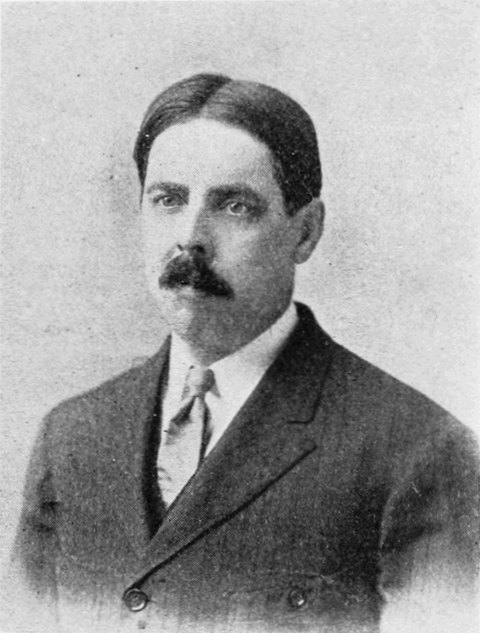
Thorndike's laws of learning are three rules proposed by Edward L. Thorndike, an American psychologist of the early 20th century, drew on an experiment with a hungry cat in a box to set out three learning laws in 1911: readiness, exercise and effect.[1]
Thorndike proposed three learning laws in 1911 after experiments with hungry cats in boxes.[1] The law of effect says actions followed by reinforcement tend to be repeated more often.[2] A critic warned that defining satisfiers by what animals approach can make the law circular.[3]
Key facts
| 1911 | Year Thorndike proposed the three laws, per Ni and Lu (2020)[1] |
|---|---|
| 1898 | Year of Thorndike's dissertation on animal intelligence, per Chance (1999)[4] |
| 140 | Japanese EFL students in Strong and Boers (2019) trial-and-error study[5] |
| 30 | Adults with transtibial amputations in Donaghey and colleagues' (2010) randomized trial[6] |
Overview
The three laws stated plainly
Edward Lee Thorndike set out 3 laws of learning: readiness, exercise and effect. The law of readiness concerns the learner's state of preparation before learning begins. The law of exercise holds that a connection between a situation and a response grows stronger when it is practiced and weaker when it is not. The law of effect holds that a connection is strengthened when its consequence is satisfying and weakened when the consequence is discomforting.[7] One review of Thorndike's behaviorism lists four laws, adding a law of attitude to the three named above.[8]
Thorndike set out these laws as part of a broader program in which psychology would supply education with scientific method. He argued that teaching methods should have their effectiveness established through scientific methodology, with rigorous control of variables, and that measurement instruments should be used to judge whether educational goals had been reached. He treated the school as a large laboratory in which the work of the educator served psychology as much as psychology served education.[9] Hearst (1999) notes that Thorndike's career began with the publication of his dissertation at the start of the twentieth century and went on to include many contributions to animal and human learning and to educational psychology.[10]
The three laws fit together as one account of how a connection is formed and kept. Readiness describes the condition of the learner at the moment a connection is to be made. Exercise describes what happens to the connection over repeated occasions. Effect describes what the consequence of the response does to the strength of the connection. In this scheme a connection is not simply stored once; its strength depends on the learner's preparation, on practice and on whether the outcome satisfies or discomforts.[7]
Thorndike's laws have been applied to the teaching of Arabic vocabulary, where they are used to organize learning preparation, the learning process and the evaluation of that learning.[7] That reading rests on a library study analyzed by content analysis, and it notes that many experiments in behaviorism were carried out with animals, which the study treats as a question about how far the theory carries over to religious teaching.[8]
History
What Thorndike proposed and when
Edward L. Thorndike was an American psychologist of the early 20th century whose work on how animals and people learn became a foundation of educational psychology.[1] His dissertation on animal intelligence, completed in 1898, is often taken as the starting point of the field later known as the experimental analysis of behavior.[4] In it Thorndike studied problem solving in cats, dogs and chicks by experiment rather than by anecdote or by watching animals in natural settings.[11]
Thorndike asked whether the similarities between human and animal behavior were homologous, meaning functionally equivalent, or merely analogous in form, and he concluded the latter. He explained what he observed through the law of effect, without appeal to reason or other cognitive mechanisms, though that law was not stated as such until long after the monograph appeared. His combination of experimental method with insistence on objective description of behavior anticipated later behaviorists such as Watson and Skinner.[11]
In 1911, working from the hungry cat box experiment, Thorndike named three learning laws that became well known: readiness, exercise and effect.[1] In the law of effect, a response followed by a satisfying state of affairs is strengthened, and one followed by an annoying state of affairs is weakened.[12] The origins of this law lie partly in Darwin's idea of selection, which Thorndike adapted to the selection of behavior.[13]
Main ideas
How the law of effect is said to work
Thorndike's law is a law of effect, not of affect, and this distinction matters for how the mechanism is understood. Earlier writers in whose tradition Thorndike continued, Spencer and Bain among them, openly treated pleasure and pain as the agents that fixed or eliminated responses. Thorndike instead defined a satisfying state of affairs as one the animal does nothing to avoid and often acts to attain and preserve, and a discomforting state as one the animal avoids and abandons. These definitions refer to what the animal does, not to what it feels or reports, so the mechanism is stated without appeal to subjective experience.[3]
In his dissertation, Thorndike argued for a general-process view of learning: the mechanisms of learning are shared by a broad range of species. Later work in evolutionary biology found that many features of the genotype and phenotype are strikingly stable across species that are widely divergent. That finding gives a biological basis for the general-process view.[14]
The behaviorist definition of satisfiers and annoyers has drawn a charge of circularity. A critic can restate the definition so that the animal does what it does for no reason beyond the doing, and leaves undone what it leaves undone for no reason beyond that. That restatement is probably not entirely fair, but it points to the difficulty of defining satisfiers and annoyers without an independent determination of their nature. Whether a state of affairs is satisfying or annoying can usually be settled only in the course of a learning experiment, and it cannot then be called a cause of the learning without circularity.[3]
Many later statements of the law of effect depart in significant ways from Thorndike's original formulation, and a review of the law's history traces how it has been and continues to be misrepresented. The mechanisms of the law remain a subject of study for behavioral and social psychologists and for neuroscientists, including work on habitual responses as contrasted with goal-directed behavior.[15]
Trial and error as a learning method
A review of 44 English as a foreign language textbooks sold commercially found that phrasal verb exercises often come with no relevant input to help learners beforehand. Faced with such exercises, learners are likely to fall back on trial and error, and they are then expected to learn from the feedback they receive. An experiment with 140 Japanese students of English compared that trial-and-error method with a retrieval procedure. In the retrieval procedure, students study a set of phrasal verbs first and then do an exercise. Retrieval scored higher on an immediate posttest and on a posttest given 1 week later. In the trial-and-error condition, 25% of the wrong exercise responses came back on the delayed posttest even though feedback had been given.[5]
A randomized controlled trial tested trial and error as treatment as usual against errorless learning, a method in which the learner is guided so as to avoid mistakes, for the practical skill of fitting a prosthetic limb. Thirty adults with transtibial amputations took part, 42% of them cognitively impaired, with 15 randomly assigned to errorless learning and 15 to the control condition.[6]
In a model of trial and error learning, how decision makers learn and how well the process works are tied to their incentives, and in particular to how much risk they will tolerate. A performance trap develops in the model, such that low performing agents opt not to experiment and so fail to gain the knowledge needed to improve. Risk has effects that carry from one period to the next, and across agents these effects lead on average to divergence in long-run performance.[16]
In programming education, trial and error is described as one effective method for refining code, yet learners in conventional exercises can struggle to stay motivated because they do not know how good their code is and cannot keep experimenting. A proposed remedy sets criteria for judging code quality and gives learners a code visualization system that displays quality indicators, a ranking system and a viewing function based on that ranking. When the system was used in a university classroom, the evaluation indicated that students produced better code by those quality indicators when they worked by trial and error themselves or looked at other learners' code.[17]
Connectionism as a general theory of learning
Thorndike's laws of learning sit inside a larger system he called connectionism, in which learning is the forming and strengthening of bonds between situations and responses. In this view a stimulus, such as a problem posed in class, meets a response, and the quality of the learning outcome depends on how firmly that connection is established. The bond grows when the response is followed by a feeling of pleasure and satisfaction, the idea Thorndike expressed as the law of effect.[18]
Thorndike's emphasis on reward brought the learner's own state into learning theory, and his law of effect became the focus of a long argument about motivation. Studies gathered in support of the law showed that praise motivated learners more effectively than reproof, and that group recognition and rivalry could serve as motivating stimuli. The law of effect was controversial from the start, and one line of criticism held that people who reach a goal often do not strive for it again but raise their aspirations to a point where failure becomes a real risk. Other critics objected that rewards and punishments place the motive for conduct outside the student's own will, and that the meaning of a reward depends on the individual's level of aspiration.[19]
Rila (2022) describes Thorndike's law of effect as holding that learning succeeds better when a student's response to a stimulus is followed by pleasure and satisfaction, and treats representation in the formation of stimulus-response bonds as serving success in learning mathematics that causes satisfaction. A reflective review of Thorndike's theory in mathematics education describes representation, the various forms in which a mathematical idea is presented, as the center of mathematics learning activities, and treats the formation of stimulus-response bonds as the route to successful learning that produces satisfaction. The same review reads the theory through a utilitarian outlook, which judges an action good when it maximizes satisfaction and happiness.[18] Later synthesis work places Thorndike alongside Vygotsky and Piaget among the traditions from which thinking processes in learning are reconstructed.[20]
Thorndike (1933) reported that school records and test scores obtained from boys and girls at age 14 predicted their educational careers with great accuracy, but that the follow-up gave little indication of their vocational futures. A ten-year study he directed, supported by grants from the Commonwealth Fund and the Carnegie Corporation, used school records and test scores collected from boys and girls at age 14.[21]
The law of effect in mathematical form
In 1934 the psychologist L. H. Gulliksen set out several claims contained in Thorndike's law of effect in mathematical form. He showed that the same functions could be obtained by generalizing a theory of learning that Thurstone had recently published. From these functions he derived an equation for the learning curve, meaning the relation between cumulative errors and cumulative correct responses over the course of practice. The equation fitted data on visual discrimination in rats.[22]
Research
The puzzle box experiments and their results
Doubts had long been raised about whether the law of frequency is primary in animal learning, and Köhler's work on apes encouraged that doubt. Aoki ran three experiments with chicks in maze boxes. One box had two courses of equal length to a goal, one had two courses of unequal length, and in the third a chick first learned a single course and was then placed in a box with a nearer alternative. In the first experiment, previous experience shaped the chicks' behaviour, which Aoki took as support for Thorndike's law of frequency. In the second and third experiments, the chick often took the course nearer the goal rather than the one it had most often used. Aoki concluded that a factor stronger than frequency, which he called the approximation to the object, decides the animal's pattern of behaviour.[23]
Modern evidence from brain and behavior studies
Staddon argued in 2014 that cumulative records, which plot individual responses in real time, are an obvious starting point for understanding the dynamics of operant behavior, the behavior shaped by its consequences, yet one that has been neglected. He recommended studying choice under concurrent random ratio schedules, in which each response has a fixed chance of payoff, because such schedules lack the stabilizing feedback built into concurrent variable-interval schedules, where payoff depends on the passage of time. From these studies he identified basic properties of operant learning: post-reinforcement pulses at the start of fixed-interval learning, regression, faster reversal learning after shorter periods, and a distribution of choice on identical random ratios at different absolute ratio values. Staddon concluded that any model of operant learning needs silent responses that compete to become the active response. It also needs response strengths that reflect more than the immediate past history of reinforcement.[24]
A 1978 set of concurrent-chain experiments with pigeons tested whether rewarding and aversive outcomes act on choice with equal force and opposite sign. Scale values taken from the two birds that conformed to matching yielded an estimate, in negative food units, of what a single shock per minute was worth. A second experiment found that predicted and obtained choice behavior corresponded closely. The two experiments together supported the contention that positive and aversive stimuli affect choice behavior equally, though opposite in sign.[25]
Nevin and Grace proposed in 2000 that the rate of a free operant, a response an animal emits without being prompted, resembles the velocity of a moving body, while resistance to change, how well the response persists when conditions worsen, resembles inertial mass. Their extension of this behavioral momentum metaphor treats preference as an analog to gravitational mass, so that resistance to change and preference become convergent measures of a single construct representing the effects of a history of exposure to signaled conditions of reinforcement. That construct joins two notions usually kept apart, the strength of learning and the value of incentives. The research it guided covers how reinforcement affects response rate, resistance to change and preference, with implications for clinical interventions, drug addiction and self-control.[26]
Beeler reported in 2012 on mice in a two-lever homecage operant task in which the relative value of the levers changed, requiring the animals to monitor reward outcome and adapt. The data were fitted to a temporal difference learning model, a formal account of how predictions are updated from reward. The fit showed that mice with higher tonic dopamine had less coupling between reward history and behavioral choice. Beeler put forward the idea that tonic dopamine regulates thrift, meaning how far an animal draws on prior reward learning to get the most return on the energy it spends. On this view, more dopamine lowers thriftiness and allows more exploration, while less dopamine raises thriftiness, favors use of prior learning and reduces exploration.[27]
Athalye and colleagues reported in 2018 that mice come to repeat more often those patterns of motor cortical activity that trigger optogenetic self-stimulation of dopamine neurons in the ventral tegmental area. Mice learned to reenter more frequently those motor cortical activity patterns that triggered optogenetic self-stimulation of the ventral tegmental area, and the participating neurons gradually increased and aligned their covariance to that of the target pattern. As learning went on, these patterns were gradually shaped: the neurons taking part increased their covariance and brought it into line with that of the target pattern. Athalye and colleagues read this as a neural law of effect. Motor cortex patterns that produce phasic dopamine activity are reinforced and shaped over time, which suggests how animals come to select and shape actions that reliably bring reinforcement.[2]
Blake, Strata, Churchland and Merzenich (2002) trained adult owl monkeys to tell tones above a standard frequency from the standard. Before training, the monkeys' frequency discrimination thresholds were close to one octave; after training they were about 1/12 octave. Blake and colleagues trained adult owl monkeys to discriminate tones higher than a standard frequency and recorded from microelectrodes implanted in the primary auditory cortex, A1. At first the recorded responses were broadly tuned, covering a range of four to five octaves. In the week when the monkey came under behavioral control, marked by a fall in the measured threshold, physiological recordings showed stronger responses to all frequencies. In that same week, A1 responses to target stimuli rose relative to standard and nontarget stimuli. Blake and colleagues take it to suggest that behavioral responses to stimuli adjust responsiveness in primary cortical areas.[12]
The negative half of the law, that responses followed by unpleasant events are weakened, has its own animal evidence. Schuster and Rachlin trained pigeons under two conditions, each using two identical variable-interval schedules of positive reinforcement. The schedules ran on separate response keys but were never available at the same time. In one condition each response was punished with electric shock, and in the other shocks were delivered independently of responding. Punishment suppressed responding, while the free shocks did not. Given a choice, however, the pigeons preferred whichever condition brought the lowest rate of shock, whether or not the shock depended on responding.[28]
Trial and error in motor and neural learning
Trial and error learning means trying a movement, using the outcome to judge whether it worked, and adjusting the next attempt accordingly. A 1997 positron emission tomography study, which images blood flow in the brain as a proxy for activity, had subjects learn sequences of eight finger movements while computer-generated tones told them whether each move was correct or incorrect. In a control condition called free selection, subjects made a finger movement on each trial and varied the movements randomly, with no feedback on success or failure, so no learning occurred. Comparing new learning with free selection, the study found a small activation in the right prefrontal cortex, which the authors suggested may reflect rehearsal of past moves and adaptation of responses. During new learning the caudate nucleus, a structure of the basal ganglia, showed strong activation. Jueptner and colleagues suggested that this activation might reflect mental rehearsal of past moves or reinforcement of movements by the outcomes they produced. On the free selection task the putamen was activated toward its front, and toward its back when subjects repeated the same movement. Jueptner and colleagues suggested that these differing peak locations in the striatum may reflect separate corticostriatal loops, that is, distinct circuits linking cortex and striatum. The cerebellar nuclei on both sides and the vermis were more active in new learning than in free selection. Jueptner and colleagues tentatively suggested that the basal ganglia may specify movement from memory of movements or outcomes. The cerebellum, in their account, may be more directly involved in changing the parameters of movement execution.[29]
Recordings from the anterior cingulate cortex, a region on the inner surface of the frontal lobes, show a different pattern from the gradual value learning thought to occur in striatal regions. In a 2020 study, ensembles of anterior cingulate neurons were recorded as rats worked out each day which of 3 levers was rewarded. Across sessions the rats' lever preferences shifted gradually as they came to concentrate on the rewarded lever. Yet for most individual neurons, responses to presses on rewarded and nonrewarded levers alike switched abruptly, within fewer than 2 trials. These neuronal transitions were not synchronized across the population, though they clustered near the point at which the rats began to concentrate on the rewarded lever. Because the individual changes were asynchronous, the population-level shift looked gradual. Emberly and Seamans proposed that such abrupt shifts in the action representations of anterior cingulate neurons may belong to a mechanism for revising choice strategies as new information arrives.[30]
Deliberate search and vicarious trial and error
When a learner cannot see how choices map onto outcomes, search proceeds by trying options and watching what happens, and earlier attempts shape later ones. A dynamic model of this situation treats the unknown mapping as the realized path of a Brownian motion, a random walk whose position drifts over time. Agents in the model learn about that mapping by observing the choices of earlier agents together with the outcomes those choices produced. The model characterizes the best action in each period and the course of experimentation and learning across periods. Applied to new product development, the model reproduces features of the data seen in the well-known Product Life Cycle.[31]
Deliberation of a different kind appears at choice points in mazes, where rodents sometimes pause and orient toward the routes ahead, a behavior called vicarious trial and error (VTE). VTE coincides with neural processing that looks ahead. This includes sweeps of representation in the hippocampus and brief signals of reward in the ventral striatum and orbitofrontal cortex. Even in a well-learned task, VTE appeared preferentially when a spatial selection was required, which links the behavior to decision-making that depends on hippocampal processing.[32]
A simulation account derives the shift from deliberate to habitual control from a single principle: policies that maximize reward alone are compared with policies that also value exploration, and the exploratory ones require VTE and the retrieval of episodic information through forward sweeps. In that account, forward sweeps appear early in learning and fade soon afterward. Their fading marks the shift from deliberative to habitual choice.[33]
Later work in rats on a set-shifting task, which requires repeated switches between spatial strategies, found that a procedure estimating strategy use from choice history could identify learning points, and decision accuracy rose around those points. The rate of VTE also increased around identified learning points, and trial-by-trial flexibility scores rose there as well. VTE fell into indecisive and deliberative subtypes. The subtype depended on the flexibility of the period in which it occurred and on whether the resulting choice was correct or incorrect. Recordings from the medial prefrontal cortex showed higher beta band activity on VTE trials than on non-VTE trials, and higher gamma activity when learned strategies could be exploited than in prelearning, exploratory periods. The link between flexibility and VTE can break down, however, so VTE is not always a sign of deliberative decision-making.[34]
Error signals and correction beyond the individual
The error-related negativity is a negative deflection in the electroencephalographic signal, meaning a downward shift in the record of the brain's electrical activity, that is generated mainly in the anterior cingulate cortex within 100 ms after a person commits an error. Pain can be treated as a signal of bodily error, a discrepancy between the actual and the targeted state, and it motivates protective action such as avoidance behavior to safeguard the body's integrity. Evidence indicates that the error-related negativity is involved in learning and in the adjustment of behavior, and that it plays a part in the development of various psychopathologies. Its relation to pain-related avoidance had not been examined, and a pilot task measuring both the error-related negativity and avoidance behavior in response to painful mistakes was run with a total of 12 participants, each of whom underwent one of six different task versions.[35]
Building an experimental task of this kind involves a tension between experimenters and participants, because the experimenter must guide the participant toward the proper performance without the participant responding to the guidance as such. The performance must look natural while staying within tight constraints, and resistance from the participant must be prevented. The attempt to develop a new paradigm for studying the role of the error-related negativity in the development of avoidance behavior failed, and the reflections on that failure were judged thorough and illuminating.[36]
Scientific correction is often pictured as a clear-cut and largely procedural response to error. The problem is identified, the editor is notified, a retraction is issued, the record is updated, and the matter is closed. For small, innocent mistakes, contradictory findings, or methodological flaws, that process might work as intended.[37]
Training memory aid use after brain injury
Smartphones can serve as external memory aids for people with an acquired brain injury, an injury to the brain that occurs after birth, yet rehabilitation services make little use of them. One proposed reason is that professionals lack evidence-based guidelines on the best way to teach smartphone use, and another is that prospective users may be unfamiliar with the technology or have memory and learning difficulties. A 2021 paper by Ramirez-Hernandez, Stolwyk, Ownsworth and Wong sets out the protocol for a study comparing three training methods for a smartphone reminder app in people with an acquired brain injury who report memory complaints. The three methods are Systematic Instruction, Error-based Learning and Trial-and-Error.[38]
The design is a Phase II randomised controlled trial with three arms and a blinded assessor. Participants are assigned at random to one of three groups, and the person who scores the outcomes does not know which group each participant was in. The estimated sample size is 51 participants older than 18 years, divided equally among the three training groups. Each participant is seen across four sessions: one for baseline measures, one for training on the app, and two for follow-up assessments at 1 week and 6 weeks after training. The main outcome is how proficiently a participant performs tasks with the trained app.[38]
Secondary outcomes include whether skills generalise to other apps and how many errors are made while attempting the tasks. They also include how often the smartphone is used in general and as a memory aid, plus confidence in smartphone use and memory self-efficacy, a person's belief in their own memory capacity. Proficiency, generalisation and error counts are measured immediately after training and at both follow-up sessions, while the other secondary measures are taken before the intervention and at the two follow-ups. An independent blinded assessor collects all outcome measures.[38]
In practice
Applications in classrooms and special education
A 2025 case study of an Arabic Morning program in Indonesia examined the program through three parts of Thorndike's connectionism: the law of exercise, the law of effect and the law of readiness. The researchers collected data from interviews with program tutors, participant observation and a review of program documents, and analyzed them with the Miles and Huberman model of data reduction, data presentation and conclusion drawing. They reported that the exercise law appeared as memorizing mufrodat (Arabic vocabulary items), writing, and expressing Arabic sentences. The effect law appeared as the giving of rewards and punishments, and the readiness law as an emphasis on students having both internal and external readiness before joining the program. The study concluded that all three aspects had been fully implemented in the Arabic learning.[39]
A 2024 article on Kiswahili as a second language argued that connectionism can be applied to that subject and that learners' success in school depends not entirely on instructional methods but also on the theories applied during learning.[40] A 2023 qualitative descriptive study of basic braille instruction in special schools (SLB) in Indonesia used interviews and found that teaching of the braille alphabet relies on repetition of the dot codes. The repetition is meant to strengthen students with visual impairments in mastering the codes, and the study concluded that Thorndike's theory contributes greatly to this instruction.[41]
In religious education, a 2025 survey took all Islamic Religious Education (PAI) teachers at MI Al Azhar Center Baturaja as respondents and used a Likert-scale questionnaire that the researchers described as validated and highly reliable. Frequency distributions showed the teachers applying the laws of readiness, exercise, effect and attitude. Teachers reported preparing students mentally, running repeated exercises, giving positive feedback, emphasizing consequences, and drawing on prior experience to strengthen positive religious behavior. The study concluded that the framework develops students' skills and strengthens religious character.[42]
A 2025 library study of PAI strategies tied the Islamic ideas of targhib (positive motivation) and tarhib (warning) to conditioning mechanisms, and rewards and punishments to operant reinforcement. It concluded that these approaches build religious habits, discipline and positive attitudes when learning is repeated and consistent.[43] A 2025 paper on Catholic Religious Education described applying Thorndike's behaviorist approach by giving students suitable stimuli and reinforcement, such as praise and prizes or punishments, through planned and structured activities intended to shape character and faith.[44]
In microbiology teaching, a 2026 study at the First Affiliated Hospital of Guangxi Medical University enrolled medical interns between August 2024 and August 2025. The interns were divided into a control group taught traditionally and an experimental group taught with a combined PBL-CBL method guided by Thorndike's learning theory. The experimental group scored higher on theoretical knowledge, practical skills and analysis of antimicrobial susceptibility reports, and showed higher scores on the CTDI-CV scale for curiosity, open-mindedness, and systematic and analytical thinking. On the MBI scale, the experimental group reported less emotional exhaustion and more personal accomplishment. Its teaching evaluations were also better on bringing out key and difficult points, encouraging active learning and building clinical practice skills. The study reported that all differences were statistically significant and concluded that the guided method improves professional knowledge, cultivates critical thinking and reduces learning burnout.[45]
Reward, repetition and readiness in practice
Arabic vocabulary, called mufradat, is taught as the groundwork for forming written and spoken sentences, and one 2024 article treats Thorndike's three laws as an alternative basis for choosing mufradat techniques. The article names the laws of readiness, exercise and effect, and it arranges mufradat teaching into three stages: preparation for learning, the learning process itself, and evaluation of what was learned. Its claim is that a mufradat technique built on the laws works well when it is followed at every one of those stages. The article reports no student numbers, test scores or comparisons with other methods, so it presents a teaching proposal rather than measured evidence.[7]
Mathematical representation, the various forms in which mathematics is presented so that students can understand it, is described as the center of mathematics learning activities in a 2022 reflective review. That review draws on the law of effect, the claim that learning succeeds better when a student's response to a stimulus is followed by pleasure and satisfaction, and it treats learning as the forming of stimulus-response bonds that fix the quality of outcomes. The review asks what prompts students to build a representation, how teachers should act so that students can create an appropriate one, and how students themselves create it. It reads these questions through a utilitarian view, in which a good action is one that maximizes satisfaction and happiness, so representation is meant to bring about successful mathematics learning that produces satisfaction. The piece is a literature review of the author's own reflections and reports no data.[18]
A web platform named UniMath was built to give high school students structured practice with numerical ability, the capacity to interpret quantitative information, because Indonesian students often struggle with contextual mathematical problems. The design integrated repetition, feedback and remediation, the three elements the developers took from Thorndike's account of practice. The product was built through the 4D stages of Define, Design and Develop, with a limited Disseminate stage. Needs data came from 34 students and one mathematics teacher. The main trial used 36 Grade X students picked by cluster random sampling. A media expert judged the platform feasible after five minor revisions, and a subject-matter expert judged it feasible without revision. Change was measured with a one-group pretest-posttest design, logs from the practice mode and normalized gain, a scale on which 0.449 counts as moderate. Practicality, measured by a 15-item questionnaire and interviews with six purposively selected students, reached 82.22%, rated very practical. The developers state that the improvement was moderate and within one class, and that causal inference and wider generalization remain limited.[46]
In online settings, a 2023 survey of 100 participants examined how learner behaviour and the learning environment relate to online motivation, using an instrument built from Thorndike's 1905 law of effect combined with a motivational framework published in 1990. The questionnaire had five sections: 5 items on demographics, 12 on behaviour, 14 on environment, 5 on changes in behaviour and 7 on changes in environment. The paper presents its findings as pedagogical implications for strengthening students' online learning motivation, and it reports no effect sizes.[47]
Later summaries of the theory describe it as built around the principles of readiness, exercise and set, and treat it as one of the basic frameworks of the modern psychology of education.[48] Classroom studies have taken the three laws together as a guide to teaching. One descriptive qualitative study of 32 seventh-grade students in a class at SMP 19 Surakarta reported that applying the laws of readiness, exercise and effect improved the students' speaking skills in storytelling.[49]
What this looks like when you study
In a junior high English reading class, teachers used questionnaires and interviews to collect data on efficient and interesting reading lessons built on Thorndike's three laws and the principle of timing.[1] In an Arabic morning program in Indonesia, tutors had students memorize mufrodat (vocabulary items), write, and express Arabic sentences as the law of exercise in practice. The same program applied rewards and punishments for the law of effect and stressed internal and external readiness before participation for the law of readiness.[39]
In a web platform called UniMath, 36 Grade X students practiced numerical problems across two practice days, logging 3,615 attempts. Accuracy rose from 64.02% to 80.64%, the mean score rose from 45.00 to 69.72, and the normalized gain was 0.449, a moderate improvement. The platform gave staged hints and required review after repeated errors, features that 97.10% of the 34 students surveyed in the needs stage had requested. A practicality questionnaire scored 82.22%, which the authors called very practical.[46]
In a study of 140 Japanese students learning English phrasal verbs, one group used a trial-and-error method: they attempted exercises without prior study and received feedback. Scores on an immediate and a 1-week delayed posttest favored retrieval over trial and error, and 25% of the wrong exercise responses were reproduced on the delayed posttest despite feedback. The authors had found that 44 commercially available English textbooks commonly present phrasal verb exercises without first providing relevant input.[5]
A source recommends that a student prepare for mufradat learning by building readiness before the learning process begins and by reviewing at the evaluation stage. When practicing, repeat the same response often, because the law of exercise strengthens a connection through use. Arrange for a satisfying consequence after a correct response, because the law of effect holds that satisfied responses tend to be repeated.[7]
Later developments
Trial and error beyond Thorndike
Derksen (2025) notes that correction is often pictured as a tidy procedure: spot the problem, tell the editor, retract, update the record, move on. That picture may hold for small honest errors, conflicting findings or weak methods. Allegations with social, economic and emotional weight, disputed responsibility, institutional silence or reputational risk make matters far less clear. Social psychology has faced a replication crisis for 13 years, declared because earlier and often influential results could not be reproduced. About 3 lessons have been drawn from the failed replications.[50]
What later research revised
Thorndike published his dissertation at the start of the 20th century.[10] Allport read those findings as showing that the ego drive outranks other motives. He also faulted the law of effect, citing evidence that people often do not try again for a goal already reached. Instead they lift their aims to a level where failure is a real risk. Cantor objected to reward and punishment as incentives, since they put the reason for conduct outside the student's own will. Lewin and his associates held that the meaning of a reward or punishment can only be read subjectively, in light of the individual's level of aspiration.[19]
Lutfiyah, Yudianto, Susanto and Suwito (2026) synthesized published work on how learners think, sorting it into three main processes: directing attention, handling knowledge and drawing inferences, and reflecting on and controlling one's own thinking. From 288 identified articles, 11 Scopus-indexed papers published between 2021 and 2026 met the inclusion criteria. The review names 3 core processes: regulation of attention, processing of knowledge with inference, and reflection with control. Those processes sit within conditions that support them, among them what learners already know, what the task asks, self-efficacy, past learning experiences, language and social support. Developmental and social settings also shape them.[20]
Criticism
Criticism, revisions and open questions
A review of converging lines of evidence reported a negative relationship between the signaled probability of food and response variation, seen in both temporal and spatial dimensions of behavior, in rats and in pigeons, in the operant chamber and in open-field settings. Response variation was also greater when rewards were smaller or delayed than when they were larger or immediate. On that basis the reviewers proposed a Law of Expect, holding that outcome expectation determines response variation, which rises as expectation falls and falls as expectation rises.[51]
The Modified Law of Effect does not account for all of the empirical data, and the Law of Expect does not account for all of the empirical phenomena either. The reviewers therefore concluded that both laws are needed. They suggested that work on the neural basis of these laws might clarify how learned behavior is generated and regulated, and might bear on creative behavior.[51]
A separate body of work uses the name Thorndike for a model of test fairness, in which cognitive ability tests are said to be biased against certain groups because they show larger mean differences across racial groups than job performance measures do. Reeve and Bonaccio (2009) describe two factors that confound this revised version of Thorndike's model. Measurement error in both the predictor and the criterion, and the Spearman-Jensen effect, can make the model signal bias where none exists. Measurement error in both the predictor and the criterion, and the Spearman-Jensen effect (the finding that group differences on an observed measure are proportional to how strongly that measure reflects general mental ability), can produce false indications of bias.[52]
Common misconceptions
A frequent objection holds that the law of effect argues in a circle: an animal performs an act, on this reading, simply because it performs it, and refrains from another simply because it refrains. The circularity danger arises when the satisfying or annoying nature of a state of affairs is determined only in the course of a learning experiment and then invoked as a cause of learning. Meehl observed that Thorndike and his co-workers did not make any significant effort to show, apart from the learning experiment itself, whether a given reward or punishment was satisfying or annoying.[3]
Key studies
| Year | Study | Sample | Design | Finding |
|---|---|---|---|---|
| 1968 | Schuster & Rachlin[28] | pigeons | experiment on punishment and free shock with variable-interval schedules | Punishment suppressed responding but free shocks did not, and pigeons preferred the condition with the lowest shock rate. |
| 1978 | Farley & Fantino[25] | Concurrent-chains choice experiments with pigeons comparing food and shock outcomes | The effects of positive and aversive stimuli on choice appeared equal, though opposite in sign. | |
| 1997 | Jueptner et al.[29] | human subjects learning finger sequences | positron emission tomography study of motor learning by trial and error | The caudate nucleus was strongly activated during new learning, and the cerebellar nuclei were more active than in free selection. |
| 2002 | Blake et al.[12] | adult owl monkeys | instrumental tone discrimination with implanted microelectrodes | Training narrowed the monkeys' frequency discrimination thresholds, which began near one octave and fell to roughly 1/12 octave. |
| 2010 | Donaghey et al.[6] | Randomized controlled trial with 30 adults with transtibial amputations, 15 per group | The errorless group recalled more correct steps (mean 90.9, SD 12.1) than the control group (77.9, SD 8.4; P<0.001). It also made fewer errors (mean 0.93, SD 1.3 versus 2.1, SD 0.95; P=0.002). | |
| 2018 | Athalye et al.[2] | mice | optogenetic VTA self-stimulation experiment | Mice learned to reenter more frequently motor cortical activity patterns that triggered VTA self-stimulation. |
| 2019 | Strong & Boers[5] | 140 Japanese EFL students | experiment comparing trial and error with retrieval | Retrieval beat trial and error on immediate and 1-week delayed posttests, and 25% of wrong responses recurred on the delayed posttest. |
| 2020 | Emberly & Seamans[30] | 9 rats, 14 free choice sessions | ensemble recording from anterior cingulate cortex during lever choice | Rats took an average of 70 trials to fully exploit the rewarded lever, and most neurons changed responses abruptly in under 2 trials. |
| 2020 | Ni & Lu[1] | Questionnaire and interview study of a junior high school English reading class | The three laws, combined with the principle of timing, supported efficient and interesting reading lessons. | |
| 2021 | Ramirez-Hernandez et al.[38] | 51 participants aged over 18 with acquired brain injury | three-armed assessor-blinded phase II randomized controlled trial protocol | The planned trial sets three training approaches side by side (systematic instruction, error-based learning, trial and error) for teaching people with acquired brain injury to use a smartphone reminder app. |
| 2024 | Miles et al.[34] | rats on a spatial set-shifting task | medial prefrontal cortex recording with strategy analysis | VTE rates and flexibility scores increased around learning points, and beta band activity was higher on VTE trials. |
| 2025 | Munazzalurrohmi et al.[39] | Arabic Morning tutors and program documents | qualitative case study with interviews, observation, and documents | All three aspects of Thorndike's connectionism were fully implemented in the Arabic learning program. |
| 2026 | Jati et al.[46] | 36 Grade X students | one-group pretest-posttest development study | Accuracy rose from 64.02% to 80.64% and the mean score from 45.00 to 69.72, with a normalized gain of 0.449. |
| 2026 | Liu et al.[45] | medical interns at one hospital, August 2024 to August 2025 | controlled comparison of two teaching methods | The Thorndike-guided PBL-CBL group scored higher on theory, practical skills, and report analysis, with all differences statistically significant. |
See also
References
- Ni, Y., & Lu, J. (2020). Research on Junior High School English Reading Class Based on the Principle of Timing and Thorndike’s Three Laws of Learning. Journal of Language Teaching and Research, 11(6), 962. doi:10.17507/jltr.1106.13
- Athalye, V. R., Santos, F. J., Carmena, J. M., & Costa, R. M. (2018). Evidence for a neural law of effect. Science, 359(6379), 1024-1029. doi:10.1126/science.aao6058
- Meehl, P. E. (1950). On the circularity of the law of effect. Psychological Bulletin, 47(1), 52-75. doi:10.1037/h0058557
- Chance, P. (1999). Thorndike's puzzle boxes and the origins of the experimental analysis of behavior. Journal of the Experimental Analysis of Behavior, 72(3), 433-440. doi:10.1901/jeab.1999.72-433
- Strong, B., & Boers, F. (2019). The Error in Trial and Error: Exercises on Phrasal Verbs. TESOL Quarterly, 53(2), 289-319. doi:10.1002/tesq.478
- Donaghey, C., McMillan, T., & O'Neill, B. (2010). Errorless learning is superior to trial and error when learning a practical skill in rehabilitation: a randomized controlled trial. Clinical Rehabilitation, 24(3), 195-201. doi:10.1177/0269215509353270
- Ahmadi, M. (2024). Teknik Pembelajaran Mufradat dalam Perspektif Teori Belajar Edward Lee Thorndike. AL-WARAQAH Jurnal Pendidikan Bahasa Arab, 4(2), 32-41. doi:10.30863/awrq.v4i2.5547
- Azizah, M. N. (2023). Relevansi Teori Behaviorisme Menurut Edward Lee Thorndike Dan J.B Watson Terhadap Pendidikan Agama Islam. Educatia : Jurnal Pendidikan dan Agama Islam, 13(2), 341-358. doi:10.69879/mczmkj50
- Thorndike, E. L. (2023). A contribuição da Psicologia à Educação. Revista Brasileira de Análise do Comportamento, 19(1). doi:10.18542/rebac.v19i1.14943
- Hearst, E. (1999). After the puzzle boxes: Thorndike in the 20th century. Journal of the Experimental Analysis of Behavior, 72(3), 441-446. doi:10.1901/jeab.1999.72-441
- Lattal, K. A. (1998). A century of effect: Legacies of e. L. Thorndike's animal intelligence monograph. Journal of the Experimental Analysis of Behavior, 70(3), 325-336. doi:10.1901/jeab.1998.70-325
- Blake, D. T., Strata, F., Churchland, A. K., & Merzenich, M. M. (2002). Neural correlates of instrumental learning in primary auditory cortex. Proceedings of the National Academy of Sciences, 99(15), 10114-10119. doi:10.1073/pnas.092278099
- Catania, A. C. (1999). Thorndike's legacy: Learning, selection, and the law of effect. Journal of the Experimental Analysis of Behavior, 72(3), 425-428. doi:10.1901/jeab.1999.72-425
- Papini, M. E. (1998). Evolución del aprendizaje: fundamentos metateóricos a un siglo de la tesis de Thorndike. Apuntes de Psicología, 16(3), 243-258. doi:10.55414/fzx1pc50
- Domjan, M. (2026). Thorndike's law of effect and its inconsistent description over the years. Journal of the Experimental Analysis of Behavior, 125(1). doi:10.1002/jeab.70073
- Callander, S., & Matouschek, N. (2019). The Risk of Failure: Trial and Error Learning and Long-Run Performance. American Economic Journal: Microeconomics, 11(1), 44-78. doi:10.1257/mic.20160359
- MAEDA, S., KOIKE, K., & TOMOTO, T. (2024). Code Visualization System for Writing Better Code Through Trial and Error in Programming Learning: Classroom Implementation and Practice. International Conference on Computers in Education. doi:10.58459/icce.2024.5006
- Rila, R. S. P. P., & Aziz, T. A. (2022). Kajian Reflektif Teori Thorndike Dalam Konteks Representasi Matematis Berdasarkan Ideologi Utilitarian. Griya Journal of Mathematics Education and Application, 2(1), 80-95. doi:10.29303/griya.v2i1.129
- Ausubel, D. P. (1949). Ego-Development and the Learning Process. Child Development, 20(4), 173. doi:10.2307/1126228
- Lutfiyah, L., Yudianto, E., Susanto, S., & Suwito, A. (2026). Reconstructing Thinking Process Indicators in Learning: An Integrative Synthesis of Vygotsky, Piaget, and Thorndike. International Journal of Current Science Research and Review, 09(10). doi:10.47191/ijcsrr/v9-i10-19
- Thorndike, E. L. (1933). The prediction of success in vocational life. The Vocational Guidance Magazine, 12(4), 21-25. doi:10.1002/j.2164-5884.1933.tb00155.x
- Gulliksen, H. (1934). A Rational Equation of the Learning Curve Based on Thorndike's Law of Effect. The Journal of General Psychology, 11(2), 395-434. doi:10.1080/00221309.1934.9917847
- Aoki, S. (1933). The Primary Principle of Animal Learning. The Japanese journal of psychology, 8(4), 495-520. doi:10.4992/jjpsy.8.495
- Staddon, J. E. R. (2014). On Choice and the Law of Effect. International Journal of Comparative Psychology, 27(4). doi:10.46867/ijcp.2014.27.04.03
- Farley, J., & Fantino, E. (1978). The symmetrical law of effect and the matching relation in choice behavior 1. Journal of the Experimental Analysis of Behavior, 29(1), 37-60. doi:10.1901/jeab.1978.29-37
- Nevin, J. A., & Grace, R. C. (2000). Behavioral momentum and the Law of Effect. Behavioral and Brain Sciences, 23(1), 73-90. doi:10.1017/s0140525x00002405
- Beeler, J. A. (2012). Thorndike's Law 2.0: Dopamine and the Regulation of Thrift. Frontiers in Neuroscience, 6. doi:10.3389/fnins.2012.00116
- Schuster, R., & Rachlin, H. (1968). Indifference between punishment and free shock: Evidence for the negative law of effect 1. Journal of the Experimental Analysis of Behavior, 11(6), 777-786. doi:10.1901/jeab.1968.11-777
- Jueptner, M., Frith, C. D., Brooks, D. J., Frackowiak, R. S. J., & Passingham, R. E. (1997). Anatomy of Motor Learning. II. Subcortical Structures and Learning by Trial and Error. Journal of Neurophysiology, 77(3), 1325-1337. doi:10.1152/jn.1997.77.3.1325
- Emberly, E., & Seamans, J. K. (2020). Abrupt, Asynchronous Changes in Action Representations by Anterior Cingulate Cortex Neurons during Trial and Error Learning. Cerebral Cortex, 30(8), 4336-4345. doi:10.1093/cercor/bhaa019
- Callander, S. (2011). Searching and Learning by Trial and Error. American Economic Review, 101(6), 2277-2308. doi:10.1257/aer.101.6.2277
- Schmidt, B., Papale, A., Redish, A. D., & Markus, E. J. (2013). Conflict between place and response navigation strategies: Effects on vicarious trial and error (VTE) behaviors. Learning & Memory, 20(3), 130-138. doi:10.1101/lm.028753.112
- Pezzulo, G., Cartoni, E., Rigoli, F., Pio-Lopez, L., & Friston, K. (2016). Active Inference, epistemic value, and vicarious trial and error. Learning & Memory, 23(7), 322-338. doi:10.1101/lm.041780.116
- Miles, J. T., Mullins, G. L., & Mizumori, S. J. Y. (2024). Flexible decision-making is related to strategy learning, vicarious trial and error, and medial prefrontal rhythms during spatial set-shifting. Learning & Memory, 31(7), a053911. doi:10.1101/lm.053911.123
- Traxler, J., Philips, R. V., von Leupoldt, A., & Vlaeyen, J. W. S. (2020). Trial and Error (-Related Negativity):An Odyssey of Integrating Different Experimental Paradigms. Journal of Trial and Error, 1(1), 27-38. doi:10.36850/e2
- Derksen, M. (2020). Reflection on Trial and Error (-Related Negativity). Journal of Trial and Error, 1(1), 39-42. doi:10.36850/r2
- Antonakaki, M. (2025). Cultures of Trial and Error: Engines of Science Correction in the Biosciences - And How They Sometimes Run Out of Steam. Blog of Trial and Error. doi:10.36850/172dc8b6-9c3d
- Ramirez-Hernandez, D., Stolwyk, R. J., Ownsworth, T., & Wong, D. (2021). A comparison of systematic instruction, error-based learning and trial and error to train the use of smartphone memory apps after acquired brain injury: A three-armed phase II randomised controlled trial study protocol. Brain Impairment, 22(2), 217-232. doi:10.1017/brimp.2020.10
- Munazzalurrohmi, M., Mubarok, K., Rosyada, A., Muzadi, N. H., & Warahmah, M. (2025). Thorndike’s Connectionism in Practice: A Qualitative Study of Arabic Morning Programs in Indonesia. Asalibuna, 9(01), 73-90. doi:10.30762/asalibuna.v9i01.5188
- Sikolia Cleophas Kalabai (2024). Thorndike’s Connectionism Theory: Application and Limitations in the Learning of Kiswahili as a Second Language. The International Journal of Humanities & Social Studies. doi:10.24940/theijhss/2023/v11/i10/hs2310-006
- Arifin, M., & Sunardi, S. (2023). Theory Contribution of Thorndike's Theory in Learning Basic Braille Alphabet for Students with Visual Impairments in SLB. Journal of Disability, 3(1), 30. doi:10.20961/jod.v3i1.74774
- Zahran, L., Khoiriyah, F., Asmaisyah, A., Harto, K., & Pratama, I. P. (2025). The Relevance of Edward L. Thorndike’s Ideas to Behaviorist Learning Theory and Implications for the Consistency of Islamic Education Instruction at MI Al Azhar Center Baturaja. ELEMENTARY: Islamic Teacher Journal, 13(2), 265. doi:10.21043/elementary.v13i2.34640
- Ikhlas, N., Afandi, M., & Subhan, M. (2025). Strategi Pembelajaran Pendidikan Agama Islam dalam Perspektif Teori Belajar Behaviorisme Thorndike, Pavlov, dan Skinner. An-Nuha, 5(3), 447-462. doi:10.24036/annuha.v5i3.628
- Paulinus Kanisius Ndoa, Sitepanus Zebua, & Anna Silfan Gulo (2025). Teori Belajar Behavioristik Edward Lee Thorndike dan Penerapannya dalam Pembelajaran Pendidikan Agama Katolik. Jurnal Magistra, 3(3), 58-67. doi:10.62200/magistra.v3i3.222
- Liu, Y., Mo, C., & Li, M. (2026). Evaluation of the combined PBL-CBL teaching method based on Thorndike’s Learning Theory in the education of bacterial resistance detection. Frontiers in Medicine, 13. doi:10.3389/fmed.2026.1897289
- Jati, S. A., Kariadinata, R., & Nurdiansyah, R. (2026). Developing Unimath: A Thorndike-Integrated Interactive Web to Improve High School Students’ Numerical Ability. (JIML) JOURNAL OF INNOVATIVE MATHEMATICS LEARNING, 9(3), 678-692. doi:10.22460/jiml.v9i3.33259
- Mohammad Iliyas, S. M., Jenal, N., Taib, S. A., Saleh, N. S., Sa’adan, N., Noorezam, M., & Rahmat, N. H. (2023). The Influence of Online Environment on Learners’ Behaviour and Learning Environment. International Journal of Academic Research in Business and Social Sciences, 13(6). doi:10.6007/ijarbss/v13-i6/17113
- Rashidi, M., Niazi, S., & Sepahvandi, M. (2025). Examining the Dimensions of Education and Training in Qabusnameh and Kalila and Dimna Based on Thorndike's Theory of Set. Treasury of Persian Language and Literature, 3(2), 1-13. doi:10.61838/jtpll.135
- Anindyarini, A., Rokhman, F., Mulyani, M., & ., A. (2018). Behavioristic Theory and Its Application in the Learning of Speech. KnE Social Sciences, 3(9), 522. doi:10.18502/kss.v3i9.2714
- Derksen, M. (2025). Cultures of Trial and Error: Replication in Social Psychology. Blog of Trial and Error. doi:10.36850/c8bbe836-47e7
- Department of Psychology, UCLA, Blaisdel, A. P., Stolyarova, A., Department of Psychology, UCLA, Stahlman, W. D., & Department of Psychological Science, University of Mary Washington (2016). The law of expect or a modified law of effect? Outcome expectation and variation in learned behavior. CONDUCTUAL, 4(2), 61-90. doi:10.59792/veec8896
- Reeve, C. L., & Bonaccio, S. (2009). Measurement Reliability, the Spearman–Jensen Effect and the Revised Thorndike Model of Test Bias. International Journal of Selection and Assessment, 17(1), 61-68. doi:10.1111/j.1468-2389.2009.00451.x
Cite this page: Atlas Nova editors. (2026). Thorndike's laws of learning. Atlas Nova. https://velocer.io/atlas/thorndike-laws-of-learning/