Technology · AI safety and society
Artificial intelligence in science
AI in scientific research
Overview
What AI for science means
A 2021 survey described machine learning methods that analyze high-throughput data, meaning very large volumes of measurements, to categorize, predict and support evidence-based decisions.[1] A 2022 analysis argued that neural network-based technology shows the marks of an emerging general method of invention.[4]
A 1989 commentary questioned claims that computer programs could derive classical scientific laws from raw observational data on their own.[5] By 2009, researchers were describing scientific workflows, declarative representations of complex scientific applications that can be managed and run automatically on shared resources. That paper argued knowledge-rich workflow environments would help scientists validate complex analyses and automate parts of discovery.[6]
A 2010 review by Sparkes, Aubrey, Byrne and colleagues set out the Robot Scientist, a system that automates all aspects of the discovery process. Such a system builds hypotheses from a computer model of the domain, then designs experiments, carries them out with robots, interprets the results and starts the cycle again.[7]
A 2025 paper reported progress in large language models and other techniques applied to scientific tasks. It also stated that integrated systems able to carry out long-term autonomous scientific research are still lacking.[8] A 2016 proposal set a grand challenge: an AI system that makes major biomedical discoveries worthy of a Nobel Prize. Kitano argued that such systems might compute through every possible hypothesis and might change what scientific intuition means.[9] A 2017 perspective proposed seven principles for thoughtful artificial intelligence, which would turn intelligent systems into partners for scientists.[10]
History
From empirical to data-driven research paradigms
Scientific research has passed through a sequence of paradigms, each defined by the main resource it draws on: observation, deduction, computation and, most recently, data. The empirical paradigm rests on experimental observation, in which knowledge grows from what instruments and senses record. The theoretical paradigm rests instead on theoretical deduction, deriving predictions from general principles rather than from fresh measurement. The computational paradigm is associated with simulation and emulation, in which a model of a system is run forward on a computer in place of the system itself. According to Xu, Wang, An, Wang and Zhang, each shift from one paradigm to the next coincided with a large advance in science and technology.[11]
The data-driven paradigm is grounded in human-machine-object integration, a phrase that points to close coupling among researchers, computing systems and the instruments or objects under study.[11] Hong, Hou, Jiang and Zhang describe artificial intelligence as the fourth paradigm of science and place machine learning within a set of data-driven methods that work together.[12] Yu and Kumbier describe artificial intelligence as data-driven by nature, so statistical ideas enter through human-machine collaboration when data are generated, when algorithms are built and when results are evaluated. Yu and Kumbier set out a workflow built on the population, the question of interest, the representativeness of training data and the scrutiny of results, which they call PQRS. That workflow also draws on randomization and local control from experimental design, plus a principle of stability, so that algorithms and data results can be reproduced and interpreted.[13]
In computational materials science, applications of machine learning and artificial neural networks are increasing very quickly, according to Hong, Hou, Jiang and Zhang. Their review covers tasks such as building interatomic potentials from data, predicting properties and finding molecules with generative adversarial networks, in which one network proposes candidate structures and another judges them.[12] Across biology, medicine, physics, chemistry and ecology, artificial intelligence is described as entering complex activities and contributing to automation, data analysis and the perception of new opportunities. Artificial intelligence is reported to help chemists and physicists simulate complex systems, predict the properties of molecules and fine-tune chemical processes.[14]
The data-driven turn also brings difficulties that earlier ways of doing research did not face, among them worries about privacy, about how far a model's reasoning can be inspected, and about whether its conclusions are fair. LeCun notes that large datasets and complex models raise worries about privacy, about whether a model can be inspected and about fairness in the conclusions drawn. High-performance computing is needed as well, which puts access and cost out of reach for some institutions.[15] A 2025 introduction to a journal devoted to the topic notes that many traditional academic journals categorize AI research strictly within computer science, overlooking its impact on scientific discovery.[16]
Main ideas
How the methods work
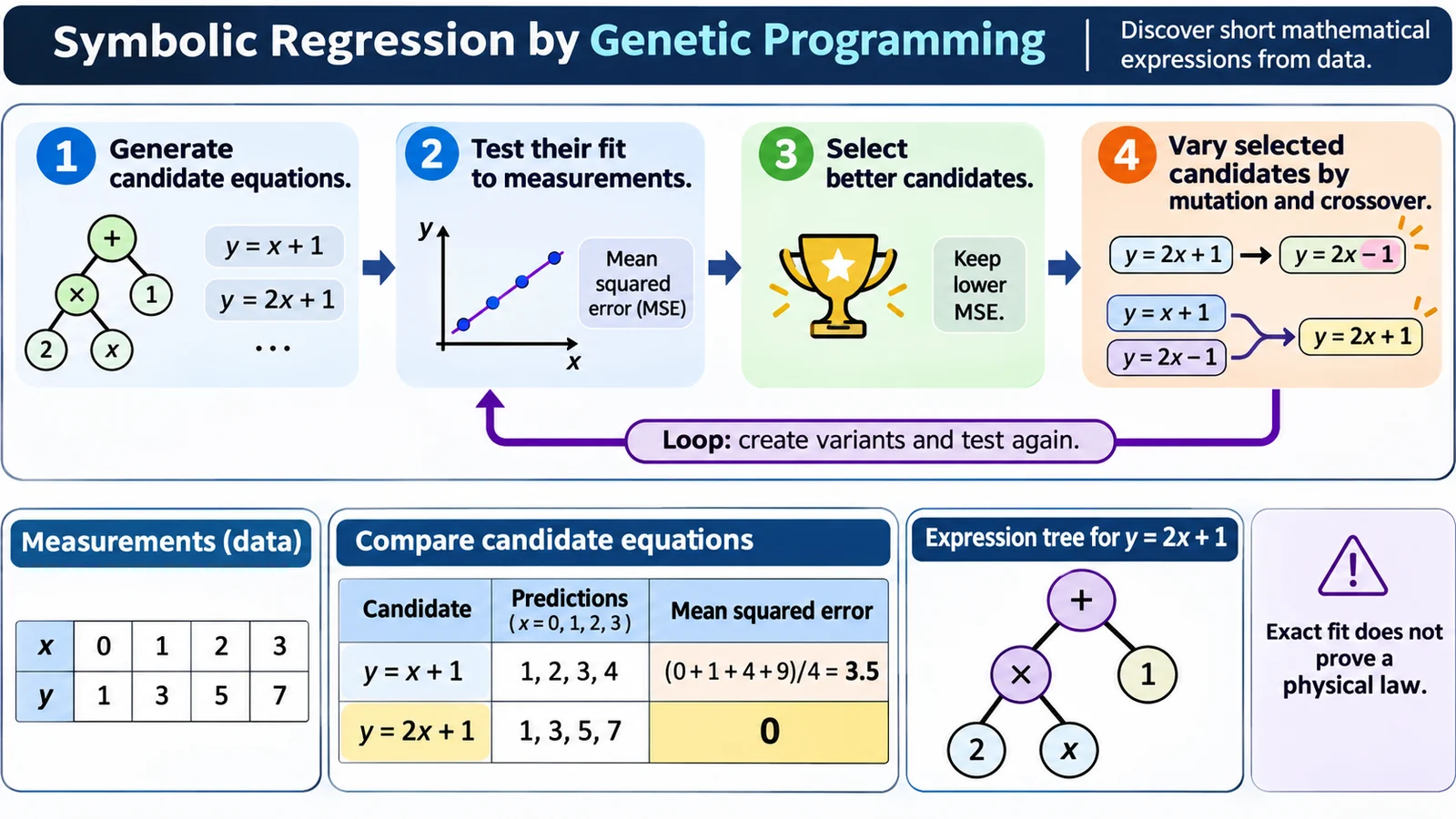
Symbolic regression is a machine learning method that learns short mathematical expressions directly from data. Researchers once tackled symbolic regression mainly with genetic programming, a method that evolves candidate expressions.[17] A 2023 review describes symbolic regression as a regression method built on genetic programming principles that can produce analytical equations purely from data. That trait reduces the need to build prior knowledge about the system into the model.[18] Deep learning has brought growing interest in symbolic regression as a tool for data-driven model discovery.[17]
Adaptive experimental design attacks a basic problem: exploring a large space of designs or hypotheses when each experiment is costly. The methods use probabilistic modeling and decision-making suited to small data settings. A 2026 survey reports substantial gains in sample efficiency, meaning fewer experiments for the same result. The gains appear for black-box optimization over high-dimensional combinatorial spaces, such as sequences and graphs. The survey lists uses in surfactant design, additive manufacturing, hardware design and nanoporous materials.[19]
The Co-Scientist system uses several agents that generate, critique and refine hypotheses. Automated evaluations showed that scaling test-time compute improved hypothesis quality over time.[20] A 2025 review describes systems that combine several modes of input, such as sound, images and speech, and that act on their own. That review calls the change a move from co-pilot to lab-pilot, in which AI acts on knowledge rather than only interpreting it.[21]
Explainable AI covers methods that justify the predictions of black-box machine learning models and yield actionable insights. A 2023 review of such methods in chemistry describes case studies, including identifying carcinogenic molecules and guiding molecular optimizations.[22] One proof-of-concept study combined explainability with the scientific method in four phases, from model development to verification. A team trained a convolutional neural network, a model for images, to classify patient sex from retinal images. Of 14 exploratory hypotheses, nine showed significant differences and five were verified on a new dataset. After training, 26 ophthalmologists recognized the new retinal features far better than before (p<0.001, d=2.63).[23]
Research
Evidence from labs and materials
Ding, Lawson and Shapira counted publications in a bibliometric database to trace how far generative AI has spread. Researchers in the United States accounted for close to two-fifths of generative AI publications and applications worldwide. Papers that applied generative AI tended to come from bigger teams (p < 0.001) and to involve more international collaboration (p < 0.05).[24]
One study trained models to judge the electronic topology of two-dimensional materials with an accuracy of over 90%. The team screened thousands of novel materials and found 56 non-trivial ones, including 17 novel insulating candidates confirmed by density functional theory. That strategy was 10× more efficient than trial and error and a few orders of magnitude faster.[3] A 2022 perspective, however, reported limited results in chemistry and materials so far, partly because machine learning struggles at tasks requiring interpretation.[25]
In medicine, a review by Yang and Cheng describes AI methods for predicting drug-target interactions. Traditional identification of these interactions carries high assay costs and low success rates, and computational methods aim to cut cost and time.[26] A 2025 review of AI for quantum, atomistic and continuum systems lists common challenges, including explainability, generalization and uncertainty quantification.[27]
Machine learning in chemistry and materials science
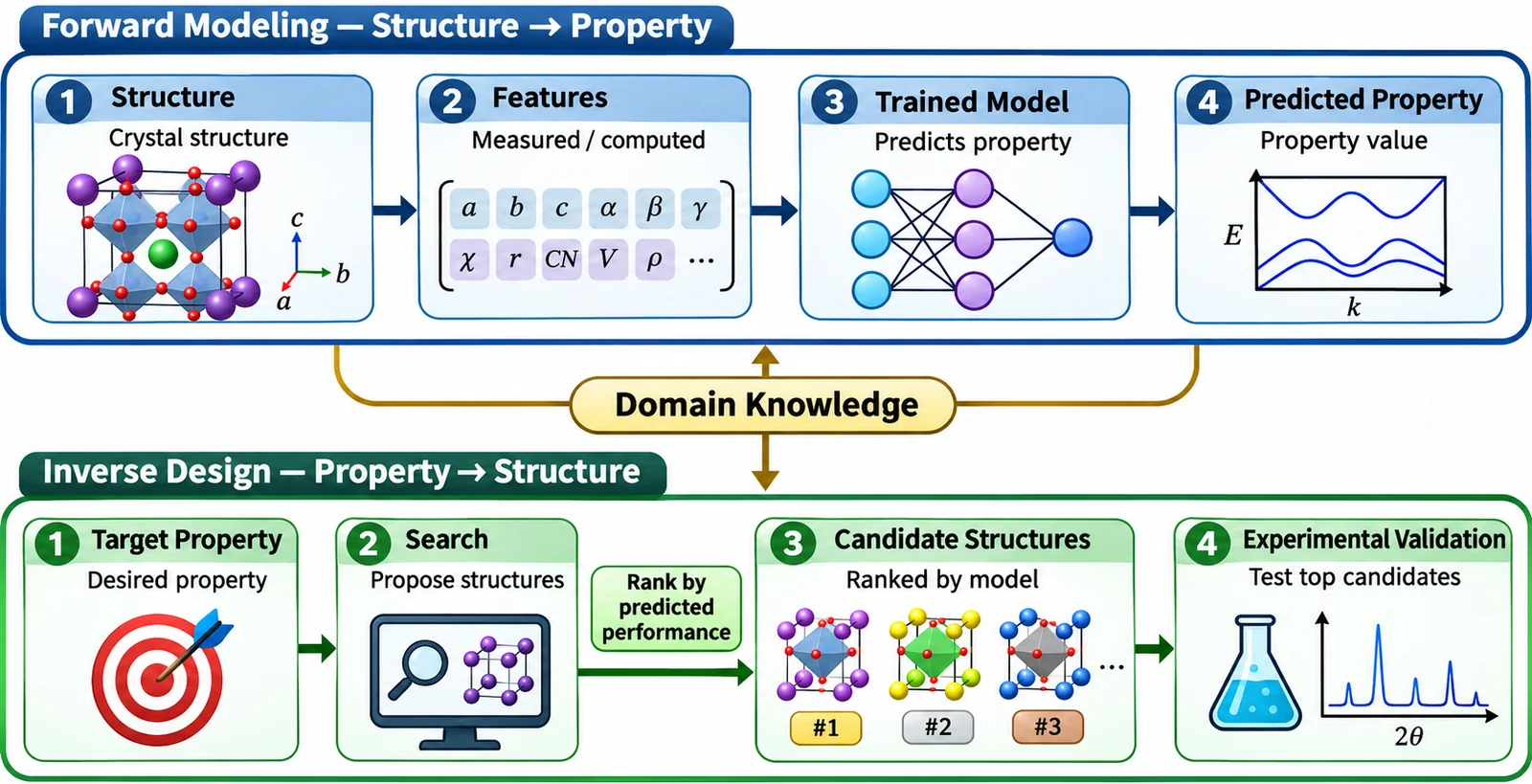
In materials science, machine learning has arrived chiefly as a screening tool: models trained on existing data rank candidate compounds by predicted performance, which trims the share of work left to trial and error.[28][29] Cai, Chu, Xu, Li and Wei describe the typical workflow as data preprocessing, feature engineering (choosing which measured or computed quantities to feed the model), a choice of algorithm, and cross-validation, in which part of the data is held back to test the model. Applications reviewed in 2020 included property prediction, discovery of new materials, inverse design (working backward from a desired property to a composition) and corrosion detection.[29] A 2023 review divided the field into forward modeling, which predicts properties from structure, and inverse modeling, which searches for structures that meet a target, and traced a decade of growth in both as computing power and materials datasets expanded.[30]
Perovskites, a family of crystalline compounds with a characteristic structure and strong photoelectric properties, have been a frequent test case. Reviews in 2021 and 2023 surveyed machine learning applied to inorganic perovskites, hybrid organic-inorganic perovskites and double perovskites, covering property prediction and candidate selection.[31][32] Feature selection, the step of discarding input variables that add little, has received particular attention for these materials because their structures are complex.[32] For metal-organic frameworks, porous crystalline materials used to capture carbon dioxide, a 2024 study trained a model on 23 structural and molecular features plus 765 calculated features using a hypothetical framework dataset at several pressures. The calculated features raised prediction accuracy by 15% to 20%, and the ranking of important features shifted with pressure: descriptors related to van der Waals forces (weak attractive forces between molecules) mattered more at low pressure, while electrical-field descriptors dominated at high pressure. Across all pressures, molecular structure and pore size were the most important factors.[33]
A 2021 review of machine learning in mechanical materials design stated that performance depends on collecting or generating a large dataset, preprocessing it with knowledge of the underlying chemistry and physics, and choosing a suitable model.[34] Kim reports that machine-learned interatomic potentials, models that approximate quantum calculations, run 2 to 4 orders of magnitude faster than density functional theory, a standard quantum method. They make it possible to simulate thousands of atoms over extended timescales.[35] Interpretability work has tried to connect model outputs to physical reasoning; in the framework study, the feature rankings agreed with an analysis of interaction potentials.[33]
Predictions mean little until they are checked, and confirmation has been rare. That review collected validated examples across a range of materials classes and noted that domain knowledge commonly informed the models.[36] Formation energy, the energy released when a compound forms, is the key quantity for judging whether an unknown compound is likely to be synthesizable, and it can be predicted from density functional theory repositories. A 2021 review of formation-energy models found that they had succeeded in uncovering new compounds stable in density functional theory calculations and in directing synthesis.[37] Duan, Nandy and Kulik argued that machine learning can outperform physics-based models, accelerate them, or be combined with them, depending on the quantity predicted and the experimental data available.[38] Zuccarini, Ramachandran and Jayaseelan stress that experimental validation must be integrated and that algorithms tailored to the problem are needed to overcome limits on data and computing.[39]
Generative models, which learn a compressed representation of material structures and sample from it to propose new ones, extend the approach from screening to design. A 2022 review reported that applying these models to inorganic materials has been harder than to organic molecules because inorganic structures are more complex to encode.[40] A 2023 review of generative artificial intelligence in materials science described its use for inverse design and data augmentation, and listed six challenges facing the approach.[41] A 2025 study built a materials map from integrated experimental and computational data using a graph neural network, a model that treats crystal structures as graphs of connected atoms. The message-passing architecture captured features related to structural complexity, but that representational advantage did not always produce higher accuracy in property prediction.[42]
Drug discovery and the life sciences
Drug discovery and development run through long, complex pipelines shaped by many factors. Vamathevan, Clark, Czodrowski, Dunham, Ferran, Lee and colleagues write that machine learning can sharpen discovery and decision making when a question is well specified and the data are plentiful and of high quality. Opportunities to apply these methods occur at every stage, including target validation, the identification of prognostic biomarkers (measurable indicators of how a disease is likely to progress) and the analysis of digital pathology data in clinical trials. Some of these approaches have produced accurate predictions and useful insights, but the main difficulties lie in the lack of interpretability and repeatability of machine-learning results, which may limit their use. In all areas, systematic high-dimensional data still need to be generated, and wider awareness of the factors needed to validate machine-learning approaches is needed before the methods can speed up the process and reduce failure rates.[43]
Hasselgren and Oprea reached a similar verdict. Generative chemistry, machine learning and optimization across several properties at once have carried several compounds into clinical trials. The reviewers add that artificial intelligence in drug discovery reaches its full potential only with sufficient ground truth (reliable reference data) and human involvement at later pipeline stages.[44]
Antibiotic discovery has produced one of the most concrete demonstrations. In 2020 a team trained a deep neural network, a machine-learning model with many stacked layers of computation, to predict which molecules have antibacterial activity. From the Drug Repurposing Hub the model identified halicin, a molecule unlike conventional antibiotics in structure. Stokes, Yang, Swanson, Jin, Cubillos-Ruiz, Donghia and colleagues found that it kills a broad range of pathogens, among them Mycobacterium tuberculosis and carbapenem-resistant Enterobacteriaceae.[45] A 2021 review describes artificial intelligence as increasingly applied to antibiotic discovery, covering small-molecule antibiotics and antimicrobial peptides, and argues that openness and reproducibility are means of accelerating preclinical research against antimicrobial resistance.[46]
Drug repurposing, the use of existing drugs to treat new and challenging diseases, has become a promising route because it offers reduced development timelines and lower overall costs. A 2020 review set out guidelines for using artificial intelligence and network medicine to accelerate repurposing, with COVID-19 as its worked example, and argued that artificial intelligence approaches are not just formidable for this task but also necessary.[47] A companion review by Keshavarzi Arshadi, Webb, Salem, Cruz, Calad-Thomson, Ghadirian and colleagues covered COVID-19 drug and vaccine development. Machine-learning models trained on particular biomolecules, they noted, offer cheap and fast structure-based prediction of inhibitor candidates. The review also presented CoronaDB-AI, a collection of compounds, peptides and epitopes found either in silico (by computer simulation) or in vitro (in laboratory glassware).[48]
Structure-based virtual screening docks candidate molecules into a target protein by computer, and artificial intelligence has sped it up. Zhou, Rusnac, Park, Canzani, Nguyen, Stewart and colleagues built a platform called RosettaVS and screened multi-billion compound libraries against two unrelated targets in less than seven days. They found seven hits at a 14% hit rate against KLHDC2 and four hits at a 44% hit rate against the sodium channel Na V 1.7, all with single digit micromolar binding affinities. An X-ray crystallographic structure confirmed the predicted docking pose for the KLHDC2 ligand complex.[49]
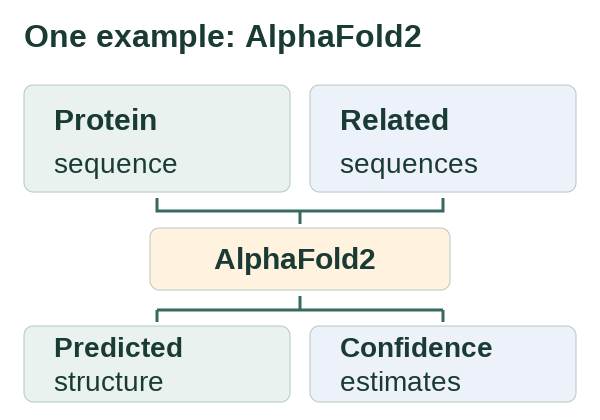
Rives, Meier, Sercu, Goyal, Lin, Liu and colleagues trained an unsupervised language model on 86 billion amino acids drawn from 250 million protein sequences. The representations it produced came from sequence data alone, and linear projections could recover information about secondary and tertiary structure from them.[50] The deep-learning system AlphaFold then made protein structure prediction a routine tool, and a 2022 review credits it with powerful impact on the life sciences and with promising a large number of applications from the database it has been creating. Nussinov, Zhang, Liu and Jang are equally clear about the limits. AlphaFold leaves the long-standing protein folding problem unsolved and does not trace folding pathways. It also misses conformational mechanisms such as frustration and allostery (the regulation of a protein's activity through a shift in its shape), which belong to populations of conformations. AlphaFold produces single ranked structures rather than ensembles, so on its own it cannot explain how allosteric activating hotspot mutations work or how allosteric drug resistance arises. Deep learning can still take the single predicted conformation and build a varied ensemble from it.[51]
Earth, energy and engineering applications
Earth system science covers the atmosphere, oceans, land, ice and the solid Earth, and a 2022 review led by working groups of the NASA Earth Science Data Systems and the ESIP machine learning cluster surveys artificial intelligence across all of these major spheres. That review describes the field as under pressure to improve accuracy, raise the intelligence of models, scale up operations and cut costs, as datasets accumulate exponentially. It sets out the steps of a typical workflow for adapting an AI method to an Earth science problem, then closes with grand challenges and guidance on allocating resources.[52] A 2024 review of geoscience traces a shift from traditional physics-based models, which reconstruct physical processes explicitly, to data-driven models built on machine learning and deep learning. Physics-based models explain processes explicitly but struggle to capture the full complexity and uncertainty of the Earth, while data-driven models learn from large geoscience datasets without requiring complete theoretical knowledge. Data scarcity, computing demands, privacy concerns and the opaque, black-box character of many models limit how easily the data-driven approach fits into geoscience practice.[53]
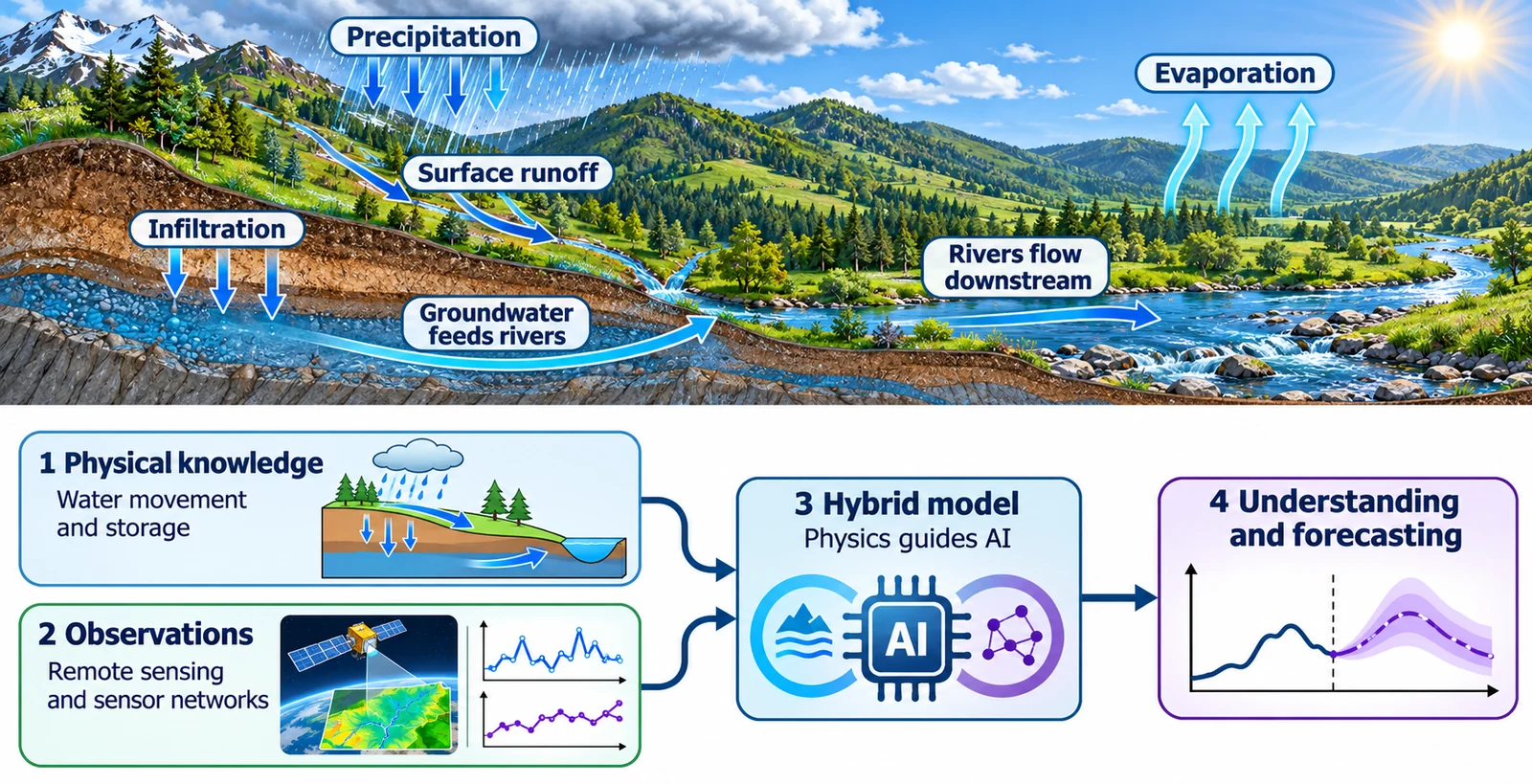
Hybrid models that combine physics-based and data-driven methods offer a middle path, using domain knowledge to guide the AI method. Such hybrids showed better efficiency and performance while needing less training data, according to the 2024 review.[53] Hydrology, the study of water movement and storage, is a mature physical science built on first principles, yet its systems are complex and now generate large data flows from conventional and novel remote sensing and from sensor networks known as the Internet of Things. A 2023 review in PLOS Water notes that AI and machine learning methods attract much hype despite limits in transparency, interpretability and ethics, and that some applications pursue black-box prediction without answering important hydrological questions or offering mechanistic insight. The review sorts hydrological problems into four main types by their dominant space and time scales, and it locates opportunities for AI in data management, in extracting insight and knowledge, and in model structure. It proposes using AI as an inductive, exploratory tool for reducing the number of variables in play, one instrument within the existing hydrological toolkit, to help build new theories for systems that are changing. AI can also absorb structured and unstructured data and traditional knowledge that process-based models usually leave out, which the review argues can advance understanding, forecasting and management at large integrated scales.[54]
In geospatial science, a 2024 systematic review searched four publication databases, Web of Science, Scopus, SSRN and arXiv, and drew 293 papers, of which 26 met the criteria for analysis. The review tabulated which domains use large language models and other generative AI models, what data those models take in, and which modelling tasks and roles they fill. It also listed challenges and directions for a future research agenda.[55] A 2025 paper describes a related effort to build a concept map of geographical science with machine learning, deep learning and natural language processing, addressing what it calls single data dimensions, shallow association mining and lagging dynamic updates in traditional map construction.[56]
Energy materials research has used machine learning to search large spaces of candidate compounds. Choudhary, Bercx, Jiang, Pachter, Lamoen and Tavazza described their 2019 work as the largest search for inorganic solar cell materials to that date. They used density functional theory, a quantum-mechanical method for calculating material properties, to compute the spectroscopic limited maximum efficiency for 5097 nonmetallic materials. That quantity is a calculated ceiling on how much of the sun's energy a material can convert. They identified 1997 candidates above 10% efficiency, including 934 that also had suitable stability and effective carrier mass, and among two-dimensional layered cases they found 58 potential materials. The quantum calculations were still costly, so the team trained a machine-learning model of high accuracy to screen for efficient materials in advance. They ran it on more than a million materials.[57] For thermoelectrics, materials that convert heat directly to electricity and back, a 2019 study used machine-learning models to identify the physical parameters controlling the spin-driven thermoelectric effect, a phenomenon whose underlying physics was poorly understood.[58]
A 2022 study combined unsupervised machine learning, which looks for patterns in unlabeled data, with known half-Heusler thermoelectric materials, a family of compounds with a particular crystal structure. Jia, Deng, Bao, Yao, Li, Li and colleagues reported optimized zT values, a standard measure of thermoelectric performance. The p-type Sc 0.7 Y 0.3 NiSb 0.97 Sn 0.03 reached about 0.5 at 925 K, and the n-type Sc 0.65 Y 0.3 Ti 0.05 NiSb reached about 0.3 at 778 K. Both were built on the same parent compound, ScNiSb.[59] A 2021 review of AI for quantum materials, a class that includes superconductors, spin liquids and topological insulators, describes data-driven methods as changing how such materials are searched for, from rapid construction and analysis of databases to physical models used as guides for autonomous experiments.[60] For solid-state lithium batteries, which replace the liquid electrolyte of conventional lithium batteries with a solid one, a 2023 review surveys machine-learning techniques used to discover solid electrolytes and discusses the key issues and outlook.[61]
In practice
Closed loops of prediction, synthesis and robotic testing
A closed loop of automated discovery joins three parts: a model that proposes what to try next, a robot that makes or measures the material, and software that feeds the result back to the model.[62][63] The aim is to replace manual, serial work done by people with automated, parallel rounds that repeat without a person in the middle.[63] NIMS-OS, a Python library published in 2023, was written to run such a loop between robotic experiments and artificial intelligence without human intervention. It works by combining modules, each of which acts either as an exploration method or as a controller for a robotic experiment, and new modules can be added to extend it. A graphical application controls the system, and visualization tools let users watch the optimization results in real time. The developers demonstrated it on an automated search for new electrolytes, using a set of robotic electrochemical equipment called NAREE.[62][64]
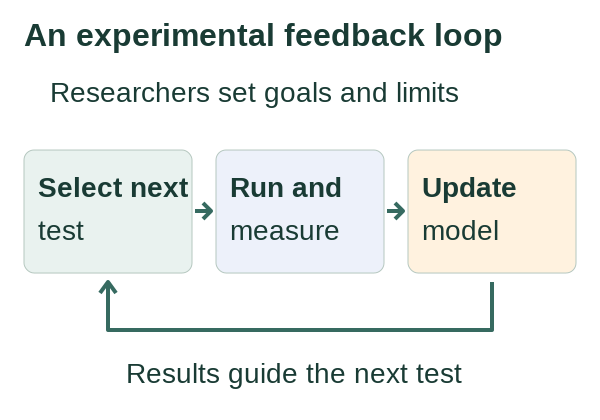
Genetic algorithms are one way to search a space of candidate materials. The method keeps a population of candidate solutions, scores each one, and combines and mutates the better ones over successive rounds. The scoring step, called a fitness function, is often the expensive part, because it can require an energy calculation for every candidate. In a 2019 study of platinum-gold nanoparticles, a machine learning model stood in for the fitness function, predicting scores instead of computing them each time. A model used this way is called a surrogate: it approximates a costly calculation closely enough to guide the search.[65] Genetic algorithms also appear among the inverse design methods used to propose materials with desired properties, alongside Bayesian optimization and pattern recognition inverse projection.[66]
Bayesian optimization is a second common search method. It builds a statistical model of how properties change across a design space and chooses the next experiment where the model suggests the best trade-off between likely gain and uncertainty. NIMS-OS offers Bayesian optimization as one option, under the name PHYSBO. Its other built-in methods are BLOX for exploration without a target objective, PDC for constructing phase diagrams and RE for random exploration.[62][64] The choice of sampling strategy matters: in active learning, the strategy that picks which new data to collect determines how quickly the model converges and how wide a range it can predict. Materials data are often scarce compared with the text and image collections that support machine learning, so active learning and transfer learning are used to add data efficiently and to reuse data already collected.[67]
Robotic instruments supply the experimental half of the loop. DeepSPM, described in 2020, is a framework for running scanning probe microscopy, a family of techniques that map surfaces at atomic precision, with little human supervision. DeepSPM has three parts, as Krull, Hirsch, Rother, Schiffrin and Krull describe them. One searches algorithmically for good sample regions, one is a convolutional neural network that judges image quality, and one is a deep reinforcement learning agent that keeps the probe in a reliable state. In multi-day scanning tunneling microscopy experiments it acquired and classified data continuously, managing probe quality as conditions changed. The developers note that fully automated scanning probe microscopy had not been accomplished before this work, and they released the source code.[68] Active learning strategies can likewise guide characterization workflows and support intelligent operation of the instruments themselves.[69]
The loop does not remove the need for data. A 2025 account of small-data methods argues that materials datasets will remain far smaller than those available for text and images for a long time to come.[67] Characterization by machine learning still faces limited model interpretability and insufficient generalization from one instrument platform to another.[69] A 2022 perspective describes how artificial intelligence, simulation and experimental automation can be combined into workflows, and illustrates the point with the development of a novel chemically amplified photoresist.[63]
What this looks like in practice
A deep neural network was trained to predict molecules with antibacterial activity and then run on multiple chemical libraries. From 23 empirically tested predictions drawn from more than 107 million molecules in the ZINC15 database, the model identified eight antibacterial compounds. One of them, halicin, is structurally divergent from conventional antibiotics and killed a wide spectrum of pathogens, including Mycobacterium tuberculosis. In mouse models, halicin was also effective against infections caused by Clostridioides difficile and by Acinetobacter baumannii strains resistant to all tested drugs.[45]
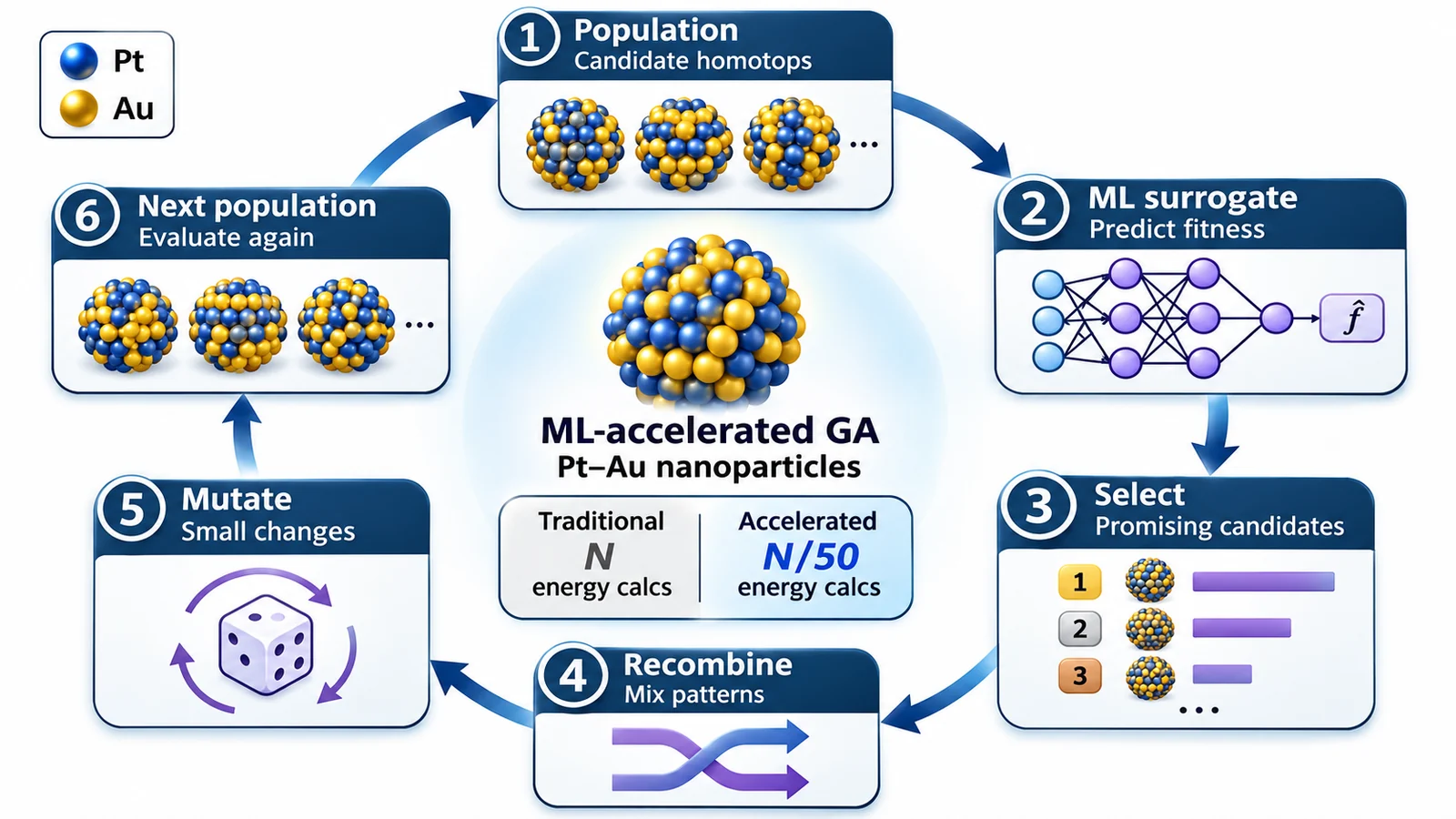
A genetic algorithm, a search method that mimics selection, was used to optimize the atomic distribution of Pt-Au nanoparticles. A machine learning model served as a surrogate fitness evaluator, and the accelerated search needed 50-fold fewer energy calculations than a traditional genetic algorithm. The 146 compositions together allow a total of 1.78 × 1044 homotops, where a homotop is one arrangement of the atoms on the fixed particle shape. Jennings, Lysgaard, Hummelshøj, Vegge and Bligaard report that their machine learning accelerated genetic algorithm needs 50 times fewer energy calculations than a traditional genetic algorithm.[65]
Criticism
Risks, verification and open questions
A 2026 literature synthesis describes an epistemic risk: researchers may publish more outputs while holding weaker grasp of the phenomena they study. The same synthesis reports a lasting mismatch between how scientists are taught to use AI and how they apply it.[70]
One 2026 paper argues that without scalable and reliable verification, scientific progress risks being hindered rather than advanced. Machine learning and large language models can generate hypotheses at a scale and speed far beyond traditional methods.[71]
A 2024 article notes a gap in the science education literature on how AI affects scientific practices themselves. Scientists now use AI to generate hypotheses, design experiments, and collect and interpret data in new ways.[2]
A 2025 review sets out the opportunities and liabilities of AI for research in several fields. It also addresses potential risks of AI to modern society and suggests strategies for mitigating them.[72]
Automating discovery and the limits of generality
Machines able to conduct science on their own have been a goal for researchers across many decades, and the goal remains unmet. A 2022 review describes that goal as a dream that has inspired scientists for decades and states plainly that, despite remarkable recent advances, the goal remains far off. The same review surveys machine learning methods used in scientific discovery and lists their limitations, then argues that builders of discovery machines should be guided by the principles scientists use across physics, mathematics and biology, rather than by the narrow objectives that dominate current systems.[73] A 2024 paper frames the problem as one of integrated systems for computational scientific discovery, sets out eight component abilities such a system needs, reviews earlier successes at partial integration, and lists the hurdles the research community must clear before the vision becomes reality.[74]
One line of work splits the discovery cycle into distinct tasks, such as searching the literature, proposing hypotheses, designing experiments, analyzing data and checking results, and assigns each task to a separate software agent that coordinates with the others. Scientific discovery is described in a 2024 paper as a collaborative, iterative process that requires synthesizing large amounts of literature, developing new theories or hypotheses, designing new experiments, and extensive validation. Chekuri and Poudel observe that most automated research systems today run as a single agent or a centralized pipeline. Such designs, they argue, hold back parallel exploration, the sharing of knowledge and the forming of consensus. Chekuri and Poudel evaluated the framework on arXiv metadata, Semantic Scholar corpora and common scientific benchmark datasets. It reported novelty detection rates of 98%, hypothesis accuracy of 96%, a consensus quality score of 97% and a hypothesis validation classifier AUC of 0.96, above single-agent, retrieval-based and hierarchical multi-agent baselines.[75]
Langley (2024) frames the open problem as building and testing systems that integrate the component abilities of discovery, rather than demonstrating any single one.[74][73] The 2024 review of integrated systems treats prior work as successes at partial integration, meaning that individual abilities have been built and tested but not combined into one working whole.[74] Khalili argues that science discovery machines should be built around the principles that guide scientific discovery, rather than around the narrow objectives that dominate current artificial intelligence systems. Machines that apply those principles automatically, Khalili suggests, might open the way to many advances.[73] The multi-agent framework addresses coordination among specialized agents, yet its reported results come from benchmark datasets rather than from a completed discovery carried through synthesis, experiment and validation in a laboratory setting.[75]
Cost, transparency and reproducibility
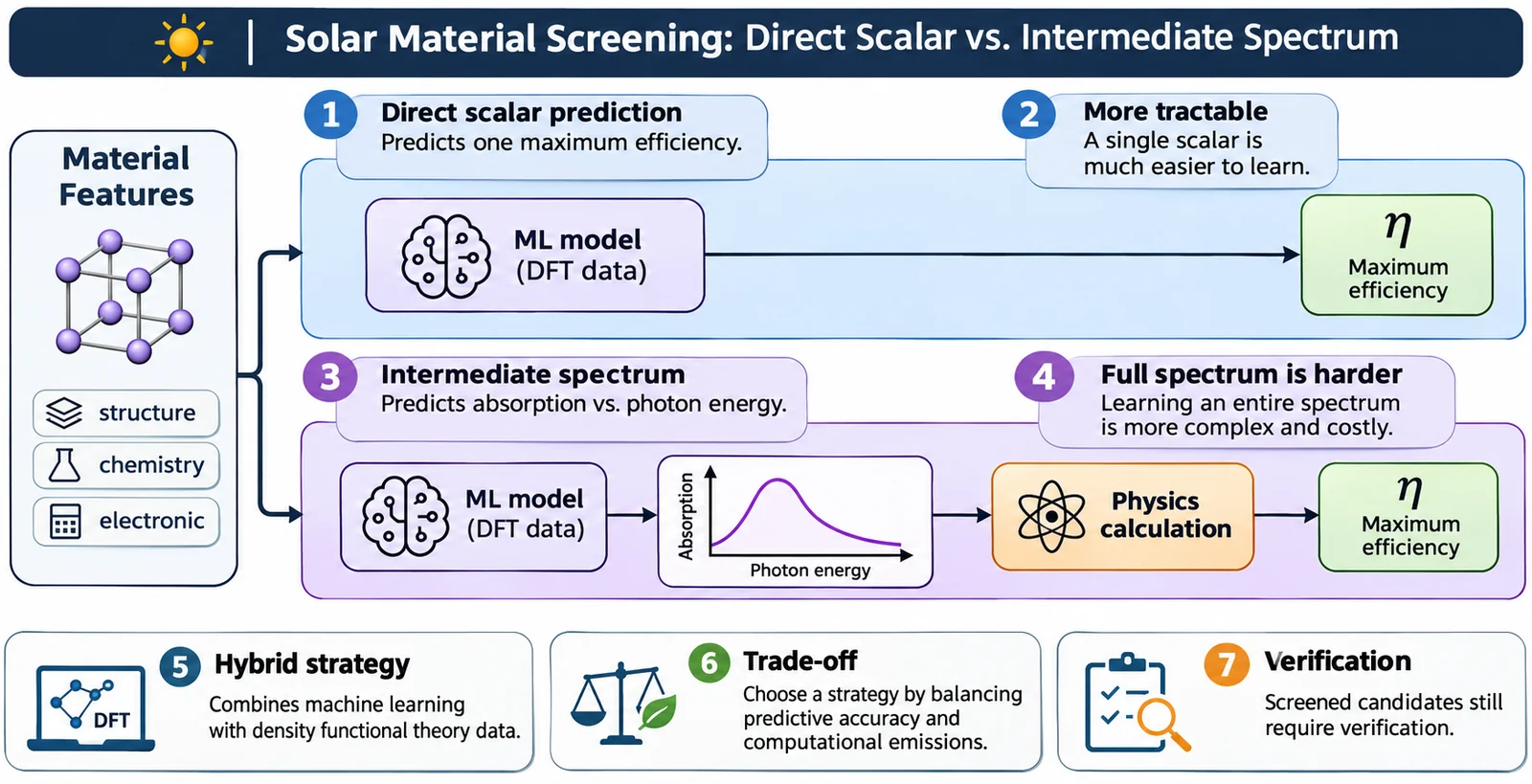
Machine-learning searches for new materials carry a computational cost that can be counted in emissions, and the choice of method moves the result along a trade-off between predictive accuracy and environmental burden. A 2026 study of machine-learning-guided searches for photovoltaic materials, meaning solar cell materials, compared several hybrid strategies that combine machine learning with density functional theory, a physics-based computational method for estimating material properties. The study found several such hybrid strategies that sit at different points along that accuracy-emissions front, and it reported that predicting a single scalar quantity such as maximum efficiency is significantly more tractable than predicting full absorption spectra as an intermediate step. Models trained on density functional theory data can outperform density functional theory workflows that use alternative exchange-correlation functionals when the task is screening, which the study treats as evidence of the consistency of data-driven approaches. Walker and Butler also set out a quantitative way to compare strategies for low-emission, high-throughput discovery pipelines. They assess larger datasets and model architectures built around features relevant to photovoltaics as routes to better screening.[76]
Haibe-Kains, Adam, Hosny, Khodakarami and colleagues published a 2020 commentary in Nature on transparency and reproducibility in artificial intelligence.[77] In materials science, a 2019 paper identified common pitfalls when machine learning learns from underrepresented or imbalanced material data. With imbalanced data, standard methods for assessing the quality of machine-learning models break down and lead to misleading conclusions, and the model's own confidence score cannot be trusted.[78]
A 2020 study screened nearly 45,000 two-dimensional structures for mechanical strength and for photovoltaics using an ensemble of crystal graph convolutional neural networks, models that learn from the graph of atoms in a crystal. The screening recovered well-accepted design rules, such as hybrid organic-inorganic perovskites containing lead and tin tending to suit solar cells and titanium-based MXenes usually having high stiffness coefficients, and it also found that other group 4 elements raise the mechanical strength of MXenes. For all-inorganic perovskites the study identified compositions that have not been deeply studied in photovoltaics, which it describes as opening paths for further investigation rather than as confirmed materials. The code base for that work was released openly to support further development.[79] A 2021 platform for predicting properties such as band gap across a wide range of materials notes that density functional theory calculations can be computationally expensive depending on unit cell size and symmetry, and that more accurate methods such as the GW approximation exist.[80]
Common misconceptions
Saal, Oliynyk and Meredig report that only a small fraction of published work on machine learning for materials discovery includes confirmation of predictions, whether by experiment or by physics-based simulation. A review of validated cases found that domain knowledge is commonly used to inform the models.[36]
It is often assumed that a model's own confidence score can be trusted, but with imbalanced material data the standard quality measures break down and the confidence score misleads. Simpler, more interpretable models lost predictive performance in that setting, a reliability-explainability trade-off. The authors propose an ensemble of simpler models with a trust score and a rationale generator to address both problems.[78]
AlphaFold is widely described as solving protein folding, but it does not resolve the decades-long protein folding challenge and does not identify folding pathways. Its models do not capture conformational mechanisms such as frustration and allostery, which depend on populations of conformations. It also does not generate ensembles of intrinsically disordered proteins, describing them instead by low structural probabilities.[51]
Key studies
| Year | Study | Sample | Design | Finding |
|---|---|---|---|---|
| 2010 | Sparkes et al.[7] | Review of Robot Scientists Adam and Eve | Adam identified twelve genes responsible for catalysing specific reactions in yeast metabolic pathways. | |
| 2019 | Jennings et al.[65] | 147-atom Pt-Au nanoparticles across 146 compositions | genetic algorithm accelerated by a machine learning surrogate | The accelerated search needed 50-fold fewer energy calculations than a traditional genetic algorithm. |
| 2019 | Choudhary et al.[57] | 5,097 nonmetallic materials, with a model applied to over a million materials | density functional theory combined with machine learning screening | 1,997 candidates exceeded 10% efficiency, including 934 with suitable stability and carrier mass. |
| 2020 | Stokes et al.[45] | 23 empirically tested predictions from more than 107 million molecules | deep neural network trained to predict antibacterial activity | The model identified eight antibacterial compounds, including halicin, which treated infections in murine models. |
| 2020 | Krull et al.[68] | multi-day scanning tunneling microscopy experiments on MgPc molecules | autonomous AI framework for microscope operation | The system acquired and classified data continuously over multiple days, managing probe quality without human supervision. |
| 2020 | Venturi et al.[79] | nearly 45,000 two-dimensional structures | ensemble of crystal graph convolutional neural networks | The screening recovered accepted design rules and found previously unstudied perovskite compositions for photovoltaics. |
| 2021 | Schleder et al.[3] | thousands of ab initio calculations of 2D materials | machine learning screening of the materials space | Models reached over 90% accuracy, 56 non-trivial materials were found, and the strategy was 10× more efficient than trial and error. |
| 2022 | Jia et al.[59] | 456 half-Heusler compounds with 484 features | iterative unsupervised machine learning with experimental follow-up | Optimized zT values of about 0.5 at 925 K and about 0.3 at 778 K were achieved experimentally. |
| 2023 | Delavari et al.[23] | 26 ophthalmologists and a nonexpert group of 31 | proof-of-concept study combining explainability with the scientific method | Five of 14 exploratory hypotheses were verified, and trained ophthalmologists improved significantly (p<0.001, d=2.63). |
| 2024 | Teng & Shan[33] | 23 structural and 765 calculated features for metal-organic frameworks | interpretable machine learning trained on a hypothetical MOF dataset | Calculated features improved prediction accuracy by 15% to 20%, and pore size was the most critical factor at all pressures. |
| 2024 | Zhou et al.[49] | multi-billion compound libraries against two targets, KLHDC2 and NaV1.7 | AI-accelerated structure-based virtual screening platform | Screening against KLHDC2 returned 7 hits, a 14% hit rate, and screening against NaV1.7 returned 4 hits, a 44% hit rate, with every hit binding in the single digit micromolar range. |
| 2025 | Ding et al.[24] | Bibliometric analysis of OpenAlex publications from 2017 to 2023 | Researchers in the United States wrote close to two-fifths of generative AI publications worldwide and those in China close to one-third; papers applying the technology came from larger teams (p<0.001). | |
| 2026 | Gottweis et al.[20] | Multi-agent AI system tested on three biomedical applications | Co-Scientist identified new drug-repurposing candidates and combination therapies for acute myeloid leukaemia validated in vitro. |
See also
References
- Xu, Y., Liu, X., Cao, X., Huang, C., Liu, E., Qian, S., Liu, X., Wu, Y., Dong, F., Qiu, C. W., Qiu, J., Hua, K., Su, W., Wu, J., Xu, H., Han, Y., Fu, C., Yin, Z., Liu, M., & ... Zhang, J. (2021). Artificial intelligence: A powerful paradigm for scientific research. The Innovation, 2(4), 100179. doi:10.1016/j.xinn.2021.100179
- Erduran, S., & Levrini, O. (2024). The impact of artificial intelligence on scientific practices: an emergent area of research for science education. International Journal of Science Education, 46(18), 1982-1989. doi:10.1080/09500693.2024.2306604
- Schleder, G. R., Focassio, B., & Fazzio, A. (2021). Machine learning for materials discovery: Two-dimensional topological insulators. Applied Physics Reviews, 8(3). doi:10.1063/5.0055035
- Bianchini, S., Müller, M., & Pelletier, P. (2022). Artificial intelligence in science: An emerging general method of invention. Research Policy, 51(10), 104604. doi:10.1016/j.respol.2022.104604
- Brannigan, A. (1989). Artificial Intelligence and the Attributional Model of Scientific Discovery. Social Studies of Science, 19(4), 601-613. doi:10.1177/030631289019004002
- Gil, Y. (2009). From Data to Knowledge to Discoveries: Artificial Intelligence and Scientific Workflows. Scientific Programming, 17(3), 231-246. doi:10.1155/2009/167604
- Sparkes, A., Aubrey, W., Byrne, E., Clare, A., Khan, M. N., Liakata, M., Markham, M., Rowland, J., Soldatova, L. N., Whelan, K. E., Young, M., & King, R. D. (2010). Towards Robot Scientists for autonomous scientific discovery. Automated Experimentation, 2(1), 1. doi:10.1186/1759-4499-2-1
- Reddy, C. K., & Shojaee, P. (2025). Towards Scientific Discovery with Generative AI: Progress, Opportunities, and Challenges. Proceedings of the AAAI Conference on Artificial Intelligence, 39(27), 28601-28609. doi:10.1609/aaai.v39i27.35084
- Kitano, H. (2016). Artificial Intelligence to Win the Nobel Prize and Beyond: Creating the Engine for Scientific Discovery. AI Magazine, 37(1), 39-49. doi:10.1609/aimag.v37i1.2642
- Gil, Y. (2017). Thoughtful artificial intelligence: Forging a new partnership for data science and scientific discovery. Data Science, 1(1-2), 119-129. doi:10.3233/ds-170011
- Xu, Y., Wang, F., An, Z., Wang, Q., & Zhang, Z. (2023). Artificial intelligence for science—bridging data to wisdom. The Innovation, 4(6), 100525. doi:10.1016/j.xinn.2023.100525
- Hong, Y., Hou, B., Jiang, H., & Zhang, J. (2020). Machine learning and artificial neural network accelerated computational discoveries in materials science. WIREs Computational Molecular Science, 10(3). doi:10.1002/wcms.1450
- Yu, B., & Kumbier, K. (2018). Artificial intelligence and statistics. Frontiers of Information Technology & Electronic Engineering, 19(1), 6-9. doi:10.1631/fitee.1700813
- Rawat, A. (2024). Applications of artificial intelligence in science. International Journal of Pharmaceutical Science and Medicine, 2(1), 53-63. doi:10.70199/ijpsm.2.2.53-63
- LeCun, Y. (2025). Artificial Intelligence in Scientific Research: Transforming Data Analysis and Discovery. International Journal of Innovative Computer Science and IT Research, 1(01), 1-9. doi:10.63665/ijicsitr.v1i01.01
- Yu, Z., Idris, M. Y. I., & Wang, P. (2025). Introduction to the International Journal of Artificial Intelligence for Science (IJAI4S). International Journal of Artificial Intelligence for Science (IJAI4S), 1(1). doi:10.63619/ijais.v1i1.001
- Makke, N., & Chawla, S. (2024). Interpretable scientific discovery with symbolic regression: a review. Artificial Intelligence Review, 57(1). doi:10.1007/s10462-023-10622-0
- Angelis, D., Sofos, F., & Karakasidis, T. E. (2023). Artificial Intelligence in Physical Sciences: Symbolic Regression Trends and Perspectives. Archives of Computational Methods in Engineering, 30(6), 3845-3865. doi:10.1007/s11831-023-09922-z
- Deshwal, A. (2026). Adaptive Experimental Design to Accelerate Scientific Discovery and Engineering Design. Proceedings of the Thirty-Fifth International Joint Conference on Artificial Intelligence, 8150-8154. doi:10.24963/ijcai.2026/904
- Gottweis, J., Weng, W. H., Daryin, A., Tu, T., Sirkovic, P., Myaskovsky, A., Glowaty, G., Weissenberger, F., Orlandi, A., Popovici, D., Palepu, A., Rong, K., Tanno, R., Saab, K., Zhang, F., Blum, J., Carroll, A., Kulkarni, K., Tomašev, N., & ... Natarajan, V. (2026). Accelerating scientific discovery with Co-Scientist. Nature, 655(8122), 487-496. doi:10.1038/s41586-026-10644-y
- Hartung, T. (2025). AI, agentic models and lab automation for scientific discovery — the beginning of scAInce. Frontiers in Artificial Intelligence, 8. doi:10.3389/frai.2025.1649155
- Wu, Z., Chen, J., Li, Y., Deng, Y., Zhao, H., Hsieh, C. Y., & Hou, T. (2023). From Black Boxes to Actionable Insights: A Perspective on Explainable Artificial Intelligence for Scientific Discovery. Journal of Chemical Information and Modeling, 63(24), 7617-7627. doi:10.1021/acs.jcim.3c01642
- Delavari, P., Ozturan, G., Yuan, L., Yilmaz, Ö., & Oruc, I. (2023). Artificial intelligence, explainability, and the scientific method: A proof-of-concept study on novel retinal biomarker discovery. PNAS Nexus, 2(9). doi:10.1093/pnasnexus/pgad290
- Ding, L., Lawson, C., & Shapira, P. (2025). Rise of Generative Artificial Intelligence in Science. Scientometrics, 130(9), 5093-5114. doi:10.1007/s11192-025-05413-z
- Oliveira, O. N., & Oliveira, M. C. F. (2022). Materials Discovery With Machine Learning and Knowledge Discovery. Frontiers in Chemistry, 10. doi:10.3389/fchem.2022.930369
- Yang, Y., & Cheng, F. (2026). Artificial intelligence streamlines scientific discovery of drug–target interactions. British Journal of Pharmacology, 183(8), 1673-1690. doi:10.1111/bph.17427
- Zhang, X., Wang, L., Helwig, J., Luo, Y., Fu, C., Xie, Y., Liu, M., Lin, Y., Xu, Z., Yan, K., Adams, K., Weiler, M., Li, X., Fu, T., Wang, Y., Strasser, A., Yu, H., Xie, Y., Fu, X., & ... Ji, S. (2025). Artificial intelligence for science in quantum, atomistic, and continuum systems. Foundations and Trends® in Machine Learning, 18(4), 385-849. doi:10.1561/2200000115
- Liu, Y., Zhao, T., Ju, W., & Shi, S. (2017). Materials discovery and design using machine learning. Journal of Materiomics, 3(3), 159-177. doi:10.1016/j.jmat.2017.08.002
- Cai, J., Chu, X., Xu, K., Li, H., & Wei, J. (2020). Machine learning-driven new material discovery. Nanoscale Advances, 2(8), 3115-3130. doi:10.1039/d0na00388c
- Gupta, V., Liao, W. k., Choudhary, A., & Agrawal, A. (2023). Evolution of artificial intelligence for application in contemporary materials science. MRS Communications, 13(5), 754-763. doi:10.1557/s43579-023-00433-3
- Tao, Q., Xu, P., Li, M., & Lu, W. (2021). Machine learning for perovskite materials design and discovery. npj Computational Materials, 7(1). doi:10.1038/s41524-021-00495-8
- Wang, J., Xu, P., Ji, X., Li, M., & Lu, W. (2023). Feature Selection in Machine Learning for Perovskite Materials Design and Discovery. Materials, 16(8), 3134. doi:10.3390/ma16083134
- Teng, Y., & Shan, G. (2024). Interpretable machine learning for materials discovery: Predicting CO2 adsorption properties of metal–organic frameworks. APL Materials, 12(8). doi:10.1063/5.0222154
- Guo, K., Yang, Z., Yu, C. H., & Buehler, M. J. (2021). Artificial intelligence and machine learning in design of mechanical materials. Materials Horizons, 8(4), 1153-1172. doi:10.1039/d0mh01451f
- Kim, K. S. (2026). Machine Learning for Accelerating Energy Materials Discovery: Bridging Quantum Accuracy with Computational Efficiency. Advanced Energy Materials, 16(2). doi:10.1002/aenm.202503356
- Saal, J. E., Oliynyk, A. O., & Meredig, B. (2020). Machine Learning in Materials Discovery: Confirmed Predictions and Their Underlying Approaches. Annual Review of Materials Research, 50(1), 49-69. doi:10.1146/annurev-matsci-090319-010954
- Peterson, G. G. C., & Brgoch, J. (2021). Materials discovery through machine learning formation energy. Journal of Physics: Energy, 3(2), 022002. doi:10.1088/2515-7655/abe425
- Duan, C., Nandy, A., & Kulik, H. J. (2022). Machine Learning for the Discovery, Design, and Engineering of Materials. Annual Review of Chemical and Biomolecular Engineering, 13(1), 405-429. doi:10.1146/annurev-chembioeng-092320-120230
- Zuccarini, C., Ramachandran, K., & Jayaseelan, D. D. (2024). Material discovery and modeling acceleration via machine learning. APL Materials, 12(9). doi:10.1063/5.0230677
- Fuhr, A. S., & Sumpter, B. G. (2022). Deep Generative Models for Materials Discovery and Machine Learning-Accelerated Innovation. Frontiers in Materials, 9. doi:10.3389/fmats.2022.865270
- Liu, Y., Yang, Z., Yu, Z., Liu, Z., Liu, D., Lin, H., Li, M., Ma, S., Avdeev, M., & Shi, S. (2023). Generative artificial intelligence and its applications in materials science: Current situation and future perspectives. Journal of Materiomics, 9(4), 798-816. doi:10.1016/j.jmat.2023.05.001
- Hashimoto, Y., Jia, X., Li, H., & Tomai, T. (2025). A materials map integrating experimental and computational data via graph-based machine learning for enhanced materials discovery. APL Machine Learning, 3(3). doi:10.1063/5.0274812
- Vamathevan, J., Clark, D., Czodrowski, P., Dunham, I., Ferran, E., Lee, G., Li, B., Madabhushi, A., Shah, P., Spitzer, M., & Zhao, S. (2019). Applications of machine learning in drug discovery and development. Nature Reviews Drug Discovery, 18(6), 463-477. doi:10.1038/s41573-019-0024-5
- Hasselgren, C., & Oprea, T. I. (2024). Artificial Intelligence for Drug Discovery: Are We There Yet? Annual Review of Pharmacology and Toxicology, 64(1), 527-550. doi:10.1146/annurev-pharmtox-040323-040828
- Stokes, J. M., Yang, K., Swanson, K., Jin, W., Cubillos-Ruiz, A., Donghia, N. M., MacNair, C. R., French, S., Carfrae, L. A., Bloom-Ackermann, Z., Tran, V. M., Chiappino-Pepe, A., Badran, A. H., Andrews, I. W., Chory, E. J., Church, G. M., Brown, E. D., Jaakkola, T. S., Barzilay, R., & Collins, J. J. (2020). A Deep Learning Approach to Antibiotic Discovery. Cell, 180(4), 688-702.e13. doi:10.1016/j.cell.2020.01.021
- Melo, M. C. R., Maasch, J. R. M. A., & de la Fuente-Nunez, C. (2021). Accelerating antibiotic discovery through artificial intelligence. Communications Biology, 4(1). doi:10.1038/s42003-021-02586-0
- Zhou, Y., Wang, F., Tang, J., Nussinov, R., & Cheng, F. (2020). Artificial intelligence in COVID-19 drug repurposing. The Lancet Digital Health, 2(12), e667-e676. doi:10.1016/s2589-7500(20)30192-8
- Keshavarzi Arshadi, A., Webb, J., Salem, M., Cruz, E., Calad-Thomson, S., Ghadirian, N., Collins, J., Diez-Cecilia, E., Kelly, B., Goodarzi, H., & Yuan, J. S. (2020). Artificial Intelligence for COVID-19 Drug Discovery and Vaccine Development. Frontiers in Artificial Intelligence, 3. doi:10.3389/frai.2020.00065
- Zhou, G., Rusnac, D. V., Park, H., Canzani, D., Nguyen, H. M., Stewart, L., Bush, M. F., Nguyen, P. T., Wulff, H., Yarov-Yarovoy, V., Zheng, N., & DiMaio, F. (2024). An artificial intelligence accelerated virtual screening platform for drug discovery. Nature Communications, 15(1). doi:10.1038/s41467-024-52061-7
- Rives, A., Meier, J., Sercu, T., Goyal, S., Lin, Z., Liu, J., Guo, D., Ott, M., Zitnick, C. L., Ma, J., & Fergus, R. (2021). Biological structure and function emerge from scaling unsupervised learning to 250 million protein sequences. Proceedings of the National Academy of Sciences, 118(15). doi:10.1073/pnas.2016239118
- Nussinov, R., Zhang, M., Liu, Y., & Jang, H. (2022). AlphaFold, Artificial Intelligence (AI), and Allostery. The Journal of Physical Chemistry B, 126(34), 6372-6383. doi:10.1021/acs.jpcb.2c04346
- Sun, Z., Sandoval, L., Crystal-Ornelas, R., Mousavi, S. M., Wang, J., Lin, C., Cristea, N., Tong, D., Carande, W. H., Ma, X., Rao, Y., Bednar, J. A., Tan, A., Wang, J., Purushotham, S., Gill, T. E., Chastang, J., Howard, D., Holt, B., & ... John, A. (2022). A review of Earth Artificial Intelligence. Computers & Geosciences, 159, 105034. doi:10.1016/j.cageo.2022.105034
- Zhao, T., Wang, S., Ouyang, C., Chen, M., Liu, C., Zhang, J., Yu, L., Wang, F., Xie, Y., Li, J., Wang, F., Grunwald, S., Wong, B. M., Zhang, F., Qian, Z., Xu, Y., Yu, C., Han, W., Sun, T., & ... Wang, L. (2024). Artificial intelligence for geoscience: Progress, challenges, and perspectives. The Innovation, 5(5), 100691. doi:10.1016/j.xinn.2024.100691
- Muñoz-Carpena, R., Carmona-Cabrero, A., Yu, Z., Fox, G., & Batelaan, O. (2023). Convergence of mechanistic modeling and artificial intelligence in hydrologic science and engineering. PLOS Water, 2(8), e0000059. doi:10.1371/journal.pwat.0000059
- Wang, S., Hu, T., Xiao, H., Li, Y., Zhang, C., Ning, H., Zhu, R., Li, Z., & Ye, X. (2024). GPT, large language models (LLMs) and generative artificial intelligence (GAI) models in geospatial science: a systematic review. International Journal of Digital Earth, 17(1). doi:10.1080/17538947.2024.2353122
- Li, L. (2025). Map of Geographical Science Based on Artificial Intelligence. Applied Artificial Intelligence Research, 1(3). doi:10.65455/dhsph777
- Choudhary, K., Bercx, M., Jiang, J., Pachter, R., Lamoen, D., & Tavazza, F. (2019). Accelerated Discovery of Efficient Solar Cell Materials Using Quantum and Machine-Learning Methods. Chemistry of Materials, 31(15), 5900-5908. doi:10.1021/acs.chemmater.9b02166
- Iwasaki, Y., Takeuchi, I., Stanev, V., Kusne, A. G., Ishida, M., Kirihara, A., Ihara, K., Sawada, R., Terashima, K., Someya, H., Uchida, K. i., Saitoh, E., & Yorozu, S. (2019). Machine-learning guided discovery of a new thermoelectric material. Scientific Reports, 9(1). doi:10.1038/s41598-019-39278-z
- Jia, X., Deng, Y., Bao, X., Yao, H., Li, S., Li, Z., Chen, C., Wang, X., Mao, J., Cao, F., Sui, J., Wu, J., Wang, C., Zhang, Q., & Liu, X. (2022). Unsupervised machine learning for discovery of promising half-Heusler thermoelectric materials. npj Computational Materials, 8(1). doi:10.1038/s41524-022-00723-9
- Stanev, V., Choudhary, K., Kusne, A. G., Paglione, J., & Takeuchi, I. (2021). Artificial intelligence for search and discovery of quantum materials. Communications Materials, 2(1). doi:10.1038/s43246-021-00209-z
- Hu, S., & Huang, C. (2023). Machine-Learning Approaches for the Discovery of Electrolyte Materials for Solid-State Lithium Batteries. Batteries, 9(4), 228. doi:10.3390/batteries9040228
- Tamura, R., Tsuda, K., & Matsuda, S. (2023). NIMS-OS: an automation software to implement a closed loop between artificial intelligence and robotic experiments in materials science. Science and Technology of Advanced Materials: Methods, 3(1). doi:10.1080/27660400.2023.2232297
- Pyzer-Knapp, E. O., Pitera, J. W., Staar, P. W. J., Takeda, S., Laino, T., Sanders, D. P., Sexton, J., Smith, J. R., & Curioni, A. (2022). Accelerating materials discovery using artificial intelligence, high performance computing and robotics. npj Computational Materials, 8(1). doi:10.1038/s41524-022-00765-z
- Tamura, R., Tsuda, K., & Matsuda, S. (2023). NIMS-OS: An automation software to implement a closed loop between artificial intelligence and robotic experiments in materials science. arXiv. doi:10.48550/arxiv.2304.13927 Free full text
- Jennings, P. C., Lysgaard, S., Hummelshøj, J. S., Vegge, T., & Bligaard, T. (2019). Genetic algorithms for computational materials discovery accelerated by machine learning. npj Computational Materials, 5(1). doi:10.1038/s41524-019-0181-4
- Xu, P., Ji, X., Li, M., & Lu, W. (2023). Virtual sample generation in machine learning assisted materials design and discovery. Journal of Materials Informatics, 3(3). doi:10.20517/jmi.2023.18
- Zhou, Q., Chen, X., & Wang, J. (2025). Machine Learning Assisted Material Discovery: A Small Data Approach. Accounts of Materials Research, 6(6), 685-694. doi:10.1021/accountsmr.1c00236
- Krull, A., Hirsch, P., Rother, C., Schiffrin, A., & Krull, C. (2020). Artificial-intelligence-driven scanning probe microscopy. Communications Physics, 3(1). doi:10.1038/s42005-020-0317-3
- Cao, Z., & Yan, J. (2026). From Data to Discovery: Machine Learning–Enabled Intelligent Characterization of Two‐Dimensional Materials. Advanced Intelligent Discovery. doi:10.1002/aidi.70145
- Eshmonova, S. (2026). Artificial Intelligence as a Scientific Research Instrument: Productivity, Discovery, and the Risk of Illusions of Understanding. Future Prospects of Education, Science, Economy, Medicine, and Artificial Intelligence, 53-57. doi:10.68717/icfpesemai2026.v1.011
- Cornelio, C., Ito, T., Cory-Wright, R., Dash, S., & Horesh, L. (2026). The need for verification in artificial intelligence-driven scientific discovery. Philosophical Transactions of the Royal Society A: Mathematical, Physical and Engineering Sciences, 384(2317). doi:10.1098/rsta.2024.0591
- Dorigo, T., Brown, G. D., Casonato, C., Cerdà, A., Ciarrochi, J., da Lio, M., D’Souza, N., Gauger, N. R., Hayes, S. C., Hofmann, S. G., Johansson, R., Liwicki, M., Lotte, F., Nieto, J. J., Olivato, G., Parnes, P., Perry, G., Plebe, A., Rao, I. M., & ... Yazdanpanah, N. (2025). Artificial Intelligence in Science and Society: The Vision of USERN. IEEE Access, 13, 15993-16054. doi:10.1109/access.2025.3529357
- Khalili, A. M. (2022). Artificial General Intelligence: A New Perspective, with Application to Scientific Discovery. Open Engineering Inc. doi:10.31224/osf.io/duz8g
- Langley, P. (2024). Integrated Systems for Computational Scientific Discovery. Proceedings of the AAAI Conference on Artificial Intelligence, 38(20), 22598-22606. doi:10.1609/aaai.v38i20.30269
- Chekuri, N., & Poudel, Y. K. (2024). Collaborative Swarm Intelligence Framework for Multi-Agent Scientific Discovery Systems. International Journal of Computer Science, Engineering and Artificial Intelligence, 1(1), 14. doi:10.63328/ijcseai-v1ri1p3
- Walker, M., & Butler, K. T. (2026). The carbon cost of materials discovery: Can machine learning really accelerate the discovery of new photovoltaics? Materials Horizons, 13(4), 1993-2004. doi:10.1039/d5mh01404b
- Haibe-Kains, B., Adam, G. A., Hosny, A., Khodakarami, F., Massive Analysis Quality Control (MAQC) Society Board of Directors, Shraddha, T., Kusko, R., Sansone, S. A., Tong, W., Wolfinger, R. D., Mason, C. E., Jones, W., Dopazo, J., Furlanello, C., Waldron, L., Wang, B., McIntosh, C., Goldenberg, A., Kundaje, A., & ... Aerts, H. J. W. L. (2020). Transparency and reproducibility in artificial intelligence. Nature, 586(7829), E14-E16. doi:10.1038/s41586-020-2766-y
- Kailkhura, B., Gallagher, B., Kim, S., Hiszpanski, A., & Han, T. Y. J. (2019). Reliable and explainable machine-learning methods for accelerated material discovery. npj Computational Materials, 5(1). doi:10.1038/s41524-019-0248-2
- Venturi, V., Parks, H. L., Ahmad, Z., & Viswanathan, V. (2020). Machine learning enabled discovery of application dependent design principles for two-dimensional materials. Machine Learning: Science and Technology, 1(3), 035015. doi:10.1088/2632-2153/aba002
- Belle, C. E., Aksakalli, V., & Russo, S. P. (2021). A machine learning platform for the discovery of materials. Journal of Cheminformatics, 13(1). doi:10.1186/s13321-021-00518-y
Cite this page: Atlas Nova editors. (2026). Artificial intelligence in science. Atlas Nova. https://velocer.io/atlas/ai-for-science/