

Learners · Development and learning differences
Dyscalculia
Learning disability
Dyscalculia is a learning disability that makes it hard to learn about numbers and arithmetic. In a six-year follow-up, 40% of children diagnosed with dyscalculia in fifth grade still met the criteria in eleventh grade.[1][2]
About two-thirds of children with dyscalculia have another condition such as dyslexia or attention problems.[3] Dyscalculia persists into late adolescence in almost half of affected individuals.[2]
Key facts
| 6.5 per cent | prevalence of dyscalculia in a cohort of 3029 students (Gross-Tsur et al., 1996)[4] |
|---|---|
| 66% | of mothers of children with dyscalculia also had dyscalculia (Shalev et al., 2001)[5] |
| 95% | of children with dyscalculia in fifth grade still performed poorly in arithmetic six years later (Shalev et al., 2005)[2] |
| 10-year-old | dyscalculic children scored at the number acuity level of 5-year-old normally developing children (Piazza et al., 2010)[1] |
Overview
What dyscalculia is and how it was named
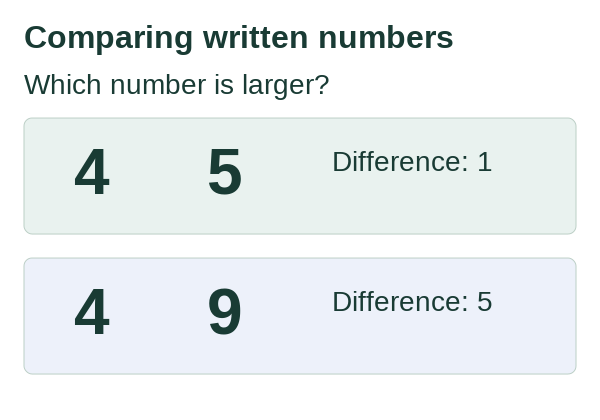
Dyscalculia is a specific learning condition that affects how a person understands and works with number ideas. That difficulty can lower a student's academic performance and well-being in maths education. One review of 23 studies found many differences in how researchers understood the condition. The clearest sign of dyscalculia in students was low scores in math achievement, and their main classroom obstacles involved understanding and applying math concepts. These difficulties could lead to others, such as following problem-solving instructions.[6] Children with dyscalculia usually have trouble with arithmetic and with comparing written numbers, and the problem can continue into adulthood.[7]
A related term is acquired dyscalculia, which describes low maths performance caused by damage to the brain. Some math learning difficulties have similar features but no sign of brain damage, and these are called developmental dyscalculia. A person shows a mathematics disability when scores are low on standardized calculation tests or number reasoning tasks, compared with that person's age, education and intellectual reasoning ability.[8]
Early clinical reports described four patients identified through clinical tests and psychological test results, and through reports of longstanding and severe arithmetic difficulties. Testing showed that the arithmetic deficits could not be explained by a generally low level of intellectual functioning. Of the four basic arithmetic operations, multiplication was relatively weaker, and this came from a poor grasp of basic multiplication tables. Short remedial coaching on multiplication tables brought fairly little success, while methods that bypassed the need to learn the tables brought some success.[9]
In 1974, Kosc gave a definition of developmental dyscalculia. It focused on an inherited or inborn disorder of the brain structures used for math. Kosc clearly separated this disorder from other forms of disturbed mathematical ability. Kosc then set out a classification with six kinds. They are verbal, practognostic, lexical, graphical, ideognostical and operational. That investigation suggested that nearly 6% of children in the so-called normal population could be justifiably expected to show symptoms. The symptoms were of developmental dyscalculia as the study defined it.[10]
The label is still more disputed than dyslexia, even though it is officially recognized. Some accounts base math learning in a number-processing area of the brain, and these clash with social and cultural views of how people learn mathematics. A medical model of math disability, however, gives too little weight to social factors in learning, which suggests that a more complex model of math difficulties is needed.[11] Few broad studies exist, and the condition is also described in inconsistent ways; both have slowed progress on finding its root causes and the best way to handle it. Dyscalculia is one of the least known mathematics learning problems, partly because it has had little exposure and little study.[7]
History
Early descriptions and the medical view
A 1979 article for teachers treated trouble with number as something that can have several causes. These include language disorders, poor teaching methods, reading problems, and disturbed qualitative thinking. That article drew on earlier work by Gesell and Amatruda in 1947 and by Piaget in 1953. Both studied how children build number concepts in stages. Flinter (1979) noted that most children learn to understand number with little difficulty. Some fail.[12]
A 1993 paper by Shalev and Gross-Tsur defined developmental dyscalculia. It called it a primary cognitive disorder of childhood. It shows up as a disturbance of arithmetic ability. Shalev and Gross-Tsur (1993) noted that dyscalculia often occurs on its own. The usual response then is special teaching rather than a referral for medical assessment. The researchers examined 7 third-grade children with dyscalculia in a mainstream school. These children had not progressed in school. This was despite specific special education intervention. In all 7 children, they found brain and nerve conditions. These had a direct effect on the children's thinking difficulties and on remedial programs. The seven children had different conditions. One had petit mal seizures, one developmental Gerstmann syndrome, one dyslexia for numbers, and four attention deficit disorders without hyperactivity. On that basis the paper suggested broadening the reasons for medical or neurological assessment. The wider list would include children who do not improve at school despite proper professional help.[13]
A 2012 paper in educational psychology summed up brain research on early number skills. It described the neurological and behavioral features of dyscalculia. It asked whether dyscalculia can be assessed and identified accurately. It also asked whether doing so benefits children and young people. The paper noted that dyscalculia had by then become a topic in popular media. Yet educational psychologists had done little research on it.[14]
Main ideas
The number sense explanation
One leading explanation of dyscalculia starts with number sense, the ability to represent and compare quantities without words or symbols.[3][1] Researchers often call the system behind it the Approximate Number System, or ANS: a nonverbal way of representing amounts that works across species and throughout development.[15] A 2010 study measured how finely children could tell apart sets of dots, and the researchers called this number acuity.[1]
The evidence links weak number sense to dyscalculia. It comes from tests of how finely people tell numbers apart.[1][15] In children who develop typically, this precision improves with age. Ten-year-olds with dyscalculia did as well as five-year-olds with typical development. The severity of that impairment also predicted how poorly the same children handled symbolic numbers.[1]
A 2011 study of 71 ninth graders compared students with a math learning disability to peers who were low, typical and high achieving. Students with the disability had much poorer ANS precision than students in every other math achievement group. The link held even after the researchers controlled for general abilities. These were abilities not specific to number. The same precision did not separate low-achieving students from typically achieving ones. This suggests the deficit belongs to the disability itself, not to low achievement in general.[15]
One 2011 review argued that the core problem lies in understanding sets and how many items they contain, a skill it called fundamental to all aspects of elementary school mathematics.[16] A 2007 account described dyscalculia as a number sense disorder caused by genes. It added that the internal number line develops during elementary school. It needs other mental parts, including working memory and number symbolization.[3]
Symbols, the mental number line and access
One way to study dyscalculia is to ask where the problem starts: in the sense of quantity itself, or in the link between written numerals and that sense.[17][18] The mental number line is the idea that people place numbers in order along a line from left to right. Children with dyscalculia usually struggle with one task: they must place Arabic numerals on a physical number line. That struggle may reflect a weak number line itself, but which one is a separate question. A 2017 study tested this with 24 Quebec French-speaking children with dyscalculia and 37 without, all aged 8 to 9. Children with dyscalculia made a larger percentage absolute error than the other children, and this held in every task except number-to-position with analogic numerosities. The researchers concluded that the trouble lies in reaching the mental number line from symbolic numbers, not in the line itself.[17]
A 2012 study looked at children with dyscalculia diagnosed with a timed arithmetic task, and it found similar distance and size effects in the dyscalculic group and the typically developing group. But the children with dyscalculia were much slower on the symbolic task; on this view, the difficulty lies in retrieving magnitude information from numerical symbols, not in handling numerosities themselves.[18] A 2011 paper argued that the first deficit in dyscalculia is in building an exact representation of numerical value through learning symbolic numbers. In that account the reduced acuity of the approximate number system, the rough sense of larger versus smaller amounts, appears only later and follows from the first deficit. The paper also noted that results that did not match had been published since Rousselle and Noël (2007) reported the symbolic-only pattern.[19]
Other studies point to problems with both symbolic and nonsymbolic processing, at least for some children.[20][21] A 2023 study chose 58 children with very weak math skills, 2 SD below average, whose general skills were average. It compared them with 42 children of average maths skill, matched for IQ, age and visuospatial memory. On simple computer tasks, the children with dyscalculia had weak number sense for both symbolic and nonsymbolic material. Two tasks separated the two groups: a digit-comparison task and a numerosity match-to-sample task. The area under the curve was .84 in cross-validated logistic regression.[20]
A 2016 study looked at children aged 11 to 13 with dyscalculia, split them into two groups and found different patterns. The group with general dyscalculia was weak at processing numbers in both symbol and non-symbol form. The group with arithmetic fact dyscalculia had problems only with symbolic number processing. The researchers read the first group as having an impaired innate approximate number system, and the second as having an access deficit.[21]
Ordinality means the order of items in a sequence, and researchers have studied it as a system that may be separate. A 2011 set of two experiments asked typically developing adults and adults with dyscalculia to judge whether three groups of dots, or three numbers, were ordered or not ordered. With quantity and ordinality separated in this way, the adults with dyscalculia showed a normal ratio effect in the nonsymbolic ordinal task. They did not show the ordinality effect. The ordinality effect appeared in that group only when area and density were randomized, and only in the descending direction. In the symbols task, both ratio and direction shaped the order effect in both groups. The findings suggest two separate mental representations, one holding ordinal information and one holding quantity information. They also suggest that language knowledge may help with estimating order.[22]
A 2012 study used an enumeration version of the Stroop task. In this task, an irrelevant aspect of the display must be ignored. It found further signs of a symbolic or linking problem. Adults with dyscalculia, unlike the control group, showed no congruency effect in the subitizing range of the nonsymbolic task.[23] Subitizing means judging how many dots are in a small set, quickly and correctly.[24]
That range covers the small quantities from 1 to 4, which are processed automatically and quickly. The researchers suggested that dyscalculia may involve poor processing of symbolic number information. It may also involve a weaker automatic link between the symbolic and nonsymbolic systems. They also reported weaknesses in the counting range, meaning amounts larger than 4. These are handled one by one and slowly.[23]
Core number deficits and the evidence
Landerl, Bevan and Butterworth (2004) concluded that dyscalculia reflects specific disabilities in basic number processing, not weaknesses in other thinking skills. The researchers compared children aged 8 and 9 with control children on tasks that tested basic number processing; the children were chosen for dyscalculia, reading difficulties or both. The children with dyscalculia alone did poorly on those tasks, yet their scores on IQ, vocabulary and working memory tests were high-average. Children with reading disability showed only mild impairment, and it appeared only on tasks that involved speaking sounds. Children with both disorders showed a number pattern like the dyscalculic group's, and their reading or language problems added no extra features.[25]
The set is usually 1 to 4 dots. A 2013 study looked at children diagnosed with developmental dyscalculia. Compared with controls, they had a deficit in subitizing and in small estimation, which covers 5 to 9 dots. Subitizing seems to depend on recognizing patterns. So dots in a familiar arrangement should produce a pattern like subitizing. Control children showed a subitizing-like pattern for dots in standard layouts in the estimation range. Ashkenazi, Mark-Zigdon and Henik (2013) concluded that trouble with pattern recognition may be a substantial contributor to subitizing deficits in developmental dyscalculia.[24]
Another line of work asks whether a seen numeral automatically brings its quantity to mind. Rubinsten and Henik (2005) call this the automatic switching on of internal sizes. In a 2005 study, university students compared two Arabic numerals. They compared them on physical size, vertical position or grayness. The numerical values could agree or conflict with the feature being judged. In the grayness task the dyscalculia group showed no number congruity effect at all. In physical comparisons their effect was much smaller than the control group's. The results suggest that numerals do not trigger a sense of size automatically in dyscalculia. People with the condition need attention to link internal sizes with numerals. The task affects whether this happens.[26]
The size congruity effect is measured with a numerical Stroop task, in which two digits differ in both physical size and value and the participant compares them while ignoring one dimension. People with developmental dyscalculia show an abnormal pattern of this effect: they do not show the facilitation part. A 2009 study tested the task under cognitive load, a condition that adds a competing mental demand. Without load, the dyscalculia group showed no help from the physical task, which matched earlier findings. When given extra mental work, control participants lost the helping effect and also showed more interference. In the dyscalculia group, load raised interference only in the physical task. The load produced a dyscalculia-like pattern in controls, so the researchers suggested that people with dyscalculia may have difficulty recruiting attention, possibly on top of their numerical processing deficits.[27]
Some number ability remains in dyscalculia. A 2014 study of adults found them slower than controls only on number meaning tasks, not at deciding colour categories. Structural scans found less grey-matter volume in the right parietal cortex of adults with dyscalculia than in controls, and accurate number judgements in both groups relied on parietal and inferior frontal brain activity.[28] Butterworth (2010) argued that the core deficit lies in numerosity coding, an inherited system for representing sets of objects and the operations on them. On this view, the deficit does not come from the approximate number system. That review also said the key tests of the proposal, longitudinal studies and intervention studies, had not yet been done.[29]
Cognitive skills beyond number
A systematic review following the PRISMA statement included 46 studies that compared school-aged children with and without math difficulties. The review covered attention, executive functions, processing speed, phonological awareness, and memory, in both short and long terms. Children with math difficulties were weaker in executive functions, attention and processing speed. The reviewers recommended checking these functions during diagnosis to help understand each child's profile and plan interventions made for that child. They noted that long-term memory and phonological awareness are still poorly studied.[30]
A 2021 review by Galitskaya and Drigas looks at working memory and math anxiety. It asks how these affect students' performance in math.[31] A 2013 study compared five rival theories of developmental dyscalculia. The children were 9 to 10 years old and in primary school. The children came from a group of 1004. The study put them through nine experiments and 16 tests. The magnitude representation theory, which holds that dyscalculia stems from impaired representation of magnitude in the intraparietal sulcus, was not supported.[32]
A study by Oladi and Ebrahmipour compared 75 students in Grades 1 to 5 in Tehran who had dyscalculia, dyslexia, or typical development, with the groups matched on age, gender, grade level and intelligence quotient. Students with dyscalculia and students with dyslexia both did worse than typically developing peers on working memory and processing speed, and no significant difference appeared between the dyscalculia and dyslexia groups. The study therefore describes these deficits as common to learning disorders.[33]
Research linking dyscalculia to attention is still thin, though the evidence so far suggests the link may be tighter than the one between dyslexia and attention deficits. A 1999 paper noted that significant educational delays can come from an inability to sustain attention, even when basic mental processing is fine.[34] Compared with children with typical learning, children with dyscalculia showed more depressive symptoms and more performance anxiety. They also showed less motivation and a poorer view of their own executive functioning.[35]
Research
How common it is and who is counted
How many children have dyscalculia depends a lot on the test used and on the cutoff used to define it.[36][37] One Israeli study screened 3029 students and found 143 11-year-old children with developmental dyscalculia. In that first group, 6.5 per cent had dyscalculia, a rate close to the rates for dyslexia and ADHD.[4]
A British study of 1004 primary school children estimated how common dyscalculia is, using several different criteria. When the researchers used absolute thresholds, meaning fixed score cutoffs, the prevalence of dyscalculia was the same for both genders whatever cutoff was applied.[37]
The largest screening study, the Havana Survey, tested 11,652 children in grades 2 to 9 and estimated that 3.4% of children have developmental dyscalculia. The ratio of boys to girls was 4 to 1. The same survey put arithmetical dysfluency at 9.35%, almost 3 times as high, with no gender difference: the male to female ratio was 1.07 to 1. Basic number deficits affected 4.54% of school-age children.[38]
One study looked at 28 public schools in Brazil and assessed 2,893 children, giving the test as a surprise activity alongside a writing test. Of these, 687 scored below 58 points, and another 184 were left out because they moved or did not agree to take part. The remaining 503 children took tests of intellectual capacity and reading, and 71 considered intellectually disabled were excluded. In total, 226 children (7.8%) met the criteria for developmental dyscalculia; they could read and write and had a normal intellectual level, and of these, 98 were female and 128 male. Three factors mattered most in that prevalence: the socioeconomic levels of the schools' neighbourhoods, the education level of parents, and being male.[39]
A long-term study of 209 people found that different groups of children meet the criteria for math disability, and which group they fall into depends on the measures used to identify them. A child who meets the criteria at one testing may fail to meet them later, even when the same tests are given again. Twenty-two of the 209 participants had a maths disability that persisted for more than one school grade. One group met a low achievement criterion and another met an IQ-achievement gap criterion, and the two groups overlapped only a little. The discrepancy measure was far less stable over time.[36]
What brain imaging shows
In a 2007 study, children with dyscalculia showed less response to numerical distance in the right intraparietal sulcus than typically developing children. The researchers called this the first direct evidence of a specific impairment of parietal magnitude systems in dyscalculia during nonsymbolic numerosity processing, which means handling amounts without number symbols.[40] A 2010 study scanned children with dyscalculia aged 9 to 11 and compared them with children who had no history of learning disability. In the controls, activity in the intraparietal sulcus on both sides rose as the numerical distance between two Arabic numerals grew, but in the children with dyscalculia it did not. In the controls, the left intraparietal sulcus also reacted to distance between colors, while the right side responded only to numerical distance.[41]
Not every study finds weaker parietal activity. A 2009 study of 18 children, 9 of them with dyscalculia, used finger patterns as the number task. Both groups scored at almost the top level, yet task-specific activity was stronger in the children with dyscalculia, in inferior parietal regions on both sides. Controls showed significant deactivation in these parietal regions during number processing but not during spatial processing, and the children with dyscalculia showed the opposite pattern. The authors read this as less consistent activity on the right and as make-up activity on the left side in dyscalculia.[42]
A 2022 study compared 19 children with dyscalculia with 18 typically developing children. It found higher structural covariance between the anterior intraparietal sulcus and the middle temporal and frontal gyri; structural covariance measures how tightly the volumes of two regions vary together across people. An analysis of hippocampus subfields found higher structural covariance for area CA3 with several regions. It found lower covariance between the subiculum and the orbitofrontal gyrus, anterior insula and middle frontal gyrus.[43]
A 2009 fMRI study noted that brain imaging studies of dyscalculia were scarce and that their results so far were not clear.[42] A 2023 paper argued that current accounts mostly give a single cause, focusing on deficits in grey matter. It proposed instead that number processing depends on two separate but overlapping networks that interact in a way that depends on context. That framework came from studies in adults, including fiber tracking and disconnectome mapping in acute stroke patients. The authors argue that its main features should appear earlier in development.[44]
Family patterns and what happens over time
Researchers assessed 39 children with dyscalculia for arithmetic, reading and attention disorders. They also assessed 21 mothers, 22 fathers, 90 siblings and 16 second-degree relatives. The rate among siblings was almost tenfold higher than expected in the general population. The 95% confidence interval, a range that likely contains the true value, ran from 40% to 64%. General intelligence and attention problems were not risk factors for dyscalculia in this sample. The researchers concluded that dyscalculia runs in families to a large degree. Other learning disabilities do too. This suggests a role for genetics.[5]
The children were re-examined three and six years later. This was in eighth grade (n=123) and eleventh grade (n=104). Six years on, 99 of 104 children (95%) still did poorly in arithmetic. They were in the lowest quartile for their grade. Forty of the 104 children (40%) met the study's criteria for dyscalculia again at that point. Dyscalculia that lasted was linked to more severe dyscalculia in fifth grade. It was also linked to lower IQ, inattention and writing problems. The study concluded that dyscalculia is a lasting, specific learning difficulty. It lasts into late adolescence in almost half of affected people.[2]
Dyscalculia can last into adult life, but research on adults is much thinner than research on children. A 2020 review described dyscalculia as a long-term condition that can block employment and harm social and emotional wellbeing.[45] In one small study, 15 adults with dyscalculia and 15 control participants did four categorization tasks using numerosities (set sizes), lengths, durations and faces. The adults with dyscalculia handled numerosity and duration poorly, but they categorized lengths and faces as well as the controls did.[46]
Some children with dyscalculia have emotional and behavioral difficulties. This is especially true when the condition persists. A study compared 58 young people with persistent dyscalculia and nonpersistent dyscalculia. They were classified at age 10 to 11. Parents filled in the Child Behavior Checklist at ages 10 to 11, 13 to 14 and 16 to 17. The youths filled it in at the last two periods. Only at age 16 to 17 years did parents report much more problems for the persistent group. Attention problems and externalizing problems stood out. More of the persistent group scored in the clinical range for problems turned outward. Fewer in the nonpersistent group did. Still, average behaviour problem levels stayed in the normal range for both groups. This held at this age and at the earlier ages. In the youths' own reports, attention problems at 16 to 17 years were the only real difference.[47]
A single case study described an English teacher named Nur and showed how dyscalculia reached into her personal, social, academic, professional and daily life. In-depth interviews yielded nine stories from Nur's life, and content analysis sorted them into themes, categories and codes. The findings tied her math difficulties to lost self-confidence and isolation from others, and also to problems in her professional skills. The study called for early individualized psychoeducational interventions, effective support systems, and greater public awareness.[48]
Tests, screening and intervention results
Building a dyscalculia test starts with deciding what it should measure. One framework set out three main constructs, assessed through seven tests. One 2020 framework used three constructs: perception, operation and reason. These make sense of math, and the framework turned them into seven tests. The framework produced a standard set of instruments for primary school students. It is called the Malaysian Dyscalculia Instrument (MDI).[49]
A 2023 study in Nigeria built a different tool, the Dyscalculia Test. It used a sample of 2340 students. They were drawn from 4,758,800 students in upper primary and junior secondary schools. Eteng-Uket (2023) found that the test's items measured three components. They are number sense, arithmetic operation and working memory.[50]
A 2015 review described the computerized screening tools developed and used over the past two decades. That review put the prevalence of dyscalculia at 3 to 6% of the world population.[51] A 2025 review reported that diagnosis is becoming more reliable with technology tools. It also said digital games and educational software have proven effective. They raise the math skills of students with dyscalculia.[52]
Hedge's g is a measure of effect size; the review reported a pooled value of .93. No moderator variable predicted the pooled effect size with statistical significance. The analysis found publication bias, shown by Egger's regression test, which pointed to publication bias in the reviewed studies. Mehari and Zeleke (2025) reported this.[53]
Michels, O'Gorman and Kucian (2018) scanned children with dyscalculia and typically developing children. The scans came before and after five weeks of number line training. It compared 16 typically developing children with 15 children with developmental dyscalculia. All had a mean age of 9.5 years. Before training, the children with dyscalculia showed hyperconnectivity, unusually strong coupling between brain regions. This appeared in parietal, frontal, visual and temporal areas of the brain. The extra connectivity went away after training, while math abilities got better.[54]
Cárdenas, Silva-Pereyra, Prieto-Corona, Castro-Chavira and Fernández (2021) reported that children with dyscalculia form a very mixed group, partly because their working memory deficits vary. A 2021 study recorded brain responses in 22 children with dyscalculia and 22 children with good academic performance while the children did a task that checked addition answers. The comparison group gave more correct answers, and only that group showed the N400 effect, a brain wave linked to spotting an arithmetic mismatch. Two subgroups appeared among the children with dyscalculia, one with an average working memory index and one below average, and the subgroups showed different patterns of brain response.[55]
In practice
Identification, teaching and support
In Russia, researchers reported that standardized tools for detecting the disorder were lacking. Prevalence is still estimated at up to 6% of the population. The tool was tried out with 91 pupils in grades 2 to 4 of regular schools in St. Petersburg, Russia, children aged 8 to 11 years with varying levels of mathematical skill.[56]
Two earlier studies in India used both inclusionary and exclusionary criteria. They ruled out other causes of arithmetic failure before counting a child. They reported 5.98% (15 cases out of 251) and 5.54% (78 out of 1408).[57]
The Russian tool pairs school arithmetic and problem tasks with subtests of neuropsychological factors.[56] One case study compared a 9-year-old girl with developmental dyscalculia with 10 typically developing children on number line tasks. She did worse on every symbolic task: her linear fit was low, and her accuracy was also low, as measured by mean percent absolute error. A logarithmic curve described her estimates better than a linear one. She also showed more fixation patterns that could not be identified on multi-digit numbers, and she showed poor estimation strategies in one third of trials, where the control group showed this in about 10%. That claim rests on a single child.[58]
A systematic review looked at interventions for primary school children with dyscalculia, covering studies from 2004 to 2014.[59] A review of the topic concluded that dyscalculia needs treatment, with specialists, parents and teachers working together, and added that early diagnosis, suitable strategies and new methods can bring effective long-term results.[60] A teacher-focused overview noted that the literature on remediation is in its infancy and called for math educators to join research across several fields.[61]
A study built learning devices for elementary school children with dyscalculia through stages of defining, designing and development, and reported that the devices helped children put numbers in order and helped with adding and subtracting whole numbers.[62] A long-term abacus course of 2 to 3 years was tested in twelve classes, half of which received the course. No child in the abacus classes was diagnosed with dyscalculia, while the rate in the control classes was 6.4%. The researchers held age, gender, grade and other basic thinking abilities constant, and even so, the abacus students did better in arithmetic computation and in spatial short-term memory.[63]
A training programme targeted the syntactic impairment of a young man with developmental dyscalculia. His errors were strings that broke the rules of number writing. One example was writing nine hundred two thousand seventy as 92,70. Comparisons before and after training showed big gains on the trained written-verbal-to-Arabic task. Gains also appeared on an untrained task: spoken words to Arabic numerals. This task is thought to share the same Arabic numeral production process. His performance rose from a third-grade level to about a fourth-grade level. Most children begin to show proficient number transcoding skills in that grade.[64]
A systematic review looked at 17 studies of error patterns in students with mathematics difficulty. It found that the rules for spotting difficulty and the coding methods varied. The topics studied were fractions, including computation and representation. They also included problem-solving and general computation. A range of common error types appeared across these areas.[65]
In Nepal, 150 basic level school teachers showed poor knowledge of dyscalculia. On a screening test, 6.8 percent of 500 students were found dyscalculic. In that survey, gender, school type and educational qualifications were not significantly linked to teachers' knowledge. Teaching experience was the exception.[66]
Among 175 primary school teachers, age and gender did not predict knowledge. Being a special education teacher did predict higher knowledge of intervention strategies. Having heard about dyscalculia predicted better knowledge of ways to help. It also predicted better knowledge of the disorder's features.[67]
An Australian overview reported a rate of 5% in Australian schools. It also reported a lack of recognition, identification and diagnosis. It also noted that 50% of dyslexics have dyscalculia.[61] In the Indian study, 40 of the 78 children with dyscalculia (51.27%) also had reading and writing problems.[57]
A Malaysian review from a doctor's point of view called for computer-based diagnosis. It should measure all possible difficulties, plus co-occurring disorders and IQ. It also called for one-on-one intervention under a standard policy. That policy would involve health professionals, teachers and parents.[68]
What teachers see in the classroom
Teachers looking for dyscalculia in a normal classroom can use a list of signs in four domains. The domains are number sense, working memory, accurate or fluent calculation, and mathematics reasoning. A 2021 review sorts the visible signs into four areas. The review lists these signs from earlier literature. The aim is to help teachers and parents spot symptoms in ordinary classrooms.[69] A 2021 paper says dyscalculic learners are held back by weak number sense and low basic math fluency. It also names poor reasoning and inaccurate arithmetic calculation.[70]
A 2021 article in a Nepali journal lists the same areas: number sense, recall of arithmetic facts, correct and fluent calculation, and correct mathematical reasoning. That article estimates that about 3 to 6 percent of people have problems linked to dyscalculia.[70] A 2021 community project in Indonesia gives a higher figure. It says 3 to 7 percent of the world's population is affected. The same project notes that students with dyscalculia show a large drop in school achievement.[71]
A study at Magsico National High School in Cebu found senior high school students with dyscalculia. It used a Dyscalculia Screener Test. Their scores on a mental mathematics test ran from 4 to 25 out of 32 items. On an achievement test they scored between 13 and 36 out of 40 items. That is below the expected 75 percent. Those students called mathematics extremely hard, especially solving problems.[72]
A survey asked 153 educators and other interested people in Malaysia. As of 2023, 47.1% of those asked still knew little about dyscalculia.[73] Interviews with 15 elementary mathematics teachers found that most had general knowledge of dyscalculia. But they struggled to identify and support diagnosed students in their classrooms.[74]
In a training session held in February 2021 for 8 teachers at SD Negeri Pisangcandi 3 Malang, questionnaire scores rose from an average of 57.5 before the session to 79.5 at the end, an average gain of 22%. Eight primary teachers in Malang, Indonesia, scored an average of 57.5 on a questionnaire. This was before a February 2021 screening workshop. They scored 79.5 after the lessons. The project reported an average gain in teacher understanding of 22 percent.[71]
A 2025 case study at one Indonesian elementary school found fifth-grade students struggled most with multiplication and division. The study traced those difficulties to low motivation to learn. It also traced them to limited parental supervision because of work duties. It also traced them to reliance on technology. That dependence reduced memorizing of basic concepts.[75]
A 2023 classroom study in Gresik, East Java, followed 20 first-grade pupils. It described students with dyscalculia as having trouble counting and recognizing numbers.[76] An article in Music Educators Journal describes how trouble with numbers and arithmetic can hold students back. It can make reading music notation harder. It can also make math and space-based rhythm ideas harder to grasp.[77]
Teaching approaches and intervention studies
One approach tested is Concrete Representational-Abstract (CRA) instruction. A quasi-experiment in Port Harcourt City, Nigeria, compared two methods, CRA instruction and Multisensory Mathematics Instruction, and also compared both with ordinary teaching. The sample was 151 pupils with dyscalculic characteristics: 40 pupils received concrete representational-abstract instruction, 23 received multisensory instruction and 88 received conventional teaching. Both structured methods gave large gains in math achievement over usual teaching, and concrete representational-abstract teaching did slightly better than multisensory teaching.[78]
A classroom action research study in Situbondo, Indonesia examined realistic mathematics education (Pembelajaran Matematika Realistik). A classroom action research study used this method to teach number operations. The study was carried out in a class at MI Nurul Huda Peleyan, Kapongan, Situbondo, in the 2022-2023 school year. Test results rose between the first and second cycles. The study treated the gain as reaching mastery.[79]
A 2024 model for children with dyscalculia reported that after teacher-led treatment, pupils showed a very large drop in difficulties. The drop was especially large in recognizing and ordering numbers. In that study, 121 of 1247 screened students, or 9.7%, were first identified as having dyscalculia. Checks with parents and teachers confirmed 119 of them. The treatment process for division operations took somewhat longer than the others.[80]
Many technological tools have been made for early diagnosis of dyscalculia, and others are for intervention programs, but more scientific evidence is needed to support their efficacy and validity in educational settings. A review of technology tools for early help built a bank of tools and found that more scientific evidence is lacking, evidence that would support their effectiveness and validity in schools.[81] A pilot study tested a toolkit of four games built on visual cues; twenty second-grade students took pre-tests and post-tests, and their scores improved.[82] A courseware package for dyscalculia students scored highest on ease of use, with a mean of 4.6 (SD=0.55).[83] An interactive multimedia product for third graders was rated valid at 3.20 and practical at 3.09, and its developers' tests rated it effective at 3.36.[84] A website-based tool for first-grade Vietnamese children was judged appropriate by 73 people who work in, or study, education for children with dyscalculia.[85]
Some people have suggested music as a support for dyscalculic learners. A 2023 review looked at articles published in Turkey between 2011 and 2022. It offered a model suggestion, not tested results.[86]
A mathematical model of intervention progress treats recovery and discontinuation as end states. But its case study of a single student does not show comparative effectiveness.[87] A survey of 30 schools in Amritsar District found a gap between school types. Private school teachers gave extra support to dyscalculic students more than government teachers did. They also used cooperative learning more.[88]
What this looks like when you study
In one study, 58 children with severely compromised mathematical skills, 2 SD below average, and 42 matched controls completed simple computerized tasks. The children compared digits and matched sets of dots to sample quantities. The authors recommend these basic numerical tasks for early identification of at-risk children.[20]
In another study, 480 children in the 2nd, 3rd and 4th grades, 68 with dyscalculia and 412 typically developing, completed subitizing, counting, magnitude comparison, number sets and number line estimation tasks. The dyscalculic group needed significantly longer reaction times than the typically developing group on dot enumeration in the counting range, but not in the subitizing range. The authors concluded that the impairments pointed to a specific developmental delay rather than a qualitatively different pattern, with the exception of dot enumeration. They also found support for the approximate number system deficit rather than the access deficit or object tracking system hypotheses.[89]
In a study of 71 ninth graders, students with mathematical learning disability had significantly poorer approximate number system precision than low, typically and high achieving groups. This relation held even when controlling for domain-general abilities.[15]
Later developments
Different profiles under one label
Dyscalculia is a very mixed disorder, and earlier studies have described many possible subtypes.[90] One long-standing split separates exact calculation from approximation. In a 2000 study, healthy volunteers did exact and approximate tasks with small and large numbers while their brain activity was recorded. Approximation turned on several regions more strongly: bilateral intraparietal, precentral, dorsolateral and superior prefrontal regions. Exact calculation produced stronger activation in the left inferior prefrontal cortex and in the angular regions on both sides. The results showed two brain networks for number processing, and the study argued that damage to just one of them can explain some types of dyscalculia.[91]
A second split separates problems with calculation procedures from problems with number facts. Temple described two cases of developmental dyscalculia in 1991, and no single stage model of arithmetic development could explain them. Both children could process numbers accurately. SW had acquired accurate number facts and tables while showing selective difficulty with the procedures of calculation. HM showed the reverse: calculation procedures were normally mastered, and arithmetical tables were learned only with selective difficulty. Temple concluded that the modules for tables and for procedures develop semi-independently, and that neither is an essential precursor of the other.[92]
A 1993 review found three distinct deficits linked to math disability. The first is trouble storing or recalling arithmetic facts from semantic memory, and the second is trouble carrying out arithmetic procedures. The third involves problems with the visuospatial representation of number information.[93]
Later work has tried to sort children into groups from test data rather than from theory. A 2021 mixture model analysis studied 174 elementary school children with dyscalculia and found strong evidence for two subtypes, one slightly impaired and one badly impaired. Mathematical abilities separated the subtypes most strongly, and the analyses suggested that attention differences might matter too. Substantial intelligence differences between the subtypes could not be found, and differences in working memory and reading fluency were negligible. The results held up regardless of which diagnostic test was used.[94]
A 2025 study tested whether children with dyscalculia form a group that is clearly separate from other children. It studied 1,015 children and sorted them into subtypes using a data-driven method. A standard test found that 93 of them had dyscalculia, with a cutoff of a score below the 10th percentile. The researchers used four ways to sort subtypes. In three of them, at least one subgroup had significant mathematical deficits, and that subgroup held more children with dyscalculia than its share. The study concluded that the boundaries are fluid, and it argued that every child who has trouble with mathematics should get support, including children not classified as dyscalculic.[90]
One evaluation looked at 47 students aged 8 to 16 years and found signs of certain patterns in the test results. Solving mathematical problems drew on a mixed set of processes: executive functions, sequential and simultaneous processing, arousal and attention, automation, and cognitive integration.[95] A 1994 article argued that single-case and group designs had both been linked to shortcomings that were theoretical or methodological, and it proposed a cognitive neuropsychological approach instead. It gave early results from several students with dyslexia who also had trouble with numbers.[96] An earlier framework by McCloskey, Caramazza and Basili in 1985 set out a model describing how number processing and calculation work, and patterns of harm in brain-damaged patients supported its main assumptions.[97]
Memory, attention and general thinking skills
Other studies point to a memory problem about the order of items. Sixteen children with dyscalculia, aged 8 to 11, were compared with 16 typically developing children. The groups were matched on age, IQ and reading ability. The dyscalculia group did worse at remembering order. They did not do worse at remembering the items themselves. They were also slower at judging whether numbers were in order.[98]
A 2013 study of children with mathematical disabilities found lower visuo-spatial working memory scores. Verbal and general control abilities were preserved. The same children did not use visuo-spatial working memory well while solving arithmetic problems.[99]
Both dyscalculia groups scored much lower than controls on working memory tasks. The group with reading disorder also scored lower on visual learning and semantic memory. In that sample, working memory tests were the best predictors of math scores.[100]
A 2015 study separated dyscalculia from high maths anxiety. It found different memory profiles in the two. Children with dyscalculia showed specific problems on the visuospatial working memory task. Children with high mathematics anxiety did particularly poorly on the verbal working memory task.[101]
Fourteen university students with dyscalculia were compared with 14 matched controls. The students had normal intelligence and reading, and showed no indication of attention-deficit hyperactivity disorder. The dyscalculia group showed a larger alerting effect and a larger congruity effect, which points to problems in the alertness and executive function networks.[102] Students with dyscalculia missed more targets, and their response times also varied more from trial to trial.[103]
In one study, attention training did not improve arithmetic in the dyscalculia group, and it also did not improve basic number processing. Nine university students with dyscalculia took part in attention training using video games, and nine matched controls took part too. Training reduced the enlarged congruity effect in the dyscalculia group and improved addition problems in both groups. It did not change the group's smaller-than-normal subitizing range, the quick accurate recognition of small quantities, and it also left their basic numerical processing unchanged. The researchers concluded that attention deficits and number deficits in dyscalculia seem to come from different sources.[104]
One 2020 study argues that executive function in a numerical context relates to dyscalculia. It also relates to math achievement. It followed 448 children from ages 4 to 13. Only performance on incongruent trials related to achievement.[105]
A 2019 study of enumeration found that alerting cues sped responses in adults with dyscalculia. This held at all ranges. The cues did not widen their smaller subitizing range. That result suggests two things help children count quantities quickly. General ability is one, and number-specific ability is the other.[106]
Overlap with dyslexia and other conditions
A 2009 study compared four groups of 8- to 10-year-olds. There were 42 control children, 21 with dyslexia, 20 with dyscalculia, and 26 with both disorders. Both dyslexia groups showed a phonological deficit. A phonological deficit was found in both dyslexic groups, whether or not the children also had arithmetic deficits, and was not found in the group with dyscalculia alone. This held whether or not they also had arithmetic difficulties. The dyscalculia-only group did not show this deficit. In contrast, both dyscalculic groups struggled to process symbolic and nonsymbolic magnitudes, meaning number symbols and sets of objects. Children with both disorders showed deficits that were additive. The two conditions combined to cause them.[107]
A 2006 experiment with adults found a different pattern in each group on a task that named large or small Hebrew letters. How similar the sounds were shaped how the control and dyscalculia groups did, but it had a very small effect in the dyslexia group. The results suggest that people with dyscalculia have trouble linking numerals to sizes without effort, but no trouble linking letters to speech sounds, while people with dyslexia show the reverse pattern.[108]
A 2001 review of children with arithmetic disability reached a similar conclusion about where the difficulties lie. It found that arithmetic disability and most dyscalculias share two defining features. One is trouble with the steps used to solve complex arithmetic problems. The other is trouble remembering basic arithmetic facts. The review linked the procedural deficits to the prefrontal cortex. It linked one form of fact-retrieval deficit there too. It linked a second form of retrieval deficit to left parieto-occipito-temporal areas. Several structures below the cortex were also linked. The review ended with a question.[109]
Brain imaging makes the picture of separate profiles more complicated. A 2018 study scanned 62 children aged 9 to 12 as they did arithmetic with dot arrays, digits and number words; of these children, 39 had a clinical diagnosis of dyscalculia, dyslexia, or both. In behavior, children with dyscalculia were less correct when subtracting dot arrays, and all the children with a learning disorder responded more slowly than typically developing children, especially with symbolic formats. At the neural level, however, control children showed higher activation in frontal and parietal areas than all three disorder groups, whatever the disorder. Direct comparisons found similar levels of activation across the disorder groups, and statistical tests confirmed that their patterns were highly similar and departed from the control pattern in similar ways.[110]
Even so, 77.3% of the children with ADHD, dyslexia or dyscalculia had only one of the three. Statistical modeling suggested that reading causes spelling (β = 0.44). For every other pair of traits, the model pointed to genetic influences shared by all the traits. It did not point to causal influences.[111]
Nonverbal learning disability is a third condition. It can involve trouble with mathematics. A 2013 study compared 16 children with nonverbal learning disability. It also compared 15 children with both dyscalculia and dyslexia. Children with nonverbal learning disability did worse on a task comparing dots. Children with both dyscalculia and dyslexia did poorly on mental calculation. They also did poorly on recalling arithmetic facts.[112]
Criticism
Disputes, limits and open questions
Another option is that it is the low end of a smooth range of math ability.[113] Apart from dot enumeration, the children with dyscalculia showed no qualitatively different basic numerical skills. Their profile pointed instead to a specific delay in development. Profiles of 4th-grade children with dyscalculia looked like those of 2nd-grade typically developing children. This again suggests a delay, not a different kind of difficulty.[89]
Price and Ansari (2013) report that behavioral and neuroimaging evidence points to a deficit in representing and processing numerical magnitude as a potential core deficit in developmental dyscalculia.[114] The 2024 study of 480 children also found specific gaps in core signs of number skill. These gaps supported the approximate number system deficit account but did not support the access and object tracking accounts.[89] A difference appeared only on some trials, in which the number of dots and their total area pulled in opposite directions. On those trials, visuo-spatial working memory strongly predicted differences between individuals on that measure. The study concluded that the apparent number sense deficit could be explained another way: children may struggle to pull number out of a dot array when the array's area runs opposite to its number.[115]
A 2008 study looked at children aged 8 and 9. It found no link between exact number tasks and either approximate or analogue tasks. This held for children doing normally, for children with low numeracy, and for children with dyscalculia. In that study, low numeracy went with a poor grasp of symbolic numerals. It did not go with a poor grasp of exact numerosities.[116]
A 2014 study of fourth graders with dyscalculia reported difficulties with space, time and number. It concluded that these children have a general problem with processing size and number.[117] A 2020 study compared 32 children with dyscalculia and 32 controls. It found poor sensitivity in processing large numerosities. It found no impairment in exactly counting small sets. That study also found shortfalls in visual short-term memory. These did not explain the low number acuity.[118]
Definitions differ. The research base is small and the criteria are unsettled.[119][120][121] A search of peer-reviewed articles with dyscalculia in the title found 31 papers. They were published from 1991 to 2001. It found 74 papers published from 2002 to 2012. The rules for defining and diagnosing dyscalculia are still unclear.[119]
A 2013 overview listed three problems. They were inconsistency in defining mathematics learning disability, comorbidity with other disabilities, and problems with assessment tools and the skills they actually measure.[120] A 2024 paper stated plainly that there is no accepted definition of dyscalculia. The same paper asked whether a child who struggles with math has dyscalculia. It argued that the link between low number sense and genetics is correlational, not causal.[121]
People often assume math anxiety lies behind poor performance, and a negative correlation is frequently reported. A study compared dyscalculia with math anxiety and found that more girls than boys had both mathematics anxiety and dyscalculia. Yet 77% of the children with high math anxiety did typically or well in math.[122]
Most studies of developmental dyscalculia rely on models of how adults do arithmetic. Such models may not suit the study of calculation systems that are still developing. So far, findings from neuroscience have had limited use for teaching.[123] A 2015 review listed questions still open. They included the role of general cognitive resources, the causes and developmental consequences of comorbidity, and the design and evaluation of interventions.[124] Future prospective studies are needed to test whether using fingers explicitly in early mathematics teaching would help typically developing children.[123]
Key studies
| Year | Study | Sample | Design | Finding |
|---|---|---|---|---|
| 1974 | Kosc[10] | definition and classification of developmental dyscalculia, plus an investigation of 66 suspected cases | Nearly 6% of children in the normal population can be expected to have symptoms of developmental dyscalculia. | |
| 1991 | Temple[92] | two cases of developmental dyscalculia (SW and HM) | two contrasting cases (SW and HM) | SW had accurate number facts but poor procedures; HM had normal procedures but poor number facts, showing a double dissociation. |
| 2001 | Shalev et al.[5] | 39 children with dyscalculia, 21 mothers, 22 fathers, 90 siblings, 16 second-degree relatives | family aggregation study | Among the relatives of children with dyscalculia, the rates were 66% for mothers, 40% for fathers, 53% for siblings, and 44% for second-degree relatives. |
| 2003 | Mazzocco & Myers[36] | 209 participants | prospective longitudinal study | Different groups of children met criteria for math disability depending on which measure was used, and 22 of 209 showed persistent disability across more than one grade. |
| 2005 | Shalev et al.[2] | 140 children diagnosed with dyscalculia in the fifth grade | prospective six-year longitudinal study | At the six-year follow-up, 99 of 104 were still performing poorly in arithmetic and 40 of 104 were recategorized with dyscalculia. |
| 2009 | Landerl et al.[107] | 42 control, 21 dyslexic, 20 dyscalculic and 26 dyslexic/dyscalculic children aged 8 to 10 | cognitive profile comparison | A phonological deficit appeared in both dyslexic groups but not the dyscalculia-only group, while magnitude deficits appeared in both dyscalculic groups but not the dyslexia-only group. |
| 2009 | Kaufmann et al.[42] | 18 children, 9 with dyscalculia | functional MRI during nonsymbolic number comparison | Despite comparable accuracy above 90% in both groups, dyscalculic children showed stronger task-specific activations in inferior parietal cortices bilaterally. |
| 2010 | Piazza et al.[1] | children with and without dyscalculia | psychophysical test of number acuity | 10-year-old dyscalculics scored at the level of 5-year-old normally developing children, and the severity of the acuity impairment predicted defective performance on symbolic number tasks. |
| 2011 | Mazzocco et al.[15] | 71 ninth graders | psychophysical assessment of approximate number system acuity | Students with mathematical learning disability had significantly poorer precision than low, typically and high achieving groups, even when controlling for domain-general abilities. |
| 2012 | Reigosa-Crespo et al.[38] | 11,652 children in grades 2 to 9 | large survey of numerical capacities | The estimated prevalence of developmental dyscalculia was 3.4%, with a male:female ratio of 4:1, while arithmetical dysfluency was 9.35% with no gender difference. |
| 2017 | Lafay et al.[17] | 24 children with dyscalculia and 37 without, aged 8 to 9 | transcoding tasks with Arabic, spoken and analogic numbers | Children with dyscalculia produced a larger percentage absolute error in every task except number-to-position with analogic numerosities. |
| 2023 | Decarli et al.[20] | 58 children with severe mathematical deficits and 42 matched controls | computerized symbolic and nonsymbolic number tasks | The children with dyscalculia were impaired on number sense for both symbolic and nonsymbolic quantities, and the two tasks together gave an area under the curve of .84. |
| 2024 | Lamb et al.[89] | 480 children in grades 2 to 4, 68 with dyscalculia and 412 typically developing | basic numerical skills tasks | The dyscalculic group needed significantly longer reaction times on dot enumeration in the counting range but not the subitizing range, pointing to a developmental delay. |
| 2025 | Kißler & Kuhn[90] | 1,015 children, 93 identified as dyscalculic | data-driven mixture model analysis | In three of four approaches, at least one subgroup showed significant mathematical deficits and included disproportionately many children with dyscalculia; one approach suggested a mild and a severely impaired subtype. |
See also
References
- Piazza, M., Facoetti, A., Trussardi, A. N., Berteletti, I., Conte, S., Lucangeli, D., Dehaene, S., & Zorzi, M. (2010). Developmental trajectory of number acuity reveals a severe impairment in developmental dyscalculia. Cognition, 116(1), 33-41. doi:10.1016/j.cognition.2010.03.012
- Shalev, R. S., Manor, O., & Gross-Tsur, V. (2005). Developmental dyscalculia: a prospective six-year follow-up. Developmental Medicine & Child Neurology, 47(2), 121-125. doi:10.1017/s0012162205000216
- Von Aster, M. G., & Shalev, R. S. (2007). Number development and developmental dyscalculia. Developmental Medicine & Child Neurology, 49(11), 868-873. doi:10.1111/j.1469-8749.2007.00868.x
- Gross‐Tsur, V., Manor, O., & Shalev, R. S. (1996). Developmental dyscalculia: Prevalence and demographic features. Developmental Medicine & Child Neurology, 38(1), 25-33. doi:10.1111/j.1469-8749.1996.tb15029.x
- Shalev, R. S., Manor, O., Kerem, B., Ayali, M., Badichi, N., Friedlander, Y., & Gross-Tsur, V. (2001). Developmental Dyscalculia Is a Familial Learning Disability. Journal of Learning Disabilities, 34(1), 59-65. doi:10.1177/002221940103400105
- Salisa, R. D., & Meiliasari, M. (2023). A literature review on dyscalculia: What dyscalculia is, its characteristics, and difficulties students face in mathematics class. Alifmatika: Jurnal Pendidikan dan Pembelajaran Matematika, 5(1), 82-94. doi:10.35316/alifmatika.2023.v5i1.82-94
- Mahmud, M. S., Zainal, M. S., Rosli, R., & Maat, S. M. (2020). Dyscalculia: What We Must Know about Students' Learning Disability in Mathematics? Universal Journal of Educational Research, 8(12B), 8214-8222. doi:10.13189/ujer.2020.082625
- Munro, J. (2003). Dyscalculia: A unifying concept in understanding mathematics learning disabilities. Australian Journal of Learning Disabilities, 8(4), 25-32. doi:10.1080/19404150309546744
- Slade, P. D., & Russell, G. F. M. (1971). Developmental dyscalculia: a brief report on four cases. Psychological Medicine, 1(4), 292-298. doi:10.1017/s0033291700042252
- Kosc, L. (1974). Developmental Dyscalculia. Journal of Learning Disabilities, 7(3), 164-177. doi:10.1177/002221947400700309
- Gifford, S. (2006). Dyscalculia: Myths and models. Research in Mathematics Education, 8(1), 35-51. doi:10.1080/14794800008520157
- Flinter, P. F. (1979). Educational Implications of Dyscalculia. The Arithmetic Teacher, 26(7), 42-46. doi:10.5951/at.26.7.0042
- Shalev, R. S., & Gross-Tsur, V. (1993). Developmental Dyscalculia and Medical Assessment. Journal of Learning Disabilities, 26(2), 134-137. doi:10.1177/002221949302600206
- Gillum, J. (2012). Dyscalculia: issues for practice in educational psychology. Educational Psychology in Practice, 28(3), 287-297. doi:10.1080/02667363.2012.684344
- Mazzocco, M. M. M., Feigenson, L., & Halberda, J. (2011). Impaired Acuity of the Approximate Number System Underlies Mathematical Learning Disability (Dyscalculia). Child Development, 82(4), 1224-1237. doi:10.1111/j.1467-8624.2011.01608.x
- Butterworth, B., Varma, S., & Laurillard, D. (2011). Dyscalculia: From Brain to Education. Science, 332(6033), 1049-1053. doi:10.1126/science.1201536
- Lafay, A., St-Pierre, M. C., & Macoir, J. (2017). The Mental Number Line in Dyscalculia: Impaired Number Sense or Access From Symbolic Numbers? Journal of Learning Disabilities, 50(6), 672-683. doi:10.1177/0022219416640783
- Cañizares, D. C., Crespo, V. R., & Alemañy, E. G. (2012). Symbolic and Non-Symbolic Number Magnitude Processing in Children with Developmental Dyscalculia. The Spanish journal of psychology, 15(3), 952-966. doi:10.5209/rev_sjop.2012.v15.n3.39387
- Noël, M. P., & Rousselle, L. (2011). Developmental Changes in the Profiles of Dyscalculia: An Explanation Based on a Double Exact-and-Approximate Number Representation Model. Frontiers in Human Neuroscience, 5. doi:10.3389/fnhum.2011.00165
- Decarli, G., Sella, F., Lanfranchi, S., Gerotto, G., Gerola, S., Cossu, G., & Zorzi, M. (2023). Severe Developmental Dyscalculia Is Characterized by Core Deficits in Both Symbolic and Nonsymbolic Number Sense. Psychological Science, 34(1), 8-21. doi:10.1177/09567976221097947
- Skagerlund, K., & Träff, U. (2016). Number Processing and Heterogeneity of Developmental Dyscalculia: Subtypes With Different Cognitive Profiles and Deficits. Journal of Learning Disabilities, 49(1), 36-50. doi:10.1177/0022219414522707
- Rubinsten, O., & Sury, D. (2011). Processing Ordinality and Quantity: The Case of Developmental Dyscalculia. PLoS ONE, 6(9), e24079. doi:10.1371/journal.pone.0024079
- Furman, T., & Rubinsten, O. (2012). Symbolic and non symbolic numerical representation in adults with and without developmental dyscalculia. Behavioral and Brain Functions, 8(1), 55. doi:10.1186/1744-9081-8-55
- Ashkenazi, S., Mark‐Zigdon, N., & Henik, A. (2013). Do subitizing deficits in developmental dyscalculia involve pattern recognition weakness? Developmental Science, 16(1), 35-46. doi:10.1111/j.1467-7687.2012.01190.x
- Landerl, K., Bevan, A., & Butterworth, B. (2004). Developmental dyscalculia and basic numerical capacities: a study of 8–9-year-old students. Cognition, 93(2), 99-125. doi:10.1016/j.cognition.2003.11.004
- Rubinsten, O., & Henik, A. (2005). Automatic Activation of Internal Magnitudes: A Study of Developmental Dyscalculia. Neuropsychology, 19(5), 641-648. doi:10.1037/0894-4105.19.5.641
- Ashkenazi, S., Rubinsten, O., & Henik, A. (2009). Attention, automaticity, and developmental dyscalculia. Neuropsychology, 23(4), 535-540. doi:10.1037/a0015347
- Cappelletti, M., & Price, C. J. (2014). Residual number processing in dyscalculia. NeuroImage: Clinical, 4, 18-28. doi:10.1016/j.nicl.2013.10.004
- Butterworth, B. (2010). Foundational numerical capacities and the origins of dyscalculia. Trends in Cognitive Sciences, 14(12), 534-541. doi:10.1016/j.tics.2010.09.007
- Agostini, F., Zoccolotti, P., & Casagrande, M. (2022). Domain-General Cognitive Skills in Children with Mathematical Difficulties and Dyscalculia: A Systematic Review of the Literature. Brain Sciences, 12(2), 239. doi:10.3390/brainsci12020239
- Galitskaya, V., & Drigas, A. (2021). The importance of working memory in children with Dyscalculia and Ageometria. Scientific Electronic Archives, 14(10). doi:10.36560/141020211449
- Szucs, D., Devine, A., Soltesz, F., Nobes, A., & Gabriel, F. (2013). Developmental dyscalculia is related to visuo-spatial memory and inhibition impairment. Cortex, 49(10), 2674-2688. doi:10.1016/j.cortex.2013.06.007
- Oladi, S., & Ebrahmipour, M. (2026). Comparison of Processing Speed and Working Memory in Students with Dyscalculia, Dyslexia, and Typical Development. Health Nexus, 4(1), 1-10. doi:10.61838/kman.hn.5113
- Lindsay, R. L., Tomazic, T., Levine, M. D., & Accardo, P. J. (1999). Impact of attentional dysfunction in dyscalculia. Developmental Medicine & Child Neurology, 41(9), 639-642. doi:10.1017/s0012162299001309
- Gentile, A., Gullo, G., & Alesi, M. (2026). Mental Health, Motivation, and Executive Functioning Perception in Children with Developmental Dyscalculia: A Pilot Study. Learning Disabilities: A Multidisciplinary Journal, 31(1). doi:10.18666/ldmj-2026-v31-i1-12882
- Mazzocco, M. M. M., & Myers, G. F. (2003). Complexities in identifying and defining mathematics learning disability in the primary school-age years. Annals of Dyslexia, 53(1), 218-253. doi:10.1007/s11881-003-0011-7
- Devine, A., Soltész, F., Nobes, A., Goswami, U., & Szűcs, D. (2013). Gender differences in developmental dyscalculia depend on diagnostic criteria. Learning and Instruction, 27, 31-39. doi:10.1016/j.learninstruc.2013.02.004
- Reigosa-Crespo, V., Valdés-Sosa, M., Butterworth, B., Estévez, N., Rodríguez, M., Santos, E., Torres, P., Suárez, R., & Lage, A. (2012). Basic numerical capacities and prevalence of developmental dyscalculia: The Havana Survey. Developmental Psychology, 48(1), 123-135. doi:10.1037/a0025356
- Bastos, J. A., Cecato, A. M. T., Martins, M. R. I., Grecca, K. R. R., & Pierini, R. (2016). The prevalence of developmental dyscalculia in Brazilian public school system. Arquivos de Neuro-Psiquiatria, 74(3), 201-206. doi:10.1590/0004-282x20150212
- Price, G. R., Holloway, I., Räsänen, P., Vesterinen, M., & Ansari, D. (2007). Impaired parietal magnitude processing in developmental dyscalculia. Current Biology, 17(24), R1042-R1043. doi:10.1016/j.cub.2007.10.013
- Mussolin, C., De Volder, A., Grandin, C., Schlögel, X., Nassogne, M. C., & Noël, M. P. (2010). Neural Correlates of Symbolic Number Comparison in Developmental Dyscalculia. Journal of Cognitive Neuroscience, 22(5), 860-874. doi:10.1162/jocn.2009.21237
- Kaufmann, L., Vogel, S. E., Starke, M., Kremser, C., Schocke, M., & Wood, G. (2009). Developmental dyscalculia: Compensatory mechanisms in left intraparietal regions in response to nonsymbolic magnitudes. Behavioral and Brain Functions, 5(1), 35. doi:10.1186/1744-9081-5-35
- Michels, L., Buechler, R., & Kucian, K. (2022). Increased structural covariance in brain regions for number processing and memory in children with developmental dyscalculia. Journal of Neuroscience Research, 100(2), 522-536. doi:10.1002/jnr.24998
- Klein, E., & Knops, A. (2023). The two-network framework of number processing: a step towards a better understanding of the neural origins of developmental dyscalculia. Journal of Neural Transmission, 130(3), 253-268. doi:10.1007/s00702-022-02580-8
- Kaufmann, L., von Aster, M., Göbel, S. M., Marksteiner, J., & Klein, E. (2020). Developmental Dyscalculia in Adults: Current Issues and Open Queastions for Future Research. Lernen und Lernstörungen, 9(2), 126-137. doi:10.1024/2235-0977/a000294
- De Visscher, A., Noël, M. P., Pesenti, M., & Dormal, V. (2018). Developmental Dyscalculia in Adults: Beyond Numerical Magnitude Impairment. Journal of Learning Disabilities, 51(6), 600-611. doi:10.1177/0022219417732338
- Auerbach, J. G., Gross-Tsur, V., Manor, O., & Shalev, R. S. (2008). Emotional and Behavioral Characteristics Over a Six-Year Period in Youths With Persistent and Nonpersistent Dyscalculia. Journal of Learning Disabilities, 41(3), 263-273. doi:10.1177/0022219408315637
- Mutlu, Y. (2024). Effects of Dyscalculia on Personal, Social, Academic, Professional and Daily Life: A Case Study. lnternational Electronic Journal of Elementary Education. doi:10.26822/iejee.2024.365
- (2020). A Framework for Diagnosing Dyscalculia. ASM Science Journal. doi:10.32802/asmscj.2020.sm26(2.1)
- Eteng-Uket, S. (2023). The Development, Validation, and Standardization of a New Tool: The Dyscalculia Test. Numeracy, 16(2). doi:10.5038/1936-4660.16.2.1417
- Drigas, A., & Pappas, M. (2015). ICT Based Screening Tools and Etiology of Dyscalculia. International Journal of Engineering Pedagogy (iJEP), 5(3), 61. doi:10.3991/ijep.v5i3.4735
- Maria Apostolidou (2025). Dyscalculia and intervention tools. GSC Advanced Research and Reviews, 22(3), 323-340. doi:10.30574/gscarr.2025.22.3.0092
- Mehari, A., & Zeleke, S. (2025). Effectiveness of interventions for school children with developmental dyscalculia: A systematic review and meta-analysis. Romanian Journal of Applied Psychology, 27(1), 73-83. doi:10.2478/rjap-2025-0008
- Michels, L., O’Gorman, R., & Kucian, K. (2018). Functional hyperconnectivity vanishes in children with developmental dyscalculia after numerical intervention. Developmental Cognitive Neuroscience, 30, 291-303. doi:10.1016/j.dcn.2017.03.005
- Cárdenas, S. Y., Silva-Pereyra, J., Prieto-Corona, B., Castro-Chavira, S. A., & Fernández, T. (2021). Arithmetic processing in children with dyscalculia: an event-related potential study. PeerJ, 9, e10489. doi:10.7717/peerj.10489
- Тарасова, Д., Исаева, Е., & Бизюк, А. (2025). Дифференциальная диагностика дискалькулии у младших школьников: апробация авторской методики комплексной оценки дискалькулии (КОД). Психологические исследования, 18(103), 1. doi:10.54359/ps.v18i103.1974
- Ramaa, S., & Gowramma, I. P. (2002). A systematic procedure for identifying and classifying children with Dyscalculia among primary school children in India. Dyslexia, 8(2), 67-85. doi:10.1002/dys.214
- van Viersen, S., Slot, E. M., Kroesbergen, E. H., van't Noordende, J. E., & Leseman, P. P. M. (2013). The added value of eye-tracking in diagnosing dyscalculia: a case study. Frontiers in Psychology, 4. doi:10.3389/fpsyg.2013.00679
- Monei, T., & Pedro, A. (2017). A systematic review of interventions for children presenting with dyscalculia in primary schools. Educational Psychology in Practice, 33(3), 277-293. doi:10.1080/02667363.2017.1289076
- Delgado, M. A. C., Delgado, R. I. Z., Palma, R. P., & Moya, M. E. (2019). Dyscalculia and pedagogical intervention. International research journal of management, IT and social sciences, 6(5), 95-100. doi:10.21744/irjmis.v6n5.710
- Williams, A. (2013). A teacher's perspective of dyscalculia: Who counts? An interdisciplinary overview. Australian Journal of Learning Difficulties, 18(1), 1-16. doi:10.1080/19404158.2012.727840
- Azhari, B., Yacoeb, M., & Irfan, A. (2020). Learning for Children with Special Needs of Dyscalculia. Jurnal Ilmiah Peuradeun, 8(3), 475. doi:10.26811/peuradeun.v8i3.550
- Lu, Y., Ma, M., Chen, G., & Zhou, X. (2021). Can abacus course eradicate developmental dyscalculia. Psychology in the Schools, 58(2), 235-251. doi:10.1002/pits.22441
- Sullivan, K. S. (1996). Remediation of Arabic Numeral Processing in a Case of Developmental Dyscalculia. Neuropsychological Rehabilitation, 6(1), 27-54. doi:10.1080/713755495
- Lin, T. H., Riccomini, P. J., & Liang, Z. (2025). Mathematical Error Patterns of Students With Mathematics Difficulty: A Systematic Review. Learning Disability Quarterly, 48(4), 242-256. doi:10.1177/07319487241310873
- Kunwar, R., & Sharma, L. (2020). Exploring Teachers’ Knowledge and Students’ Status about Dyscalculia at Basic Level Students in Nepal. Eurasia Journal of Mathematics, Science and Technology Education, 16(12), em1906. doi:10.29333/ejmste/8940
- Sousa, P., Dias, P. C., & Cadime, I. (2017). Predictors of primary school teachers’ knowledge about developmental dyscalculia. European Journal of Special Needs Education, 32(2), 204-220. doi:10.1080/08856257.2016.1216635
- Aquil, M. A. I., & Ariffin, M. M. (2020). The Causes, Prevalence and Interventions for Dyscalculia in Malaysia. Journal of Educational and Social Research, 10(6), 279. doi:10.36941/jesr-2020-0126
- (2021). Characteristics of Dyscalculia in Mathematics Learning. Jurnal Pendidikan Bitara UPSI(14), 15-22. doi:10.37134/bitara.vol14.1.2.2021
- Kunwar, R. (2021). Dyscalculia in Learning Mathematics: Underpinning Concerns for Delivering Contents. Dristikon: A Multidisciplinary Journal, 11(1), 127-144. doi:10.3126/dristikon.v11i1.39154
- Faradiba, S. S., & Hasana, S. N. (2021). Peningkatan softskill guru sekolah dasar dalam mengenali gejala awal dyscalculia melalui pelatihan dyscalculia screening. JMM (Jurnal Masyarakat Mandiri), 5(4), 1346. doi:10.31764/jmm.v5i4.5041
- Desucatan, C. (2025). Mathematics performance and challenges of the senior high school students with dyscalculia: an intervention program. Pantao (International Journal of the Humanities and Social Sciences). doi:10.69651/pijhss0402211
- Fu, S. h. (2024). Awareness of Dyscalculia Among Educators and Stakeholders in Malaysia. SEA-CECCEP, 5(01), 67-75. doi:10.70896/seaceccep.v5i01.87
- Karademir, A., & Girgin, D. (2025). Dyscalculia: The hidden barrier of mathematics teachers' awareness, experiences and suggestions. EKEV Akademi Dergisi(102), 147-161. doi:10.17753/sosekev.1600479
- Rafika, R., Febria, B. H., & Rofiqi, M. A. (2025). Classroom Teachers’ Efforts to Overcome Mathematics Learning Difficulties (Dyscalculia) in Elementary School Students. Jurnal Wawasan Sarjana, 4(3), 227-240. doi:10.35326/juwara.v4i3.7395
- Rulyansah, A. (2023). Reconnecting Learning: An Educational Alternative For Dyscalculia Children In Elementary School. Elementary School: Jurnal Pendidikan dan Pembelajaran ke-SD-an, 10(1). doi:10.31316/esjurnal.v10i1.4114
- Hosseini, S. (2025). Dyscalculia and Music Learning: Helping Students with Mathematical Learning Disabilities in the K–12 Classroom. Music Educators Journal, 112(2), 31-39. doi:10.1177/00274321251387552
- Ndubisi, E. E. (2026). Effects of Targeted Intervention Strategies (Concrete Representational–Abstract Instruction and Multisensory Mathematics Instruction) on Mathematics Achievement Among Primary School Pupils with Dyscalculia in Port Harcourt City LGA, Rivers State, Nigeria. INTERNATIONAL JOURNAL OF APPLIED SCIENCE AND MATHEMATICAL THEORY, 10. doi:10.56201/ijasmt.vol.12.no9.2026pg10.23
- Nurulsofia, & Moh. Nur Hidayatullah (2023). Problem Solving Untuk Anak Dyscalculia Dengan Metode PMR (Pembelajaran Matematika Realistik) Pada Kelas IV MI Nurul Huda Peleyan Kapongan Situbondo Tahun Pelajaran 2022-2023: Problem Solving Untuk Anak Dyscalculia dengan Metode PMR (Pembelajaran Matematika Realistik). Ibtidaiyah Jurnal Pendidikan Guru Madrasah Ibtidaiyah, 57-76. doi:10.52491/ibtidaiyah.v1i2.11
- Azhari, B., Johar, R., Ramadhani, E., Mailizar, M., & Safrina, K. (2024). Mathematics Learning Model for Children with Dyscalculia through Special Intervention. Jurnal Ilmiah Peuradeun, 12(3), 1155-1184. doi:10.26811/peuradeun.v12i3.1528
- Espina, E., Marbán, J. M., & Maroto, A. I. (2023). Technological Resources for Early Intervention in Cases of Dyscalculia: A Deductive-Inductive Categorization. OBM Neurobiology, 07(04), 1-15. doi:10.21926/obm.neurobiol.2304191
- Anaihita Agarwal (2026). A Game-Based Toolkit Intervention for Reducing Mathematics Anxiety Amongst Students with Dyscalculia: A Pilot Study. International Journal of Social Science & Economic Research, 11(08), 3873-3879. doi:10.46609/ijsser.2026.v11i08.017
- Noordin, M. S. S., Mohd Bahrin, U. F., Hamzah, S. S., & Sa’dan, S. ‘. (2020). Mathematics courseware for dyscalculia students (MCDYs). e-Academia Journal, 9(2). doi:10.24191/e-aj.v9i2.11519
- Patricia, F. A., & Zamzam, K. F. (2021). Development of scientific approach-based interactive multimedia for elementary school dyscalculia children. Jurnal Prima Edukasia, 9(1). doi:10.21831/jpe.v9i1.33853
- Thi Quynh Hoa, N., Thi Cam Huong, N., Thanh Ha, L., & Thi Duyen, N. (2025). Ezmath: Developing digital methods, a website-based approach to support teaching math with first-grade vietnamese children with dyscalculia. Journal of Science Natural Science, 83-94. doi:10.18173/2354-1059.2025-0039
- CEYLAN, A. D., & ÖZAL GÖNCÜ, İ. (2023). Descriptive analysis of dyscalculia articles published in Turkiye and a music-supported model proposal for dyscalculia education. Journal for the Education of Gifted Young Scientists, 11(1), 45-53. doi:10.17478/jegys.1225122
- Tarragona, S., & García-Planas, M. I. (2026). Modelling Progress in Educational Interventions for Dyscalculia Using Controlled Markov Chains. Mathematics, 14(21), 3872. doi:10.3390/math14213872
- Kauts, D. S., & Dadwal, K. (2022). Survey study on dyscalculia support in schools. SCHOLARLY RESEARCH JOURNAL FOR HUMANITY SCIENCE AND ENGLISH LANGUAGE, 10(52). doi:10.21922/srjhsel.v10i52.11528
- Lamb, S., Krieger, F., & Kuhn, J. T. (2024). Delayed development of basic numerical skills in children with developmental dyscalculia. Frontiers in Psychology, 14. doi:10.3389/fpsyg.2023.1187785
- Kißler, C., & Kuhn, J. T. (2025). Identifying and subtyping dyscalculia in a sample of children with and without dyscalculia — a data-driven approach. Frontiers in Psychology, 16. doi:10.3389/fpsyg.2025.1590581
- Stanescu-Cosson, R., Pinel, P., van de Moortele, P. F., Le Bihan, D., Cohen, L., & Dehaene, S. (2000). Understanding dissociations in dyscalculia. Brain, 123(11), 2240-2255. doi:10.1093/brain/123.11.2240
- Temple, C. M. (1991). Procedural Dyscalculia and Number Fact Dyscalculia: Double Dissociation in Developmental Dyscalculia. Cognitive Neuropsychology, 8(2), 155-176. doi:10.1080/02643299108253370
- Geary, D. C. (1993). Mathematical disabilities: Cognitive, neuropsychological, and genetic components. Psychological Bulletin, 114(2), 345-362. doi:10.1037/0033-2909.114.2.345
- Kißler, C., Schwenk, C., & Kuhn, J. T. (2021). Two Dyscalculia Subtypes With Similar, Low Comorbidity Profiles: A Mixture Model Analysis. Frontiers in Psychology, 12. doi:10.3389/fpsyg.2021.589506
- Johnsen, F. (2024). Dyscalculia – a cognitive approach. NOMAD Nordic Studies in Mathematics Education, 9(1). doi:10.7146/nomad.v9i1.147058
- Sokol, S. M., Macaruso, P., & Gollan, T. H. (1994). Developmental dyscalculia and cognitive neuropsychology. Developmental Neuropsychology, 10(4), 413-441. doi:10.1080/87565649409540593
- McCloskey, M., Caramazza, A., & Basili, A. (1985). Cognitive mechanisms in number processing and calculation: Evidence from dyscalculia. Brain and Cognition, 4(2), 171-196. doi:10.1016/0278-2626(85)90069-7
- Attout, L., & Majerus, S. (2015). Working memory deficits in developmental dyscalculia: The importance of serial order. Child Neuropsychology, 21(4), 432-450. doi:10.1080/09297049.2014.922170
- Ashkenazi, S., Rosenberg-Lee, M., Metcalfe, A. W. S., Swigart, A. G., & Menon, V. (2013). Visuo–spatial working memory is an important source of domain-general vulnerability in the development of arithmetic cognition. Neuropsychologia, 51(11), 2305-2317. doi:10.1016/j.neuropsychologia.2013.06.031
- Rosselli, M., Matute, E., Pinto, N., & Ardila, A. (2006). Memory Abilities in Children With Subtypes of Dyscalculia. Developmental Neuropsychology, 30(3), 801-818. doi:10.1207/s15326942dn3003_3
- Mammarella, I. C., Hill, F., Devine, A., Caviola, S., & Szűcs, D. (2015). Math anxiety and developmental dyscalculia: A study on working memory processes. Journal of Clinical and Experimental Neuropsychology, 37(8), 878-887. doi:10.1080/13803395.2015.1066759
- Askenazi, S., & Henik, A. (2010). Attentional networks in developmental dyscalculia. Behavioral and Brain Functions, 6(1), 2. doi:10.1186/1744-9081-6-2
- LINDSAY, R. L., TOMAZIC, T., LEVINE, M. D., & ACCARDO, P. J. (2001). Attentional Function as Measured by a Continuous Performance Task in Children with Dyscalculia: . Journal of Developmental & Behavioral Pediatrics, 22(5), 287-292. doi:10.1097/00004703-200110000-00002
- Ashkenazi, S., & Henik, A. (2012). Does attentional training improve numerical processing in developmental dyscalculia? Neuropsychology, 26(1), 45-56. doi:10.1037/a0026209
- Wilkey, E. D., Pollack, C., & Price, G. R. (2020). Dyscalculia and Typical Math Achievement Are Associated With Individual Differences in Number-Specific Executive Function. Child Development, 91(2), 596-619. doi:10.1111/cdev.13194
- Gliksman, Y., & Henik, A. (2019). Enumeration and Alertness in Developmental Dyscalculia. Journal of Cognition, 2(1). doi:10.5334/joc.55
- Landerl, K., Fussenegger, B., Moll, K., & Willburger, E. (2009). Dyslexia and dyscalculia: Two learning disorders with different cognitive profiles. Journal of Experimental Child Psychology, 103(3), 309-324. doi:10.1016/j.jecp.2009.03.006
- Rubinsten, O., & Henik, A. (2006). Double dissociation of functions in developmental dyslexia and dyscalculia. Journal of Educational Psychology, 98(4), 854-867. doi:10.1037/0022-0663.98.4.854
- Geary, D. C., & Hoard, M. K. (2001). Numerical and arithmetical deficits in learning-disabled children: Relation to dyscalculia and dyslexia. Aphasiology, 15(7), 635-647. doi:10.1080/02687040143000113
- Peters, L., Bulthé, J., Daniels, N., Op de Beeck, H., & De Smedt, B. (2018). Dyscalculia and dyslexia: Different behavioral, yet similar brain activity profiles during arithmetic. NeuroImage: Clinical, 18, 663-674. doi:10.1016/j.nicl.2018.03.003
- van Bergen, E., de Zeeuw, E. L., Hart, S. A., Boomsma, D. I., de Geus, E. J. C., & Kan, K. J. (2025). *Co-Occurrence and Causality Among ADHD, Dyslexia, and Dyscalculia. Psychological Science, 36(3), 204-217. doi:10.1177/09567976241293999
- Mammarella, I. C., Bomba, M., Caviola, S., Broggi, F., Neri, F., Lucangeli, D., & Nacinovich, R. (2013). Mathematical Difficulties in Nonverbal Learning Disability or Co-Morbid Dyscalculia and Dyslexia. Developmental Neuropsychology, 38(6), 418-432. doi:10.1080/87565641.2013.817583
- Dowker, A. (2024). Developmental Dyscalculia in Relation to Individual Differences in Mathematical Abilities. Children, 11(6), 623. doi:10.3390/children11060623
- Price, G., & Ansari, D. (2013). Dyscalculia: Characteristics, Causes, and Treatments. Numeracy, 6(1). doi:10.5038/1936-4660.6.1.2
- Bugden, S., & Ansari, D. (2016). Probing the nature of deficits in the ‘Approximate Number System’ in children with persistent Developmental Dyscalculia. Developmental Science, 19(5), 817-833. doi:10.1111/desc.12324
- Iuculano, T., Tang, J., Hall, C. W. B., & Butterworth, B. (2008). Core information processing deficits in developmental dyscalculia and low numeracy. Developmental Science, 11(5), 669-680. doi:10.1111/j.1467-7687.2008.00716.x
- Skagerlund, K., & Träff, U. (2014). Development of magnitude processing in children with developmental dyscalculia: space, time, and number. Frontiers in Psychology, 5. doi:10.3389/fpsyg.2014.00675
- Decarli, G., Paris, E., Tencati, C., Nardelli, C., Vescovi, M., Surian, L., & Piazza, M. (2020). Impaired large numerosity estimation and intact subitizing in developmental dyscalculia. PLOS ONE, 15(12), e0244578. doi:10.1371/journal.pone.0244578
- Kaufmann, L., Mazzocco, M. M., Dowker, A., von Aster, M., Göbel, S. M., Grabner, R. H., Henik, A., Jordan, N. C., Karmiloff-Smith, A. D., Kucian, K., Rubinsten, O., Szucs, D., Shalev, R., & Nuerk, H. C. (2013). Dyscalculia from a developmental and differential perspective. Frontiers in Psychology, 4. doi:10.3389/fpsyg.2013.00516
- Watson, S. M. R., & Gable, R. A. (2013). Unraveling the Complex Nature of Mathematics Learning Disability: Implications for Research and Practice. Learning Disability Quarterly, 36(3), 178-187. doi:10.1177/0731948712461489
- Nelissen, J. M. C. (2024). Dyscalculia in Learning Mathematics. Curriculum and Teaching, 39(2), 71-89. doi:10.7459/ct/390206
- Devine, A., Hill, F., Carey, E., & Szűcs, D. (2018). Cognitive and emotional math problems largely dissociate: Prevalence of developmental dyscalculia and mathematics anxiety. Journal of Educational Psychology, 110(3), 431-444. doi:10.1037/edu0000222
- Kaufmann, L. (2008). Dyscalculia: neuroscience and education. Educational Research, 50(2), 163-175. doi:10.1080/00131880802082658
- Kuhn, J. T. (2015). Developmental Dyscalculia: Neurobiological, Cognitive, and Developmental Perspectives. Zeitschrift für Psychologie, 223(2), 69-82. doi:10.1027/2151-2604/a000205
Cite this page: Atlas Nova editors. (2026). Dyscalculia. Atlas Nova. https://velocer.io/atlas/dyscalculia/