

Learners · Development and learning differences
Dyslexia
Neurodevelopmental learning disorder
Dyslexia is a neurodevelopmental disorder characterised by slow and inaccurate word recognition.[1][2]
Reading problems often persist into adolescence and do not simply go away.[3] Early help with reading can prevent or reduce later reading failure for many children.[4]
Overview
What dyslexia is and what it is not
In dyslexia, reading is hard for children and adults. Their intelligence, motivation and schooling would otherwise predict accurate, fluent reading.[1][8] A 2003 review written for pediatricians placed dyslexia among the problems most often seen in children and adults. It estimated that 5% to 17% of school-age children in the United States have dyslexia. As many as 40% read below grade level.[8]
The core difficulty is with reading words.[9][10] A 2006 review defined dyslexia as major trouble with the speed and accuracy of word decoding.[9] A 2020 paper put it more briefly: dyslexia is a difficulty in learning to decode, that is, to read aloud, and to spell. That paper classifies dyslexia as one form of neurodevelopmental disorder, a group of conditions that are heritable, lifelong and present from early childhood.[10]
Vision problems can interfere with reading, but the 2011 statement found inadequate scientific evidence that subtle eye problems cause learning disabilities or make them worse.[11][8] A common belief holds that children with dyslexia see letters and words backwards.[8] The 2011 pediatric statement put it plainly. Children with dyslexia or related learning disabilities have eyes and visual function like other children. Scientific evidence does not support visual training, eye-muscle exercises, tracking exercises, vision therapy, training glasses, prisms, or colored lenses and filters as treatments for learning disabilities.[11]
A 2006 review stated that the IQ score plays no role in the diagnosis of dyslexia.[9] For many years, research treated dyslexia as a specific learning difficulty. It could not be traced to sensory problems or to low general ability. The Rose Review held that dyslexia occurs at every IQ level. It also held that weak decoding calls for the same intervention whatever the IQ. The 2020 paper argued that loosening the criteria has shaped how the public understands the condition. It has also caused confusion in diagnosis.[10]
The 2006 review noted that reading performance forms a continuum, so any cutoff point is arbitrary.[9] A 2003 review placed reading ability and reading disability on a single continuum, with disability at the low end of a normal distribution. That review reported good evidence from sample surveys of randomly selected groups of children, and found that dyslexia affects boys and girls about equally.[8] In 1997, a committee of the Health Council of the Netherlands published a report that treated the definition of dyslexia as a question of its typical symptoms and placed dyslexia in a category of developmental language disabilities.[12]
History
How the definition changed over time
Many researchers defined dyslexia by a gap between reading level and IQ score. Under this IQ discrepancy definition, a child counted as dyslexic when reading levels fell well below what IQ scores predicted. A 1992 study compared children who met that gap with poor readers whose reading matched their IQ scores. The dyslexic group had significantly higher IQ scores. Yet the two groups did not differ on reading, spelling, phonological processing, or most language and memory tasks. Both reading disabled groups scored well below nondisabled readers. The pattern held whether absolute difference or regression scores were used. The study found no clear need to separate people with dyslexia from poor readers.[13]
A second challenge came from the shape of reading scores in a whole population. The Connecticut Longitudinal Study followed 414 children who started kindergarten in 1983. It gave intelligence tests in grades 1, 3 and 5, and achievement tests every year from grades 1 through 6. Each child had 108 possible discrepancy scores, from three ability scores in each of three years and two achievement scores in each of six years. Each discrepancy score followed a univariate normal distribution. At most 9 of 108 discrepancy scores (8.3 percent) differed much from expected values, and so did 171 of 3402 pairs (5.0 percent). In grade 1, 25 children were classified as dyslexic, and only 7 of them (28 percent) were also classed as dyslexic in grade 3. The researchers concluded that dyslexia is not all or nothing: it occurs in degrees, like high blood pressure.[14]
Frith proposed a causal model with three levels of description: behavioural, cognitive and biological. A 1999 paper proposed a framework with three levels: behaviour, cognition and biology. In that account, dyslexia has a biological origin and shows behavioural signs that reach beyond written language, making it a neuro-developmental disorder. The proposed cognitive causes of those signs are still debated, but they allow testable predictions at the behavioural and biological levels. Culture affects all three levels and shapes how dyslexia shows up in a person, and how far the person can improve with help.[15]
Elliott and Grigorenko (2024) offered a commentary on the definition of dyslexia put forward by the International Dyslexia Association, known as the IDA. The commentary judged each main part of the IDA definition technically accurate. Taken together, the commentary called it problematic. This was especially so in the uses to which the definition is often put. The critics argued that using the definition for diagnosis often produces diagnoses that science questions. They said it also leads to major unfairness in education. They proposed a simpler definition that names the primary difficulty. It avoids causal explanation, unexpectedness and secondary outcomes. That definition would push practitioners and policymakers toward meeting the needs of all struggling readers.[16]
What the term has meant since 1981
A 1981 book on the subject said the term was often used for severe, widespread reading trouble. The children affected were normal in other ways. The same book observed that, in its strict technical sense, the term means a reading disability found in patients with brain injury. The book calls dyslexia one of the most misunderstood problems known to psychologists and educators. The book also judged that most research on the subject had relied on weak methods. These included poorly designed experiments, informal observations and unclear results.[17]
Fletcher (2009) describes 25 years of fast progress in how dyslexia is defined and classified. He also describes progress in neuropsychological and neurobiological research. He covers progress in intervention too. A 2009 review described fast progress over the previous 25 years. This covered definition and classification, among other areas. That review stressed how research and theory on basic academic skills shaped who gets identified. It also shaped how samples are chosen. It also argued that understanding dyslexia requires an interdisciplinary perspective.[18]
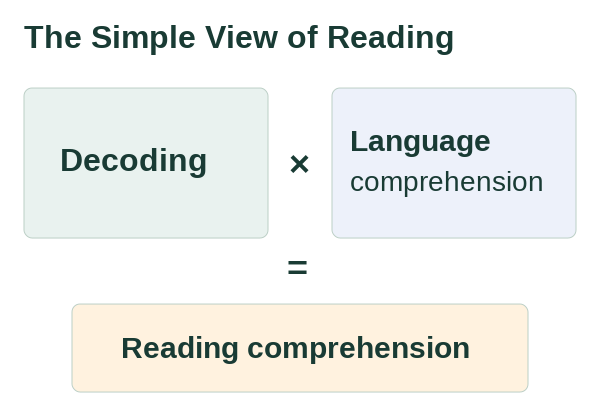
In 2007 the New Zealand Ministry of Education formally recognized dyslexia for the first time, and it later developed a working definition of the condition. A 2010 article proposed a definition with four key parts, built on a framework called the simple view of reading, and then compared its definition with the ministry's working definition.[19] Denmark took a different route. In 2012 its government issued a public tender for a standardized dyslexia test given by computer, meant for use from primary Grade 3 up through all educational levels, which runs to 5-year university education. It was released in 2015.[20]
Rice and Gilson (2023) note that there is no universal definition of dyslexia, and Poulsen, Juul and Elbro (2023) note that differing definitions and tests can cause unfairness.[21][20] A 2023 article on schools listed current identification issues, one of which was the lack of a universal definition for dyslexia, and it pointed to possible confusion created by state legislation about dyslexia.[21] Definitions and tests of dyslexia vary, and the result can be unfair treatment and difficulty for people with dyslexia and the professionals who work with them.[20]
Main ideas
The phonological deficit account
The phonological deficit account says dyslexia grows out of a weakness. The account became well known after researchers grew unhappy with the older discrepancy definition of specific reading difficulties.[22] Gabrieli says dyslexia often comes from impaired phonological awareness. This means weak auditory analysis of spoken language, which links speech sounds to print.[4]
One review pooled 235 studies and calculated 995 effect sizes on phonological skills and word reading. Children with dyslexia showed a large deficit in phonemic awareness compared with typically developing children of the same age; the pooled effect size was -1.37. Against younger children matched on reading level, the same deficit was smaller but still clear, at -0.57. Verbal short-term memory showed deficits of -0.71 against age-matched controls and -0.09 against reading-level controls. In unselected samples, phonemic awareness was most strongly linked to differences between children in word reading. That link stayed reliable after the analysis allowed for differences in verbal short-term memory and in rime awareness.[23]
Across all the studies, the average nonword reading difference between groups was moderate, at d = 0.65. The total sample was N = 2865. The size of the gap depended on how groups were matched: studies using passage reading tests found significantly less evidence of a nonword deficit than studies using word-level reading accuracy tests. Group differences in intelligence level were positively related to effect sizes. Group differences in age were negatively related to them. The groups' mean age, reading level and intelligence level did not significantly predict nonword reading outcomes. The review concluded that the nonword reading deficits support one claim. Poor development of phonological recoding is a leading cause of reading difficulties.[24]
A 1998 review reported that sound-processing difficulties in dyslexia last from preschool into adulthood, even when reading deficits are compensated.[22] Gabrieli reports that behavioural remediation helps many children with dyslexia, and helps most when it starts young, but not every child. He also reports that behavior and brain measures can identify infants and young children at risk, and that preventive intervention is often effective.[4]
Share (2021) dealt with several common wrong beliefs about what the phonological deficit theory claims. One defense holds that phonemic awareness is only the visible tip of a larger phonological problem, and argues that deeper spoken-language impairments appear long before reading begins, even at birth. The same paper notes that the theory never claims to explain every difference in reading ability or disability, so accepting it leaves room for other hypotheses.[25] A 2001 review noted that a task's claims about which processes it measures are best judged against an explicit model of information processing. That review also noted that phonology goes beyond phonemic sorting and awareness to cover syllable structure, stress, intonation and rhythm, and that it is not yet tested whether dyslexic children struggle to learn these aspects.[26]
A 2014 analysis sorted the phonological deficit hypothesis into three claims. The first claim is that only one basic kind of dyslexia exists. The second is that all or most dyslexic children have phonological impairments. The third is that these impairments cause the dyslexia. It concluded that questions remain about all three claims. Phonological deficits alone seem unlikely to explain how varied developmental dyslexia is.[27] A 2022 note argued that part of the theory's success comes from a lack of clear predictions. That makes its claims very hard to test or disprove.[28]
A 1998 review set the hypothesis against studies of how reading normally develops. The review also reported that individuals differ in how dyslexia shows up. These differences fit differences in the severity of the underlying phonological difficulty.[29] Phonological awareness, the ability to notice and work with the sound units of speech, is one of the skills this research measures.[30]
Some evidence comes from studies that test children in kindergarten, before formal reading instruction. The same children are tested again in grade 1. Naming speed and phoneme awareness also influenced specific skills. Phoneme awareness is the awareness of individual speech sounds. The study concluded that learning written language draws on language, perception and thinking skills together.[30]
A 2018 study compared 50 fourth-grade children with dyslexia, aged 9;10, with 613 typically developing children, aged 9;5. Phonological awareness was linked to word reading efficiency in the same way in both groups. Among the children with dyslexia, working memory had a significant indirect effect on word reading efficiency, and the effect ran through phonological awareness. The results suggest working memory matters for reading efficiency through its link with phonological awareness.[31]
A second source of reading difficulty is rapid automatized naming. It appears to work alongside phonological awareness. The double-deficit hypothesis proposes two separate sources of reading difficulty. One is problems in phonological processing, and the other is problems in rapid naming. It predicts that having both problems lowers reading performance more than having either one alone. A 2001 study examined 476 children with reading disabilities, aged 8 to 18. Phonological awareness and rapid naming had a combined effect on most reading and spelling measures. Children with both deficits did worse than the single-deficit groups on all measures of written language. The study also described several statistical problems. These arise when forming deficit groups. The problems come from splitting scores into high and low.[32]
The account has been challenged by findings that the underlying sound representations may be intact. A 2008 review of experiments on speech input and output, foreign speech perception and unconscious speech processing concluded that phonological representations in dyslexia may be intact. On that view, the deficit shows up only under certain task demands. These include short-term memory, conscious awareness and time limits. The review proposed instead a deficit in access to phonological representations.[33]
A 2013 study of adults with dyslexia found a similar split. The dyslexic group was impaired in metaphonological manipulation. This is the deliberate analysis and manipulation of speech sounds. This held for both segmental and suprasegmental tasks. The same group showed no weakness in implicit knowledge of speech sound contrasts.[34]
Training studies test whether strengthening basic hearing skills carries over to phonological skills and spelling. In one study, 140 dyslexics practised low-level hearing tasks they had failed. The average number of unsolved tasks fell from 3 of 5 to 1 of 5. Practice succeeded for 70 to 80% of dyslexics on three tasks: intensity discrimination, frequency discrimination and gap detection. It worked for only 36% on time-order judgement and 6% on side-order judgement. Successful training in low-level hearing skills carried over fully to language-related phonological skills and to spelling. The largest gain was in spelling errors caused by poor auditory analysis. Waiting and placebo control groups showed no significant improvements.[35]
Phonological processing is one part of the language system. Shaywitz and Shaywitz (2005) place dyslexia within it. Shaywitz and Shaywitz (2005) report evidence from several lines of research that points the same way. Dyslexia is a disorder within phonological processing.[36]
One long-term study followed Dutch-speaking children from kindergarten to sixth grade. It compared three groups. The groups were dyslexic readers, normal readers at high family risk for dyslexia, and normal readers at low risk. The children with a dyslexia diagnosis scored below the high-risk normal readers. This held for phonological awareness, rapid automatized naming, verbal short-term memory and literacy skills. Dandache, Wouters and Ghesquière (2014) measured phonological awareness in kindergarten. They treated it as one predictor of later reading. Normal readers at high risk scored between the other two groups. This fits the view that dyslexia is a continuum, not an all-or-none condition.[37]
Many experts see rapid automatized naming (RAN) as an important sign of dyslexia, though the mental processes behind it are still debated.[38] In the longitudinal study, only phonological awareness and RAN explained a significant amount of variance in how reading skills changed over time.[37] Bexkens, van den Wildenberg and Tijms (2015) tested whether inhibition processes add to rapid naming, looking especially at interference control, and also at phonological processes and processing speed. The study compared 86 children with dyslexia and 31 normal readers. Naming speed, literacy skills, phonological processing and processing speed separated the dyslexic children from normal readers, but inhibition did not. Interference control is one kind of inhibition, and it did predict rapid naming in dyslexia. Once the study took processing speed, interference control and phonological processing into account, naming speed was no longer consistently linked to the reading and spelling skills of children with dyslexia.[38]
Fawcett and Nicolson (2002) report that children with dyslexia show reduced speed of articulation, and that they also have well-established problems in phonological processing. A 2002 study asked children to repeat one speech sound, /p/, /t/ or /k/, as fast as they could, while others repeated the sequence "putuku". The study compared two groups of children with dyslexia, with mean ages of 13 and 16 years, against two groups of normally achieving children matched on age and IQ, with 33 participants in all. No age effects were found, but the dyslexic groups were significantly slower on all tests. The deficits were larger for gesture duration, a measure that includes pauses between gestures, and smaller for articulatory duration, which leaves the pauses out. The results point to problems not only in planning a gesture but in producing single gestures quickly.[39]
Kalashnikova and Burnham (2016) note that one kind of learning is impaired in children with dyslexia. Visual-verbal paired associate learning means linking a visual thing to an unfamiliar spoken label. A 2016 study used a paired associate learning task. In it, a child must link a picture of an object to a made-up spoken word. Children with reading difficulties needed many more trials to learn the object-word pairs. They were asked to pick the right object after hearing a label. Their accuracy and speed did not differ from controls. They were much less successful, though, when asked to produce the learned labels themselves in response to the pictures. The study concluded that the hard part is producing the words. This may point to a broader problem in hearing or processing speech sounds.[40]
A 2010 follow-up study linked non-word repetition at age 4 to reading at age eight. de Bree, Wijnen and Gerrits (2010) measured non-word repetition in 4-year-olds. Children at risk of dyslexia scored between the control group and children with specific language impairment (SLI). About half of the at-risk group and half of the language-impaired group showed reading difficulties. In the at-risk group, literacy and non-word repetition scores went together. In the language-impaired group they did not. The findings suggest that dyslexia and specific language impairment should not be treated as one similar disorder.[41]
A 2017 study followed 73 children at genetic risk of dyslexia and 73 matched controls over the first months of phonics-based teaching. In kindergarten, the children at genetic risk of dyslexia had weaker phonemic awareness. During the first 5 months of instruction they were less efficient at decoding words, and the gap widened over those months. Later the gap held steady for simple words but grew for more complex words. Phonemic awareness and word retrieval predicted reading growth equally well in the at-risk children and the controls.[42]
Naming speed and the double deficit
The double-deficit hypothesis was proposed in 1999. It treats phonological deficits and the processes behind naming-speed deficits as 2 separate sources of reading difficulty, so naming speed should not be folded into phonological processing. Naming a letter involves several parts at once. The hypothesis describes two single-deficit subtypes with milder reading problems and one double-deficit subtype whose impairments are broader and more severe. Naming-speed and phonological-awareness measures each add something different to different aspects of reading.[43]
The children with dyslexia were much slower than their age-matched controls at naming colors, digits and letters, and about equal to their reading-age-matched controls. On pictures of common objects they were much slower, slower than even the reading-age-matched controls. The problems showed up for every kind of stimulus, whether or not naming it needed grapheme-phoneme decoding. The 17-year-olds with dyslexia performed closest to the 8-year-old controls.[44]
The double-deficit hypothesis draws on three kinds of studies: cross-sectional, longitudinal and cross-linguistic. It treats processing speed as a second core deficit in dyslexia. The hypothesis also considers two possible explanations for how naming-speed processes relate to reading.[43]
A 2007 study gave verbal and visuospatial working memory tasks to 22 adult students with dyslexia. It gave the same tasks to 22 controls matched on age and IQ. The dyslexic group scored much lower than controls on every verbal task. This held for simple and complex tasks alike. They also scored lower on the spatial complex span measure. The gaps on complex span tasks remained after simple span scores were controlled for statistically. This points to a central executive impairment. The first trials of the spatial updating task brought new task demands. These were also more of a problem for the dyslexic participants. The results suggest that working memory difficulties in dyslexia continue into adulthood. They affect both the phonological and the visuospatial modalities.[45]
A 2008 study tested serial recall in German second-grade children who had poor or good reading and spelling. The lists held four common nouns. The word length and phonological similarity effects were the same in both groups, which points to equal use of phonological coding and rehearsal. One condition combined visual presentation with visual recall. In all other conditions, overall performance was significantly lower in the poor readers. So the poor readers' difficulties seem to come from using the phonological loop poorly, not from avoiding it.[46]
How reading and spelling go wrong
A 2016 review describes dyslexia as one of two distinct forms of reading disorder in children. The second form is reading comprehension impairment. It is also blamed mainly on weak oral language skills. Children with decoding difficulties show weak phoneme awareness, which is the ability to notice and work with the separate sounds inside spoken words. They also lag in letter-sound knowledge and in rapid automatized naming, the speed of retrieving familiar names for letters, digits or objects.[47] A 2019 review defines dyslexia as lasting trouble with word recognition, decoding and spelling. This occurs despite average or above academic performance in other areas.[48]
Spelling problems stood out most, followed by text reading fluency and decoding of nonwords, which are made-up strings of letters that follow spelling rules. The adults rated their own literacy skills fairly accurately, and their self-ratings matched test results moderately to strongly. The researchers concluded that spelling impairments lead adults to see themselves as dyslexic, while reading impairments do so less. Three literacy tests and three cognitive tests, used together, sorted the two groups with 90.4% accuracy. Three weak skills stayed strongly linked to literacy problems, even in adults reading a fairly regular writing system, which has consistent letter-sound links. These skills were phoneme awareness, rapid automatized naming and working memory.[49]
Before intervention, children with dyslexia and typically developing children both made mostly morphological spelling errors, followed by orthographic and phonological ones. In each category, the children with dyslexia made more errors. The largest difference was for errors with speech sounds. Before an intervention, the study looked at 52 children with dyslexia and 105 typically developing spellers. Both groups made mostly morphological errors, which concern word parts that carry meaning, such as prefixes and endings. Orthographic errors break written conventions, and they came next. Phonological errors misrepresent sounds. They came last in both groups. Children whose knowledge of word meanings was better developed made fewer errors of all three types.[50]
Children with dyslexia took much longer to write words than their peers. When copying dictated words, they did worse than the typically developing group on every word type. When writing a text, the children with dyslexia made more pauses than their peers. The extra pauses fell chiefly between words.[51]
In students with dyslexia, transcription is slowed, which disrupts other high-level mental operations. A 2025 study collected 86 texts from 21 French students with dyslexia and used 22 matched control students. The texts were written on digitising tablets and recorded with Eye and Pen software. The students with dyslexia wrote in shorter bursts, meaning fewer units of text produced without a pause, and they paused longer inside words, before words and before punctuation. Earlier work had concluded that spelling difficulties no longer affect the flow of writing for university students, and the 2025 results limit that conclusion. The researchers argue that transcription is still slowed and that this disrupts higher-level thinking about content.[52]
Revising a text is also less effective for students with dyslexia. French higher education students with dyslexia proofread their texts in ways broadly like control students. They seem to have a deficit in spotting errors, and their revisions are less efficient. The explanation offered draws on capacity theory. Spelling that has not become automatic leaves fewer mental resources for higher-level processes such as revision.[53]
Among university students with dyslexia, reading aloud well had little link to understanding the text well. A study looked at 16 Danish university students with dyslexia and 16 comparison students. The dyslexic group performed worse on most measures of oral reading of a complex text, and behaviour also varied widely within the group. The researchers suggest that many such students focus on one part of reading, either decoding or understanding, because doing both at once is too demanding.[54]
A qualitative study looked at eleven student writers, seven of them formally identified as dyslexic, and interviewed them before, during and after a coursework essay. The interviews brought out the usual difficulties linked to dyslexia. They also showed that the eleven writers differed sharply in how they experienced the essay task. Those differences were linked to each student's position in the setting, to earlier and developing writing and learning experience, and to metacognitive, meta-affective and metalinguistic awareness.[55]
Attention, timing and other cognitive theories
Several theories hold that dyslexia involves difficulties beyond the mapping of letters to sounds.[56][57] A 2004 review argued that a visual attentional disorder meets two tests for a cause of dyslexia. The deficit must appear on its own, apart from phonological deficits. It must also predict reading ability. The review reported studies where phonological skills and visual attention skills each added separately to reading performance.[56]
A later study of 105 high school students with dyslexia found an effect of visual attention span. It had a direct effect on harder reading comprehension but not on easier comprehension. That study also found an indirect path, through pseudo-word and word reading skills.[58]
A related proposal says the main deficit is in visuo-spatial attention. That attention is controlled by the dorsal visual stream. Its supporters argue that poor visual coding of letters can cause the reading impairment. It can also produce the phonological problems.[57]
A study of five adults with dyslexia found alerting and executive control of attention generally intact. Orienting attention was impaired for parafoveal stimuli, those just outside the point of fixation, in a discrimination task. The researchers suggested the deficit may lie in adjusting the size of the attentional focus.[59] A 2015 review described sluggish attentional shifting. Attention fails to disengage quickly from one item before moving to the next. This account predicts atypical perception of rapid sequences of stimuli, in more than one sense modality.[60]
Sensory and motor accounts have been tested in meta-analyses, which pool effect sizes across studies.[61][62][63] A meta-analysis looked at auditory frequency discrimination. This is the ability to tell tones apart. It found average group differences of about three-quarters of a standard deviation. The size of that difference varied a lot between studies. The authors warned that non-sensory factors may explain much of it.[61]
A meta-analysis of 35 studies looked at coherence motion perception. This means judging the shared direction of moving dots. It reported a moderate mean effect size of d = 0.675 across 2334 subjects. Differences between groups were larger (d = 0.747). Links between motion thresholds and reading ability were smaller (d = 0.178). Studies of children showed smaller effect sizes than studies of adults.[62]
A meta-analysis of 17 studies found a mean balance deficit of .64 in dyslexia. The 95% CI was .44 to .78. Co-occurring developmental disorders and variation in intelligence scores were the strongest moderators of that effect. The authors concluded that balance problems are probably not linked to dyslexia alone.[63]
A 2025 study looked at 24 university students with dyslexia and 28 matched peers. It found that 75% of the dyslexic students showed at least one significant motor or balance difficulty. In that sample, inattention, balance and primary reflex persistence each predicted reading efficiency.[64]
Executive function, the set of mental controls used for planning and monitoring, has also been studied.[65][66] The study looked at 60 children aged 9 to 15 years. Executive skills contributed to reading comprehension after attention, decoding, fluency and vocabulary were controlled. The same skills did not contribute to word recognition.[65]
A random number generation task tested 54 adults. The dyslexia group struggled early but did better than controls by the end. The researchers read this as a sign of difficulty when a task is new and strategies are not yet in place.[66]
On fluency tasks, adults with dyslexia produced fewer words beginning with a given letter. They showed no such problem on category and design fluency. The researchers favored a phonological explanation. They admitted, though, that executive control could not be fully ruled out.[67]
One study looked at children with dyslexia and normally developing children aged 8 to 10. Both groups learned a cued sequence to the same degree. The children with dyslexia responded more slowly overall.[68] A serial reaction time study also found sequence learning in both dyslexic and control groups. It did not depend on awareness.[69]
Studies of face processing have given conflicting results. Some report weaker performance and some report normal performance. A 2025 meta-analysis covered 15 studies and 34 effect sizes. It included 311 people with dyslexia and 336 controls. It found an average weighted difference of Hedges' g = 0.51. The 95% confidence interval was [0.24, 0.79], p = 0.001. Age, gender and task type did not significantly change that difference. The authors interpreted the result as evidence of domain-general deficits in dyslexia, that is, deficits that are not confined to reading.[70]
Researchers have proposed several explanations for dyslexia, each pointing to a different weak skill. One study described dyslexia theories built on five kinds of deficit: phonological, attentional, auditory, magnocellular and automatisation deficits. A 2008 study screened 642 children for reading ability and tested 49 dyslexics and 48 controls. The children took tests of phonological awareness, sound discrimination, motion detection, visual attention and rhythm imitation. The analysis found three clusters of dyslexic children, each with different weak skills. One cluster had weaker phonological awareness, a second had higher attentional costs, and a third group did poorly on phonological tasks, auditory tasks and magnocellular tasks.[71]
The magnocellular theory says dyslexia comes from poor growth of a visual pathway that times events during reading. As a result, letters may seem to move around and cross over each other. Covering one eye can improve reading. The same theory links lower sensitivity to changes in sound frequency and amplitude to phonological problems.[5] A 2003 review noted a paradox: many people with dyslexia show sensory and motor deficits, yet those deficits will play only a limited part in explaining specific reading disability.[72]
A 2007 study tested large samples of French and British dyslexic children against age-matched controls. Visual attention span explained a large share of unique variance in reading, and phonological skills did too. The British sample repeated the French result. The contribution remained after controlling for IQ, verbal fluency, vocabulary, single letter identification and phoneme awareness. In both studies, most dyslexic children had one of two selective disorders: a phonological disorder or a visual attention span disorder.[73] A 2022 review reported that this attention-based reading of poor performance is hotly debated.[74]
A related account, the anchoring deficit hypothesis, proposes a cause for perceptual problems. They arise, it says, when a person fails to form a perceptual anchor for repeated stimuli. A 2010 study tested this directly with four groups. Together they covered all four combinations of high or low reading skill and high or low attention. In a time estimation task, participants compared a standard tone with tones of varying length. Poor readers had problems only if they also had limited attentional skills. Poor readers with good attention were unaffected. The study concluded that a time estimation deficit alone cannot cause reading deficits.[75]
A 1999 study compared 10 dyslexic students aged 10 with 10 age-matched controls and 20 reading-age controls. The dyslexic students named familiar words, letter clusters and nonwords more slowly, and showed larger word-frequency and word-length effects. This points to difficulty when task demands rise. The study suggested that dyslexic students may prefer large orthographic units and use them as a compensatory tool in reading.[76]
A 2000 study tested 43 young dyslexics with severe difficulties and 20 non-dyslexic controls on tasks that measured executive function. The dyslexic group did much worse on all tasks. A receptive language test split them into two subgroups with different patterns. The data supported a hypothesis that dyslexia involves executive problems that depend on receptive language skills.[77]
The procedural learning account concerns the learning of sequences, tested with serial reaction time tasks. A 2013 meta-analysis combined 14 such studies, using data from 314 people with dyslexia and 317 typically developing controls. On average, people with dyslexia had worse procedural learning than controls, with an effect size of 0.449 (CI95: .204, .693). The analysis found moderate differences between study-level effect sizes, and smaller effect sizes appeared in studies of older participants and in studies that used second order conditional sequences, or sequences presented many times.[78]
A 2004 study used an artificial grammar learning task and found dyslexic participants did equally well on two versions of the task. Non-dyslexic participants matched them on embedded stimuli but did worse on sequences stimuli. That result was read as dyslexic participants being less able to process individual stimulus elements, which fits with problems in focusing and shifting attention.[79]
A semantic account asks whether meaning-related abilities play a part in reading in dyslexia. A 2018 study tested nine-year-old Dutch children diagnosed with dyslexia on meaning, sound and decoding measures. Children's semantic abilities predicted word decoding efficiency and pseudoword decoding efficiency indirectly, through phonological awareness and rapid naming. A lexical restructuring account explained the result: strong semantic abilities strengthen phonological and naming skills, which helps reading indirectly.[80]
Common misconceptions
In the 1920s, defects in the visual system were blamed for the letter and word reversals thought to typify dyslexia, and this idea became a popular myth. Later research overturned the old idea that faulty vision causes dyslexia. Children with dyslexia do not see letters or words backwards more often than other children. Their difficulty is linguistic, not visual. They struggle to name letters and may call a b a d or read saw as was.[8]
That meant one not explained by sensory problems or low IQ. This discrepancy definition later lost favour. Studies found no qualitative differences in reading or phonological skills between children with dyslexia and other poor readers, so this definition fell out of favour.[10]
Many people hold that dyslexia is linked to remarkable artistic creativity.[81] Adults with dyslexia scored significantly higher than controls on creativity, but the child and adolescent samples showed no such advantage.[82]
Research
How common dyslexia is
Estimates of how many children have dyslexia usually fall between 5 and 17 percent.[83] One review of the genetics of dyslexia gives a prevalence of 5-12%.[84] A 2016 study of eye movements during reading puts the figure at 5-10% of the population.[85]
The predictors of dyslexia are also spread along a continuous scale. For that reason, a 2020 analysis argues that prevalence is better described as a distribution that shifts with severity, not as one fixed figure.[86]
A second reason estimates vary is the nature of the samples studied. Some read poorly in a way that fits their performance in other school subjects and in language. Others have dyslexia, and their reading does not match what their other performances would predict. The 2020 analysis found that expected poor readers outnumber unexpected, or dyslexic, readers in such samples.[86]
A rule that looks only at the weakest readers will miss dyslexic readers with higher scores, because dyslexia occurs across the whole reading range. The results bear on how schools screen and identify students, and on how scientists recruit participants for dyslexia studies.[86]
There is no full understanding of the cause of dyslexia, according to a 2016 screening study. There is also no agreement on its exact definition. That study drew its subjects from a wider pool of 2165 second-grade school children. From that pool it chose 97 high-risk subjects with early word decoding difficulties. It also chose a low-risk control group of 88.[85]
Finding dyslexia early and at school age
Dyslexia runs in families, and researchers have followed children from such families to learn when the first signs appear. A review of 95 publications examined children at family risk of reading disorders, drawing on 21 independent samples. These children show delayed language development as infants and toddlers. In the preschool years they have significant difficulties with phonological processes, the mental handling of speech sounds, and they also struggle with broader language skills and with learning the foundations of decoding.[87]
Family risk raises the chance of reading disability without settling the outcome.[6][7] One study followed 56 children at family risk from the age of 3 years, 9 months to 8 years. By age 8 years, 66% of the high-risk group had reading disabilities. The figure was 13% in a control group from similar middle-class backgrounds.[6]
A 3-year longitudinal study followed 67 preschool children at high family risk and 57 at low risk. It tested them yearly from before kindergarten through the end of second grade. In that study, 34% of the high-risk group became reading disabled. That compares with 6% of the low-risk group.[7]
Risk acts as a continuous quantity, not a yes-or-no label.[6][7] Some high-risk children escaped a reading impairment at 8 years. Even so, at age 6 they did as poorly as impaired high-risk children on grapheme-phoneme knowledge.[6] Some children at family risk do become dyslexic. They show more severe preschool language problems than at-risk children who become normal readers.[87]
One study compared school-aged children from families with a history of dyslexia and families without one, measuring phonology, language and rapid automatized naming. Two measures of sound skills tracked both reading problems and family risk: phoneme awareness and nonword repetition. That pattern led the authors to suggest the phonological deficit is an endophenotype of dyslexia. The two measures differed in their links: phoneme awareness was more strongly tied to dyslexia status, and nonword repetition was more strongly tied to risk.[88]
The earliest easy-to-use predictor of later reading difficulty is letter knowledge. The Jyväskylä Longitudinal Study of Dyslexia in Finland followed children from birth to puberty; half were at risk, and the study used hundreds of measures. At-risk children can be identified from brain recordings taken at birth, and predictors are also clear in late-talking infants who have a family history of dyslexia.[89] Later reading disability could be predicted with moderate accuracy at age 5, and the strongest predictor at that age was letter-name knowledge.[7]
Findings on auditory and visual perception in at-risk children are mixed. Not controlling for other conditions makes their interpretation unclear. At-risk children do not seem to have slow motor development. There is no strong evidence that at-risk children grow up in surroundings that differ much from those of controls. Their parents do tend to have less education. They also tend to read less often to themselves.[87]
Early identification has practical aims: the earliest diagnosis and suitable intervention.[89] The Dutch Dyslexia Programme asked a question about at-risk children: could training in phoneme awareness and letter-sound links, given before reading instruction, change how they learn? Its studies ran in the last months of kindergarten, just before formal reading instruction starts in Grade 1. The programme argued that intervention must begin early, and must also fit each child's educational needs, which are often long-lasting.[90]
Genes, brain and multiple deficit models
Family studies point to strong genetic influences, and research with identical and fraternal twins supports this. How researchers define dyslexia changes how strong the genetic influence appears.[91] A 2013 overview describes dyslexia as a highly heritable learning disorder whose genetic architecture is complex, and it stresses how much is still unknown about the molecular networks involved.[92]
Linkage studies have found several regions of the human genome. These regions likely hold risk genes for dyslexia. Four candidate genes sit within three of these linked regions.[93]
A 2015 review reports that several candidate genes were found in the past decade.[94] Work on these genes points to mechanisms such as neuronal migration and axon guidance. The 2013 overview also argues for tying genetic findings to intermediate brain measures. It also calls for linking them to data followed over time.[92]
Brain imaging shows differences in both structure and function. These are mainly in left hemisphere networks for reading and language.[94] A 2018 review describes differences in gray matter anatomy, in white matter connectivity, and in functional activation in response to print and language.[95] Earlier imaging of brain anatomy gave less clear results than expected. It did broadly confirm some small differences whose meaning is still under study.[96]
Brain measures may also forecast which children improve, at least in one small study that followed children with dyslexia (n = 25) and without it (n = 20) for 2.5 years. No behavioural measure reliably predicted later reading gains, including widely used standard tests of reading and language. Two things predicted gains: greater right prefrontal activation during a phonological awareness task, and stronger organization of right superior longitudinal fasciculus white matter. A pattern analysis of whole-brain activation during phonological processing identified which children would improve 2.5 years later, and it was more than 90% accurate.[97]
Single cause explanations have given way to models in which many risk factors combine. Pennington's 2006 multiple deficit model treats dyslexia as probabilistic and multifactorial.[98] A 2015 review also describes dyslexia as caused by many genetic and environmental risk factors. It is their interplay that matters.[94]
The intergenerational multiple deficit model extends this picture to the family, building on Pennington's 2006 model and on the generalist genes hypothesis. In this account, both parents pass on liability, and genetic and environmental pathways are intertwined. A longitudinal study looked at children at family risk for dyslexia and examined risk factors at both the child and family level.[99] One older proposal is the temporal processing impairment theory, which holds that dyslexia rests on trouble handling brief stimuli in quick succession. That theory was offered as a way to explain some symptoms often seen with the reading disorder, including perceptual, motor and cognitive symptoms.[96]
Dyslexia alongside other conditions
Dyslexia often appears together with another developmental condition, an overlap researchers call comorbidity.[100][101] A 2005 study followed a representative sample of 527 children and found language impairment in kindergarten and dyslexia in 2nd, 4th or 8th grade. The overlap between the two conditions was small but statistically significant. Children with language impairment alone showed only mild phonological processing deficits next to typical children. The researchers concluded that the two are distinct language disorders that can occur together.[100]
A 2018 review noted that most studies of dyslexia have focused on sound skills. It drew attention to broader language skills, such as vocabulary, syntax and discourse. Children with dyslexia often have language weaknesses outside the speech-sound area. This holds with or without a co-occurring language disorder. The review also noted that children with dyslexia may be at risk for slower language growth across their lifetime. This holds whatever their language abilities at diagnosis.[102]
An earlier study tested the literacy of 56 school leavers at age 15. They came from a preschool group with language impairment. That group read, spelled and understood text less well than age-matched controls. Results were especially poor for people with Performance IQ below 100. Yet over 35% had reading skills within the normal range. Children whose early problems were limited to expressive phonology did particularly well.[103]
Attention deficit hyperactivity disorder, usually shortened to ADHD, often co-occurs with reading disorder. A 2010 review described children with both conditions as showing failures across several cognitive functions. The effects add together and can produce more severe deficits.[101]
Arithmetic is another area where dyslexia can bring difficulties beyond reading and spelling. A 2008 review looked at studies of children with dyslexia. It found a consistent difficulty in recalling number facts. The reviewers proposed that phonological processing deficits harm the parts of mathematics that rely on verbal codes. Examples are counting speed and number fact recall. Parts less reliant on verbal codes, such as estimation and subitising, the rapid recognition of small quantities without counting, appeared unimpaired. The review presented this as a hypothesis still to be tested, not a settled finding.[104]
Emotional difficulties are not main features of dyslexia, though they are linked with it. A 2018 review looked at the emotional effects of developmental dyslexia, covering over 100 journal articles published between 1980 and 2018. It reported that social and emotional effects can last, and in some cases they get worse in adulthood.[105]
A 2012 study compared transitioning adolescents and college students with ADHD, dyslexia, or both, using self-report measures of depression and anxiety. It found no differences between the college-level groups. A main effect for gender showed a trend toward more symptoms of depression and anxiety in females with dyslexia than in males with dyslexia. High school students with these conditions were moving on to the next stage, and they reported fewer symptoms of anxiety and depression than college underclassmen who had them.[106]
How language and writing system change the picture
Dyslexia looks different in different languages, partly because of how regularly a writing system links letters to sounds.[107] In a shallow orthography, letters and sounds match closely, which facilitates reading.[108] A 2021 meta-analysis reviewed 113 studies of developmental dyslexia published from 2013 to 2018 and kept 79 in which participants held an official diagnosis. Each study was classed by writing system depth, deep or shallow, and by age, children or adults.[109]
Reading speed is a reliable sign that tells people with dyslexia from typical readers across European writing systems, from childhood to adulthood. The meta-analysis found no effect of age or orthographic depth on fluency measures. Accuracy showed a different pattern: word reading accuracy showed an interaction between age and orthography. Pseudoword reading accuracy means reading made-up words, and it showed a significant effect of age. A similar pattern appeared for phonological awareness and rapid automatized naming, and it also appeared for short-term working memory.[109]
A 2001 brain imaging study compared dyslexic readers in Italy, France and England. Italian readers with dyslexia read a shallow writing system, which makes reading easier. They did better on reading tasks than English and French readers with dyslexia. Yet all the dyslexics were equally impaired on reading and phonological tasks, compared with their own controls. Scans taken during reading showed the same lower activity in a left-hemisphere region. This held for dyslexics from all three countries. The study concluded that reading differences among dyslexics from different countries come from different writing systems.[108]
On spoonerisms, a task that challenges phonological processing, both groups were significantly impaired compared with their controls. The gap in reading performance between the English and German dyslexic children was extremely large. Systematic differences due to spelling consistency appeared for normal readers as well. English showed a marked adverse effect on learning to read.[110] A 2010 summary of research on German, a regular writing system, reported a pattern. There, dyslexia is marked by a severe reading speed deficit and poor orthographic spelling.[111]
Studies of Arabic-speaking children report problems with both accuracy and speed. One study tested third and fourth graders aged about 9 to 10 years. The tests covered frequent words, infrequent words, pseudowords and phonological awareness. The group with dyslexia scored much lower than controls. They were lower on accuracy and speed in reading tasks. Phonological and mixed dyslexic subgroups differed on infrequent and frequent word reading accuracy. The mixed subgroup did worse. The subgroups were similar on pseudoword identification and phonological awareness.[112] One study looked at Arabic-speaking children in grades 1 to 3 in Bahrain. It found that phonological skills, decoding and awareness best predicted differences in reading and spelling.[113]
Portuguese sits at a middle depth. A 2015 study compared 24 children with dyslexia, aged 10 to 12, with 24 age-matched and 24 reading-level-matched controls. The children with dyslexia did much worse on all speech-sound processing and reading measures than both control groups. Phonological awareness best predicted every measure of reading accuracy. Naming speed was tied most closely to how fluently children read text. Phonological awareness and naming speed were also very accurate. They told the dyslexia group apart from both control groups.[114]
Writing research has centred largely on reading. One study used keystroke logging to record 13 children with dyslexia and 28 without it, all aged 11, who typed five dictated sentences with no time limit. Rapid automatic naming went with transcription fluency, and working memory went with the number of meaning errors. The study read this as showing that effort is usually not the problem in dyslexia, and that the mental skills behind reading also shape writing.[115]
In every language studied so far, learning to read depends on phonological awareness. Writing systems differ in how steadily they stand for sounds. This produces different reading strategies and different signs of dyslexia. A 2005 framework called psycholinguistic grain size theory was built to explain these cross-language findings. The theory holds that skilled readers use different reading strategies in different writing systems. Different developmental limits shape these strategies.[107]
How common dyslexia is may depend partly on the language a child is learning to read. A meta-analysis of primary school children found no significant difference in how common dyslexia was across writing systems and across orthographic depths.[116][117] A meta-analysis pooled studies from the 1950s to June 2021 and found a worldwide prevalence of 7.10% among primary school children, with a 95% confidence interval of 6.27 to 7.97. That review found no significant difference between alphabetic writing systems, at 7.26%, and logographic ones, at 6.97%, where a logographic system uses whole characters rather than letters for sounds. It also found no significant gap between shallow orthographies, at 7.13%, and deep ones, at 7.55%, where orthographic depth means how regularly letters map onto sounds. The review warned that most included studies had small samples and used differing definitions of dyslexia, which makes comparison hard.[116]
A separate meta-analysis of 16 Spanish-language studies put prevalence at 7.52%, with a range of 5.17% to 10.91%, and none of the tested moderating variables explained this large variation.[117] In Iran, a meta-analysis of 18 studies covered 28,952 pupils and put prevalence at 5.7%, with a 95% confidence interval of 4.5% to 6.9%. That review found the estimates varied with the test used: informal reading tests gave 3.4%, and a screening inventory gave 8.8%.[118]
The pattern of weak skills can differ between languages, and one meta-analysis compared the shares of different deficits among Chinese children with dyslexia. A meta-analysis of Chinese children with developmental dyslexia found rapid naming deficits in 44% of cases, the largest share of any skill examined. Orthographic knowledge deficits came next at 43%, phonological awareness deficits followed at 41%, and morphological awareness deficits at 40%. Visual and motor skills deficits appeared in 33%.[119]
A case study described two bilingual children who read Kannada and English. One had developmental dyslexia: phonemic awareness, spelling and pseudoword naming were below average in both languages, while listening comprehension was normal. The other child showed the opposite pattern: decoding was good in both languages, but listening and reading comprehension were poor, a profile that looks like hyperlexia.[120] One study compared English and Polish students with and without dyslexia and found that differences in letter-to-sound rules between the languages got in the way, affecting how accurately and smoothly children read words and nonwords. English students without dyslexia scored higher than both Polish groups on all reading measures, but English students with dyslexia did not, despite their native-language advantage. In the Polish groups, native-language phonological awareness did not help reading in English as a foreign language.[121]
A systematic review covered 18 studies published between 2000 and 2023, in four languages. It compared children with dyslexia alone, language disorder alone, and both conditions. Children with both conditions had the most severe and lasting reading difficulties, which covered decoding, fluency and comprehension. The review called this an added burden of phonological and language deficits. Dyslexia mainly affected decoding, and language disorder mainly affected comprehension, so the combined profile included both kinds of deficit. The review concluded that current diagnostic systems may miss this combined profile, and it called for cross-linguistic validation of assessment tools.[122]
Functional magnetic resonance imaging has let scientists study the brain systems that serve reading. It also shows how those systems differ in dyslexic readers. A 2008 review described a brain pattern linked to dyslexia. This is a pattern of brain activity that makes a hidden disability visible. The same review argued that many poor readers can be taught to decode words. Yet reading fluently and automatically stays out of reach for many. It proposed that attentional mechanisms take part in reading and may add to reading difficulties. Attentional mechanisms are the brain processes that select and hold focus. Early studies cited there suggested that drugs used for attention disorders might one day add to reading instruction.[123]
Electroencephalography (EEG) is one method used to study brain activity. A 2023 systematic review gathered 49 EEG studies. They covered children with dyslexia aged 6 to 12 years who had no other conditions. Only 14% of those studies rated high quality, 63% medium, 20% low and 2% very low. Methods varied so widely that pooling the results was hard, but some patterns held. The two groups differed on several EEG measures even when children were resting. Theta and alpha frequencies stood out, and these appear to be tied to learning performance.[124]
A 2021 study scanned 22 average readers and 13 readers with dyslexia. They were 8 to 9 years old and in third grade. They were scanned before and after 3 months of teaching. White and grey matter showed no real change after the intervention. Reading gains over time did track mean diffusivity in the right hemisphere. The authors concluded that right-hemisphere white matter organization predicts reading change. They added that dyslexic readers may carry lasting differences tied to ongoing reading deficits.[125]
Cainelli and colleagues (2023) say the biological basis and main causes of dyslexia are still not fully understood. The EEG evidence is limited by uneven study quality. It is also limited by methods that differ greatly from one study to the next.[124] The imaging study was small, with 13 dyslexic readers.[125]
What teaching helps and what does not
A 2024 meta-analysis pooled 49 effect sizes from 28 randomized controlled trials of reading interventions for Chinese children. Across those trials, reading intervention raised literacy achievement. Fluency training was the strongest method in that review, at g = 1.78. Working memory training came next at g = 0.80. Phonological training reached g = 0.69, and orthographic training, which teaches letter patterns, reached g = 0.70. Morphological training teaches word parts and reached g = 0.66.[126]
In one meta-analysis, interventions given to groups (g = 0.78) worked better than those given one to one (g = 0.45). In the Chinese review, group delivery (g = 0.78) beat individual delivery (g = 0.45). Spelling outcomes (g = 0.93) improved more than word reading (g = 0.63). Interventions run by researchers (g = 0.85) or by mixed teams (g = 1.11) did better than those run by parents (g = 0.27).[126]
A Hong Kong trial tested a school-based programme for secondary students in Years 7 to 9. The intervention group (n = 116) had 45-minute daily lessons in Chinese and English for 40 weeks. They were in small split groups, while the control group (n = 98) had normal lessons. The intervention students improved on self-regulated learning scales and phonetic skills. Their academic achievement, however, did not improve significantly against the control group. The trial authors concluded that the students needed continued lessons to become self-regulated learners.[127]
One study gave third graders an individualized programme for an average of 189 hours over 3 months. Word recognition and decoding fluency improved at once and 1 year later. The share of students with significant reading impairments fell from 62% to 35% at follow-up. Baseline reading, spelling, phonological awareness and rapid naming predicted which children kept persistent deficits.[128]
A Dutch study followed children with dyslexia after a 50-week phonics-based intervention in grade 4. In grade 5 those children were still much slower than 93 typical readers. They were slower at reading words and pseudowords, made-up words that follow spelling rules. Growth in pseudoword reading during the intervention predicted long-term pseudoword reading. Pretest scores also predicted it.[129]
A Swedish randomized trial gave grade 3 children daily training for 12 weeks in letter-sound mapping, comprehension and speed (n = 57), while a comparison group did ordinary classroom activities (n = 55). Right after the programme, the intervention group did significantly better on spelling, reading speed, comprehension and phoneme awareness. The effects held 1 year later. At the 5-year follow-up (n = 47 and n = 37), the only significant difference was on word decoding. The lowest-performing students had gained the most. Children screened as poor readers in grade 2, out of 2212 children screened, still lagged behind typical readers on working memory, spelling, comprehension and word decoding.[130]
Dutch children at higher familial risk of reading disability were trained in phoneme awareness and letter knowledge (n = 23). A control group (n = 25) had training in morphology, syntax and vocabulary. Both programmes were designed for 10 minutes a day, 5 days a week, for 10 weeks. The trained group gained more on phoneme awareness. But on average the training did not produce significant group differences in first-grade reading and spelling. Fewer trained children did fall below the 10th percentile on word recognition.[131]
A separate analysis of 32 families found that treatment integrity predicted children's pre-reading skills. Treatment integrity means how completely and how well parents ran the lessons. Lesson completion and interaction quality together explained 43% of the variance in that outcome.[132]
A 2026 systematic review of 12 studies found that neurofeedback (training brain activity with feedback) alone gave no significant benefit to reading skills in people with dyslexia. The review also found that study designs varied so much that an unbiased judgment of efficacy was hard to reach.[133] Daniel Britton designed a simulation font that removes forty percent of each letter stroke. It had not been tested in a study before 2022. That study asked typical readers to read texts set in the simulation font. Adults with dyslexia read the same texts in Times New Roman. The simulation font made reading harder than the adults with dyslexia experienced. Most typical readers had longer reading times and more eye movements. The researchers suggested future work compare the font with beginning readers with dyslexia. They also suggested a version that keeps more of each letter stroke.[134]
A large review of reading intervention studies gives an overall picture of what helps children with dyslexia. Across all of them, instruction had a statistically significant main effect of g = 0.33. Effects varied a lot between studies. Dosage, meaning how much instruction students received, was one of only two significant moderators. The other was the type of reading outcome measured.[135]
In one randomized trial, 112 nine-year-old Swedish pupils with reading difficulties were assigned by chance. Some went to a phonics-based program and some to a control group. The training ran for twelve weeks as one-to-one tutoring. It was tailored to Swedish spelling, which maps letters to sounds fairly consistently. The taught group improved right away in spelling, reading comprehension, reading speed and phoneme awareness. Significant indirect effects from the intervention were still present on all variables one year later. The trial's results point to a multi-component program. It combines phonics with comprehension strategies and fluency training. This holds even in a language with consistent spelling.[136]
A Dutch study tested a 12-week phonics program with 54 children with dyslexia. It compared their gains with 61 typical readers. The children with dyslexia started well behind on every reading and spelling measure. During the intervention they made more progress than the typical readers in three areas. These were letter-sound accuracy and speed, decoding words and pseudowords, and spelling accuracy.[137]
A later two-phase intervention studied 122 second-grade Dutch children with dyslexia. It also raised reading accuracy, reading efficiency and spelling. Even so, the gap with typical readers grew.[138]
One study took poor readers aged 6:7 to 11:0 from two schools in East Yorkshire, UK. They got either a 6-week computer comprehension program or their usual teaching. The program group showed significant gains in reading accuracy and reading comprehension. The researcher concluded that such programs can help in poor areas with limited resources. But they are not a replacement for good teaching. They also need regular monitoring.[139]
Intervention research now includes children who speak a different language at home. One observational study followed English Learners and English Proficient students with dyslexia in public schools for two school years, and all received English Language Dyslexia Instruction. English Learners began with more severe deficits, yet after two years of intensive reading intervention with several parts, the two groups performed equally on the target reading skills. The findings suggest that English Learners with dyslexia can be identified and served through routine school practices.[140]
Adults with dyslexia can still gain from targeted teaching. A study compared 44 Italian adults with dyslexia, aged 16 to 30, with 44 typical readers. It found weaknesses in reading, spelling, phonological awareness, morphological awareness and lexical access. A web application delivered a specialized program to 24 of the adults. They made significant gains in word reading, text reading and spelling. Their speed of phonological processing also improved.[141]
One change needs no training at all: widening the space between letters. The sample was large and unselected: Italian and French children with dyslexia. Extra-large letter spacing improved their text reading on the spot. The proposed reason is crowding, a perceptual effect in which nearby letters interfere with recognizing one another. Children with dyslexia are unusually affected by it. The researchers argued that easier access to text could help break a cycle in which poor readers avoid the very reading practice they need.[142]
Cost matters when schools and health systems decide what to fund. A cost-utility analysis of individualized dyslexia intervention in 36 people with dyslexia found a significant rise in quality of life, with medium effect sizes, concentrated in the domains affected by learning disorders. The cost was 9,782 Euros per quality adjusted life year. This is in line with similar therapies such as speech therapy. The analysis also estimated lost productivity from untreated dyslexia in the German population. It counted class repetition and lower income from less schooling. It concluded that the intervention is good value for the money.[143]
What intervention studies show and what they leave open
Two randomized controlled trials tested reading interventions for children with reading difficulties. One was in Sweden and one in Iran.[144][145] This was a Swedish randomized controlled trial. Second-grade students with early reading difficulties were split into an intervention group of 34 and a control group of 34. Special education teachers gave a 9-week intensive phonics program one-to-one. The intervention group improved on every outcome measure compared with the controls. The trial reported large gains in word reading skills and reading comprehension. The Swedish program was phonics-directed and intensive. Special education teachers delivered it one-to-one in mainstream elementary schools.[144]
Basharpoor, Seif and Daneshvar (2024) tested a computer-based training for executive functions. The training targeted cognitive abilities such as working memory, inhibition control and cognitive flexibility. The authors say normal reading requires these. The trained group gained more on word reading, reading of word chains, picture naming, comprehension of text and of words, and letter fluency. The training had no significant effect on category fluency, phoneme elimination or rhyming.[145]
Verwimp, Meiboom and Tijms (2026) compared a phonics-based dyslexia intervention in two groups. One had 16 children with both ADHD and dyslexia, the other 16 with dyslexia only. The co-occurring group started with poorer reading and spelling on average. Yet the intervention was equally effective for reading fluency. For spelling, the pattern pointed to larger gains among children who had both ADHD and dyslexia.[146]
A trial gave 76 sessions to first-grade students at risk of dyslexia. It studied 101 participants: 68 first-language speakers and 33 second-language learners of Danish. Letter-sound knowledge and pronunciation accuracy together sorted poor and adequate responders fairly well.[147]
Six teachers had one day of training without ongoing coaching. They did not reach the intended dose of 4 days per week, though their adherence and quality were high on average. Barriers included training, content and structure, fit with existing practices and alignment with goals, and on average teachers reported neutral satisfaction.[148] One-to-one and group neuropsychological training improved their self-rated cognitive and behavioural strategies and their cognition-related quality of life, while gains in self-esteem were smaller. The measures were self-report questionnaires taken at baseline, 5 months and 10 months.[149]
In practice
Living with dyslexia at school and at work
A narrative study looked at 12 such adults. All reported self-esteem problems when they struggled or failed at school, which could feel traumatic. The study also found that testing and diagnosis improved self-esteem when it was done in a relevant way that led to changes.[150] Interviews with 75 teenagers and young adults with dyslexia found that most remembered the first 6 grades as full of distress and failure. Peer relations were often good, yet many of these young people had been bullied. As they grew older, their problems narrowed to reading and writing activities, which the study linked to accepting the disability and to choosing school subjects and jobs that matched their talents.[151]
Children with dyslexia develop ways to protect their self-esteem when schoolwork fails again and again. Self-talk featured in all four strategies, and it could work adaptively, for example by keeping the student's belief in his or her academic capacities, or it could work badly, for example by lowering the value placed on learning. The children relied most strongly on support from their parents, while teachers and peers were more often seen as threats to self-esteem.[152]
A questionnaire survey covered 136 male students at 17 British higher education institutions. Of these, 62 had dyslexia and 74 did not. The students with dyslexia had trouble taking notes, organizing essays and putting ideas into writing. These students said their difficulties had lasted a long time. They had shown up in primary and secondary school, though the pattern changed over time. They reported using resources such as extra time in examinations, dyslexia tutors and support with information technology. The survey also found signs of unmet needs. These included support for specific subjects, help organizing coursework, learning in lectures, and academic writing skills.[153]
A large survey of teachers in England and Wales (N ≈ 2,600) found a basic grasp of dyslexia. This grasp rested on the behavioural issues tied to it. Teachers lacked knowledge of the biological and cognitive sides of dyslexia. A number mentioned visual factors. Yet evidence for a direct link between vision and dyslexia is inconclusive. The same survey found that good-quality teacher training raised teachers' confidence in working with those with dyslexia. It also increased their knowledge of its cognitive aspects.[154]
One study looked at 30 regular education teachers and 307 students. It found that teachers' unspoken attitudes toward dyslexia went with their ratings of student achievement on a writing task. They also went with standardized spelling test scores for students with dyslexia, but not math scores. Teachers' own reports of their attitudes did not relate to any outcome measure. Neither measure of attitude was linked to teacher expectations.[155]
Principals who know more about dyslexia and hold more accurate beliefs about it arrange more suitable services for students with dyslexia, whatever their leadership style. A survey covered principals from kindergarten through second grade across the United States. Principals with more knowledge and more correct beliefs about dyslexia provided more suitable school services, and their leadership style made no difference. The study also found that many principals lacked knowledge of phonetic, multisensory instruction, which students with dyslexia need.[156] That link held for work attributes, work competency and work anxiety, even after background context variables were taken into account.[157]
Assessment and identification in practice
A survey of 274 dyslexia professionals in the United Kingdom found substantial variability in how they conceptualized dyslexia and in the assessment methods they used.[158][159] A systematic review covered studies published between 2013 and 2021. It found eleven studies, reported across fourteen papers, on how psychologists identify or diagnose dyslexia in English-speaking countries. Most of those studies sampled school psychologists working in the USA. The assessment practices they described were varied and included cognitive discrepancy methods and response-to-intervention methods. The review concluded that the field needs one agreed working definition of dyslexia, meaning agreed rules for deciding who has it, and common assessment guidelines.[159]
Screening tools such as the Dyslexia Adult Checklist let people self-evaluate common risk factors. They can do this before, or instead of, costly and time-consuming psychoeducational assessments. The Dyslexia Adult Checklist is one such self-report tool, widely available online. A 2025 study tested the checklist in 200 adults. They had a self-reported diagnosis of dyslexia. Another 200 control adults were also tested. The checklist proved valid, with a Cronbach's alpha of 0.86, a statistic for internal consistency in which higher values mean the items hang together better. Its sensitivity, the share of people with dyslexia it flags, ranged from 76% to 91.5%. Its specificity ranged from 80% to 88%. This is the share of people without dyslexia it correctly clears. The researchers recommended a cut-off score of 40, not the 45 first proposed. A score of 40 would point to possible mild to severe symptoms.[160]
Self-report inventories have also been built for students, and a Dutch version has shown promising results. That inventory rested on a view of dyslexia as a deficit with several dimensions. It had six questions about the student's background, 20 general statements about language and 56 specific ones. In one sample, 15 statements predicted identification by test results with 98% accuracy, and 18 statements predicted identification from biographical information with 97% accuracy. In a second sample, 16 statements predicted the biographical criterion with 94% accuracy, and positive and negative predictive values were estimated at 89% and 99%. Fewer than 20 self-report items were enough to classify students accurately, and the researchers took this as support for self-assessment in place of a full set of diagnostic tests.[161]
Scores were highest on diagnosis and lowest on treatment. Having taken a course on dyslexia had a significant positive effect on those scores. Having a close relative with dyslexia helped only on general knowledge.[162]
The sample was 269 Norwegian upper-elementary teachers. Only a small share held misconceptions, but a large share were uncertain. This was especially true about the role of visual deficits. Resource teachers knew only a little more about dyslexia than classroom teachers did. Teaching experience and reading course content in formal training did not strongly predict that knowledge.[163] Female teachers and those with less than 11 years of experience showed significantly higher levels.[164]
The tools used to measure teacher knowledge have themselves been questioned. Responses from 1141 preservice teachers were scored in three different ways. An exploratory factor analysis suggested dropping at least one-third of the items. Every scoring model showed unacceptable internal consistency reliability, all below 0.70. So it is still doubtful whether policy should rest on scores from such tools.[165] False beliefs were about equally common among teachers, parents and clinicians.[166]
A study looked at 118 professional assessors working with students in United Kingdom higher education. It confirmed concerns about how consistent and reliable the diagnosis is. Those assessors relied on professional observation and experience more than on test results. They doubted the face validity of set psychometric tests, meaning whether the tests appear to measure what they claim.[167]
A further problem is that some students may exaggerate symptoms. A 2008 paper reported that such exaggeration looks the same as real symptoms when it occurs. That paper argued for checks on whether effort is genuine. These should form part of every higher-education assessment for dyslexia and other specific learning disorders.[168]
Dyslexia in higher education
A systematic review published in 2014 found only 15 studies. They looked at how higher education can include students with dyslexia. Those 15 studies used descriptive designs and mostly qualitative methods. These record students' own views rather than test outcomes. The review judged that the evidence had significant gaps. It grouped what it found into five themes. The themes were coping strategies, being identified as dyslexic, contact with academic staff, accessibility and accommodations, and assistive and information technologies.[169]
In 2012, students at the Open University in the United Kingdom who had dyslexia or other specific learning difficulties and no additional disabilities completed their distance modules as often as nondisabled students. Those same students were less likely to pass the modules they completed. They were also less likely to earn good grades on the modules they passed. Even so, about 40% of students with dyslexia or other specific learning difficulties earned grades that would lead to honours. Those grades were of the first or upper second class.[170] More than half of those students were examined at a normal rate of study. About one fifth had a very low rate.[171]
Researchers interviewed students with dyslexia and peers without it. The students with dyslexia described learning activities they carried out intensively, frequently and strategically, and they named helpful strategies. These included adaptive techniques they devised themselves, arrangements made by lecturers and help from the university.[172] The Swedish students felt confident about finding information on the Internet, but they doubted their ability to read course books and articles in English and to take notes.[171] Academic texts that rely on metaphor may add difficulty. Students with and without dyslexia read excerpts in metaphorical and literal versions, and the students with dyslexia scored much lower only on the metaphorical texts.[173]
A questionnaire study looked at 367 students in England and Wales, and 163 of them had dyslexia. They reported less confidence in their grades and in studying. Students without specific learning difficulties did not report this. Students with dyslexia used more technology-related support than students with developmental coordination disorder alone. Writing exam accommodations were common for all students with specific learning difficulties. The varied profiles led the researchers to call for an individualized approach.[174]
Students assessed in childhood reported lower self-esteem and self-efficacy, while their estimated intelligence showed no difference. The researchers recommended psychological support to improve how these students see themselves.[175]
Stereotype threat is the drop in test performance that comes from added pressure. The pressure is being judged by a negative group label. One study tested adults with and without dyslexia on an intelligence test used in hiring. Participants received one of three instructions. The test measured intelligence or problem-solving skills. In another case, it was a plain request to take the test. Participants with dyslexia did poorer in the intelligence instruction condition than in the other conditions. In that same condition, they also did worse than participants without dyslexia. The researchers called this early evidence that the effect can be reduced.[176]
Help-seeking itself can be held back by self-stigma, the shame a student attaches to needing help. The study looked at 115 university students with dyslexia. Perfectionistic self-presentation means trying to show a perfect image and hide flaws, and it predicted higher self-stigma, more harmful coping and less helpful coping. Self-oriented and socially prescribed perfectionism both predicted the same results, and perfectionistic self-presentation carried the effect.[177]
Researchers interviewed eight junior doctors in the United Kingdom who had dyslexia. They found helplessness and hopelessness were common. The doctors also described fear of stigma, bullying and belittling by other medical students, and a lack of pastoral support.[178]
What this looks like when you study
A meta-analysis combined 53 studies covering 6,053 students in grades K to 5. Reading instruction raised scores on norm-referenced reading tests, with an effect size of 0.33. More hours of instruction were linked to larger effects, and reading comprehension improved less than word reading and spelling.[135] A Chinese meta-analysis of 28 studies found that reading interventions raised literacy scores, with an overall effect size of 0.68. Fluency training had the largest effect, at 1.78. Children with dyslexia benefited more than typically developing children, group delivery worked better than individual delivery, and researchers or combined implementers produced larger gains than parents alone.[126]
A study looked at 40 fourth and fifth graders with dyslexia. Twelve sessions of computer-based training in executive functions improved word reading, text comprehension and letter fluency. A neutral computer game served as the comparison. The training did not significantly change category fluency, phoneme elimination or rhyming.[145] Heim and colleagues (2008) concluded that prevention and treatment programmes should target each child's own pattern of deficits.[71] Snowling, Hulme and Nation (2020) say trouble learning to decode and to spell lies at the core of dyslexia.[10]
Later developments
School, self-worth and life after school
Students with dyslexia describe school as a place of repeated strain. A 2025 review gathered 30 studies on this question: 23 were qualitative, 4 were quantitative and 3 used mixed methods, and every participant had a formal diagnosis of dyslexia. The review put the difficult situations into two groups, problems in the social environment and stressors tied to the student. Everyday school practices stood out as especially distressing. These included reading aloud before the class, comparison with peers and correction of errors in public. Such routines are seldom questioned, yet the review reports they can bring humiliation, anxiety and fear of failure.[179]
Whether dyslexia necessarily damages self-worth is less settled than it looks. Burden (2008) called for a different research approach that would draw on attribution theory and other parts of social psychology.[180] Nelson and Liebel (2018) studied college students and found that people with dyslexia gave significantly more socially desirable responses (SDR) than people without dyslexia. Higher socially desirable responding went with lower reported depressive and anxiety symptoms and with lower reading skills. The two groups did not differ on anxiety symptoms, but once socially desirable responding was controlled, students with dyslexia reported more depressive symptoms.[181]
Later study choices differ as well, according to a 2022 Italian study of 440 high school students and their families. The study compared 47 students with dyslexia with 47 classmates without it and found significant differences in their choices of university studies. Psychological and emotional factors played a part in the decisions of the students with dyslexia, and the study called for further research on these factors. More students with dyslexia are enrolling at Italian universities each year, though their numbers are still fairly small.[182]
Schools and universities have responded with policy and with teaching guidance.[183][184] Durham County in England spent several years building a policy document on specific learning difficulties, covering dyslexia and dyspraxia, and training programmes helped schools put it into practice.[183] A 2018 review of the research looked at inclusive classroom strategies with the aim of raising the achievement of students with dyslexia. That overview cited a definition of dyslexia as lasting learning difficulties in children who otherwise develop typically, despite high quality literacy teaching, and it noted that no single set intervention exists.[185] At university level, a project at the University of Florence drew up guidelines for inclusion and learning support, using a questionnaire and focus groups with students, for teachers, students and administrative staff. The teaching section of those guidelines aims at teaching friendly to learning disorders at university level, in line with Italian Law 170/2010.[184]
Criticism
Open questions and disputed claims
The phonological theory traces reading failure to weak processing of speech sounds. Many researchers still find it the most convincing account. Yet speech sound problems also interact with other cognitive risk factors.[2] A 2010 study of children at family risk of dyslexia tested the causal claim directly. The risk was real: 40% of the children developed reading deficits in first grade.[186]
A second dispute concerns whether the underlying speech sound representations are damaged or merely hard to reach. A 2013 brain imaging study used functional magnetic resonance imaging with pattern analysis to look at adults with dyslexia. Phonetic representations are the brain's stored sound patterns, and how distinct and stable they are was intact in the adults with dyslexia.[187]
One scheme divides readers into two subtypes: the phonological subtype reads non-words poorly, and the surface subtype has trouble with irregular words. Between 62 and 75% could be divided into these two subtypes, depending on whether accuracy or latency measures were used. Comparisons between the groups found few differences, and none of them showed up on measures of phonological ability. That result casts doubt on the scheme as a way to explain individual differences and on its use to guide diagnosis and intervention.[188] A 2007 study subgrouped children with dyslexia by language comprehension and mathematics skills, following a 1998 definition from the British Dyslexia Association. The three subgroups showed distinct neuro-cognitive profiles, but their scores on single word reading and spelling varied only a little.[189]
The Connecticut Longitudinal Study followed 445 children who entered public kindergarten in Connecticut in 1983. In grade 9, the persistently poor readers, a group of 21 children, were compared with other readers: 35 average readers and 39 superior readers. All three groups grew at similar rates over time, and the study found no evidence that the persistently poor readers caught up in reading skills.[3]
Some adults do read well despite dyslexia, and researchers are still working out why. Semantic verbal fluency and phonological awareness strongly predicted who belonged to the non-compensated group. The study describes these adults as having partly compensated for their phonological processing difficulties.[190]
A 2025 paper argues that students who struggle to read and spell face stigma and discrimination. This comes from peers, teachers, relatives and society.[191] A 2024 meta-analysis covered 33 studies with 88 effect sizes. It found a significant negative link between reading and externalizing behavior, meaning disruptive conduct. The students were ages 5 to 12. The correlation was r = −0.1698, with a standard error of 0.01. The relation did not change whether the reading measure tested comprehension or word reading. The socioeconomic status of the sample did not change it either.[192]
Creativity, giftedness and disputed claims
A common belief holds that dyslexia comes with remarkable artistic creativity. People have guessed at brain differences to explain it.[81] Few objective studies have tested the idea that dyslexia is linked to artistic creativity. One review of the creativity literature notes that the pattern is not always seen.[81][82]
One 2002 study compared university art students with students from other subjects. Getting into the art schools was extremely hard. So the students were probably genuinely talented rather than avoiding academic failure. The art students reported significantly more signs of dyslexia than the non-art students. Objective testing also found significantly poorer phonological skills in the art group. Phonological skills are skill at handling the sounds of speech. The researchers used self-reports and objective tests together. They found dyslexia far more often among art students than among other students.[81]
A 2021 meta-analysis, a statistical pooling of separate studies, reviewed studies covering 397 people with a clinical diagnosis of dyslexia and 453 controls. Overall, the two groups did not differ much in creativity scores. Three things did not explain differences in the link between dyslexia and creativity. They were the kind of creativity task, whether intelligence was controlled for, and gender. People with dyslexia did score significantly higher than controls in adult samples. They did not in samples of children or adolescents. The review concluded that support for more creativity in dyslexia is limited. It may be confined to adults.[82]
A 2022 meta-analysis of 20 studies reached a similar verdict. It covered 770 people with dyslexia and 1,671 controls. It found no difference in average creativity (g = −0.02, p = .84). It found no difference in how widely scores varied (g = −0.0004, p = .99). When males made up a larger share of the dyslexia group, that group did worse than controls. Taken together, the results suggest that people with dyslexia are no more creative than peers without it.[193]
A separate question concerns twice-exceptional children. These children are gifted and dyslexic at the same time. A 2024 review of published studies examined one claim. The claim was that these children have a unique pattern of well-masked reading and spelling difficulties. Gifted strengths, especially in oral language, may let such children make up for reading difficulties. This can go far enough that they fail standard diagnostic criteria. Even so, gifted dyslexic students score poorly on word-level reading, reading fluency and spelling. Their scores fall below those of control groups and of gifted peers without dyslexia. The review called for a more careful approach to assessing students with very uneven profiles. It also called for research into their instructional needs.[194]
Key studies
| Year | Study | Sample | Design | Finding |
|---|---|---|---|---|
| 1992 | Shaywitz et al.[14] | 414 Connecticut children followed from kindergarten | longitudinal cohort study | Reading ability followed a normal distribution, and only 7 of 25 children classified as dyslexic in grade 1 were also classified as dyslexic in grade 3. |
| 1999 | Shaywitz et al.[3] | Longitudinal study of 445 Connecticut children followed from kindergarten to adolescence. | Phonological awareness best distinguished persistently poor readers from average and superior readers in grade 9. | |
| 2001 | Paulesu et al.[108] | PET scan study of dyslexic and control readers in Italy, France, and England. | All dyslexic groups showed reduced activity in the same left hemisphere region, despite different orthographies. | |
| 2003 | Snowling et al.[6] | Longitudinal study of 56 children at family risk of dyslexia followed from age 3 years 9 months to 8 years. | 66% of the high-risk group had reading disabilities at age 8, compared with 13% of controls. | |
| 2004 | Schäffler et al.[35] | 140 children with dyslexia | Training study with waiting and placebo control groups | Daily practice reduced unsolved auditory tasks from 3 of 5 to 1 of 5, and gains transferred to phonological skills and spelling. |
| 2008 | Heim* et al.[71] | 93 children, 45 with dyslexia and 48 controls, mean age about 9 | cluster and discriminant analysis of cognitive tests | Cluster analysis of 45 dyslexics sorted them into three groups with different cognitive profiles, and phonological awareness and attention were the two significant predictors of reading score in the full sample. |
| 2012 | Melby-Lervåg et al.[23] | 235 studies with 995 effect sizes | meta-analysis of extreme group and correlational studies | Children with dyslexia showed a large deficit in phonemic awareness compared with age-matched peers (effect size -1.37) and a smaller deficit compared with reading-level matches (-0.57). |
| 2015 | Lyytinen et al.[89] | longitudinal study | Letter knowledge was the earliest easy-to-use predictor of reading difficulty, and GraphoGame, a computer game, provides reading instruction and intervention. | |
| 2020 | Wagner et al.[86] | model-based meta-analysis and simulation | statistical modeling of prevalence | Prevalence is better represented as a distribution that varies with severity than as a single point estimate. |
| 2021 | Majeed et al.[82] | meta-analysis | There was no overall significant difference in creativity scores, though adults with dyslexia outperformed controls. | |
| 2022 | Yang et al.[116] | 56 articles with 58 studies of primary school children | systematic review and meta-analysis | The pooled prevalence of developmental dyslexia was 7.10 percent, higher in boys (9.22 percent) than girls (4.66 percent). |
| 2023 | Hall et al.[135] | 53 studies with 6,053 students in grades K to 5 | meta-analysis of experimental and quasi-experimental studies | Instruction improved norm-referenced reading outcomes with an effect size of 0.33, and higher dosage was linked to larger effects. |
| 2024 | Ruan et al.[126] | 28 independent studies of Chinese children | meta-analysis of randomized controlled trials | Reading interventions improved literacy with an effect size of 0.68, and fluency training had the largest effect at 1.78. |
| 2025 | Stark et al.[160] | 200 adults with self-reported dyslexia and 200 controls | validation study of a self-report checklist | The checklist was valid and reliable, with sensitivity of 76 to 91.5 percent and specificity of 80 to 88 percent. |
See also
References
- Shaywitz, S. E. (1998). Dyslexia. New England Journal of Medicine, 338(5), 307-312. doi:10.1056/nejm199801293380507
- Peterson, R. L., & Pennington, B. F. (2012). Developmental dyslexia. The Lancet, 379(9830), 1997-2007. doi:10.1016/s0140-6736(12)60198-6
- Shaywitz, S. E., Fletcher, J. M., Holahan, J. M., Shneider, A. E., Marchione, K. E., Stuebing, K. K., Francis, D. J., Pugh, K. R., & Shaywitz, B. A. (1999). Persistence of Dyslexia: The Connecticut Longitudinal Study at Adolescence. Pediatrics, 104(6), 1351-1359. doi:10.1542/peds.104.6.1351
- Gabrieli, J. D. E. (2009). Dyslexia: A New Synergy Between Education and Cognitive Neuroscience. Science, 325(5938), 280-283. doi:10.1126/science.1171999
- Stein, J. (2001). The magnocellular theory of developmental dyslexia. Dyslexia, 7(1), 12-36. doi:10.1002/dys.186
- Snowling, M. J., Gallagher, A., & Frith, U. (2003). Family Risk of Dyslexia Is Continuous: Individual Differences in the Precursors of Reading Skill. Child Development, 74(2), 358-373. doi:10.1111/1467-8624.7402003
- Pennington, B. F., & Lefly, D. L. (2001). Early Reading Development in Children at Family Risk for Dyslexia. Child Development, 72(3), 816-833. doi:10.1111/1467-8624.00317
- Shaywitz, S. E., & Shaywitz, B. A. (2003). Dyslexia (Specific Reading Disability). Pediatrics in Review, 24(5), 147-153. doi:10.1542/pir.24-5-147
- Siegel, L. S. (2006). Perspectives on dyslexia. Paediatrics & Child Health, 11(9), 581-587. doi:10.1093/pch/11.9.581
- Snowling, M. J., Hulme, C., & Nation, K. (2020). Defining and understanding dyslexia: past, present and future. Oxford Review of Education, 46(4), 501-513. doi:10.1080/03054985.2020.1765756
- Handler, S. M., Fierson, W. M., & the Section on Ophthalmology and Council on Children with Disabilities, American Academy of Ophthalmology, American Association for Pediatric Ophthalmology and Strabismus, and American Association of Certified Orthoptists (2011). Learning Disabilities, Dyslexia, and Vision. Pediatrics, 127(3), e818-e856. doi:10.1542/peds.2010-3670
- Gersons-Wolfensberger, D. C. M., & Ruijssenaars, W. A. J. J. M. (1997). Definition and Treatment of Dyslexia: A Report by the Committee on Dyslexia of the Health Council of the Netherlands. Journal of Learning Disabilities, 30(2), 209-213. doi:10.1177/002221949703000208
- Siegel, L. S. (1992). An Evaluation of the Discrepancy Definition of Dyslexia. Journal of Learning Disabilities, 25(10), 618-629. doi:10.1177/002221949202501001
- Shaywitz, S. E., Escobar, M. D., Shaywitz, B. A., Fletcher, J. M., & Makuch, R. (1992). Evidence That Dyslexia May Represent the Lower Tail of a Normal Distribution of Reading Ability. New England Journal of Medicine, 326(3), 145-150. doi:10.1056/nejm199201163260301
- Frith, U. (1999). Paradoxes in the definition of dyslexia. Dyslexia, 5(4), 192-214. doi:10.1002/(sici)1099-0909(199912)5:4<192::aid-dys144>3.0.co;2-n
- Elliott, J. G., & Grigorenko, E. L. (2024). Dyslexia in the twenty-first century: a commentary on the IDA definition of dyslexia. Annals of Dyslexia, 74(3), 363-377. doi:10.1007/s11881-024-00311-0
- Bradley, L., & Vellutino, F. R. (1981). Dyslexia: Theory and Research. British Journal of Educational Studies, 29(1), 95. doi:10.2307/3120437
- FLETCHER, J. M. (2009). Dyslexia: The evolution of a scientific concept. Journal of the International Neuropsychological Society, 15(4), 501-508. doi:10.1017/s1355617709090900
- Tunmer, W., & Greaney, K. (2010). Defining Dyslexia. Journal of Learning Disabilities, 43(3), 229-243. doi:10.1177/0022219409345009
- Poulsen, M., Juul, H., & Elbro, C. (2023). A national test of dyslexia. Annals of Dyslexia, 73(3), 337-355. doi:10.1007/s11881-023-00285-5
- Rice, M., & Gilson, C. B. (2023). Dyslexia Identification: Tackling Current Issues in Schools. Intervention in School and Clinic, 58(3), 205-209. doi:10.1177/10534512221081278
- Snowling, M. (1998). Dyslexia as a Phonological Deficit: Evidence and Implications. Child Psychology and Psychiatry Review, 3(1), 4-11. doi:10.1017/s1360641797001366
- Melby-Lervåg, M., Lyster, S. A. H., & Hulme, C. (2012). Phonological skills and their role in learning to read: A meta-analytic review. Psychological Bulletin, 138(2), 322-352. doi:10.1037/a0026744
- Herrmann, J. A., Matyas, T., & Pratt, C. (2006). Meta‐analysis of the nonword reading deficit in specific reading disorder. Dyslexia, 12(3), 195-221. doi:10.1002/dys.324
- Share, D. L. (2021). Common Misconceptions about the Phonological Deficit Theory of Dyslexia. Brain Sciences, 11(11), 1510. doi:10.3390/brainsci11111510
- Ramus, F. (2001). Outstanding questions about phonological processing in dyslexia. Dyslexia, 7(4), 197-216. doi:10.1002/dys.205
- CASTLES, A., & FRIEDMANN, N. (2014). Developmental Dyslexia and the Phonological Deficit Hypothesis. Mind & Language, 29(3), 270-285. doi:10.1111/mila.12050
- Zoccolotti, P. (2022). Success Is Not the Entire Story for a Scientific Theory: The Case of the Phonological Deficit Theory of Dyslexia. Brain Sciences, 12(4), 425. doi:10.3390/brainsci12040425
- Snowling, M. (1998). Dyslexia as a Phonological Deficit: Evidence and Implications. Child and Adolescent Mental Health, 3(1), 4-11. doi:10.1111/1475-3588.00201
- Plaza, M., & Cohen, H. (2007). The contribution of phonological awareness and visual attention in early reading and spelling. Dyslexia, 13(1), 67-76. doi:10.1002/dys.330
- Knoop‐van Campen, C. A. N., Segers, E., & Verhoeven, L. (2018). How phonological awareness mediates the relation between working memory and word reading efficiency in children with dyslexia. Dyslexia, 24(2), 156-169. doi:10.1002/dys.1583
- Compton, D. L., Defries, J. C., & Olson, R. K. (2001). Are RAN‐ and phonological awareness‐deficits additive in children with reading disabilities? Dyslexia, 7(3), 125-149. doi:10.1002/dys.198
- Ramus, F., & Szenkovits, G. (2008). What Phonological Deficit? Quarterly Journal of Experimental Psychology, 61(1), 129-141. doi:10.1080/17470210701508822
- DICKIE, C., OTA, M., & CLARK, A. (2013). Revisiting the phonological deficit in dyslexia: Are implicit nonorthographic representations impaired? Applied Psycholinguistics, 34(4), 649-672. doi:10.1017/s0142716411000907
- Schäffler, T., Sonntag, J., Hartnegg, K., & Fischer, B. (2004). The effect of practice on low‐level auditory discrimination, phonological skills, and spelling in dyslexia. Dyslexia, 10(2), 119-130. doi:10.1002/dys.267
- Shaywitz, S. E., & Shaywitz, B. A. (2005). Dyslexia (Specific Reading Disability). Biological Psychiatry, 57(11), 1301-1309. doi:10.1016/j.biopsych.2005.01.043
- Dandache, S., Wouters, J., & Ghesquière, P. (2014). Development of Reading and Phonological Skills of Children at Family Risk for Dyslexia: A Longitudinal Analysis from Kindergarten to Sixth Grade. Dyslexia, 20(4), 305-329. doi:10.1002/dys.1482
- Bexkens, A., van den Wildenberg, W. P. M., & Tijms, J. (2015). Rapid Automatized Naming in Children with Dyslexia: Is Inhibitory Control Involved? Dyslexia, 21(3), 212-234. doi:10.1002/dys.1487
- Fawcett, A. J., & Nicolson, R. I. (2002). Children with dyslexia are slow to articulate a single speech gesture. Dyslexia, 8(4), 189-203. doi:10.1002/dys.222
- Kalashnikova, M., & Burnham, D. (2016). Novel Word Learning, Reading Difficulties, and Phonological Processing Skills. Dyslexia, 22(2), 101-119. doi:10.1002/dys.1525
- de Bree, E., Wijnen, F., & Gerrits, E. (2010). Non‐word repetition and literacy in Dutch children at‐risk of dyslexia and children with SLI: results of the follow‐up study. Dyslexia, 16(1), 36-44. doi:10.1002/dys.395
- Schaars, M. M. H., Segers, E., & Verhoeven, L. (2017). Word Decoding Development during Phonics Instruction in Children at Risk for Dyslexia. Dyslexia, 23(2), 141-160. doi:10.1002/dys.1556
- Wolf, M., & Bowers, P. G. (1999). The double-deficit hypothesis for the developmental dyslexias. Journal of Educational Psychology, 91(3), 415-438. doi:10.1037/0022-0663.91.3.415
- Fawcett, A. J., & Nicolson, R. I. (1994). Naming Speed in Children with Dyslexia. Journal of Learning Disabilities, 27(10), 641-646. doi:10.1177/002221949402701004
- Smith-Spark, J. H., & Fisk, J. E. (2007). Working memory functioning in developmental dyslexia. Memory, 15(1), 34-56. doi:10.1080/09658210601043384
- Steinbrink, C., & Klatte, M. (2008). Phonological working memory in German children with poor reading and spelling abilities. Dyslexia, 14(4), 271-290. doi:10.1002/dys.357
- Hulme, C., & Snowling, M. J. (2016). Reading disorders and dyslexia. Current Opinion in Pediatrics, 28(6), 731-735. doi:10.1097/mop.0000000000000411
- Reifinger, J. L. (2019). Dyslexia in the Music Classroom: A Review of Literature. Update: Applications of Research in Music Education, 38(1), 9-17. doi:10.1177/8755123319831736
- Nergård‐Nilssen, T., & Hulme, C. (2014). Developmental Dyslexia in Adults: Behavioural Manifestations and Cognitive Correlates. Dyslexia, 20(3), 191-207. doi:10.1002/dys.1477
- van Rijthoven, R., Kleemans, T., Segers, E., & Verhoeven, L. (2021). Semantics impacts response to phonics through spelling intervention in children with dyslexia. Annals of Dyslexia, 71(3), 527-546. doi:10.1007/s11881-021-00233-1
- Duranovic, M., & Vukovic, B. (2025). Temporal Characteristics of Handwriting in Children With Dyslexia in Transparent Orthography. Dyslexia, 31(4). doi:10.1002/dys.70012
- Mazur, A., & Quignard, M. (2025). Pauses in the Dynamics of Handwriting Production: Evidence of Persistent Difficulties in French Students With Dyslexia. Dyslexia, 31(1). doi:10.1002/dys.1789
- Mazur, A., & Chenu, F. (2023). The revision process during handwritten text production: The case of French higher education students with dyslexia. Dyslexia, 29(2), 116-135. doi:10.1002/dys.1734
- Pedersen, H. F., Fusaroli, R., Lauridsen, L. L., & Parrila, R. (2016). Reading Processes of University Students with Dyslexia – An Examination of the Relationship between Oral Reading and Reading Comprehension. Dyslexia, 22(4), 305-321. doi:10.1002/dys.1542
- Carter, C., & Sellman, E. (2013). A View of Dyslexia in Context: Implications for Understanding Differences in Essay Writing Experience Amongst Higher Education Students Identified as Dyslexic. Dyslexia, 19(3), 149-164. doi:10.1002/dys.1457
- Valdois, S., Bosse, M., & Tainturier, M. (2004). The cognitive deficits responsible for developmental dyslexia: Review of evidence for a selective visual attentional disorder. Dyslexia, 10(4), 339-363. doi:10.1002/dys.284
- Vidyasagar, T. R., & Pammer, K. (2010). Dyslexia: a deficit in visuo-spatial attention, not in phonological processing. Trends in Cognitive Sciences, 14(2), 57-63. doi:10.1016/j.tics.2009.12.003
- Chen, C., Schneps, M. H., Masyn, K. E., & Thomson, J. M. (2016). The Effects of Visual Attention Span and Phonological Decoding in Reading Comprehension in Dyslexia: A Path Analysis. Dyslexia, 22(4), 322-344. doi:10.1002/dys.1543
- Buchholz, J., & Aimola Davies, A. (2008). Adults with dyslexia demonstrate attentional orienting deficits. Dyslexia, 14(4), 247-270. doi:10.1002/dys.356
- Krause, M. B. (2015). Pay Attention!: Sluggish Multisensory Attentional Shifting as a Core Deficit in Developmental Dyslexia. Dyslexia, 21(4), 285-303. doi:10.1002/dys.1505
- Witton, C., Swoboda, K., Shapiro, L. R., & Talcott, J. B. (2020). Auditory frequency discrimination in developmental dyslexia: A meta‐analysis. Dyslexia, 26(1), 36-51. doi:10.1002/dys.1645
- Benassi, M., Simonelli, L., Giovagnoli, S., & Bolzani, R. (2010). Coherence motion perception in developmental dyslexia: a meta‐analysis of behavioral studies. Dyslexia, 16(4), 341-357. doi:10.1002/dys.412
- Rochelle, K. S. H., & Talcott, J. B. (2006). Impaired balance in developmental dyslexia? A meta‐analysis of the contending evidence. Journal of Child Psychology and Psychiatry, 47(11), 1159-1166. doi:10.1111/j.1469-7610.2006.01641.x
- McPhillips, M., McNally, H., Taylor, B., & Doumas, M. (2025). Pervasive Motor and Balance Difficulties in University Students With Dyslexia. Dyslexia, 31(2). doi:10.1002/dys.70006
- Sesma, H. W., Mahone, E. M., Levine, T., Eason, S. H., & Cutting, L. E. (2009). The Contribution of Executive Skills to Reading Comprehension. Child Neuropsychology, 15(3), 232-246. doi:10.1080/09297040802220029
- Osofisan, E. J., Carrus, E., & Smith‐Spark, J. H. (2026). Random Number Generation in Adults With Dyslexia: Further Evidence of Dyslexia‐Related Executive Function Difficulties. Dyslexia, 32(2). doi:10.1002/dys.70030
- Smith‐Spark, J. H., Henry, L. A., Messer, D. J., & Zięcik, A. P. (2017). Verbal and Non‐verbal Fluency in Adults with Developmental Dyslexia: Phonological Processing or Executive Control Problems? Dyslexia, 23(3), 234-250. doi:10.1002/dys.1558
- Roodenrys, S., & Dunn, N. (2008). Unimpaired implicit learning in children with developmental dyslexia. Dyslexia, 14(1), 1-15. doi:10.1002/dys.340
- Kelly, S. W., Griffiths, S., & Frith, U. (2002). Evidence for implicit sequence learning in dyslexia. Dyslexia, 8(1), 43-52. doi:10.1002/dys.208
- Li, Y., & Zhao, X. (2025). The Face Processing Deficit in Developmental Dyslexia: A Meta‐Analysis. Dyslexia, 31(2). doi:10.1002/dys.70007
- Heim*, S., Tschierse, J., Amunts, K., Wilms, M., Vossel, S., Willmes, K., Grabowska, A., & Huber, W. (2008). Cognitive subtypes of dyslexia. Acta Neurobiologiae Experimentalis, 68(1), 73-89. doi:10.55782/ane-2008-1674
- Ramus, F. (2003). Developmental dyslexia: specific phonological deficit or general sensorimotor dysfunction? Current Opinion in Neurobiology, 13(2), 212-218. doi:10.1016/s0959-4388(03)00035-7
- Bosse, M. L., Tainturier, M. J., & Valdois, S. (2007). Developmental dyslexia: The visual attention span deficit hypothesis. Cognition, 104(2), 198-230. doi:10.1016/j.cognition.2006.05.009
- Valdois, S. (2022). The visual‐attention span deficit in developmental dyslexia: Review of evidence for a visual‐attention‐based deficit. Dyslexia, 28(4), 397-415. doi:10.1002/dys.1724
- Willburger, E., & Landerl, K. (2010). Anchoring the deficit of the anchor deficit: dyslexia or attention? Dyslexia, 16(2), 175-182. doi:10.1002/dys.404
- van der Leij, A., & van Daal, V. H. P. (1999). Automatization Aspects of Dyslexia: Speed Limitations in Word Identification, Sensitivity to Increasing Task Demands, and Orthographic Compensation. Journal of Learning Disabilities, 32(5), 417-428. doi:10.1177/002221949903200507
- Helland, T., & Asbjørnsen, A. (2000). Executive Functions in Dyslexia. Child Neuropsychology, 6(1), 37-48. doi:10.1076/0929-7049(200003)6:1;1-b;ft037
- Lum, J. A. G., Ullman, M. T., & Conti-Ramsden, G. (2013). Procedural learning is impaired in dyslexia: Evidence from a meta-analysis of serial reaction time studies. Research in Developmental Disabilities, 34(10), 3460-3476. doi:10.1016/j.ridd.2013.07.017
- Pothos, E. M., & Kirk, J. (2004). Investigating learning deficits associated with dyslexia. Dyslexia, 10(1), 61-76. doi:10.1002/dys.266
- van Rijthoven, R., Kleemans, T., Segers, E., & Verhoeven, L. (2018). Beyond the phonological deficit: Semantics contributes indirectly to decoding efficiency in children with dyslexia. Dyslexia, 24(4), 309-321. doi:10.1002/dys.1597
- Wolff, U., & Lundberg, I. (2002). The prevalence of Dyslexia among art students. Dyslexia, 8(1), 34-42. doi:10.1002/dys.211
- Majeed, N. M., Hartanto, A., & Tan, J. J. X. (2021). Developmental dyslexia and creativity: A meta‐analysis. Dyslexia, 27(2), 187-203. doi:10.1002/dys.1677
- Ozernov‐Palchik, O., & Gaab, N. (2016). Tackling the ‘dyslexia paradox’: reading brain and behavior for early markers of developmental dyslexia. WIREs Cognitive Science, 7(2), 156-176. doi:10.1002/wcs.1383
- Schumacher, J., Hoffmann, P., Schmäl, C., Schulte-Körne, G., & Nöthen, M. M. (2007). Genetics of dyslexia: the evolving landscape. Journal of Medical Genetics, 44(5), 289-297. doi:10.1136/jmg.2006.046516
- Nilsson Benfatto, M., Öqvist Seimyr, G., Ygge, J., Pansell, T., Rydberg, A., & Jacobson, C. (2016). Screening for Dyslexia Using Eye Tracking during Reading. PLOS ONE, 11(12), e0165508. doi:10.1371/journal.pone.0165508
- Wagner, R. K., Zirps, F. A., Edwards, A. A., Wood, S. G., Joyner, R. E., Becker, B. J., Liu, G., & Beal, B. (2020). The Prevalence of Dyslexia: A New Approach to Its Estimation. Journal of Learning Disabilities, 53(5), 354-365. doi:10.1177/0022219420920377
- Snowling, M. J., & Melby-Lervåg, M. (2016). Oral language deficits in familial dyslexia: A meta-analysis and review. Psychological Bulletin, 142(5), 498-545. doi:10.1037/bul0000037
- Moll, K., Loff, A., & Snowling, M. J. (2013). Cognitive Endophenotypes of Dyslexia. Scientific Studies of Reading, 17(6), 385-397. doi:10.1080/10888438.2012.736439
- Lyytinen, H., Erskine, J., Hämäläinen, J., Torppa, M., & Ronimus, M. (2015). Dyslexia—Early Identification and Prevention: Highlights from the Jyväskylä Longitudinal Study of Dyslexia. Current Developmental Disorders Reports, 2(4), 330-338. doi:10.1007/s40474-015-0067-1
- van der Leij, A. (2013). Dyslexia and Early Intervention: What Did We Learn from the Dutch Dyslexia Programme? Dyslexia, 19(4), 241-255. doi:10.1002/dys.1466
- Olson, R. K. (2002). Dyslexia: nature and nurture. Dyslexia, 8(3), 143-159. doi:10.1002/dys.228
- Carrion‐Castillo, A., Franke, B., & Fisher, S. E. (2013). Molecular Genetics of Dyslexia: An Overview. Dyslexia, 19(4), 214-240. doi:10.1002/dys.1464
- Paracchini, S., Scerri, T., & Monaco, A. P. (2007). The Genetic Lexicon of Dyslexia. Annual Review of Genomics and Human Genetics, 8(1), 57-79. doi:10.1146/annurev.genom.8.080706.092312
- Peterson, R. L., & Pennington, B. F. (2015). Developmental Dyslexia. Annual Review of Clinical Psychology, 11(1), 283-307. doi:10.1146/annurev-clinpsy-032814-112842
- D'Mello, A. M., & Gabrieli, J. D. E. (2018). Cognitive Neuroscience of Dyslexia. Language, Speech, and Hearing Services in Schools, 49(4), 798-809. doi:10.1044/2018_lshss-dyslc-18-0020
- Habib, M. (2000). The neurological basis of developmental dyslexia: An overview and working hypothesis. Brain, 123(12), 2373-2399. doi:10.1093/brain/123.12.2373
- Hoeft, F., McCandliss, B. D., Black, J. M., Gantman, A., Zakerani, N., Hulme, C., Lyytinen, H., Whitfield-Gabrieli, S., Glover, G. H., Reiss, A. L., & Gabrieli, J. D. E. (2011). Neural systems predicting long-term outcome in dyslexia. Proceedings of the National Academy of Sciences, 108(1), 361-366. doi:10.1073/pnas.1008950108
- PENNINGTON, B. (2006). From single to multiple deficit models of developmental disorders. Cognition, 101(2), 385-413. doi:10.1016/j.cognition.2006.04.008
- van Bergen, E., van der Leij, A., & de Jong, P. F. (2014). The intergenerational multiple deficit model and the case of dyslexia. Frontiers in Human Neuroscience, 8. doi:10.3389/fnhum.2014.00346
- Catts, H. W., Adlof, S. M., Hogan, T. P., & Weismer, S. E. (2005). Are Specific Language Impairment and Dyslexia Distinct Disorders? Journal of Speech, Language, and Hearing Research, 48(6), 1378-1396. doi:10.1044/1092-4388(2005/096)
- Germanò, E., Gagliano, A., & Curatolo, P. (2010). Comorbidity of ADHD and Dyslexia. Developmental Neuropsychology, 35(5), 475-493. doi:10.1080/87565641.2010.494748
- Adlof, S. M., & Hogan, T. P. (2018). Understanding Dyslexia in the Context of Developmental Language Disorders. Language, Speech, and Hearing Services in Schools, 49(4), 762-773. doi:10.1044/2018_lshss-dyslc-18-0049
- Snowling, M., Bishop, D. V. M., & Stothard, S. E. (2000). Is Preschool Language Impairment a Risk Factor for Dyslexia in Adolescence? Journal of Child Psychology and Psychiatry, 41(5), 587-600. doi:10.1111/1469-7610.00651
- Simmons, F. R., & Singleton, C. (2008). Do weak phonological representations impact on arithmetic development? A review of research into arithmetic and dyslexia. Dyslexia, 14(2), 77-94. doi:10.1002/dys.341
- Livingston, E. M., Siegel, L. S., & Ribary, U. (2018). Developmental dyslexia: emotional impact and consequences. Australian Journal of Learning Difficulties, 23(2), 107-135. doi:10.1080/19404158.2018.1479975
- Nelson, J. M., & Gregg, N. (2012). Depression and Anxiety Among Transitioning Adolescents and College Students With ADHD, Dyslexia, or Comorbid ADHD/Dyslexia. Journal of Attention Disorders, 16(3), 244-254. doi:10.1177/1087054710385783
- Ziegler, J. C., & Goswami, U. (2005). Reading Acquisition, Developmental Dyslexia, and Skilled Reading Across Languages: A Psycholinguistic Grain Size Theory. Psychological Bulletin, 131(1), 3-29. doi:10.1037/0033-2909.131.1.3
- Paulesu, E., Démonet, J. F., Fazio, F., McCrory, E., Chanoine, V., Brunswick, N., Cappa, S. F., Cossu, G., Habib, M., Frith, C. D., & Frith, U. (2001). Dyslexia: Cultural Diversity and Biological Unity. Science, 291(5511), 2165-2167. doi:10.1126/science.1057179
- Carioti, D., Masia, M. F., Travellini, S., & Berlingeri, M. (2021). Orthographic depth and developmental dyslexia: a meta-analytic study. Annals of Dyslexia, 71(3), 399-438. doi:10.1007/s11881-021-00226-0
- Landerl, K., Wimmer, H., & Frith, U. (1997). The impact of orthographic consistency on dyslexia: A German-English comparison. Cognition, 63(3), 315-334. doi:10.1016/s0010-0277(97)00005-x
- Wimmer, H., & Schurz, M. (2010). Dyslexia in regular orthographies: manifestation and causation. Dyslexia, 16(4), 283-299. doi:10.1002/dys.411
- Layes, S., Lalonde, R., & Rebaï, M. (2015). Reading Speed and Phonological Awareness Deficits Among Arabic‐Speaking Children with Dyslexia. Dyslexia, 21(1), 80-95. doi:10.1002/dys.1491
- Mannai, H. a., & Everatt, J. (2005). Phonological processing skills as predictors of literacy amongst Arabic speaking Bahraini children. Dyslexia, 11(4), 269-291. doi:10.1002/dys.303
- Moura, O., Moreno, J., Pereira, M., & Simões, M. R. (2015). Developmental Dyslexia and Phonological Processing in European Portuguese Orthography. Dyslexia, 21(1), 60-79. doi:10.1002/dys.1489
- Morken, F., & Helland, T. (2013). Writing in Dyslexia: Product and Process. Dyslexia, 19(3), 131-148. doi:10.1002/dys.1455
- Yang, L., Li, C., Li, X., Zhai, M., An, Q., Zhang, Y., Zhao, J., & Weng, X. (2022). Prevalence of Developmental Dyslexia in Primary School Children: A Systematic Review and Meta-Analysis. Brain Sciences, 12(2), 240. doi:10.3390/brainsci12020240
- Cubilla-Bonnetier, D. (2024). Prevalencia de dislexia del desarrollo en español: Un metaanálisis. Revista Argentina de Ciencias del Comportamiento, 16(3), 1-13. doi:10.32348/1852.4206.v16.n3.38343
- Sakhai, F., Mazaheri, S., Golmohammadi, G., & Asadollahpour, F. (2025). Prevalence of Developmental Dyslexia among Primary School Children in Iran: A Systematic Review and Meta-Analysis. Iranian Journal of Psychiatry. doi:10.18502/ijps.v20i2.18204
- Li, X., Hu, M., & Liang, H. (2022). The Percentages of Cognitive Skills Deficits among Chinese Children with Developmental Dyslexia: A Systematic Review and Meta-Analysis. Brain Sciences, 12(5), 548. doi:10.3390/brainsci12050548
- Joshi, R. M., Padakannaya, P., & Nishanimath, S. (2010). Dyslexia and hyperlexia in bilinguals. Dyslexia, 16(2), 99-118. doi:10.1002/dys.402
- Łockiewicz, M., Jaskulska, M., & Fawcett, A. (2020). Decoding and word recognition in English as a native and a foreign language in students with and without dyslexia (English vs. Polish students). Dyslexia, 26(1), 18-35. doi:10.1002/dys.1648
- Andreou, G., & Sepeti, P. (2026). Reading ability in children with comorbid developmental dyslexia and developmental language disorder: a systematic review: Reading in Children with DD and DLD. Annals of Dyslexia. doi:10.1007/s11881-026-00369-y
- Shaywitz, S. E., & Shaywitz, B. A. (2008). Paying attention to reading: The neurobiology of reading and dyslexia. Development and Psychopathology, 20(4), 1329-1349. doi:10.1017/s0954579408000631
- Cainelli, E., Vedovelli, L., Carretti, B., & Bisiacchi, P. (2023). EEG correlates of developmental dyslexia: a systematic review. Annals of Dyslexia, 73(2), 184-213. doi:10.1007/s11881-022-00273-1
- Partanen, M., Kim, D. H. C., Rauscher, A., Siegel, L. S., & Giaschi, D. E. (2021). White matter but not grey matter predicts change in reading skills after intervention. Dyslexia, 27(2), 224-244. doi:10.1002/dys.1668
- Ruan, Y., Maurer, U., & McBride, C. (2024). Effectiveness of Reading Interventions on Literacy Skills for Chinese Children with and Without Dyslexia: a Meta-analysis of Randomized Controlled Trials. Educational Psychology Review, 36(3). doi:10.1007/s10648-024-09915-9
- Tam, I. O. L., & Leung, C. (2019). Evaluation of the effectiveness of a literacy intervention programme on enhancing learning outcomes for secondary students with dyslexia in Hong Kong. Dyslexia, 25(3), 296-317. doi:10.1002/dys.1626
- Partanen, M., Siegel, L. S., & Giaschi, D. E. (2019). Longitudinal outcomes of an individualized and intensive reading intervention for third grade students. Dyslexia, 25(3), 227-245. doi:10.1002/dys.1616
- van der Kleij, S. W., Segers, E., Groen, M. A., & Verhoeven, L. (2017). Response to Intervention as a Predictor of Long‐Term Reading Outcomes in Children with Dyslexia. Dyslexia, 23(3), 268-282. doi:10.1002/dys.1562
- Wolff, U. (2016). Effects of a Randomized Reading Intervention Study Aimed at 9‐Year‐Olds: A 5‐Year Follow‐up. Dyslexia, 22(2), 85-100. doi:10.1002/dys.1529
- van Otterloo, S. G., van der Leij, A., & Henrichs, L. F. (2009). Early home‐based intervention in the Netherlands for children at familial risk of dyslexia. Dyslexia, 15(3), 187-217. doi:10.1002/dys.376
- van Otterloo, S. G., van der Leij, A., & Veldkamp, E. (2006). Treatment integrity in a home‐based pre‐reading intervention programme. Dyslexia, 12(3), 155-176. doi:10.1002/dys.311
- López-Zamora, M., Porcar-Gozalbo, N., Moreno, M. R., Cano-Villagrasa, A., & Pastor, L. B. (2026). Efficacy of neurofeedback in the treatment of Dyslexia: a systematic review. Annals of Dyslexia, 76(1), 137-155. doi:10.1007/s11881-025-00335-0
- Stark, Z., Franzen, L., & Johnson, A. P. (2022). Insights from a dyslexia simulation font: Can we simulate reading struggles of individuals with dyslexia? Dyslexia, 28(2), 228-243. doi:10.1002/dys.1704
- Hall, C., Dahl‐Leonard, K., Cho, E., Solari, E. J., Capin, P., Conner, C. L., Henry, A. R., Cook, L., Hayes, L., Vargas, I., Richmond, C. L., & Kehoe, K. F. (2023). Forty Years of Reading Intervention Research for Elementary Students with or at Risk for Dyslexia: A Systematic Review and Meta‐Analysis. Reading Research Quarterly, 58(2), 285-312. doi:10.1002/rrq.477
- Wolff, U. (2011). Effects of a Randomised Reading Intervention Study: An Application of Structural Equation Modelling. Dyslexia, 17(4), 295-311. doi:10.1002/dys.438
- Tilanus, E. A. T., Segers, E., & Verhoeven, L. (2016). Responsiveness to Intervention in Children with Dyslexia. Dyslexia, 22(3), 214-232. doi:10.1002/dys.1533
- Tilanus, E. A. T., Segers, E., & Verhoeven, L. (2019). Predicting responsiveness to a sustained reading and spelling intervention in children with dyslexia. Dyslexia, 25(2), 190-206. doi:10.1002/dys.1614
- Horne, J. K. (2017). Reading Comprehension: A Computerized Intervention with Primary‐age Poor Readers. Dyslexia, 23(2), 119-140. doi:10.1002/dys.1552
- Middleton, A. E., Davila, M., & Frierson, S. L. (2024). English learners with dyslexia benefit from English dyslexia intervention: an observational study of routine intervention practices. Frontiers in Education, 9. doi:10.3389/feduc.2024.1495043
- Vender, M., & Delfitto, D. (2024). Bridging the Gap in Adult Dyslexia Research: Assessing the Efficacy of a Linguistic Intervention on Literacy Skills. Annals of Dyslexia. doi:10.1007/s11881-024-00314-x
- Zorzi, M., Barbiero, C., Facoetti, A., Lonciari, I., Carrozzi, M., Montico, M., Bravar, L., George, F., Pech-Georgel, C., & Ziegler, J. C. (2012). Extra-large letter spacing improves reading in dyslexia. Proceedings of the National Academy of Sciences, 109(28), 11455-11459. doi:10.1073/pnas.1205566109
- Moll, K., Georgii, B. J., Tunder, R., & Schulte‐Körne, G. (2023). Economic evaluation of dyslexia intervention. Dyslexia, 29(1), 4-21. doi:10.1002/dys.1728
- Lindström‐Sandahl, H., Elwér, Å., Samuelsson, S., & Danielsson, H. (2023). Effects of a phonics intervention in a randomized controlled study in Swedish second‐grade students at risk of reading difficulties. Dyslexia, 29(4), 290-311. doi:10.1002/dys.1751
- Basharpoor, S., Seif, E., & Daneshvar, S. (2024). Computerized Executive Functions Training: The efficacy on reading performance of children with dyslexia. Dyslexia, 30(2). doi:10.1002/dys.1762
- Verwimp, C. T., Meiboom, N., & Tijms, J. (2026). Short Report: Intervention of Reading and Spelling Problems in Children With Co‐Occurring Attention‐Deficit Hyperactivity Disorder and Dyslexia. Dyslexia, 32(2). doi:10.1002/dys.70032
- Gellert, A. S., Petersen, D. K., & Elbro, C. (2026). Predicting response to early reading intervention for children at risk for dyslexia – the importance of pronunciation accuracy. Annals of Dyslexia. doi:10.1007/s11881-026-00388-9
- Dahl-Leonard, K., Hall, C., & Capin, P. (2024). Exploring the feasibility of implementing the SPELL-Links to Reading and Writing intervention. Annals of Dyslexia. doi:10.1007/s11881-024-00315-w
- Nukari, J. M., Laasonen, M. R., Arkkila, E. P., Haapanen, M., Lipsanen, J. O., & Poutiainen, E. T. (2022). Neuropsychological intervention of dyslexia has a positive effect on aspects of psychological well‐being in young adults – a randomized controlled study. Dyslexia, 28(2), 166-184. doi:10.1002/dys.1697
- McNulty, M. A. (2003). Dyslexia and the Life Course. Journal of Learning Disabilities, 36(4), 363-381. doi:10.1177/00222194030360040701
- Ingesson, S. G. (2007). Growing Up with Dyslexia: Interviews with Teenagers and Young Adults. School Psychology International, 28(5), 574-591. doi:10.1177/0143034307085659
- Singer, E. (2008). Coping with academic failure, a study of Dutch children with dyslexia. Dyslexia, 14(4), 314-333. doi:10.1002/dys.352
- Mortimore, T., & Crozier, W. R. (2006). Dyslexia and difficulties with study skills in higher education. Studies in Higher Education, 31(2), 235-251. doi:10.1080/03075070600572173
- Knight, C. (2018). What is dyslexia? An exploration of the relationship between teachers' understandings of dyslexia and their training experiences. Dyslexia, 24(3), 207-219. doi:10.1002/dys.1593
- Hornstra, L., Denessen, E., Bakker, J., van den Bergh, L., & Voeten, M. (2010). Teacher Attitudes Toward Dyslexia: Effects on Teacher Expectations and the Academic Achievement of Students With Dyslexia. Journal of Learning Disabilities, 43(6), 515-529. doi:10.1177/0022219409355479
- Schraeder, M., Fox, J., & Mohn, R. (2021). K‐2 principal knowledge (not leadership) matters for dyslexia intervention. Dyslexia, 27(4), 525-547. doi:10.1002/dys.1690
- Nalavany, B. A., Logan, J. M., & Carawan, L. W. (2018). The relationship between emotional experience with dyslexia and work self‐efficacy among adults with dyslexia. Dyslexia, 24(1), 17-32. doi:10.1002/dys.1575
- Daniel, J., Clucas, L., & Wang, H. H. (2024). Identifying students with dyslexia: exploration of current assessment methods. Annals of Dyslexia. doi:10.1007/s11881-024-00313-y
- Sadusky, A., Berger, E. P., Reupert, A. E., & Freeman, N. C. (2022). Methods used by psychologists for identifying dyslexia: A systematic review. Dyslexia, 28(2), 132-148. doi:10.1002/dys.1706
- Stark, Z., Elalouf, K., Soldano, V., Franzen, L., & Johnson, A. P. (2025). Validation and Reliability of the Dyslexia Adult Checklist in Screening for Dyslexia. Dyslexia, 31(1). doi:10.1002/dys.1797
- Tamboer, P., & Vorst, H. C. M. (2015). A New Self‐Report Inventory of Dyslexia for Students: Criterion and Construct Validity. Dyslexia, 21(1), 1-34. doi:10.1002/dys.1492
- Bakkaloglu, S. (2026). The future of the classroom and Dyslexia: Preservice teachers’ knowledge and beliefs. ODÜ Sosyal Bilimler Araştırmaları Dergisi (ODÜSOBİAD), 16(ISRIS 2026), 1-13. doi:10.48146/odusobiad.1945269
- Solheim, O. J., Arntzen, J., & Foldnes, N. (2024). Norwegian classroom teachers’ and specialized “resource” teachers’ dyslexia knowledge. Reading and Writing, 37(10), 2619-2641. doi:10.1007/s11145-023-10486-4
- Yüksel, H. G., & Özcan, E. (2025). Second Language Teachers' Knowledge and Beliefs About Dyslexia: Turkish Context. Dyslexia, 31(2). doi:10.1002/dys.70005
- Reed, D. K., & Zhang, H. (2024). Technical adequacy of measuring teachers' knowledge of dyslexia. Dyslexia, 30(2). doi:10.1002/dys.1765
- Bollig, B., Coverdale, G., Bayliss, D., McArthur, G., & Badcock, N. A. (2026). What Parents, Teachers and Clinicians Know About the Features of Developmental Dyslexia and Its Intervention: A Scoping Review. Dyslexia, 32(1). doi:10.1002/dys.70017
- Ryder, D., & Norwich, B. (2018). What's in a name? Perspectives of dyslexia assessors working with students in the UK higher education sector. Dyslexia, 24(2), 109-127. doi:10.1002/dys.1582
- Harrison, A. G., Edwards, M. J., & Parker, K. C. H. (2008). Identifying students feigning dyslexia: preliminary findings and strategies for detection. Dyslexia, 14(3), 228-246. doi:10.1002/dys.366
- Pino, M., & Mortari, L. (2014). The Inclusion of Students with Dyslexia in Higher Education: A Systematic Review Using Narrative Synthesis. Dyslexia, 20(4), 346-369. doi:10.1002/dys.1484
- Richardson, J. T. E. (2015). Academic Attainment in Students with Dyslexia in Distance Education. Dyslexia, 21(4), 323-337. doi:10.1002/dys.1502
- Olofsson, Å., Taube, K., & Ahl, A. (2015). Academic Achievement of University Students with Dyslexia. Dyslexia, 21(4), 338-349. doi:10.1002/dys.1517
- MacCullagh, L., Bosanquet, A., & Badcock, N. A. (2017). University Students with Dyslexia: A Qualitative Exploratory Study of Learning Practices, Challenges and Strategies. Dyslexia, 23(1), 3-23. doi:10.1002/dys.1544
- Cersosimo, R., Domaneschi, F., & Cancer, A. (2025). The Impact of Metaphors on Academic Text Comprehension: The Case of Students With Dyslexia. Dyslexia, 31(1). doi:10.1002/dys.1796
- Sumner, E., Crane, L., & Hill, E. L. (2021). Examining academic confidence and study support needs for university students with dyslexia and/or developmental coordination disorder. Dyslexia, 27(1), 94-109. doi:10.1002/dys.1670
- Brunswick, N., & Bargary, S. (2022). Self‐concept, creativity and developmental dyslexia in university students: Effects of age of assessment. Dyslexia, 28(3), 293-308. doi:10.1002/dys.1722
- Piotrowska, B., & Barratt, J. (2024). Investigating low intelligence stereotype threat in adults with developmental dyslexia. Dyslexia, 30(2). doi:10.1002/dys.1766
- Stoeber, J., & Rountree, M. L. (2021). Perfectionism, self‐stigma , and coping in students with dyslexia: The central role of perfectionistic self‐presentation. Dyslexia, 27(1), 62-78. doi:10.1002/dys.1666
- Shaw, S. C. K., & Anderson, J. L. (2018). The experiences of medical students with dyslexia: An interpretive phenomenological study. Dyslexia, 24(3), 220-233. doi:10.1002/dys.1587
- Mori, J., Prinz, K., Fischer, U., Tönnissen, L., Hofmann, C., Plank, J., Hövel, D., Schabmann, A., Gasteiger-Klicpera, B., & Schmidt, B. M. (2025). Challenging school-related situations faced by students with dyslexia: a scoping review. Annals of Dyslexia. doi:10.1007/s11881-025-00356-9
- Burden, R. (2008). Is dyslexia necessarily associated with negative feelings of self‐worth? A review and implications for future research. Dyslexia, 14(3), 188-196. doi:10.1002/dys.371
- Nelson, J. M., & Liebel, S. W. (2018). Socially Desirable Responding and College Students with Dyslexia: Implications for the Assessment of Anxiety and Depression. Dyslexia, 24(1), 44-58. doi:10.1002/dys.1563
- Donato, A., Muscolo, M., Arias Romero, M., Caprì, T., Calarese, T., & Olmedo Moreno, E. M. (2022). Students with dyslexia between school and university: Post‐diploma choices and the reasons that determine them. An Italian study. Dyslexia, 28(1), 110-127. doi:10.1002/dys.1692
- Coffield, M., & O'Neill, J. (2004). The Durham experience: promoting dyslexia and dyspraxia friendly schools. Dyslexia, 10(3), 253-264. doi:10.1002/dys.279
- Zappaterra, T. (2016). Dyslexia in the University. Guidelines for inclusion and teaching of the University of Florence. EDUCATION SCIENCES AND SOCIETY(1). doi:10.3280/ess1-2016oa3498
- Stuart, A., & Yates, A. (2018). Inclusive classroom strategies for raising the achievement of students with dyslexia. Teachers Work, 15(2), 100-104. doi:10.24135/teacherswork.v15i2.260
- Blomert, L., & Willems, G. (2010). Is there a causal link from a phonological awareness deficit to reading failure in children at familial risk for dyslexia? Dyslexia, 16(4), 300-317. doi:10.1002/dys.405
- Boets, B., Op de Beeck, H. P., Vandermosten, M., Scott, S. K., Gillebert, C. R., Mantini, D., Bulthé, J., Sunaert, S., Wouters, J., & Ghesquière, P. (2013). Intact But Less Accessible Phonetic Representations in Adults with Dyslexia. Science, 342(6163), 1251-1254. doi:10.1126/science.1244333
- Zabell, C., & Everatt, J. (2002). Surface and phonological subtypes of adult developmental dyslexia. Dyslexia, 8(3), 160-177. doi:10.1002/dys.223
- Helland, T. (2007). Dyslexia at a behavioural and a cognitive level. Dyslexia, 13(1), 25-41. doi:10.1002/dys.325
- Pellicer‐Magraner, A., Zarzo‐Benlloch, M., Ygual‐Fernández, A., & Cervera‐Mérida, J. F. (2026). The Severity of Phonological Deficit as a Determinant of Dyslexia Compensation in Adulthood. Dyslexia, 32(3). doi:10.1002/dys.70041
- Okey-Kalu, O. J. (2025). Understanding Dyslexia through the Perspective of Phonological Awareness Deficit Theory. Shodh Sari-An International Multidisciplinary Journal, 04(01), 118. doi:10.59231/sari7783
- Pickren, S. E., Torelli, J. N., Miller, A. H., & Chow, J. C. (2024). The relation between reading and externalizing behavior: a correlational meta-analysis. Annals of Dyslexia, 74(2), 158-186. doi:10.1007/s11881-024-00307-w
- Erbeli, F., Peng, P., & Rice, M. (2022). No Evidence of Creative Benefit Accompanying Dyslexia: A Meta-Analysis. Journal of Learning Disabilities, 55(3), 242-253. doi:10.1177/00222194211010350
- Kranz, A. E., Serry, T. A., & Snow, P. C. (2024). Twice‐exceptionality unmasked: A systematic narrative review of the literature on identifying dyslexia in the gifted child. Dyslexia, 30(1). doi:10.1002/dys.1763
Cite this page: Atlas Nova editors. (2026). Dyslexia. Atlas Nova. https://velocer.io/atlas/dyslexia/