Technology · Online and digital learning
Educational podcasts
Educational audio and video format
Educational podcasts are audio or video programs created for teaching and learning. Educational audio podcasts are a media format that researchers still describe as not sufficiently studied.[1][2][3][4][5]
Podcasts are feasible and accepted by learners, but evidence of their teaching efficacy is limited.[2] Podcasts are not embraced by everyone; many students prefer face-to-face learning.[6] In interviews with 16 residents, Riddell and colleagues (2020) found that podcasts gave them broad exposure to core content and learning tailored to their needs.[7]
Overview
What an educational podcast is
One proposed definition of an audio podcast includes its technical properties and also what its content is like. The series studied were "100 Minutes" with 26 issues, "Literary squabbles" with 11, "Conversations about literature" with 14, "Diary of his Wife" with 11 and "Between the lines" with 17. The study found that the basic form of these podcasts is an informative conversation, built from smaller kinds of speech inside it.[5]
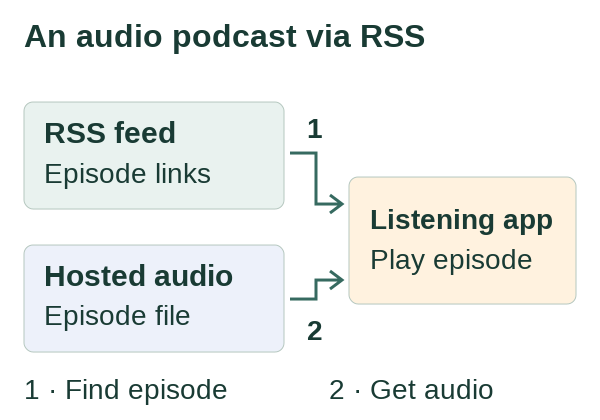
A 2008 fact sheet for educators described podcasting as a tool for improving the student learning experience and explained how teachers could make and publish their own podcasts.[10] Podcasts were also expected to help students who study away from campus. Curtin University Library started its own podcast series at the end of 2005, and a 2007 paper argued that podcasts could serve distance education and offshore students.[11] A 2008 article listed podcasts among new communications technologies first regarded as intended for personal and recreational use. With the reach of the internet, that article argued, such tools became viable choices for education and for managing knowledge.[12]
Podcasts as media for general learning
Media of many kinds serve as sources of new information for listeners, viewers, readers and visitors of online platforms who want to expand their knowledge.[13] A podcast is a digital audio recording that can serve as a tool for creating and sharing academic content.[14] The format fits that demand because a listener can gain knowledge or be educated while carrying out other activities.[13] One documentary review of educational experiences in higher education describes podcasts as an excellent teaching and learning tool for creating and spreading academic content. That review also notes that podcast production is compatible with asynchronous learning, in which students study at times of their own choosing rather than at a fixed hour.[14]
History
Where the idea came from
A biology project found that most students used the recordings to improve their understanding of material covered in particular lectures. Students in those courses strongly preferred the live lectures to the recorded versions. Having the lectures available did not lead to large drops in attendance. The project team read these results as evidence that students saw the podcasts as extra resources for success, not as a replacement for ordinary teaching.[15]
A 2010 study in a medical radiation program asked how students actually used recorded lectures. That program carries a large amount of content, especially in the first year, when courses such as anatomy and physiology begin. Students mostly used the podcasts to review lecture content, above all when they had trouble understanding a lecture or new terminology. They generally listened at a home computer while viewing the lecture PowerPoint slides. The study concluded that teachers should weigh podcast lectures against their wider instructional goals.[16]
A 2010 study of a non-specialist accounting module combined a student questionnaire with usage statistics from the Blackboard online tracking facility. Students said podcasts improved their learning experience, and the usage records showed convincing evidence of the podcasts as an additional learning tool, particularly for revision.[17]
A 2009 review of podcasting in higher education sorted the early uses into three broad types. Substitutional use meant giving students recordings of past lectures for review and revision, and this was the most common type. Supplementary use, the second most common, meant adding material such as study guides and summary notes to broaden and deepen understanding. Creative use, the least common, meant having students make podcasts themselves.[18]
Multicultural collaborations and early classroom uses
One of the earliest documented classroom podcast projects took place in a multicultural setting and was reported in 2008 as a case study. Pre-service undergraduate teaching majors, students training to become teachers, worked with graduate students enrolled in an educational technology course. The two groups also worked with clients of a community agency that serves minority, low-income youth. Together they produced a radio-style show distributed as a podcast. The project was limited to a single semester of implementation, so its findings describe one trial rather than a sustained program.[19]
The report described the project as showing both the potential and the limits of podcasting for two goals. The first goal was improving the literacy skills of inner-city youth. The second was building the technical proficiency of the pre-service teaching majors. The case was presented as an example of low-income minority youth using technology, and of that use narrowing the digital divide, the gap in access to computing tools and skills. Two conditions shaped the project's setting. Because of the digital divide, podcasting had not reached poorly resourced settings such as inner-city community agencies, and pre-service teaching majors were rarely taught how to use MP3 players in teaching.[19]
An early account of podcast uses for learning appeared in 2008 in a journal of educational technology, under the title "Fishing For Learning With A Podcast Net." The article was written by staff at the University of the Pacific, a science and technology teacher in a Florida school district, and an educational media coordinator at the University of North Florida.[20]
Main ideas
Autonomy and metacognitive support
Podcasts can serve learners who work without a teacher, and research has examined how that independent use interacts with the learner's own planning and monitoring of comprehension. One exploratory study in 2022 followed 12 adult learners of English as a foreign language who used podcasts on their own while receiving instruction in metacognitive strategies, meaning techniques for planning, checking and reviewing one's own understanding while listening. The researcher gathered evidence through a questionnaire, the learners' journals and semi-structured interviews rather than through a controlled comparison with a group that received no such support. Results suggested that these autonomous learners gained several advantages from extensive listening to podcast input, and the learners reported a positive attitude toward learning listening with metacognitive strategies. The participants said the strategies helped them become independent listeners, and the study presented this technology-based listening approach as useful in a setting where many learners lack sufficient authentic and understandable spoken input. With 12 participants and no control group, the findings describe these learners' experience and do not establish how much of any listening gain came from the podcasts themselves.[21]
A second line of work treats podcasts less as a listening exercise than as material chosen to match what a learner already cares about. A 2025 paper argued that engaging lesson content is the foundation of effective language learning, and that materials addressing a student's own topic of interest and resonating on a deeper level will motivate that student to learn. The paper drew on Abraham Maslow's account of motivation, in which four basic needs (food, safety, love and self-esteem) must be met before people strive for self-actualization, the pursuit of personal fulfilment and self-expression. On that basis the authors proposed podcasts as motivating teaching material with the potential to encourage personal fulfilment and self-expression while improving language skills in a fun and informative way. This second paper is a proposal about how podcasts might be used rather than a test of whether interest-matched episodes improve measured language outcomes.[22]
Research
How researchers measure podcast learning
Satisfaction with podcasts has usually been measured through surveys or interviews in descriptive studies. In 2017, Alarcón, Bendayan and Blanca presented the Student Satisfaction with Educational Podcasts Questionnaire, or SSEPQ. The questionnaire was tested on 3-5 minute podcasts used as a supplementary tool in a psychology undergraduate course on research methods and statistics.[23]
Zacharis (2012) used a structured, self-administered questionnaire to study enhanced, audiovisual podcasts as a review and exam preparation tool. Perceived usefulness did not emerge as a strong predictor of user acceptance. Perceived ease of use was a strong predictor of perceived usefulness, so ease of use and enjoyment were the two main drivers of willingness to adopt podcasting.[24]
Inderawati (2024) identified four important aspects of educational podcast creation from the literature and wrote 60 statements covering them. English language education experts judged the statements for relevance, feasibility and suitability to the research objectives, and the instrument was found valid.[25]
What the evidence shows about learning
Scores rose at each evaluation point (P ≤ 0.001). A control group of similar baseline characteristics received only standard didactics. The podcast group showed greater increases in mean EEG evaluation scores from baseline to after 10 interpretations. Prior podcast experience also mattered: individuals with 4 or more previous podcasts gained more than those with 3 or fewer (P = 0.027).[26]
Concept understanding and research methods
A 2024 quasi-experimental study tested whether educational podcasts raise students' grasp of academic concepts, a question the study's background section describes as having little empirical research behind it. The design involved 120 students from various educational levels, split into an experimental group that used podcasts as supplementary material and a control group that continued with conventional teaching methods. Pre-tests and post-tests measured conceptual understanding before and after the intervention, and the analysis used quantitative methods, including t-tests and analysis of variance, a statistical test for comparing the averages of more than two groups. The experimental group's conceptual understanding improved significantly compared with the control group, and its average score increase was 20% higher than the control group's. The study concludes that podcasts can reinforce learning outside classroom hours and can be integrated into educational practice to support student learning.[27]
A separate development project built podcast-based audiovisual learning media on the basic concepts of educational research methods for students in the Department of Mechanical Engineering Education at the Faculty of Engineering, UNJ. The project used a research and development method, a cycle of building and testing an educational product, following the ADDIE model of analysis, design, development, implementation and evaluation. Validation involved one material expert, one media expert and two experts on practice-question grids, and the combined validation score was 94%, which the project categorized as very valid. A practicality test scored 88%, and the gain in student understanding, measured with the normalized gain formula that compares actual improvement with the maximum possible improvement, was 59%, described as quite effective. The project concludes that the media is highly valid and well suited for use as a learning resource in research methodology courses.[28]
Extensive listening with podcasts and vodcasts
Extensive listening means hearing large amounts of spoken language for meaning, without working through every word, and one year-long study tested whether podcasts and vodcasts (video versions of podcasts) could support it for learners of English as a foreign language. Forty-nine college-level EFL students took part in the study, which ran for a full year. The data came from listening logs, progress tests, proficiency tests and a questionnaire about the logs. The data were analyzed both quantitatively and qualitatively, so the numbers from the tests were read alongside what students wrote about their practice.[29]
Students rated extensive listening with podcasts and vodcasts highly effective, both for improving as second language listeners and for strengthening their pronunciation and their knowledge of words and phrases. The same students said the speed of speech in podcasts and vodcasts sometimes frustrated them.[29]
In practice
Podcasts and the traditional lecture
A randomised controlled trial published in 2010 put a live lecture against a video podcast to see which students learned more from. The trial took 100 undergraduate medical students and assigned each one by chance to a live lecture or a video podcast for a first clinical topic. The live lectures were given by the same instructor who narrated the video podcasts. Each video podcast showed slides narrated from the same script as the lecture, so the words were held constant. The groups then swapped formats for a second clinical topic, a design called a crossover. Knowledge was tested with multiple choice questions, and a questionnaire collected students' views.[3]
Students enjoyed the convenience of the video podcast but found it less engaging, according to the questionnaire results. The trial's authors concluded that video podcasts were not ready to replace traditional teaching methods.[3]
A second line of work asks whether a short podcast heard before a lecture can prepare students to learn from it. A 2014 study adapted two tools long used with text, advance organisers and higher order questions, for use with podcasts. Students reported that audio advance organisers and questions had a positive influence on their learning.[30]
Podcasts have also been tested inside large online courses, which mostly rely on video-based learning materials. In one six-week course on cybersecurity with more than 1,500 learners, consuming an additional podcast raised learning outcomes by up to 7.9%.[31]
Listening skills in language learning
In Ecuador, secondary students who used educational podcasts gained 26 percentage points on a listening comprehension test, against 7% for the control group.[32] A study of 60 male learners in Tehran language colleges likewise found educational podcasts significantly more effective than the usual method, reporting F = 165/001.[33] At a Jakarta high school, 60 students were sampled and the post-test difference between the podcast class and the comparison class again gave a significance value of 0.010.[34]
Two of these studies used a one-group pre-test and post-test design, with no separate comparison group.[35][36] One class of tenth-grade students at SMAN 1 Praya in Indonesia scored higher after podcast-based learning than before it. Those students became better at identifying main ideas, understanding specific information, recognising vocabulary in context and interpreting spoken messages.[35] At Vocational High School No. 18 in Jakarta, 33 accounting students taught over three meetings raised their mean listening score from 55.15 to 87.03, with a significance value of 0.000.[36] A qualitative study of grade VIII students at a state middle school in Gunungsitoli also reported a significant increase in listening skills.[37]
Two studies collected data through questionnaires and interviews with students rather than through listening tests.[38][39] Fourteen university students in one case study said they liked podcasts and found the topics and activities useful for learning English.[39] Students in a senior high school class in Siantar reported that podcasts made them interested and motivated to study listening.[38]
Subjects beyond language teaching
Podcasts have been tried in subjects far beyond language teaching, from music and visual arts to economics, nursing and forensic science.[40][41][42][43] A 2012 study at a teacher-education institution asked 128 students in years one to four of their courses about podcasts in music and visual arts. The students found the podcasts useful and saw them as a way to supplement face-to-face teaching. Podcasts that demonstrated procedures or skills worked best, while podcasts that simply reproduced lecture materials worked least well. The students also asked teachers to make podcast content more relevant to what was taught in lessons.[40]
In Islamic education, a 2026 study used the ADDIE model, a five-stage design process of analysis, design, development, implementation and evaluation, to build a podcast medium. The podcast was checked by expert validation and then tried with users to judge content quality, usability and learning effectiveness. The findings describe the podcast as pedagogically feasible and report that it raised students' motivation, engagement and conceptual understanding.[44]
A 2023 study at Universitas Pendidikan Indonesia in Bandung developed a podcast-based social studies medium and measured its effect on students' digital literacy. The researchers report a good impact and a significant effect on digital literacy skills. They add that the materials work well only when the issues are contemporary, the design is current, and lecturers and students build the materials together.[45] In history, a 2026 qualitative case study followed 19 fourth-grade students in a public primary school during a ten-hour teaching intervention. The project came before a visit to the archaeological site of Delphi and included searching digital sources, writing scripts as a group, recording, and editing audio in the Audacity software. The findings link student podcast creation to greater interest and participation and to more meaningful processing of historical content.[46]
In nursing, a 2024 pilot study moved a didactic critical care course in graduate nursing education from screen-based lectures to a podcast format. Pre-course and post-course surveys showed that the podcasts met course objectives and were equally or more engaging than screen-based lectures.[42] A 2026 quasi-experimental study without randomization asked first-year nursing students to make 5-to-7-minute podcast capsules on eight maternal and child health themes. The work ran over 4 weeks with 8 contact hours of faculty guidance, and groups of 3 to 4 students received training in audio production. With 130 valid questionnaires at each point, self-perceived knowledge was higher after the intervention across all eight topics.[47]
Health professions and workplace training
One qualitative study interviewed 16 residents from 2 U.S. and 1 Canadian institution between March 2016 and August 2017. These residents described podcasts as easy to use and engaging, and said podcasts gave them both broad exposure to content and targeted learning. They often listened while doing other activities, driven by a wish to use their time productively. That habit brought challenges: residents had trouble retaining what they heard and applying it to their clinical work.[7]
Podcast length has drawn practical study. A pilot 20-minute podcast on telephone triage for pediatrics residents drew responses from 27 residents. Most of the 27 called the length about right, while 22% (6 of 27) said it could be slightly shorter and only 1 asked for longer content. Listening records showed that, among those who listened beyond 1 minute, 28% stopped near the 10-minute mark. The authors suggested a starting aim of 10 to 15 minutes in total.[48] The 2016 review found a mean podcast length of 18 minutes and reported that interview format, clear disclosures and accurate information were seen as desirable.[2]
An 18-question survey went to 198 otolaryngology residents, ear, nose and throat specialists in training, covering 94% of eligible programs, and 73 residents completed it, a 37% response rate. Nearly 3 quarters of respondents had used otolaryngology podcasts, and among those, 83% listened at least monthly. Over half said they changed their overall clinical practice (53%) and their consult practice (51%) because of podcast use. Even so, these residents ranked podcasts last among traditional options for asynchronous learning, behind reading textbooks and watching online videos.[49]
A staff development study made podcasts continuously available through common websites and tested whether they helped preceptors approach difficult situations with caring behaviors. The study found a significant increase in preceptors' perception of support, especially among those with less training or experience in precepting. It also found a strong correlation between perceived support and commitment to the preceptor role, and preceptors asked for more podcasts for ongoing support.[50]
A study of 606 people in education, including K-12 teachers and college professors, identified five motives for listening. Listeners were often most motivated by social interaction, flexibility in use and information gathering. Several of these motives were significantly associated with intention to listen and with recommending podcasts to others.[51]
Why students choose podcasts
Listeners give several reasons for choosing podcasts, and research has sorted them into groups. A survey of 636 college students found six prominent dimensions of motivation for podcast use. These were companionship and social interaction, entertainment and relaxation, education and information, pastime and escape, habit, and convenience. Motivations tied to relationships, excitement and educational achievement explained actual use and appreciation better than the other motivations did. Students' attachment to the medium was a strong predictor of their podcast use and the satisfaction they drew from it.[9]
A study of podcasters and their student listeners found that podcasts can be heard in many places and situations. The same study noted a rewind feature, which lets a listener replay a passage to understand a topic better. During the Covid-19 pandemic, podcasts served as a complement to digital learning media such as video meeting tools used in lessons.[52]
Much of what listeners gain from podcasts falls outside formal education. An online survey of 605 respondents, mostly young and well educated, examined listening habits and the extent of informal learning. More than half of the respondents engaged in self-directed learning, and a third took part in incidental learning. Trust in podcast content was significantly higher among educated listeners.[53]
One study reports that students see podcasts as complementary to conventional education and as a resource for revising difficult topics and preparing for exams. The same study found that some students still prefer more traditional methods, which points to a need for organized integration of podcasts into courses.[54]
A qualitative study in Pune, India, interviewed student podcasters and held focus groups with listeners to see how personal stories affect resilience. Narrative storytelling means sharing lived experiences in a structured, relatable way. Unlike formal counseling sessions, podcasts offer a low-cost, flexible platform for these conversations without the stigma.[55]
Designing podcasts for courses
A study of 20 units of study in 2007 and 2008 sorted teacher-made podcasts into three broad approaches. Re-framed podcasts reproduce content in another medium, such as a textbook chapter summarised as an episode. Complementary podcasts add extra information to enhance the student learning experience. Supplementary podcasts re-design and broadcast content that was previously presented in class.[56]
In one course, short supportive podcasts gave students context for their out-of-class preparation and let them hear directly from the teacher. Results suggested that the podcasts addressed both issues and may benefit other collaborative classrooms facing similar challenges. The teacher's voice mattered because students in active learning classes often perceive that contact with the teacher is missing.[57]
Focus group interviews were held with 14 of those students. Participants generally viewed the podcast as effective, and the episode gave them new information about the difference between inclusion and integration. They also recognised barriers to building an inclusive environment for children with disabilities and questioned whether integrated settings are always preferred.[58]
In an experiment, 49 students watched a video on matrix multiplication and then completed a questionnaire on viewing behaviour, perception, attitudes, satisfaction and learning performance. The results supported video podcasts as complementary tools in higher education and judged the course video adequate. From the students' perspective, speech, sound and image were the most important features of a video podcast.[59]
In the first group, teaching staff prepared and carried out the podcast dynamics; in the second, students created the podcast together. The two groups differed significantly in the usability and design dimensions, and no gender differences were found. The study concluded that podcasts worked as a teaching strategy, particularly for accessibility, use and design by students.[60]
In a study of 148 students at the University of Zaragoza, one group used podcasts and another gave live oral presentations. Both groups reported high satisfaction, in-class presentations were judged slightly more appropriate, and exam performance was similar across the two groups. In one experiment, 148 students at the University of Zaragoza in 2022-2023 were split into a podcast group and a group giving live oral presentations. Collaborative, student-centered learning raised satisfaction, but conflicts within groups prevented clear distinctions between the two methods.[61]
Students as podcast makers
The material went to elderly students in the Youth and Adult Education Program, who received instructions on how to reach the media online. The project's grantee gained skills for future teaching practice, and the local community gained free access to basic education content during a period of social isolation.[62]
At the University of Hertfordshire, an existing podcast in the School of Health and Social Work gained a segment called 'Just a Moment with SASS'. The segment let a student support team share advice and tips on common student queries, interviews with staff and students, and school news. The aim was an online community that students could join once per month, creating a sense of belonging for those unable to attend support sessions or networking events.[63]
How podcasts fit into course design
A 2012 review of podcasts as a teaching tool describes podcasting as one pedagogic choice among many, a simple and cheap means of exploring learning opportunities through social media rather than a substitute for every other method.[64] A 2016 account of classroom podcasting names four ways to use them: brief lectures on one concept, overviews of a focused topic, review material, and audio feedback in narrative form for students. That discussion also proposes that podcasting fits a constructivist approach, in which learners build understanding from material rather than receive it whole.[65]
A 2008 set of tips from Leeds Metropolitan University, drawn from trials in a faculty of information and technology, treats podcasts as a way to promote flexibility in teaching and learning.[66] A 2020 set of twelve tips for medical education podcasts covers how to plan, design and carry out a new podcast. It also addresses keeping learners engaged and the practical side of recording and hosting the files. A 2020 set of twelve tips points educators toward free podcast content that already exists, with practical examples, rather than assuming every course must make its own.[67]
A university-wide pilot with 25 participants found that staff had little prior experience with digital audio. Wider adoption depended on suitable support available in good time, since many staff lacked confidence with the technology. With that support in place, the authors concluded, audio could be taken up by any teacher who wanted to add a further layer of presence and connection through voice.[68][69] A 2020 study of an open, distance and e-learning institution examined 431 podcast scripts produced during staff development across modules, departments and subjects, and found that introducing podcasts into distance teaching had often failed to meet the expected outcomes. That study compared the purposes lecturers actually used against purposes identified in the literature, and offered guidance for better use of podcasts in open, distance and e-learning settings.[70]
What students and teachers report about podcasts
A sample of 171 students from eight disciplines at three universities in Ecuador and Spain gave a mostly positive assessment of podcast integration, citing its academic and pedagogical contribution, and rated it more highly when the subject teacher took a supportive and participatory role. In that sample, the students' assessment of gender perspective significantly predicted how useful they judged the podcast to be.[71] At one Indonesian institute, 35 students answered a five-point Likert questionnaire, a rating scale running from low to high agreement, on listening comprehension. Flexibility drew a mean of 4.52 and motivation a mean of 4.33, while technical barriers scored 2.89, and open responses raised learner autonomy and content mismatch as themes.[72]
A qualitative mixed-method study of 120 university students combined surveys, focus group discussions and reflective journals. Those students reported that podcasts raised their motivation, concentration and comprehension of complex concepts, and that the conversational tone prompted reflective thinking and emotional engagement. They also described listening at their own pace as a way to keep learning beyond the classroom.[73] A separate mixed-methods study of 72 undergraduates compared a group that produced podcasts and vlogs during a six-week intervention with a group taught conventionally. The producing group showed higher cognitive and emotional engagement and better academic performance, and interviews pointed to greater motivation, more collaboration and stronger communication skills.[74]
To measure student views in a repeatable way, a questionnaire was built for educational podcasts: the Questionnaire for Assessing Educational Podcasts, or QAEP. The questionnaire asks about 4 areas: how students access and use podcasts, how episodes are designed and structured, whether the content is adequate, and how far podcasts help learning. An expert panel in the first study judged the items clearly worded and relevant, and a second study used confirmatory factor analysis, a method for testing whether items group as the designer intended, with cross-validation. That analysis found a factor structure matching the four dimensions, with configural and metric invariance across groups, meaning the questionnaire behaved the same way in different groups, and item and reliability results were satisfactory. The scores give teachers direct student feedback and point to aspects of a podcast that need improving.[75] The QAEP was later translated, adapted and validated for Brazilian Portuguese as the Instrumento de Avaliação de Podcast Educativo, aimed at health literacy.[76]
Studies of acceptance borrow the Technology Acceptance Model, which holds that perceived usefulness and ease of use shape a person's attitude and intention to adopt a technology. A structural equation model, a statistical method for testing chains of influence among measured constructs, applied to university students in Ecuador fit the data well (CFI = 0.957; RMSEA = 0.065).[77] The picture is less favorable among lecturers: 829 questionnaires from lecturers at three Federal Universities in Nigeria showed a low level of podcast acceptance for teaching, with the hypothesis tested by multiple regression.[78] At Kaduna State College of Education, 150 randomly selected students reported using audio, radio or text podcasts for academic information and relying on the internet more than on prescribed textbooks, while privacy concerns, solitary listening and insufficient information limited adoption.[79]
Motivation has its own adapted instrument: a Turkish version of the Instructional Podcast Material Motivation Scale, tested with preparatory-year students at Cag University. The adapted scale kept four sub-dimensions (attention, relevance, confidence and satisfaction) across 31 items, and internal consistency was high for the whole scale (.95) and for the sub-dimensions (.78, .91, .75 and .93).[80]
Podcasts in medical and health education
Podcasts have become a familiar addition to clinical training. Medical students, residents, physicians past training and advanced practitioners all report listening to them.[81] A 2022 scoping review searched PubMed and Embase in June and July 2020. It looked for English-language studies of audio-only medical education podcasts at the undergraduate, graduate and continuing levels. Of 491 unique articles, 62 met the inclusion criteria. That review found podcast use rising over time, podcasts among the top resources for resident education, and podcasts being written into formal medical curricula.[8] A later scoping review drew on 121 references and an evidence map of 155 original studies with 316966 total participants or sample observations, and concluded that medical podcasts work most reliably as flexible, supplemental tools rather than as replacements for traditional instruction.[82]
Residents value particular design features, according to 16 semi-structured interviews with emergency medicine trainees at three institutions between March 2016 and August 2017. The interviewers grouped what residents described using the five canons of classical rhetoric, a scheme from ancient instruction in speechmaking that divides a persuasive composition into invention, arrangement, style, memory and delivery. Residents valued clinically relevant material given from more than one perspective, with learning points stated outright. They wanted communication that wasted no time, and stories told with humor. They asked for key content to be repeated, and for short episodes that are well produced. The same residents reported difficulty remembering what they had learned from listening, and the study's authors described the features as a starting point for research rather than a settled standard.[83]
The 2022 scoping review sorted outcomes by Kirkpatrick's four levels of evaluation, a widely used ladder that runs from learner reaction through knowledge, behavior and results for patients or systems. The 29 studies at the first level, learner reaction and attitudes, showed that learners valued podcasts for portability, efficiency and combined educational and entertainment value. The 11 studies at the third level, behavior change, found better documentation skills among medical students. No study in the review reported system change or patient outcomes, the fourth level.[8]
In one study, 42 undergraduate medical students were recruited, and participants who completed the assessments showed an effect of learning. Most participants who expressed a preference favored episodes of 30 minutes or less, and the top activities while listening were driving (46%), completing chores (26%) and exercising (23%). Among students who did not finish the study, lack of time and podcast length were the two most cited barriers.[84] A randomized educational study at the University of Malta assigned 122 undergraduate nursing students to a podcast or to a written transcript on preventive cardiology, with time-equivalent content and a 50-item test. Both groups gained significantly from pre-test to post-test (podcast group t = 6.98, reading group t = 5.10, both p < 0.001). The podcast group scored higher on the post-test, but the gap between groups fell short of statistical significance (p = 0.081).[85]
In dental education, a systematic review searched PubMed, Scopus and Web of Science in September 2025 and found six eligible studies out of 693 records. In individual studies, between 73% and 97% of respondents agreed that podcasts helped them learn, helped them prepare for exams, or mattered for theoretical learning. Ratings for practical or skills-based learning were lower. One quasi-experimental study in that review found higher scores on an immediate multiple-choice test among students given podcasts. The reviewers judged the risk of bias high or unclear in most studies and called the evidence base small, heterogeneous and methodologically limited.[86]
None of the studies it examined reported patient outcomes.[8] The 2026 scoping review reported a 15.5% adjusted knowledge gain in a trial with hematology and oncology fellows and improved scores on an objective structured clinical examination, a hands-on test of clinical skills, after podcast exposure. The same review found that only 12.9% of cardiology podcasts provided detailed references, a gap in quality transparency that it said limits confident adoption.[82] A 2020 commentary observed that podcasts had become an influential format within informal medical education and that open questions remained about how they would be integrated into formal and informal curricula.[81]
Two studies describe students who make the audio themselves rather than listening to a lecturer's recording.[87][88] In medical education, a preliminary co-design study at Aalborg University asked medical students, through semi-structured focus group interviews, how a podcast-based intervention should be built to strengthen collaborative competencies, meaning the skills students need to work together on a shared task. The interviews were analysed with Braun and Clarke's reflexive thematic analysis, a method for finding patterns across interview transcripts, guided by activity-centred analysis and design, a framework that treats a learning activity as a system of people, tools, rules and setting. Students asked for clear guidelines, a focus on process and varied methods, which the study groups under epistemic design; for suitable rooms, accessible technology and supervisor support, grouped under set design; and for good interpersonal interaction and well-chosen group composition, grouped under social design. The study notes that podcasts in medical education have mostly been substitutional or supplementary, and that creative podcasting fits problem-based learning by turning students from passive recipients into active learners. Its practical advice includes a starting guide that covers technical matters and sets out clear expectations, and it favors process over product.[87]
In veterinary training, a short student-produced audio podcast assignment was given to all students in pairs within a third-year veterinary anesthesia curriculum. Veterinary anesthesia is described as cognitively demanding, requiring mastery of complex pharmacological concepts and many drug names while applying them in clinical contexts. Once faculty had reviewed the episodes and the class had discussed them, they were posted to an online platform as a peer-generated resource for revision and exam preparation. Perceptions were measured with a 5-point Likert questionnaire, a rating scale running from low to high agreement, and 50 students replied voluntarily. Students reported high engagement. They rated the act of creating the podcast as the strongest benefit, ahead of the group work experience and greater motivation to understand the material more deeply. The episode length was well accepted, and more than half of the students listened repeatedly to podcasts made by their peers. Most students judged the podcasts of limited value for direct exam preparation, yet the group exposed to podcasts scored higher on the final examination than a historic cohort that neither created nor accessed podcasts.[88]
Podcasts for reading, writing and vocabulary
A mixed-methods study of 20 university students learning English as a foreign language reported vocabulary retention gains for 95% of users and listening gains for 80%, and the authors concluded that podcast effectiveness depends on how students use the material rather than on exposure alone. In that study, 55% of the interviewed students repeated segments and 50% used transcripts, while speech speed was a barrier for 65% and accents for 35%.[89] A broader paper on English learners of different ages and proficiency levels found that regular podcast use strengthened vocabulary acquisition, listening comprehension and general proficiency, though it reports no effect sizes.[90] An effect size is a statistical calculation of how large a measurable effect is, for example the difference between the averages of two groups divided by the standard deviation.[91] An experimental study of elementary learners compared podcasts with the usual method of writing words on the board, repeating them and translating them, with a multiple-choice test after 2 months; its abstract states the design and the test but not the outcome.[92] A study of 31 English majors at Yazd University found that students taught English proverbs through video podcasts outperformed a group taught in the traditional way after 5 weeks.[93]
A classroom action research project in two cycles combined a reflective writing method with a podcast called Writing Friends in a high school class; students averaged 65 out of 100 on narrative writing, with coherence and character development as the weakest points.[94] A small mixed-methods study of 10 tenth-grade students used podcast texts with translation to support reading, listening and speaking, and concluded that the combination improved reading and listening comprehension and speaking fluency.[95] A study of college students learning Chinese found that grammar podcasts improved their speaking skills and their confidence. Visual scores, by contrast, were significantly and negatively related to posttest speaking scores.[96]
Content acquisition podcasts (CAPs) are short multimedia recordings built on evidence-based instructional design principles and used to deliver course content in teacher education.[97] With 43 preservice educators, a CAP on language use regarding people with disabilities significantly increased knowledge, and participants rated the format positively. The investigators described this as the first CAP study to use focus groups, and they noted that earlier CAP research had mostly addressed topics with single correct answers rather than complex, contextual issues such as language use.[98] A separate experimental study of 48 bachelor of education students found significantly higher gain scores for a group taught psychology with video podcasts than for a control group, including on knowledge and understanding objectives, but found no significant difference on application objectives.[99]
For students with learning disabilities, a practitioner article describes CAPs as a flexible way to deliver explicit vocabulary instruction with visual scaffolds and repeated exposure in science, social studies, English and mathematics classes. The same article notes that students with learning disabilities face persistent difficulty acquiring and retaining academic vocabulary, which can undermine reading achievement across content areas.[100]
Two small studies look at how podcast listening connects to specific language skills: one asks students what listening does for their pronunciation, and the other measures whether knowledge of English tenses goes with success in understanding spoken autobiography. Neither study compares podcast listeners with a group that did not listen, so both describe associations rather than proven causes.[101][102]
Data came from semi-structured interviews, in which a set of guiding questions leaves room for follow-up, from notes kept by the investigator, and from a record of the students' performance over time. Students reported that podcasts improved the quality of their pronunciation, helped them speak English with more confidence, and made native speech easier to follow. They also said listening widened their vocabulary and supported their listening and speaking skills. The same students named obstacles: unfamiliar vocabulary in the audio, and podcasts that come without subtitles, which made the content harder to understand.[101]
Grammar was measured with a gap-filling test of 15 questions, and listening with a multiple-choice test of 10 questions on an autobiography audio about Benjamin Franklin; each test was scored out of 100 for fully correct answers. More than half of the sample scored low on grammar yet high on listening comprehension. Using Karl Pearson's correlation coefficient, a standard measure of how closely two sets of scores move together, the study reported a normal positive correlation between knowledge of English tenses and listening comprehension. The study involved 17 students, a 15-question grammar test, and a 10-question listening test based on one autobiography audio recording.[102]
Podcasts for transition, belonging and wellbeing
A distinct group of educational podcasts is made to help students begin university, feel part of a community and picture themselves in a field, rather than to teach subject matter.[103][104][105] Most transition support has been designed by institutions, for example courses on learning and study skills, and podcast projects have been proposed as a way to draw instead on the knowledge of current undergraduates.[103] One practice report describes a podcast series begun in 2017 at La Trobe University in Australia. It sits inside Legal Institutions and Methods, a required subject in the first year of law. The episodes record interviews with students who have recently finished the subject, giving those interviewees a chance to reflect on their experience and offering advice to students about to begin. The series is described as a form of peer-to-peer mentoring that needs a relatively small investment of resources and gives on-demand support, and the format is said to be readily adaptable to other disciplines.[104]
Podcasts have also been used to bring Indigenous content and Indigenous student success into university programs. A practice report by two academics, one non-Indigenous and one Ngugi and Wakka Wakka, discusses two podcasts they developed and hosted, the reasons for choosing the medium and the impact that was emerging. The report describes how the podcasts contribute to Indigenising university curricula and to improving outreach programs for Indigenous students, and it considers how podcasting might be adapted in other university contexts.[106] A student-led podcasting initiative in engineering was intended to cover topics such as student views on global, institutional and scientific developments and information on educational opportunities. An evaluation of the team members' experiences reported good outcomes in skills development, community identity and wider educational awareness.[105]
Some projects put production itself at the centre, so that making an episode becomes the reflective or communal activity.[107][108][109] In a German practice project on open educational resources and open educational practices, a podcast accompanying the project documented its design and served as a reflective element that mirrored the perspectives of staff at two sites, of stakeholders and of cooperation partners.[107] A student-produced podcast in a leadership and ethics course served both as a teaching resource and as an experiential learning opportunity for the student hosts, who developed critical thinking skills while listeners met leadership concepts.[108] In basic education, a mixed-methods study of school radio and educational podcasts reported that making radio and digital content strengthened students' communication and digital competences. It also supported more reflective, participatory learning. School radio became a space of democratic interaction in which students took on varied roles.[109]
Researchers examined a podcast at the Polytechnic Institute of Coimbra that is built on alumni narratives. The researchers analysed 23 episodes and surveyed current Organizational Communication students. The study reported that alumni interviews encouraged institutional advocacy and a shared identity. Among surveyed students, 97.1% saw the podcast as an innovative branding tool that improved their understanding of the program and raised their motivation and sense of belonging. The study noted limitations in sample size and generalizability.[110]
Student-contributed production can also raise difficult material, and one case study describes a journalism class at Toronto Metropolitan University that turned an unplanned event into an episode. A student experienced a microaggression during an interview, and the recording captured it. The class decided together to drop the original subject and make an episode about the impact of microaggressions. The case study was written jointly by the instructor and a student producer. It presents the change of plan as an example of treating students as colleagues and giving them agency.[111]
How podcasts are produced and who makes them
Recording an educational podcast has become simpler as mobile apps and recording technology have improved, which has lowered the technical barrier for teachers and students who want to make their own episodes.[112] Guidance written for medical educators covers planning, designing and carrying out a new educational podcast, including ways to keep learners engaged and the practical matters of recording and hosting the material.[67]
Students at a technical university created audio and video podcasts while studying Russian, and the article gives QR codes for them.[113] A program at Manado State University took 25 sociology education students through preparation, implementation, practice and evaluation, with group projects in which each group made its own episode. Average test scores rose from 31.72 before the program to 80.56 after it, and the evaluation found that students had gained skills running from first ideas to final editing.[114] Training at a secondary madrasah in Rembang covered podcast tools and the latest production equipment, and reported gains in students' understanding of both.[115] Training for students at MBI Amanatul Ummah Pacet Mojokerto covered topic planning, cover design, hardware and software preparation, recording technique, editing, and the choice of a hosting service and platform.[116]
Machine-generated speech has entered educational podcasting, and one experiment tested whether listeners care about the difference. In a quasi-experimental study, 60 participants were randomly assigned to two groups and heard the same AI-generated audio, but each group was told something different about where it came from. The result partly contradicts the literature on AI disclosure, and the study accounts for it through the sample's AI-affine, highly educated profile and an experience-driven competence heuristic toward generative AI. The small sample and the low variance in AI-related attitudes meant that possible moderating effects could not be meaningfully explored.[117] A separate study of AI-assisted podcasts in construction and engineering modules at two South African universities found a considerable rise in class average scores at postgraduate level while undergraduate averages stayed at baseline, so no causation could be established. That study also found that technical barriers were significantly and negatively related to motivation and to willingness to expand podcast use.[118]
A study of influential educational podcasts in Spain reports uneven professionalization, a range of pedagogical voices, and strategies that adapt to win visibility on platforms. The Spanish study used a mixed-method coding protocol that combined formal, discursive and platform variables drawn from major audio platforms.[119] In open and distance learning, an analysis of 431 podcast scripts produced during staff development at the University of South Africa tallied the podcasts by purpose or type and identified purposes that the scripts left out.[70] Video podcasts also support open research practice: an analysis of educational video materials on 26 foreign university websites covered research data management, digital tools for research, and open science principles.[120] One Brazilian project surveyed educational podcasts about disinformation and then made its own. It set out the script, recording, editing and publication on a streaming service.[121]
Podcasts outside formal courses
Museums are one setting where educational audio has been tried. A project in Kazakhstan had 11 students of English as a foreign language record five museum podcasts. The stated aims were to improve listening and speaking, to work on interactive student problems and to create a dialogic space in which students and teachers both had agency. The project was proposed as authentic intercultural content. It could support communication between students in Kazakhstan and students in other countries, and it could spread knowledge of Central Kazakhstan's historical and cultural heritage.[122] A panorama of history podcasts in the United States describes the format's rapid growth as a tool for presenting history to non-specialist audiences, and it names museums and memory institutions among the bodies using podcasts to engage the public. That account credits the intimacy of oral narration, the convenience of listening and a human inclination toward stories for the format's fit with history communication.[123]
School radio and educational podcasts have been studied together as community digital narratives in basic education. The study concluded that such innovation depended less on advanced technology than on teachers' creativity and commitment.[109] A separate study of Bulgarian podcasts examined 50 programs broadcast between January 2018 and September 2021 and described their place in the media system and their thematic range.[124]
Public science communication is another use, and podcasts about artificial intelligence in German online media have been analyzed as popular science discourse. That study examined two podcasts from a public broadcaster's talk series and three from a science series, treating the brief written episode summaries, called shownotes, as a small text type of their own. It set out to identify the strategies and verbal and non-verbal means by which specialized knowledge about artificial intelligence is translated for a general audience.[125] A study of podcasts on neurotechnology found that the programs used colloquial speech, English loanwords, abbreviations and everyday examples, which the researchers judged to make the content accessible to a broad audience. That analysis organized the field into four subframes, one of which was neurotechnologies in education, and it raised ethical questions about effects on society, health and education.[126]
Podcasts also serve vocational guidance, the process by which secondary students choose a career or a university degree. One proposal had upper-secondary students produce a podcast, using mixed qualitative and quantitative methods, in order to build links between secondary schools and universities and to develop media literacy.[127] Podcasts further carry public argument about schooling itself. An analysis of an Indonesian podcast episode critical of the education system applied Teun A. van Dijk's discourse framework across textual, social cognition and social context dimensions. The analysis found that the episode depicted schooling as holding back students' potential and as a source of learning trauma. It also found that the creator's popularity helped spread awareness of educational issues.[128] A study of Saudi listeners drew on uses and gratifications theory, which explains why audiences seek media, and cultivation theory, which explains the cumulative effect of repeated exposure, to examine whether podcasts shape cultural identity, including language, values, heritage and belonging.[129]
Four podcast genres for online courses
The guide does not claim that one genre outperforms the others; it presents all four as usable for different learning tasks. The article sets out the four genres and how they can be used in online courses. Educators can look for podcasts in each genre to bring into their teaching, or encourage students to make their own after studying the features of each genre.[130]
Speech strategies inside educational audio
A 2024 study by Egoshkina examined how hosts of educational audio programs on a Russian radio platform use speech strategies. The study identifies the dominant speech strategies and the tactics that carry them out in the sampled educational audio podcasts, and draws conclusions about the stylistic character of those media texts.[131]
Podcasts for listening comprehension in school settings
Several classroom studies at secondary and senior high school level have tested whether podcasts raise listening comprehension scores, usually by comparing a pre-test with a post-test.[134][135][136] The designs differ in strength: some use a single group measured before and after teaching, while others compare an experimental class with a control class.[135][136] Results are consistent in direction, with post-test scores higher than pre-test scores, but most samples are small and drawn from one school.[134][135][136]
At a senior high school in Raha, Indonesia, second grade students listened to podcasts delivered through a music streaming service, and the average post-test score was higher than the average pre-test score. A gain score normalised against the maximum possible improvement placed most students in the moderate improvement band, with only a small number showing high improvement. Hypothesis testing rejected the null hypothesis at a significance value below the chosen limit, and the study concluded that podcasts on that platform can support listening comprehension, pronunciation and vocabulary.[134]
A quasi-experimental study at a business vocational high school in Tangerang, Indonesia, worked with 37 eleventh grade students in one class during the 2020/2021 academic year. Pre-test and post-test data were analysed with a one-sample Kolmogorov-Smirnov test, which returned an asymptotic significance of 0.000 for the experimental class, below the 0.05 threshold. The study reported that podcast use made a significant difference to listening skill and had a positive impact on the class.[135]
The average pre-test score was 67 and the average post-test score was 87, an increase of 30%. A t-test gave a value of 5.45 against a t-table value of 1.833, which the study read as a significant difference between the two measurements. The researcher reported that video podcasts helped students with pronunciation, with understanding the material and with confidence in listening, and recommended choosing topics that hold students' interest.[136]
At university level, a six-week procedure at Nizhyn Gogol State University in Ukraine used BBC Learning English podcasts with first-year students and combined questionnaires, initial and final testing, and observation. Activities were arranged in three stages: preparation that draws on background knowledge before listening, listening for gist, details, inference and summary during the podcast, and tasks afterwards that connect listening to other language skills. The study reported positive results and attributed them to a balance between top-down processing, which relies on prior knowledge and context, and bottom-up processing, which builds meaning from sounds and words. It also reported that meaningful activities around the podcasts held students' attention, raised motivation and improved listening comprehension.[137]
An experimental study with first-year students at a university in Vietnam found that listening skills developed further when podcasting technology was used in the classroom. That study argued for making such listening practice a regular part of English teaching at university level, citing authentic and contextual materials and the motivation they provide.[138] Action research at a lower secondary school in Slovakia reached a similar conclusion, reporting that podcasts integrated at all listening stages helped develop learners' comprehension when lesson plans were designed well and activities were challenging.[139]
Speaking performance and oral expression
Studies of podcasts as a route to better speaking fall into two broad designs: small classroom action research and short pre-test and post-test trials with university students. They share a common starting point, namely that learners struggle to build spoken sentences, to find words, and to speak without shyness or fear of error.[140][141] The evidence is promising but thin, since most reports come from single classes and few have been repeated elsewhere.[140][141][142]
A classroom action research study at Wittaya Islamic School in Thailand applied a group podcast strategy with 6th grade high school students over two cycles. Classroom action research is a form of inquiry in which a teacher changes practice in planned cycles and measures the result each time. The strategy was designed to address several problems: difficulty constructing spoken sentences, low self-confidence, limited vocabulary, and shyness or fear of making mistakes. Teacher activity rose from 68 percent, rated poor, to 85 percent, rated excellent, and student activity rose from 60.73 percent, rated fair, to 75 percent, rated good. Test scores moved from 52.12 percent, rated poor, to 84.62 percent, rated excellent, a difference of 32.5 percent. The report credits the gain to collaboration, greater confidence, wider vocabulary, and a more meaningful setting for talk, though the design has no separate control group.[140]
A mixed-methods study at Universitas PGRI Ronggolawe in Indonesia used Slow English Podcast video content on Instagram with 26 second-semester students in a one-group pre-test and post-test design. The mean speaking score rose from 58.03 to 71.38, an improvement of 23.01 percent, and a paired-samples t-test found the difference significant at p < 0.05. Students described the material as easy to reach and engaging, and said it helped their pronunciation, vocabulary, fluency and confidence. Because every participant received the treatment, the design cannot show how much of the gain would have occurred without it.[141]
A quasi-experimental study with Aliyah students in grade XII compared a class taught with podcast media against a control class, using speaking tests and a questionnaire. The independent sample t-test gave 0.014, below the 0.05 threshold, so the groups differed significantly. Most students in the podcast class reported a positive view of the medium for learning to speak. The report gives no mean scores for either group, which limits comparison with the other trials.[143]
A qualitative descriptive study at UIN Fatmawati Sukarno Bengkulu asked fourth-semester students about podcasts through questionnaires and interviews. Students were generally positive, citing accessibility, authenticity and flexibility, and said podcasts helped with pronunciation, vocabulary, intonation and confidence. They also named difficulties: unfamiliar accents, the absence of visuals, and limited access for some students. Podcasts were not consistently part of formal instruction, yet students reported that regular use improved fluency and reduced anxiety.[144]
A case study of 24 second-semester students at Universitas Baturaja examined podcast video in a speaking class through a closed-ended questionnaire. Students held a good attitude toward the format, found it simple to use and easy to access, and were willing to adopt it as an alternative way to learn to speak. They credited the content and the pronunciation of first-language speakers with helping their skills, and said the videos held their interest. The main complaint was length: episodes ran too long, so students could grow bored and lose interest.[145]
An action research study in Quito, Ecuador, worked with tenth-year students at Colegio Consejo Provincial de Pichincha, starting from the difficulty those students had with oral expression. The researchers used a sociocritical paradigm, a qualitative approach, and observation and survey techniques to identify classroom realities. They concluded that oral expression can be strengthened with digital tools, with the podcast standing out, supported by blogs, the audio editor Audacity, and the creation of educational content. The study reports no test scores, so its claim rests on interpretation of observations and survey responses rather than measured speaking gains.[142]
In one senior high school in Bogor, Indonesia, 6 eleventh-grade students took part in a two-cycle classroom action research project, and the researcher reported gains in grammar, pronunciation, vocabulary and self-confidence.[146] Sujono reported a t-count of 27 against a t-table value of 1,690, and read this as a significant difference in speaking scores before and after the podcast lessons.[147] A study of 50 high school students in Indonesia, split into an experimental group and a control group, found that podcasts improved understanding of Arabic material, especially in listening and speaking.[148]
One teacher in Ukraine recorded 5 bilingual grammar podcasts using Audacity, a free audio editing program, for use outside class with university students. Scores on a pretest and a posttest differed, which the author took to suggest that self-designed podcasts can be used to teach grammar to learners of English as a foreign language.[149]
Video podcasts have been tested for speaking proficiency and for differences between learners. A 2024 study of 42 second-semester English majors in an Intermediate Speaking course in Indonesian higher education grouped students by their dominant learning style: visual, auditory or kinesthetic. Auditory-dominant learners rose from 60.36 to 66.73, with p = .001, and kinesthetic-dominant learners rose from 64.33 to 72.83, with p = .022. The author concluded that video podcasts were effective across the different learning styles.[150]
Podcasts in German, French and English teaching
Podcasts have been studied as teaching tools in three specific language courses: German for philology students, French at a non-linguistic university, and English for master's students.[151][152][153] A 2022 Ukrainian article on German for philology students divides German-language podcasts into two kinds. Authentic podcasts have not been adapted for teaching and must be selected to match students' proficiency in speech, while special podcasts made for learning German may occasionally carry subtitles as verbal support for listening comprehension. The same article names three goals that work with podcasts can serve in German classes: forming socio-cultural competence, developing listening skills and obtaining regional information, and developing speaking skills. It also identifies difficulties that may arise when podcasts are used in German classes in higher education institutions, compiles a list of German-language podcasts for future teachers of German, and sets out guidelines for teachers. The article reports that Ukrainian teachers seldom bring podcasts into foreign language classes in high school, a gap it links to the growth of remote learning during the pandemic.[151]
A 2021 study of French teaching at a non-linguistic university treats listening as a perceptual type of speech activity that is nonetheless tied to the productive skills of speaking and writing, so that foreign language communicative competence cannot be called formed without adequate listening skills. The podcasts used in class need not be authentic, but the exercises built around them should be, since exercises that match real conditions of communication raise the motivation of non-linguistic students and support the formation of skills. Work with podcasts can follow the established three-step model for teaching the types of speech activity, with sample exercises given for each of the three levels. The study stresses continuity across the exercises and the need to adapt both the material and the exercises to the language level of the group. Its conclusion is that podcasts are an effective means of developing listening skills in French teaching at a non-linguistic university. Their didactic potential lets the teacher organize classroom work and gives students a tool for building a strategy of self-education in French outside the classroom.[152]
Pre-service teachers and constructivist uses
One study of pre-service teachers examined podcasts through the lens of social constructivism, the view that learners build understanding through interaction with others and with tools rather than by receiving information passively. The participants were 22 pre-service English language teachers in their third year of training, all enrolled in a course on teaching language skills. The course was blended with podcasting on a web-based platform, so that audio episodes formed part of the coursework alongside face-to-face meetings. The study asked how these trainees perceived podcasts, how far they used Web 2 tools in their academic and personal lives, and what they saw as the benefits and drawbacks of podcasts. A mixed method design was used, combining a questionnaire with face-to-face interviews.[154]
Both instruments were administered at the start, and the results were compared to see whether a significant change had occurred. Participants held a positive view of podcasts in general. They also showed a tendency to use podcasts in their coming teaching careers. The study reports perceptions and stated intentions from a single group of 22 trainees, which limits how far the findings can be generalized to other teacher education programs.[154]
Health topics for community and adult learners
Some podcasts are made as health education resources for people outside degree courses, and four published examples show how they are built and tested. Their audiences range from students in adult basic education to the general public, health students and pregnant women.[155][156][157][158]
A 2024 study in Recife, Pernambuco, tested a podcast about leprosy with 211 students in Youth and Adult Education, a public school program for people who return to study after time away from school. The design was prospective and quasi-experimental, meaning the same students were measured before and after listening rather than being assigned at random, and the sample was chosen by convenience rather than by chance. A questionnaire on leprosy content was given before and after the intervention, and the McNemar test, which compares matched answers from the same people, was used to judge whether the changes were significant. After the intervention, more students held adequate knowledge: for the questionnaire items, the share who moved from a wrong answer to a correct one was greater (p < 0.05) than the share who moved from correct to wrong. The report concludes that tools such as podcasts widen access to health information and can support changes in individual and collective health behavior.[155]
A COVID-19 podcast was built and validated in four stages: gathering requirements from a narrative review of manuals and protocols, constructing the episodes, checking content with expert judges, and checking meaning with the target audience. Content validation reached a Cronbach's alpha of 0.90 among the judges and 0.90 among the target audience, and the overall average content validity index was 0.98.[156] Cronbach's alpha, also called coefficient alpha, is a number that expresses the internal consistency of a test, that is, how closely its parts, such as its items, relate to one another.[159]
An experience report from 2023 describes Podcast Saúde Única, made at a Brazilian university as extension work, the name for university activity offered to the wider public. Eleven episodes of interviews with professionals from different health fields were produced for undergraduate and graduate students in health, and 104 listeners had been counted at the time of writing. Students approved the resource as a complement to the existing teaching model, and the report describes it as the first podcast created in Brazil on the theme of One Health, the idea that human, animal and environmental health are connected.[157]
A randomized trial reported in 2024 examined whether educational podcasts affect a pregnant woman's labor experience, measured as satisfaction and a sense of control during childbirth. The trial's rationale notes that educational childbirth resources, including technology, can lower anxiety and fear around childbirth, reduce perceptions of pain and improve a sense of overall control through the birthing process.[158]
Paired storytelling with audio stories
Paired storytelling is a classroom model in which students work in pairs, each holding part of a story, and exchange information to build a shared account of the whole text. A 2025 study by Repani Julyani, Panca Pertiwi Hidayati and Eggie Nugraha applied this model to short stories that students heard through audio podcasts rather than read on paper. The study took place with Phase F students at SMAN 12 Bandung, a senior secondary stage in the Indonesian curriculum. Its stated problem was low listening skill among students, which the researchers traced to little attention to the listening process and to ineffective media and learning models.[161]
The design was quantitative and quasi-experimental, using a non-equivalent control group, a common school design in which existing classes are compared rather than students assigned at random. The sample consisted of two classes: an experimental class that used paired storytelling with podcast media, and a control class that used a conventional discussion model. Data came from observation, an attitude assessment, and pre-tests and post-tests, and analysis was carried out with statistical tests in IBM SPSS Statistics 25.[161]
The experimental class showed better learning outcomes than the control class, both in understanding the structure of short stories and in understanding their intrinsic elements, the internal features of character, plot and setting that literary study names. The researchers report that paired storytelling with audio podcasts had a significant positive effect on listening comprehension. They recommend the podcast-assisted model as an effective strategy for listening to literary texts, particularly short stories. The report gives no effect size and no count of students per class, and the non-equivalent design leaves open the possibility that differences between the two classes, rather than the model, contributed to the result.[161]
Student experiences and perceptions
Surveys and interviews with students describe podcasts less as a replacement for classroom teaching than as a flexible source of spoken English that students can use on their own schedule.[162][163] A qualitative descriptive study looked at fourth-year English Education students who listened to English podcasts regularly as part of independent learning. It collected data through an open-ended questionnaire and analyzed the answers with Braun and Clarke's thematic analysis, a method for sorting recurring ideas in written or interview responses into themes. Four themes emerged: how students used the podcasts, how listening developed, advantages and challenges, and students' overall perceptions. Students in that study reported that podcasts helped their listening comprehension, their familiarity with different accents and speaking rates, their vocabulary, their pronunciation, and their confidence in understanding spoken English. The same students described difficulties with fast speech, unfamiliar vocabulary, slang expressions and accent variation, and reported that they developed strategies for coping with these difficulties.[163]
A review of 20 articles published between 2010 and 2020 on teaching English to students of English as a foreign language found that podcasts can increase language ability, especially listening, and can motivate students. Indahsari reports that the students in her review confirmed that the podcast is fascinating when used to learn listening skills. That review recommends teacher guidance so that students get the full benefit of the recordings, and it states that the intention is not to replace the teacher's presence with a podcast.[162] A separate review of books, journal articles and earlier studies reached the conclusion that podcasts bring many benefits to the teaching of listening and speaking for learners of English as a foreign language.[164]
Religious tolerance and values through podcasts
A 2025 study examined whether a popular Indonesian podcast could strengthen religious tolerance among university students, treating the show as a medium for religious teaching, called da'wah in Indonesian. The podcast, titled "Log in," appears on Deddy Corbuzier's YouTube channel and is hosted by Habib Ja'far Husein and Onadio Leonardo. It treats diversity and tolerance in a casual but substantive way. The study surveyed 100 students at UINSU, a state Islamic university in North Sumatra, chosen by simple random sampling, a method in which every member of the population has an equal chance of being selected. Students reported frequent use of YouTube for entertainment and learning, and the "Log in" podcast was among their favored content.[165]
A regression analysis, a statistical method for estimating how one variable changes with another, found a significant positive correlation between how often students watched the podcast and their understanding and reinforcement of tolerance. The reported t-value was 10.970, above the t-table value of 1.664, and the coefficient of determination was 55.6 percent, the share of variation in tolerance scores accounted for by viewing frequency. The study concluded that the podcast significantly influenced the strengthening of tolerance values among the students surveyed.[165]
Assisted suicide discussions in educational audio
In 2010 the International Journal of Palliative Nursing published a commentary by Smyth titled "Educational podcasts: issues around assisted suicide." That column opened the year by noting the arrival of new e-readers, devices that let a reader study newspapers and journals in an electronic format. It also announced that podcasts, meaning audio and video files compressed into pocket-sized, portable digital configurations, would be the theme of the first few editions of Web Words for 2010. Further systems were to be considered as and when they were launched and linked to palliative care matters.[166]
The title of the commentary names assisted suicide among the issues raised for educational podcasts. The commentary appeared in a journal of palliative nursing, and its title links educational podcasts to the issue of assisted suicide. The abstract of the commentary discusses new portable audio and video formats, podcasts among them, and their relevance to palliative care matters.[166]
What this looks like when you study
In a year-long study, 49 college-level EFL students listened to podcasts or vodcasts outside class for about one hour per week. By the end of the year, listening progress tests and proficiency tests showed significant gains in overall listening skills. The same students said the practice also helped their pronunciation and their knowledge of words and phrases. Some students were occasionally frustrated with the pace of speech in the recordings.[29]
In a medical radiation program, students used podcasts mainly to review lecture content, especially when a lecture or new terminology was hard to understand. The authors concluded that teachers should consider podcast lectures within the broader context of instructional goals.[16] In a study of 128 arts students, demonstration of procedures or skills was the most effective podcast type, while reproduction of lecture materials was the least effective.[40]
In a study of 83 third-year medical students on a pediatrics clerkship, 43 listened to a voluntary podcast series called Peds Soup. Listeners reported studying 16.5 hours per week (SD 9.0) against 12.4 hours (SD 9.2) for nonlisteners, a significant difference (P=.009). Examination scores did not differ between the two groups.[167] In a randomized crossover trial with 100 medical students, multiple choice scores right after a session showed no significant difference between a live lecture and a video podcast.[3]
Across 16 interviews with emergency medicine residents, participants favored episodes whose content matched their clinical work, that offered several speakers' viewpoints, and that stated the main learning points plainly. They also valued efficient communication, narrative with humor and storytelling, repetition of key content, and short episodes with good production quality.[83] A scoping review of 62 studies found podcasts noninferior to traditional teaching methods for knowledge retention. The same review reported that medical students improved their documentation skills after listening, and that residents and practicing physicians described changes in their own practice.[8] A scoping review is a review that scopes the body of literature on a topic in order to identify gaps in knowledge and clarify concepts.[168]
Residents in 16 interviews said they preferred podcasts closely aligned with their clinical experiences and avoided episodes they found too technical. Residents valued podcasts that distilled and clearly signposted learning points, and they valued repetition of key content.[83]
Later developments
Gamified and augmented podcast formats
Two structured variations on the plain episode have been studied in classrooms: a gamified podcast intervention for English as a foreign language (EFL) learners, and augmented podcasts that pair audio with images of lecture slides. Both depart from ordinary listening by adding elements around the audio, such as quizzes and rewards in the first case and visual cues in the second.[169][170]
A 2024 study tested gamified podcasts with university-level EFL students, assigning one group podcasts with interactive quizzes, leaderboards and badges and a comparison group the same podcasts without those elements. The design was quasi-experimental, meaning classes were compared as they already existed rather than through random assignment, and pre-tests and post-tests measured listening comprehension, learning motivation and content retention, with t-tests and analysis of variance used for the statistical comparisons. Students in the gamified group showed significant improvements on all three measures compared with their peers. The study attributes the gains to the interactive and competitive elements, which it says encouraged repeated engagement and active participation and led to deeper processing of the audio, strengthening long-term memory. The authors recommend gamification as a strategy for podcast instruction in language classes.[169]
Augmented podcasts, as described in a 2026 qualitative study, combine an MP3 audio file with a PDF of the screenshots shown during a lecture. The analysis drew on interviews with 20 students selected by purposive sampling from Tier 2 and Tier 3 Indian cities, and it extended an earlier quantitative evaluation of the format that had used test scores. Students reported that the format supported learner autonomy, cognitive engagement and the combining of senses, and they valued the integrated cues and layered delivery for focused learning and sustained attention. Some students also described barriers: problems with pacing, difficulty with language accessibility, and digital fatigue. The study presents these accounts as evidence for the pedagogical value of augmented podcasts while noting the limits of a small interview sample.[170]
Criticism
Limits, access and open questions
A survey at a large institution in South Africa found that podcasting was well received by all students. Regular recordings of difficult, content-heavy lectures were seen as the most effective use, which suggests that course design matters. That setting had severe resource constraints and fear of technology among lecturers and students, and the simplicity of podcasts promised wider adoption there.[173]
In both experiments, students listened to an educational podcast on an iPod; some also walked or jogged, while a control group only listened. In the first study, learning test scores did not differ significantly between the conditions. In the second study, students who were sitting down outperformed those who were moving while studying.[174]
In a questionnaire survey of 150 secondary school teachers in Northern Greece, most held positive views of podcasts, but they judged that podcasting contributed only to a small extent to students' overall experience and to in-depth analytical thinking. A questionnaire study of 150 secondary school teachers in Northern Greece used convenience sampling, meaning teachers were recruited because they were easy to reach. Teachers reported a higher level of positive attitude toward podcasts in education. They felt podcasts could motivate students by making lessons more interesting and by removing limits of time and place on access. They also saw a positive effect on language skills and did not think podcasts led to student isolation. The researchers called for further training of teachers and for research on larger, more representative samples.[175]
What the research still cannot settle
A 2019 concept analysis of the theories behind educational podcasts notes that research in this area has been criticized for lack of detail, for not reporting reliability, and for testing instruments of questionable validity. A concept analysis of the theories used to develop educational podcasts listed lack of detail, lack of reporting of reliability and questionable validity of testing instruments among the methodological issues cited in podcast research. The same analysis found that theoretical frameworks guiding how podcasts are built had received minimal attention, and it argued that learning theories such as the Cognitive Theory of Multimedia Learning and adult learning theories should inform podcast development.[176]
The 43 who used a voluntary podcast series reported studying 16.5 hours per week (SD 9.0), against 12.4 hours (SD 9.2) for nonusers. The authors noted that the effect of podcasts on educational outcomes had not been well studied.[167] The only significant difference was longer hours in paid work among non-listeners, and the researchers concluded that podcasts are not embraced by everyone.[6]
Music and visual arts in higher education
Research on podcasting in higher education has covered teaching in business, engineering, sciences and languages, while arts learning has received little attention. A 2012 study by On Tam set out to fill part of that gap by testing podcasts in music and visual arts courses at a teacher-education institution. The study collected survey responses from 128 students spread across the first through fourth years of study. A smaller group of 24 students also took part in focus-group interviews and described what they thought of learning from podcasts. The paper appeared in Research in Learning Technology in January 2012.[177]
Students in the study generally rated the podcasts as useful and saw podcasting as a way to supplement face-to-face teaching rather than replace it. Students asked for podcast content to be tied more closely to what was covered in class lessons. The paper closes with advice on producing effective podcasts and suggestions for further research.[177]
The evidence for arts teaching remains thin: one survey and one set of interviews at a single institution, with no comparison group and no measure of what students learned. The finding that skill demonstrations outperform recorded lectures is a student judgment about usefulness, not a test score.[177]
Kinesiology courses and scoping evidence
A scoping review maps the extent and nature of research on a question rather than pooling results into a single effect size, and one such review examined educational podcasts in kinesiology.[1] Educational podcasts are audio programs made specifically for learning purposes, as distinct from podcasts produced for entertainment or news.[1][4] The review followed the PRISMA extension checklist for scoping reviews and searched six databases. Fourteen articles met the full inclusion criteria. Of these, 11 reported data-driven research and three were practitioner articles in which instructors described their own use of the medium. The reviewers found that much of the research lacked critical information about research design, instrument development and findings, and they recommended more rigorous work to determine what educational podcasts actually accomplish in the field.[1]
Reviews of podcast use in language learning
An early review by Masudul Hasan and Bee Hoon, published in 2013 in English Language Teaching, examined twenty journal articles on podcast use with students learning English as a second language. The review reported that podcasts support learning not only in speaking and listening but also in grammar, pronunciation and vocabulary, and it treated podcasting as a tool teachers use to deliver content and to extend learning beyond the classroom. That review also counted learners' attitudes among its outcomes, so its scope covered how students responded to the medium as well as what they learned.[178]
A later systematic literature review by Safitri, published in 2024 in LinguaEducare, narrowed the question to listening comprehension, the skill the review describes as remaining difficult for many learners of English. The review analyzed three studies published between 2018 and 2023 and found improvement in listening skills in all three, across the student levels and settings the studies covered. Safitri attributed the gains to authentic material, diverse content and active listening activities, three conditions of use rather than properties of podcasts alone. With three studies behind it, the review's conclusion that podcasts are a valuable tool for listening comprehension rests on a small base, and the review does not report effect sizes.[179]
A broader systematic review by Ahmad Shahrizal and colleagues, published in 2022 in the Asean Journal of Teaching and Learning in Higher Education, searched the Scopus database for work on podcasts among university students and retained eighteen papers. That review found a favorable impact on university students and reported that podcasts helped them better understand the learning process, and it also identified limits in how podcasts are deployed that need attention before teaching and learning improve.[180] The three reviews differ in reach: one covers twenty articles across several language skills, one covers three studies of listening alone, and one covers eighteen papers on higher education without restricting itself to language courses. None of the three reports a pooled numerical estimate of benefit, so the reviews map where podcasts have been tried and what small studies concluded rather than settling how much they help.[178][179][180]
Health claims and appraisal skills
Health information is easy to find but varies in quality, and most people do not hold the general knowledge needed to judge whether a claim about a health intervention is trustworthy. That gap can make health decisions poorly informed, needlessly expensive or even unsafe. A 2018 systematic review asked which educational interventions improve people's grasp of the key concepts needed to judge claims about the effects of health interventions. The review searched several electronic databases and sources of grey literature, meaning reports and documents issued outside commercial publishing. It accepted any study type that included a comparison, enrolled any participants other than health professionals or health professional students, and tested an intervention aimed at one or more of those key concepts. Knowledge and understanding of the concepts, or the related skills, served as the primary outcome measures, while behaviour, confidence, attitude and satisfaction with the intervention were secondary outcomes.[181]
Of 24 eligible studies, 14 were randomised trials and 10 used other designs. Participants, settings and the type, content and delivery of the interventions differed widely across the set. Every randomised study carried a high risk of bias in at least one domain, a judgment about how far a design flaw could distort the result. Most studies measured outcomes right after the intervention, and few measured them later.[181]
In most comparisons, people who received an educational intervention scored better on measures of knowledge and skills than people in the control groups, and some of those differences were statistically significant. Effects on the secondary outcomes were inconsistent. The review concluded that such interventions can improve knowledge and skills, at least in the short term, while their effects on confidence, attitude and behaviour remain uncertain. Many of the included studies were at moderate or greater risk of bias. Better study quality, consistent outcome measures and measures of longer-term effects would strengthen confidence in estimates of what these interventions achieve.[181]
Key studies
| Year | Study | Sample | Design | Finding |
|---|---|---|---|---|
| 2010 | Schreiber et al.[3] | 100 medical students | crossover randomised controlled trial | No significant difference in multiple choice scores immediately after a live lecture or video podcast; 92% preferred lectures and tutorials. |
| 2010 | Scutter et al.[16] | students in a medical radiation program | descriptive study of podcast use | Students used podcasts mainly to review lecture content, especially when lectures or terminology were hard to understand. |
| 2010 | Taylor & Clark[56] | Survey of 4584 students across 20 units of study, with 1780 responses. | Three broad approaches to podcasting were identified: re-framed, complementary, and supplementary podcasts. | |
| 2012 | On Tam[40] | survey and focus groups | Demonstration of procedures or skills was the most effective podcast type; reproduction of lecture materials was the least effective. | |
| 2012 | Kazlauskas & Robinson[6] | Survey of undergraduate nursing and business students on podcast uptake. | Non-listeners did not differ significantly from listeners demographically, but non-listeners spent longer hours in paid work. | |
| 2017 | Cosimini et al.[48] | Survey of 27 pediatrics residents plus objective listening-time data. | Most residents described the 20-minute podcast as about right, but 28% of those who listened beyond 1 minute dropped off near the 10-minute mark. | |
| 2020 | Riddell et al.[7] | Qualitative grounded theory study with 16 semistructured interviews with residents. | Residents found podcasts easy to use and engaging, but reported challenges retaining and applying content to clinical work. | |
| 2021 | Riddell et al.[83] | 16 emergency medicine residents | qualitative interview study | Residents valued clinically relevant material, explicit learning points, efficient communication, narrative with humor, repetition, and short episodes. |
| 2021 | McNamara et al.[1] | scoping review in kinesiology | The review included 11 data-driven research articles and three practitioner articles. For much of the research, key details on how the study was designed, how the instrument was developed and what was found were missing. | |
| 2022 | Kelly et al.[8] | 62 studies | scoping review | Podcasts were noninferior to traditional teaching for knowledge retention, and 11 studies showed improved documentation skills or self-reported practice change. |
| 2022 | Gonulal[29] | 49 college-level EFL students | year-long study with listening logs and tests | Students spent about one hour per week on extensive listening and made significant progress in overall listening skills. |
| 2023 | McCarthy et al.[167] | 83 third-year medical students | prospective cohort study | Podcast listeners studied 16.5 hours per week versus 12.4 for nonlisteners (P=.009), but examination scores did not differ. |
See also
References
- McNamara, S. W. T., Shaw, M., Wilson, K., & Cox, A. (2021). Educational Podcasts in Kinesiology: A Scoping Review. Kinesiology Review, 10(1), 88-100. doi:10.1123/kr.2020-0007
- Cho, D., Cosimini, M., & Espinoza, J. (2017). Podcasting in medical education: a review of the literature. Korean Journal of Medical Education, 29(4), 229-239. doi:10.3946/kjme.2017.69
- Schreiber, B. E., Fukuta, J., & Gordon, F. (2010). Live lecture versus video podcast in undergraduate medical education: A randomised controlled trial. BMC Medical Education, 10(1). doi:10.1186/1472-6920-10-68
- McNamara, S. W. T., & Shaw, M. (2022). Using Educational Podcasts in Kinesiology College Courses. International Journal of Kinesiology in Higher Education, 6(1), 27-38. doi:10.1080/24711616.2020.1846476
- Egoshkina, V. A. (2024). The speech genre specifics of educational audio podcasts. Филология: научные исследования(6), 79-94. doi:10.7256/2454-0749.2024.6.70907
- Kazlauskas, A., & Robinson, K. (2012). Podcasts are not for everyone. British Journal of Educational Technology, 43(2), 321-330. doi:10.1111/j.1467-8535.2010.01164.x
- Riddell, J., Robins, L., Brown, A., Sherbino, J., Lin, M., & Ilgen, J. S. (2020). Independent and Interwoven: A Qualitative Exploration of Residents’ Experiences With Educational Podcasts. Academic Medicine, 95(1), 89-96. doi:10.1097/acm.0000000000002984
- Kelly, J. M., Perseghin, A., Dow, A. W., Trivedi, S. P., Rodman, A., & Berk, J. (2022). Learning Through Listening: A Scoping Review of Podcast Use in Medical Education. Academic Medicine, 97(7), 1079-1085. doi:10.1097/acm.0000000000004565
- Chung, M. Y., & Kim, H. S. (2015). College Students' Motivations for Using Podcasts. Journal of Media Literacy Education. doi:10.23860/jmle-7-3-2
- Foster, J. S., & Havemann, S. A. (2008). Basics of Educational Podcasting: Enhancing the Student Learning Experience: MB004/MB004, 7/2008. EDIS, 2008(5). doi:10.32473/edis-mb004-2008
- Ralph, J., & Olsen, S. (2007). Podcasting as an Educational Building Block in Academic Libraries. Australian Academic & Research Libraries, 38(4), 270-279. doi:10.1080/00048623.2007.10721309
- Hsu, J. (2008). Innovative Technologies for Education and Learning: Education and Knowledge-Oriented Applications of Blogs, Wikis, Podcasts, and More. International Journal of Web-Based Learning and Teaching Technologies, 3(3), 62-81. doi:10.4018/jwltt.2008070106
- Krúpová, V. (2024). Podcasts as an Attractive Educational Tool. Media Literacy and Academic Research, 7(1), 145-161. doi:10.34135/mlar-24-01-08
- Benítez Jerez, J. B., Santillán Sarmiento, A. R., & Beltrán Salazar, M. D. (2023). Los podcasts y su importancia en la educación superior; una revisión documental. Revista Científica de Ciencias Humanas y Sociales RECIHYS, 1(2), 1-8. doi:10.24133/recihys.v1i2.3215
- Bryans Bongey, S., Cizadlo, G., & Kalnbach, L. (2006). Explorations in course‐casting: podcasts in higher education. Campus-Wide Information Systems, 23(5), 350-367. doi:10.1108/10650740610714107
- Scutter, S., Stupans, I., Sawyer, T., & King, S. (2010). How do students use podcasts to support learning? Australasian Journal of Educational Technology, 26(2). doi:10.14742/ajet.1089
- Robson, N., & Greensmith, J. (2010). Educational podcasts: Some early evidence and thoughts. The International Journal of Management Education, 8(3), 107-117. doi:10.3794/ijme.83.277
- McGarr, O. (2009). A review of podcasting in higher education: Its influence on the traditional lecture. Australasian Journal of Educational Technology, 25(3). doi:10.14742/ajet.1136
- Beilke, J. R., Stuve, M. J., & Williams‐Hawkins, M. A. (2008). “Clubcasting”: educational uses of podcasting in multicultural settings. Multicultural Education & Technology Journal, 2(2), 107-117. doi:10.1108/17504970810883379
- Assistant Provost for Faculty Development, University of the Pacific, Pacific Avenue Stockton, CA., Hargis, J., Schofield, K., Teacher, Science and Technology, Clay County School District, Spencer Plantation Blvd, Orange Park, Florida., Wilson, D., & Coordinator of Educational Media, University of North Florida, 1 UNF Drive. (2008). Fishing For Learning With A Podcast Net. i-manager's Journal of Educational Technology, 4(4), 33-38. doi:10.26634/jet.4.4.576
- Bozorgian, H., & Shamsi, E. (2022). Autonomous use of podcasts with metacognitive intervention: Foreign language listening development. International Journal of Applied Linguistics, 32(3), 442-458. doi:10.1111/ijal.12439
- Alfa BK University, Budinčić, V., Ćuk, M., & Alfa BK University (2025). Self-actualization' and Language Learning: Podcasts as Engaging Teaching Materials. Scientific Bulletin of the Politehnica University of Timişoara Transactions on Modern Languages, 24(1), 341-352. doi:10.59168/octt5244
- Alarcón, R., Bendayan, R., & Blanca, M. J. (2017). The Student Satisfaction with Educational Podcasts Questionnaire. Escritos de Psicología - Psychological Writings, 10(2), 126-133. doi:10.24310/espsiescpsi.v10i2.13183
- Zacharis, N. Z. (2012). Predicting college students' acceptance of podcasting as a learning tool. Interactive Technology and Smart Education, 9(3), 171-183. doi:10.1108/17415651211258281
- Inderawati, R. (2024). Crafting a survey instrument for educational podcasts: Integrating technology in english language teaching enhancement. English Review: Journal of English Education, 12(2), 753-764. doi:10.25134/erjee.v12i2.9977
- Vasilopoulos, T., Chau, D. F., Bensalem-Owen, M., Cibula, J. E., & Fahy, B. G. (2015). Prior Podcast Experience Moderates Improvement in Electroencephalography Evaluation After Educational Podcast Module. Anesthesia & Analgesia, 121(3), 791-797. doi:10.1213/ane.0000000000000681
- Nugroho, B., Cale, W., & Jie, L. (2024). The Effect of Educational Podcasts on Increasing Understanding of Concepts Among Students. Journal of Computer Science Advancements, 2(4), 213-221. doi:10.70177/jsca.v2i4.1320
- Wibawa, B., Mahir, I., & Owen, A. M. (2025). Development of podcast learning media about educational research methods for mechanical engineering education students. Jurnal Dinamika Vokasional Teknik Mesin, 10(1). doi:10.21831/dinamika.v10i1.83815
- Gonulal, T. (2022). Improving Listening Skills with Extensive Listening Using Podcasts and Vodcasts. International Journal of Contemporary Educational Research, 7(1), 311-320. doi:10.33200/ijcer.685196
- Popova, A., Kirschner, P. A., & Joiner, R. (2014). Effects of primer podcasts on stimulating learning from lectures: How do students engage? British Journal of Educational Technology, 45(2), 330-339. doi:10.1111/bjet.12023
- Köhler, D., Serth, S., & Meinel, C. (2024). Promoting content variety in MOOCs: increasing learning outcomes with podcasts. Frontiers in Education, 9. doi:10.3389/feduc.2024.1339142
- Cabrera Herrera, G. A. (2025). Uso de podcasts educativos para mejorar la comprensión auditiva en ingles en secundaria: Use of educational podcasts to improve listening comprehension in English in secondary education. Revista multidisciplinaria UNNIVAL, 3(3), 16-29. doi:10.70577/unnival.v3i3.67
- Fardavoodi, M., Gojar, S. I., & Bakhtiarvand, M. (2020). Investigating the Effect of Using Educational Podcasts on Listening Comprehension of Language Learners. Randwick International of Education and Linguistics Science Journal, 1(1), 101-106. doi:10.47175/rielsj.v1i1.35
- Rizky Widodo, M., & Gunawan, A. (2019). Investigating the effect of using podcast on students’ listening comprehension. Lingua, 15(2), 35-42. doi:10.34005/lingua.v15i2.358
- Junaidi Rahman (2026). The Effectiveness of Podcast-Based Learning in Enhancing Students’ Listening Skills. Journal of Practice Learning and Educational Development, 6(1), 1316-1322. doi:10.58737/jpled.v6i1.1341
- Sabrila, R. A. P., & Apoko, T. W. (2022). The Effectiveness of Podcast on Listening Skill for Vocational School Students. IDEAS: Journal on English Language Teaching and Learning, Linguistics and Literature, 10(2), 1177-1186. doi:10.24256/ideas.v10i2.2897
- Waruwu, A. B., Marua’o, N., Harefa, A. T., & Harefa, T. (2025). Analysis of Using Technology Podcast in the Eighth.Grade Students Listening Comprehension at UPTD SMP Negeri 5 Gunungsitoli. Riwayat: Educational Journal of History and Humanities, 8(3), 2321-2327. doi:10.24815/jr.v8i3.46777
- Saragih, D., Marpaung, A., & Saragih, R. P. S. (2022). Influence of Podcast In Improving Students’ Listening Skill of Senior High School. International Journal Corner of Educational Research, 1(2), 57-68. doi:10.54012/ijcer.v1i2.81
- Harahap, S. D. (2020). Podcast impacts on students’ listening skill: A case study based on students’ perceptions. Jurnal Inovasi Penelitian, 1(4), 891-900. doi:10.47492/jip.v1i4.166
- On Tam, C. (2012). The effectiveness of educational podcasts for teaching music and visual arts in higher education. Research in Learning Technology, 20(1), 14919. doi:10.3402/rlt.v20i0.14919
- Coon, M., & Vidal, D. D. (2021). Using Podcasts to Teach the New Generations About Supply and Demand. Journal of Higher Education Theory and Practice, 21(2). doi:10.33423/jhetp.v21i2.4119
- Gast, S., & Shifrin, M. (2024). Everyone Is Listening: Podcasts as an Innovative Educational Approach in Graduate Level Education. Journal of Nursing Education, 63(5), 335-337. doi:10.3928/01484834-20240122-01
- Preece, D. (2025). Voices in forensics: exploring student perceptions of oral presentations and podcasts as assessment tools in forensic science education. Journal of Learning Development in Higher Education(36). doi:10.47408/jldhe.vi36.1548
- Santoso, B. (2026). Development of Podcasts as a Digital-Based Islamic Education Learning Medium. Ahlussunnah: Journal of Islamic Education, 5(1), 577-583. doi:10.58485/jie.v5i1.801
- Saripudin, D., Ratmaningsih, N., & Anggraini, D. N. (2023). The Development of Podcast Based Learning Media on Social Studies to Improve Students’ Digital Literacy. The New Educational Review, 2023(Vol. 71), 35-49. doi:10.15804/tner.23.71.1.03
- IOANNA, C. (2026). Creating Student Podcasts in History Class: A Qualitative Case Study in a Fourth-Grade Primary Classroom. INTERNATIONAL JOURNAL OF EDUCATIONAL INNOVATION, 8(2). doi:10.69685/zxeb3852
- Martínez-Vázquez, S., Peinado-Molina, R. A., Díaz-Ogállar, M. A., Hernández-Martínez, A., & Martínez-Galiano, J. M. (2026). Evaluation of the Impact and Satisfaction of Creating a Mother–Child Educational Podcast by University Nursing Students. Nursing Reports, 16(9), 306. doi:10.3390/nursrep16090306
- Cosimini, M. J., Cho, D., Liley, F., & Espinoza, J. (2017). Podcasting in Medical Education: How Long Should an Educational Podcast Be? Journal of Graduate Medical Education, 9(3), 388-389. doi:10.4300/jgme-d-17-00015.1
- Vanstrum, E. B., Badash, I., Wu, F. M., Ma, H. J., Sarode, D. N., Chambers, T. N., & Johns, M. M. (2022). The Role of Educational Podcast Use Among Otolaryngology Residents. Annals of Otology, Rhinology & Laryngology, 131(12), 1353-1357. doi:10.1177/00034894211072996
- Blum, C. A. (2014). Evaluating Preceptor Perception of Support Using Educational Podcasts. International Journal of Nursing Education Scholarship, 11(1), 47-54. doi:10.1515/ijnes-2013-0037
- McNamara, S. W. T., & Min, S. D. (2024). Understanding why educational professionals engage with podcasts: Educational Podcasts Motivational Scale development and validation. British Journal of Educational Technology, 55(4), 1728-1746. doi:10.1111/bjet.13428
- Dhamayanti, M. (2022). Utilize Podcasts as Literacy and Educational Media. KOMUNIKA: Jurnal Dakwah dan Komunikasi, 16(2), 129-138. doi:10.24090/komunika.v16i1.6784
- Meden, E., Radovan, M., & Štefanc, D. (2024). Podcasts and Informal Learning: Exploring Knowledge Acquisition and Retention. Education Sciences, 14(10), 1129. doi:10.3390/educsci14101129
- Ritu Garg (2025). Impact of Podcasts on Higher Education and Students Engagement: A Study. Tuijin Jishu/Journal of Propulsion Technology, 46(04), 462-475. doi:10.52783/tjjpt.v46.i04.10040
- Shinde, H., & More, H. (2026). Narrative Storytelling in Podcasts: Enhancing Student Resilience and Wellbeing in Pune’s Higher Education. Journal of Advances and Scholarly Researches in Allied Education, 23(3), 1221-1234. doi:10.29070/y72axw40
- Taylor, L., & Clark, S. (2010). Educational design of short, audio-only podcasts: The teacher and student experience. Australasian Journal of Educational Technology, 26(3). doi:10.14742/ajet.1082
- Taylor, L., McGrath-Champ, S., & Clarkeburn, H. (2012). Supporting student self-study: The educational design of podcasts in a collaborative learning context. Active Learning in Higher Education, 13(1), 77-90. doi:10.1177/1469787411429186
- McNamara, S. W., & Haegele, J. A. (2021). Undergraduate students’ experiences with educational podcasts to learn about inclusive and integrated physical education. European Physical Education Review, 27(1), 185-202. doi:10.1177/1356336x20932598
- Costa, S. F., Silva, E. C. e., & Correia, A. (2021). Guidelines for Creating Video Podcasts in Mathematics Higher Education. International Journal for Technology in Mathematics Education, 28(2), 93-105. doi:10.1564/tme_v28.2.03
- Artiles-Rodríguez, J., Guerra-Santana, M., Aguiar-Perera, M. V., & Mazorra-Aguiar, L. (2024). Evaluation of the use of educational podcasts as a collaborative learning tool taking into consideration participation in its creation. RELIEVE - Revista Electrónica de Investigación y Evaluación Educativa, 30(1). doi:10.30827/relieve.v30i1.27474
- Asensio-Martínez, Á., Aguilar-Latorre, A., Oliván-Blázquez, B., Fernández-Del-Río, E., Samper-Pardo, M., & Bartolomé, C. (2025). Creating educational podcasts as an expository methodology for active learning and its relationship with satisfaction: A comparative study with live oral presentations. Innovations in Education and Teaching International, 62(3), 896-908. doi:10.1080/14703297.2024.2386031
- Roselino, F. C. d. S., Tenani, L. E., & Villela, F. F. (2023). Desenvolvimento de podcasts educativos para a educação de jovens e adultos. Revista Em Extensão, 22(1), 121-132. doi:10.14393/ree-v22n12023-67219
- Begum, S. (2023). Using podcasts to create an online community. Journal of Learning Development in Higher Education(29). doi:10.47408/jldhe.vi29.1118
- Kidd, W. (2012). Utilising podcasts for learning and teaching: a review and ways forward for e-Learning cultures. Management in Education, 26(2), 52-57. doi:10.1177/0892020612438031
- Maher Palenque, S. (2016). The Power of Podcasting: Perspectives on Pedagogy. Journal of Instructional Research, 5(1), 4-7. doi:10.9743/jir.2016.1
- Sheridan-Ross, J., Gorra, A., & Finlay, J. (2008). Practical tips for creating podcasts in higher education. ACM SIGCSE Bulletin, 40(3), 311-311. doi:10.1145/1597849.1384354
- Berk, J., Watto, M., & Williams, P. (2020). Twelve tips for creating a medical education podcast. Medical Teacher, 42(11), 1221-1227. doi:10.1080/0142159x.2020.1779205
- Middleton, A. (2009). Beyond podcasting: creative approaches to designing educational audio. ALT-J, 17(2), 143-155. doi:10.1080/09687760903033082
- Middleton, A. (2009). Beyond podcasting: creative approaches to designing educational audio. Research in Learning Technology, 17(2). doi:10.3402/rlt.v17i2.10871
- (2020). Investigating the use of podcasts in an open, distance and e-learning environment. Perspectives in Education, 38(1), 30-42. doi:10.38140/pie.v38i1.4312
- Patricia, C. Z. D., Teresa, M. P. M., Saulo, V. H. J., Sobeida, M. C. J., & Eduardo, M. T. C. (2026). University students' perceptions of the use of podcasts as an educational resource in different disciplines. Asian Journal of Contemporary Education, 10(2), 115-128. doi:10.55493/5052.v10i2.6309
- Zihori Maulida, Sudiani, & Nicolás Girado (2025). Students' Perception of Podcast Integration in Listening Comprehension Learning. Chatra: Jurnal Pendidikan dan Pengajaran, 3(1), 37-42. doi:10.62238/chatra.v3i1.186
- Baharuddin, B., Mendes, C., Wulan, D. R., Hastuti, E., & Alves, L. (2025). Podcasts as Digital Narratives for Higher Education: Enhancing Engagement and Reflective Learning. International Journal of Educational Narratives, 3(5), 275-387. doi:10.70177/ijen.v3i5.2557
- Baharuddin, B., Malik, F., & Shah, A. (2026). Podcasts and Vlogs as Educational Tools: Exploring Digital Narratives in Teaching. International Journal of Educational Narratives, 4(2), 392-404. doi:10.70177/ijen.v4i1.3509
- Alarcón, R., & Blanca, M. J. (2020). Development and Psychometric Properties of the Questionnaire for Assessing Educational Podcasts (QAEP). Frontiers in Psychology, 11. doi:10.3389/fpsyg.2020.579454
- Sampaio, H. A. d. C., Araújo, N. M. S., Alves, P. C., & Cabral, L. A. (2024). Adaptação e evidências de validade do Questionnaire for Assessing Educational Podcasts (QAEP) para o português brasileiro: um estudo indisciplinar em letramento em saúde. Texto Livre, 17. doi:10.1590/1983-3652.2024.47783
- Morales-Urrutia, D., Yépez-Villacis, R., & Mantilla-Falcón, L. M. (2026). Educational podcasts and student engagement in Ecuadorian higher education: an SEM-based evaluation of the technology acceptance model. Frontiers in Education, 10. doi:10.3389/feduc.2025.1744459
- Ifedayo, A. E., Ziden, A. A., & Ismail, A. B. (2021). Podcast acceptance for pedagogy: the levels and significant influences. Heliyon, 7(3), e06442. doi:10.1016/j.heliyon.2021.e06442
- ABDULRAHEEM, ISIYAKU (2025). Impact of podcast in teaching and learning in kaduna state college of education, gidan waya. Journal of Educational Studies Trends and Practice. doi:10.70382/sjestp.v7i8.024
- Tolga, C., & Tugba, Y. Y. (2024). Turkish adaptation of motivation scale for instructional podcast material. i-manager's Journal of Educational Technology, 20(4), 1. doi:10.26634/jet.20.4.20093
- Berk, J., Trivedi, S. P., Watto, M., Williams, P., & Centor, R. (2020). Medical Education Podcasts: Where We Are and Questions Unanswered. Journal of General Internal Medicine, 35(7), 2176-2178. doi:10.1007/s11606-019-05606-2
- SAIMSARA (2026). Medical Podcasts in Medical Education, CME, Health Communication, and AI-Generated Learning: Scoping Review with ☸️SAIMSARA. SAIMSARA Journal, 1(3). doi:10.62487/saimsara62897eb5
- Riddell, J., Robins, L., Sherbino, J., Brown, A., & Ilgen, J. (2021). Residents’ Perceptions of Effective Features of Educational Podcasts. Western Journal of Emergency Medicine, 22(1). doi:10.5811/westjem.2020.10.49135
- Chin, A., Helman, A., & Chan, T. (2017). Podcast Use in Undergraduate Medical Education. Cureus. doi:10.7759/cureus.1930
- Mifsud, J. (2026). A Randomised Educational Study Comparing Reading and Podcast Based Learning in Cardiovascular Disease Prevention. Health and Caring, 5(1). doi:10.46585/hc.2026.1.2807
- Patil, S., Bhandi, S., Baeshen, H. A., & Licari, F. W. (2026). Educational Podcasts as Adjuncts for Dental Students: A Systematic Review. Journal of Dental Education. doi:10.1002/jdd.70297
- Rathleff, C. R., Ryberg, T., & Telléus, P. K. (2026). Co-designing a digital problem-based learning (DPBL) intervention informed by medical students’ perspectives: Student-produced podcasts to enhance collaborative competencies. Australasian Journal of Educational Technology. doi:10.14742/ajet.10529
- Mestrinho, L., & Almeida, M. (2026). Tuning In: Student-Produced Podcasts in Veterinary Anesthesia Learning Experience. Journal of Veterinary Medical Education. doi:10.3138/jvme-2026-0018
- Aziz, M. A. A., Ahmad Tauchid, Moh. Zainuddin, & Mohammad Fatoni (2025). Exploring University EFL Learners' Experiences in Using Podcasts for Listening and Vocabulary Development: Podcasts for Listening and Vocabulary Development. INTENS (International Journal of English Education and Linguistics), 2(02), 1-14. doi:10.32665/intens.v2i02.5145
- Haneul, B. (2024). Improving English Language Proficiency through Podcasts: A Multifaceted Educational Approach. Research Studies in English Language Teaching and Learning, 2(3), 146-160. doi:10.62583/rseltl.v2i3.48
- ERIC Thesaurus (n.d.). Effect Size. ERIC Thesaurus. https://eric.ed.gov/?ti=Effect+Size
- Angouti, S. (2019). The effect of podcast on vocabulary learning of elementary EFL students. Journal of English Language and Literature, 11(1), 1097-1102. doi:10.17722/jell.v11i1.409
- Nikbakht, A., & Mazdayasna, G. (2023). The effect of video podcasts on learning English proverbs by Iranian EFL learners. Frontiers in Education, 8. doi:10.3389/feduc.2023.1193845
- Widiyarto, S., Pujaning Ati, A., & Megayanti, W. (2026). Reflective Writing Method with the Assistance of the ‘Writing Friends’ Podcast to Improve High School Students' Narrative Writing Skills. IJORER : International Journal of Recent Educational Research, 7(2), 773-785. doi:10.46245/ijorer.v7i2.1033
- Suseno, E. (2024). Podcast and Translation Learning as a Means of Developing Students' Reading, Speaking, and Listening Skills. Linguistics Initiative, 4(2), 220-242. doi:10.53696/27753719.42121
- Kelly, W. Q., & Klein, J. D. (2016). The Effect of Type of Podcasts and Learning Styles on Language Proficiency and Confidence. Journal of Educational Technology Systems, 44(4), 421-429. doi:10.1177/0047239515617159
- Kennedy, M. J., Kellems, R. O., Thomas, C. N., & Newton, J. R. (2015). Using Content Acquisition Podcasts to Deliver Core Content to Preservice Teacher Candidates. Intervention in School and Clinic, 50(3), 163-168. doi:10.1177/1053451214542046
- McNamara, S. W. T., Wilson, K. R., & Petersen, A. (2020). Content acquisition podcasts’ impact on preservice teachers’ understanding of language and disability. British Journal of Educational Technology, 51(6), 2513-2528. doi:10.1111/bjet.12927
- K, T. (2014). Effectiveness Of Video Podcast In Learning Psychology Among Bachelor Of Education Students. i-manager's Journal on School Educational Technology. doi:10.26634/jsch.10.1.2832
- Waterfield, D. A., McDonald, S. D., Coleman, O. F., Welker, N. P., Kunemund, R., & Kennedy, M. J. (2026). Using Content Acquisition Podcasts to Teach Vocabulary to Students With Learning Disabilities Across Academic Content Areas. Intervention in School and Clinic, 61(4), 191-199. doi:10.1177/10534512251412313
- Bahri, S., & Halimatussadiah, H. (2024). A Qualitative Study On The Impact Of Listening Podcast On Students’ Pronounciation. Educator Development Journal, 2(2), 107-120. doi:10.22373/edj.v2i2.6039
- Mardiyah, R. A., Alhumaira, Z., & Salsabila, A. H. (2021). Correlation between Students’ Mastery of English Tenses and Students’ Achievement in Listening Autobiography Podcast. Linguistics Initiative, 1(2), 55-63. doi:10.53696/27753719.127
- Edirisingha, P., Cane, R., Jiang, M., & Cane, C. (2018). Student-contributed podcasts to support transition to higher education. Journal of Learning and Teaching in Higher Education, 1(1), 43-58. doi:10.29311/jlthe.v1i1.2360
- Mackay, A. (2023). Capturing Peer-To-Peer Mentoring Advice: A Podcast Series for First-Year Law Students. Student Success. doi:10.5204/ssj.2992
- Alpay, E., & Gulati, S. (2010). Student-led podcasting for engineering education. European Journal of Engineering Education, 35(4), 415-427. doi:10.1080/03043797.2010.487557
- Barney, K., & Bunda, T. (2024). Using Podcasts in Higher Education: Examples of Strategies to Indigenise Higher Education Curricula and to Promote Indigenous Student Success. Student Success. doi:10.5204/ssj.3381
- Reder, C., & Lukács, B. (2018). Offene Bildungspraxis erlebbar machen – die Rolle von Podcasts für Projektdokumentationen und Reflexionsprozesse. MedienPädagogik: Zeitschrift für Theorie und Praxis der Medienbildung, 32, 17-27. doi:10.21240/mpaed/32/2018.10.20.x
- Norsworthy, C., & Herndon, K. (2020). LEADING BY EAR: Podcasting as an Educational Leadership Tool. Journal of Leadership Education, 19(3), 61-68. doi:10.12806/v19/i3/a1
- Solis, L., Sánchez, M., Andrade, D., Artos, V., Arízaga, M., & Narciza Herrera, C. (2025). Narrativas digitales comunitarias sociales: radio escolar y podcasts educativos: Community social digital narratives: school radio and educational podcasts. Revista Multidisciplinar de Estudios Generales, 4(3), 1576-1592. doi:10.70577/reg.v4i3.238
- Leandro, A., Morais, J., & Silva, E. (2026). “Digital Storytelling in Higher Education: The Use of Podcasts in Building Institutional Identity and Engagement”. Innovative Higher Education, 51(2), 905-924. doi:10.1007/s10755-025-09839-4
- Okeke, S., & Carvalhal Dias, L. (2026). The power of pivoting: How a students-as-partners approach transformed a microaggression into student empowerment in our podcast production. International Journal for Students as Partners, 10(1). doi:10.15173/ijsap.v10i1.6777
- Casares, D. R. (2024). Counselor Educator- and Student-Produced Podcasts: Technical Considerations and Educational Applications for Marriage and Family Counseling Courses. The Family Journal, 32(3), 309-318. doi:10.1177/10664807241230200
- Наурзбай, Н., Багдат, М., & Танкиева, Н. Ш. (2022). Innovative Educational Technology: Podcasts. INTERNATIONAL JOURNAL OF INFORMATION AND COMMUNICATION TECHNOLOGIES(1(1)). doi:10.54309/ijict.2020.1.1.069
- Mesra, R., Monica, W. S., & Apada, A. M. S. (2024). Development Of Students' Podcast Skills as Part of Lecturer's Teaching Variation to Improve Students' Digital Communication. Abdi Masyarakat, 6(2), 466-474. doi:10.58258/abdi.v6i2.8048
- Fathurohman, I., Nugraheni, L., Hidayati, N. A., Surachmi, S., & Rohmah, I. F. (2022). Podcast Introduction and Optimization Training as well as Podcast Development in The Digital Era for Students and Teachers MAN 1 Rembang. ICCCM Journal of Social Sciences and Humanities, 1(1), 118-130. doi:10.53797/icccmjssh.v1i1.14.2022
- Laksono, P., Fatikh, M. A., & Damaio, A. (2026). Podcast Training for Students at MBI Amanatul Ummah Pacet Mojokerto. Sahwahita: Community Engagement Journal, 3(1), 1-13. doi:10.69965/sahwahita.v3i1.216
- Hebbel-Seeger, A. (2026). Voices of Authority?! Trust in Human and AI-Generated Educational Podcasts. Athens Journal of Mass Media and Communications, 12(4), 219-238. doi:10.30958/ajmmc.12-4-1
- Aghimien, D., Akinradewo, O., Aliu, J. O., & Aghimien, L. (2026). Listen and Learn! Enhancing Construction and Engineering Education with AI-Assisted Podcasts. Trends in Higher Education, 5(3), 81. doi:10.3390/higheredu5030081
- García Sánchez, I., Martínez Arcos, C. A., & Herrero Gutiérrez, F. J. (2026). The open educational podcast in Spain: production structures, hosting models, and discursive dynamics. Comunicação Mídia e Consumo, 23, e3103. doi:10.18568/cmc.2026.e3103
- Шевченко, Л. Б. (2025). Обучающие видеоподкасты для поддержки открытых научных исследований: Educational video podcasts to support open science research. Научно-техническая информация. Серия 1: Организация и методика информационной работы(7), 20-25. doi:10.36535/0548-0019-2025-07-2
- Rocha, T., Golveia da Silva Brandao, C. W., & Dos Santos Vitória de Melo, J. (2026). Inteligências artificiais e desinformação: Levantamento de podcasts educativos. Revista Docência e Cibercultura, 10(1). doi:10.12957/redoc.2026.94907
- Kalizhanova, A. N. (2023). The potential of using museum podcasts for educational purposes for intercultural exchange. Bulletin of the Karaganda university Pedagogy series, 111(3), 186-192. doi:10.31489/2023ped3/186-192
- Covart, L., & Carvalho, D. G. d. (2025). Os Podcasts de História: um panorama do campo. CLIO: Revista de Pesquisa Histórica, 43, 1-16. doi:10.51359/2525-5649.2025.267889
- Mavrodieva, I. (2021). Features of Podcasts in Bulgaria. Bulletin of L.N. Gumilyov Eurasian National University. JOURNALISM Series, 136(3), 8-18. doi:10.32523/2616-7174-2021-136-3-8-18
- St. Petersburg State University, Jesan, I. J., Kovtunova, E. A., & St. Petersburg State University (2024). Popular science podcasts about artificial intelligence in german online media. German Philology at the St Petersburg State University, 14, 434-458. doi:10.21638/spbu33.2024.123
- A. K. Yeleuzhanova, & G. Z. Beysembaeva (2025). "frame «neurotechnology», role and significance in podcasts". Bulletin of Toraighyrov University. Philology series(2,2025), 111-124. doi:10.48081/ikob6733
- Cuenca Orellana, N., Martínez Pérez, N., & Dueñas Mohedas, S. (2024). Orientación vocacional y alfabetización mediática: Propuesta de podcast en el ámbito educativo. EDU REVIEW. International Education and Learning Review / Revista Internacional de Educación y Aprendizaje, 12(2), 169-184. doi:10.62701/revedu.v12.5410
- Samudra, N., & Febriana, P. (2025). Critical Discourse Reveals Educational System Problems in Indonesian Podcast: Diskusi Kritis Mengungkap Permasalahan Sistem Pendidikan di Podcast Indonesia. Academia Open, 10(2). doi:10.21070/acopen.10.2025.12163
- Albahri, S. (2026). The role of podcasts in shaping cultural identity in Saudi Arabia. International Journal of Educational Sciences and Arts, 5(6), 157-170. doi:10.59992/ijesa.2026.v5n6p7
- Drew, C. (2019). Planning your Educational Podcast for an Online Course: Four genres to consider. eLearn, 2019(8). doi:10.1145/3343412.3343234
- Egoshkina, V. A. (2024). The specifics of the representation of speech strategies and tactics in educational audio podcasts. Филология: научные исследования(2), 103-118. doi:10.7256/2454-0749.2024.2.69816
- Saripudin, D., Ratmaningsih, N., & Anggraini, D. N. (2023). The Development of Podcast Based Learning Media on Social Studies to Improve Students’ Digital Literacy. The New Educational Review, 2023(Vol. 71), 35-49. doi:10.15804/tner.2023.71.1.03
- Rahmia, Zhahra, Hasanah, N., & Almubarak (2021). Development of podcasts as educational media based on local wisdom. Journal of Physics: Conference Series, 1760(1), 012041. doi:10.1088/1742-6596/1760/1/012041
- Sayidaturrahmah, S. S., Fatmawati, W. O., & Husain, D. L. (2024). The Effect of Using Podcasts to Improve Listening Comprehension in Senior High School Students. Journal of Educational Technology Studies and Applied Research, 1(2). doi:10.70125/jetsar.v1i2y2024a19
- Azmi, G. M. (2021). The Effect of Using Podcast toward Students’ Listening Skill. Foremost Journal, 2(1), 55-58. doi:10.33592/foremost.v2i1.1195
- Valentin, O. (2025). Improving listening skill with a video based podcast for vocational high school students’. Journal of English Teaching and Learning, 3(2), 73-81. doi:10.62734/jetling.v3i2.593
- Nizhyn Gogol State University, & Davydenko, O. (2021). Using BBC Learning English Podcasts to develop university students’ listening skills. e-mentor, 92(5), 26-35. doi:10.15219/em92.1545
- University of Electricity, Viet Nam, & Thi Nguyet Minh, N. (2020). Enhancing EPU first-year students’ listening skills by using podcasts in the classroom. Vinh University Journal of Science, 48(4B). doi:10.56824/vujs.2019ed06
- Constantine the Philosopher University in Nitra, Slovakia, Horváthová, B., & Krištofovičová, K. (2020). Using podcasts to support learners` positive attitude to listening comprehension in TEFL. Educational Role of Language Journal, 2020-1(3), 91-105. doi:10.36534/erlj.2020.01.07
- Nasution, N., & Saragih, M. (2026). Improving Students' English Speaking Achievement Through A Group Podcast Strategy. Journal of English Language and Education, 11(1), 782-788. doi:10.31004/jele.v11i1.1946
- Mayra, G., & Panggabean, C. I. T. (2026). Enhancing EFL University Students Speaking Skill through Slow English Podcast on Instagram. Pro-ELLitera, 4(1), 73-83. doi:10.55719/prora.v4i1.2465
- Chasi Guala, R. E., & Diaz Quichimbo, D. M. (2023). El podcast educativo como estrategia innovadora para potenciar la expresión oral: The educational podcast as an innovative strategy to enhance oral expression. Revista Scientific, 8(29), 57-78. doi:10.29394/scientific.issn.2542-2987.2023.8.29.3.57-78
- Hikmah, H., Nugroho, W., & Azmi, U. (2021). Improving Aliyah Students’ Speaking Skills by Using Podcast. EDUKATIF : JURNAL ILMU PENDIDIKAN, 3(6), 5057-5065. doi:10.31004/edukatif.v3i6.1626
- Sartika, A., Zasrianita, F., & Febriani, H. (2025). Students’ Perception of Using Podcast Toward English Speaking Ability at Students of English Department UINFAS Bengkulu. DEIKTIS: Jurnal Pendidikan Bahasa dan Sastra, 5(3), 2357-2366. doi:10.53769/deiktis.v5i3.1889
- Lestari, Y., Devana, T., & Rasheed, A. (2025). Students’ Perceptions toward the Use of Podcast Video in Speaking Class. Educalingua, 3(2), 125-134. doi:10.26877/educalingua.v3i2.2852
- Prasetya, E. P., & Nuraeni, N. (2021). The use of podcast to promote students’ speaking ability in online learning at the covid pandemic 19. Journal of English Educational Study (JEES), 4(1), 11-20. doi:10.31932/jees.v4i1.794
- Sujono, S. (2022). Improving Students Speaking Skill Through Podcast at X MIPA 2 Students OF SMAN 1 Rejoso. Dharma Pendidikan, 17(2), 204-211. doi:10.69866/dp.v17i2.316
- Syamlan, A. C., & Mufidah, Z. (2024). Penggunaan Podcast sebagai Media Alternatif dalam Pembelajaran Bahasa Arab. Journal of Practice Learning and Educational Development, 4(4). doi:10.58737/jpled.v4i4.315
- Chaikovska, O. (2020). The impact of podcasts designed through audacity on improving grammar skills. OPEN EDUCATIONAL E-ENVIRONMENT OF MODERN UNIVERSITY(8), 1-7. doi:10.28925/2414-0325.2020.8.1
- Wahyuni, S., & Dewi, D. S. (2024). Impact of Video Podcasts on Speaking Proficiency in Indonesian Higher Education: A Study of Diverse Learning Styles. AL-ISHLAH: Jurnal Pendidikan, 16(3), 3041-3053. doi:10.35445/alishlah.v16i3.5735
- Petro Mohyla Black See National University, & Kirshova, O. (2022). Podcast as an educational tool for teaching German for philology students. Pedagogical Education:Theory and Practice, 31, 261-291. doi:10.32626/2309-9763.2021-31-281-291
- M.S., D., & E.L, S. (2021). Podcasts as a means of listening skills developing when teaching french in a non-linguistic university: Подкасты как средство развития навыков аудирования при обучении французскому языку в неязыковом вузе. “Educational bulletin “Consciousness”, 23(11), 13-19. doi:10.26787/nydha-2686-6846-2021-23-11-13-19
- Akbergenova, M., Zhambylkyzy, M., & Demir, N. (2026). Developing speaking and listening through podcasts. HIGHER EDUCATION IN KAZAKHSTAN, 53(1). doi:10.59787/2413-5488-2025-53-1-50-56
- Özkan, Y., & Güler, S. (2018). Podcast Applications in Pre-service Language Teacher Education from a Constructivist Perspective. World Journal on Educational Technology: Current Issues, 10(3), 131-141. doi:10.18844/wjet.v10i3.3552
- Ferreira, M. C., Costa, R. H. G. d., Muniz, R. A. A., Santos, C. R. d., Santos, C. B. d., & Vasconcelos, E. M. R. d. (2024). Educational podcast on leprosy as a learning resource. Cogitare Enfermagem, 29. doi:10.1590/ce.v29i0.96968
- Ramos Soares, D., Pinheiro de Andrade, G., Campos Vasconcelos, C., & Menezes, E. G. (2024). Educational technology in health: construction and validation of a podcast for guidance on COVID-19: Tecnologia educacional em saúde: construção e validação de um podcast para orientações sobre a COVID-19. Concilium, 24(6), 479-493. doi:10.53660/clm-3195-2442
- França, D. A. d., Polido, L. R. F., Sá, K. V. d., & Langoni, H. (2023). Uso do Podcast na extensão universitária como recurso educacional para a Saúde Única. Veterinária e Zootecnia, 30, 1-5. doi:10.35172/rvz.2023.v30.1532
- Cai, F., McCabe, M., & Srinivas, S. K. (2024). A Randomized Trial Assessing the Impact of Educational Podcasts on Personal Control and Satisfaction During Childbirth. Obstetric Anesthesia Digest, 44(1), 41-41. doi:10.1097/01.aoa.0001005432.81869.73
- NCME Glossary of Important Assessment and Measurement Terms (n.d.). coefficient alpha. NCME Glossary of Important Assessment and Measurement Terms. https://ncme.org/resources/professional-learning/glossary/
- Chaves-Yuste, B., & de-la Peña, C. (2023). Podcasts’ effects on the EFL classroom: a socially relevant intervention. Smart Learning Environments, 10(1). doi:10.1186/s40561-023-00241-1
- Repani Julyani, Panca Pertiwi Hidayati, & Eggie Nugraha (2025). The Application of the Paired Storytelling Model in Responding to Short Story Texts Heard Thru Audio Podcast Media in Phase F Students. Journal of Practice Learning and Educational Development, 5(4), 1352-1357. doi:10.58737/jpled.v5i4.598
- Indahsari, D. (2020). Using podcast for EFL students in language learning. JEES (Journal of English Educators Society), 5(2), 103-108. doi:10.21070/jees.v5i2.767
- Zulfikar, S. R., Mulatsih, D., & Kurniati, U. (2026). Exploring EFL University Students Experiences in Using Podcasts for Listening Skills. Journal of Educational Management Research, 5(4), 4734-4750. doi:10.61987/jemr.v5i4.2744
- Yoestara, M., & Putri, Z. (2019). PODCAST: An alternative way to improve EFL students’ listening and speaking performance. Englisia Journal, 6(1), 15. doi:10.22373/ej.v6i1.3805
- Pohan, S. A., & Bahrin, A. N. (2025). The Influence of the "Log in" Podcast as a Da'wah Media in Strengthening Religious Tolerance among UINSU Students: The Influence of the "Log in" Podcast as a Da'wah Media among UINSU Students. AL-IDZAAH: Jurnal Dakwah dan Komunikasi, 7(1), 1-10. doi:10.24127/al-idzaah.v7i1.8810
- Smyth, D. (2010). Educational podcasts: issues around assisted suicide. International Journal of Palliative Nursing, 16(2), 100-100. doi:10.12968/ijpn.2010.16.2.46757
- McCarthy, J., Porada, K., & Treat, R. (2023). Educational Podcast Impact on Student Study Habits and Exam Performance. Family Medicine, 55(1), 34-37. doi:10.22454/fammed.55.183124
- Medical Subject Headings (MeSH) (n.d.). Scoping Review. Medical Subject Headings (MeSH). https://meshb.nlm.nih.gov/record/ui?ui=D000098583
- Iis Susiawati, Arozatulo Bawamenew, & Zohaib Hassan Sain (2024). Gamified Podcast-Based Learning for Improving Listening Comprehension, Motivation, and Retention in EFL Students. Global Education : International Journal of Educational Sciences and Languages, 1(4), 18-25. doi:10.70062/globaleducation.v1i4.290
- Deshmukh, A., Pandya, D., & Sahasrabudhe, S. (2026). Tuning into Learning: Student Narratives from an Augmented Podcasts Intervention. International Journal of Changes in Education, 3(3), 371-385. doi:10.47852/bonviewijce52026135
- De Gagne, J. C., Park, H. K., Hall, K., Woodward, A., Yamane, S., & Kim, S. S. (2019). Microlearning in Health Professions Education: Scoping Review. JMIR Medical Education, 5(2), e13997. doi:10.2196/13997
- Galiatsatos, P., Porto-Carreiro, F., Hayashi, J., Zakaria, S., & Christmas, C. (2016). The use of social media to supplement resident medical education – the SMART-ME initiative. Medical Education Online, 21(1), 29332. doi:10.3402/meo.v21.29332
- Gachago, D., Livingston, C., & Ivala, E. (2016). Podcasts: A technology for all? British Journal of Educational Technology, 47(5), 859-872. doi:10.1111/bjet.12483
- Coens, J., Degryse, E., Senecaut, M. P., Cottyn, J., & Clarebout, G. (2011). Listening to an Educational Podcast While Walking or Jogging: Can Students Really Multitask? International Journal of Mobile and Blended Learning, 3(3), 23-33. doi:10.4018/jmbl.2011070102
- KATSIOULA, P., & BOUTSKOU, L. (2024). Teachers' opinions on the use of podcast in education and its effect on high school students. Research in High Schools of Northern Greece. INTERNATIONAL JOURNAL OF EDUCATIONAL INNOVATION, 6(2). doi:10.69685/qhoo6935
- McNamara, S., & Drew, C. (2019). Concept analysis of the theories used to develop educational podcasts. Educational Media International, 56(4), 300-312. doi:10.1080/09523987.2019.1681107
- On Tam, C. (2012). The effectiveness of educational podcasts for teaching music and visual arts in higher education. Research in Learning Technology, 20(0). doi:10.3402/rlt.v20i0/14919
- Masudul Hasan, M., & Bee Hoon, T. (2013). Podcast Applications in Language Learning: A Review of Recent Studies. English Language Teaching, 6(2). doi:10.5539/elt.v6n2p128
- Safitri, I. A., & Najwa, S. (2024). Podcast towards Students’ Listening Comprehension: A Literature Review. LinguaEducare: Journal of English and Linguistic Studies, 1(1), 1-8. doi:10.63324/lec.1v.1i.1
- Ahmad Shahrizal, A. Z. S., Rahmatullah, B., Ab Majid, M. H., Mohamad Samuri, S., Hidayanto, A. N., M. Yas, Q., & Purnama, S. (2022). A systematic literature review on the use of podcasts in education among university students. Asean Journal of Teaching and Learning in Higher Education, 14(1). doi:10.17576/ajtlhe.1401.2022.10
- Cusack, L., Del Mar, C. B., Chalmers, I., Gibson, E., & Hoffmann, T. C. (2018). Educational interventions to improve people’s understanding of key concepts in assessing the effects of health interventions: a systematic review. Systematic Reviews, 7(1). doi:10.1186/s13643-018-0719-4
Cite this page: Atlas Nova editors. (2026). Educational podcasts. Atlas Nova. https://velocer.io/atlas/educational-podcasts/
Socially relevant EFL interventions and interaction
One classroom study treated podcasts as a socially relevant tool rather than only a listening exercise, using audio episodes about social inequality as the material for English as a foreign language (EFL) lessons. The study was run over one term in a high school in Madrid, Spain, with a sample of seventy-eight secondary education students who were randomly distributed into a control group and an experimental group. The design was quasi-experimental and produced quantitative data, with grades from pre-tests and post-tests in the different skills and scores from task performance analysed in both groups.[160]
Results confirmed the hypothesis that creating and using podcasts benefits EFL linguistic competence, especially in speaking and listening skills. The study reports practical implications for organising English classes to improve EFL proficiency, and it frames podcasts as an influential teaching strategy that may improve the teaching and learning process. Because the comparison rested on one term in a single school with seventy-eight students, the findings describe that setting and do not by themselves establish how far the gains would hold elsewhere.[160]